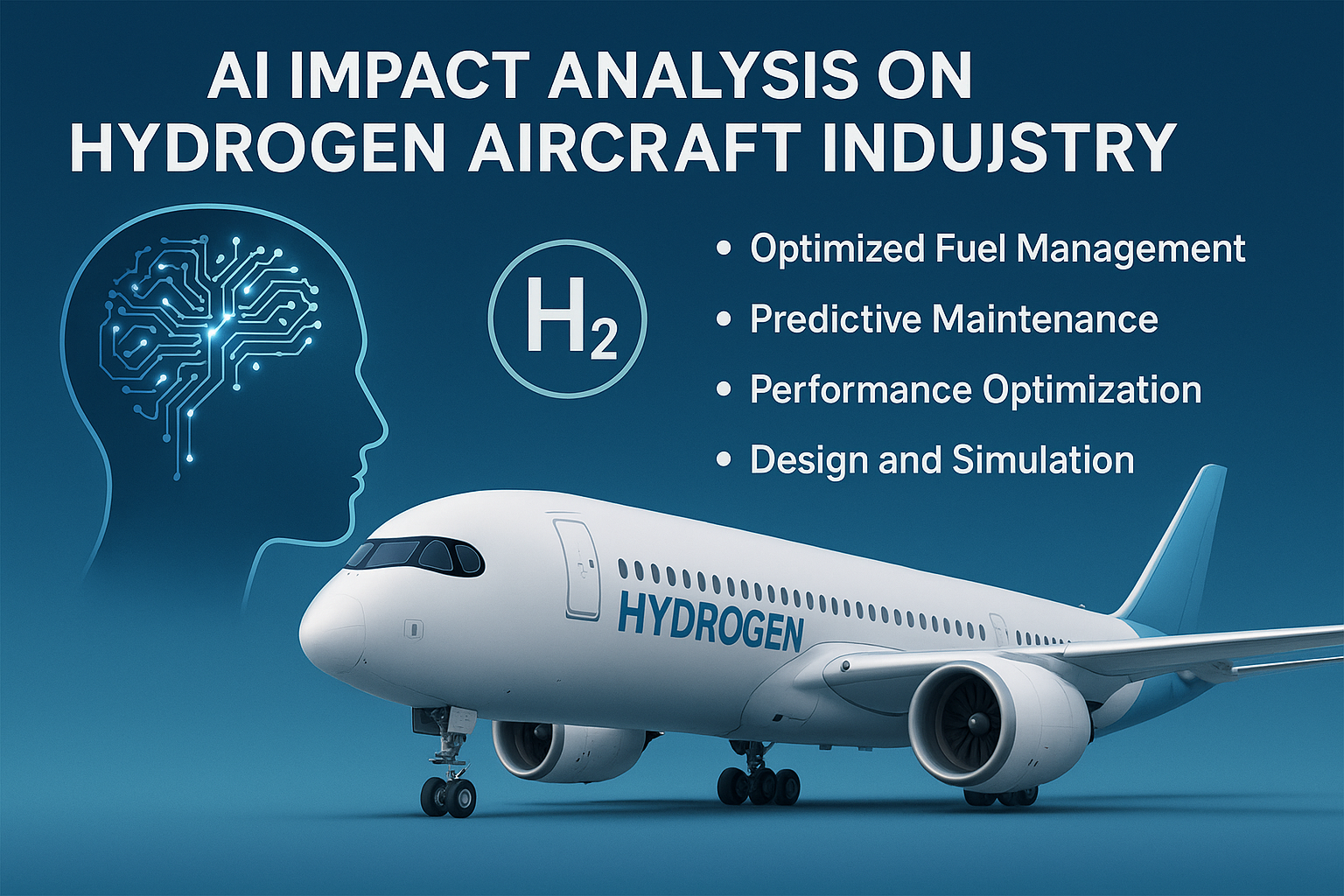
AI Impact Analysis on Hydrogen Aircraft Industry
The aviation industry is undergoing a transformative shift towards sustainability, with hydrogen powered aircraft emerging as a promising solution to reduce carbon emissions. Artificial Intelligence (AI) plays a pivotal role in accelerating this transition by optimizing various aspects of hydrogen aircraft development and operation. This comprehensive analysis delves into the multifaceted impact of AI on the hydrogen aircraft market, exploring its influence on design, safety, maintenance, and market dynamics.
1. Introduction to Hydrogen Aircraft and AI Synergy
Hydrogen powered aircraft utilize hydrogen fuel cells or combustion engines to generate thrust, offering a cleaner alternative to traditional jet fuels. The integration of AI into this domain enhances the efficiency and safety of hydrogen aircraft. AI algorithms can process vast datasets to optimize flight operations, predict maintenance needs, and improve overall aircraft performance. This synergy between hydrogen technology and AI is driving innovation in sustainable aviation.
2. AI in Hydrogen Fuel System Design and Optimization
Designing efficient hydrogen fuel systems is critical for the viability of hydrogen aircraft. AI contributes by simulating various design scenarios, enabling engineers to identify optimal configurations for fuel storage and distribution. Machine learning models can predict the behavior of hydrogen under different conditions, assisting in the development of safer and more efficient fuel systems. This approach reduces the time and cost associated with traditional trial and error methods.
3. AI Enabled Hydrogen Flight Control Systems
Flight control systems in hydrogen aircraft must adapt to the unique characteristics of hydrogen propulsion. AI enhances these systems by providing real time data analysis, allowing for dynamic adjustments during flight. This capability ensures optimal performance and safety, particularly during critical phases such as takeoff and landing. AI driven control systems can also learn from past flights to improve future operations.
4. AI in Hydrogen Supply Chain and Infrastructure Planning
The deployment of hydrogen aircraft necessitates a robust supply chain and infrastructure. AI aids in planning and optimizing these systems by analyzing factors such as fuel demand, distribution logistics, and refueling station placement. Predictive analytics can forecast future infrastructure needs, ensuring that the hydrogen supply chain scales effectively with market growth. This strategic planning is essential for the widespread adoption of hydrogen aviation.
5. AI for Safety, Risk Assessment, and Compliance
Safety is paramount in aviation, and AI enhances risk assessment and compliance in hydrogen aircraft operations. By continuously monitoring system performance and environmental conditions, AI can detect anomalies and predict potential failures. This proactive approach allows for timely interventions, reducing the likelihood of accidents. Furthermore, AI assists in ensuring compliance with regulatory standards by automating documentation and reporting processes.
6. AI in Maintenance and Predictive Health Monitoring
Maintenance of hydrogen aircraft is complex due to the novel technologies involved. AI facilitates predictive health monitoring by analyzing sensor data to identify wear and tear before it leads to system failures. This predictive maintenance approach minimizes downtime and extends the lifespan of critical components. Additionally, AI can optimize maintenance schedules, ensuring that resources are allocated efficiently.
Get AI Impact Analysis on Hydrogen Aircraft Market, Request Pdf Brochure: https://www.marketsandmarkets.com/pdfdownloadNew.asp?id=143337335
7. AI for Emissions Monitoring and Environmental Optimization
While hydrogen aircraft aim to reduce emissions, monitoring their environmental impact remains crucial. AI enables real time tracking of emissions and energy consumption, providing insights into the aircraft's ecological footprint. This data supports continuous improvement in environmental performance and helps in meeting sustainability goals. AI driven analytics also assist in optimizing flight paths to minimize environmental impact.
8. AI in Market Forecasting and Economic Viability
Understanding market dynamics is essential for the successful commercialization of hydrogen aircraft. AI contributes by analyzing market trends, consumer behavior, and economic indicators to forecast demand and profitability. These insights inform strategic decisions regarding production, pricing, and marketing. AI driven models can also assess the economic viability of different business models within the hydrogen aviation sector.
9. AI in Training and Simulation for Hydrogen Aircraft Pilots
Training pilots to operate hydrogen aircraft requires specialized knowledge and skills. AI enhances training programs through advanced simulation technologies that replicate real world scenarios. These simulations provide immersive learning experiences, allowing pilots to practice responses to various situations safely. AI also personalizes training by adapting to individual learning styles and progress, ensuring effective skill development.
10. Future Outlook: AI’s Role in Scalable Hydrogen Aviation
The future of hydrogen aviation is closely tied to advancements in AI. As AI technologies evolve, they will further streamline aircraft design, operations, and maintenance, making hydrogen aviation more scalable and economically viable. Continued integration of AI will also facilitate the development of autonomous hydrogen aircraft, opening new possibilities in air travel. The synergy between AI and hydrogen technology holds the promise of a more sustainable and efficient aviation industry.
The integration of AI into the hydrogen aircraft market is revolutionizing the aviation industry by enhancing design, safety, maintenance, and market strategies. As both technologies continue to advance, their combined impact will play a crucial role in achieving sustainable and efficient air travel. Stakeholders in the aviation sector must embrace this synergy to stay competitive and contribute to a greener future.
Related Report:
Hydrogen Aircraft Market by Power Source (Hydrogen Combustion, Hydrogen Fuel Cell), Platform (Unmanned Aerial Vehicles, Air Taxis, and Business Jets), Range, Passenger Capacity, Technology, and Region (2020-2030)

This FREE sample includes market data points, ranging from trend analyses to market estimates & forecasts. See for yourself.
SEND ME A FREE SAMPLE






