AI's Role in North America Airport Information System Market
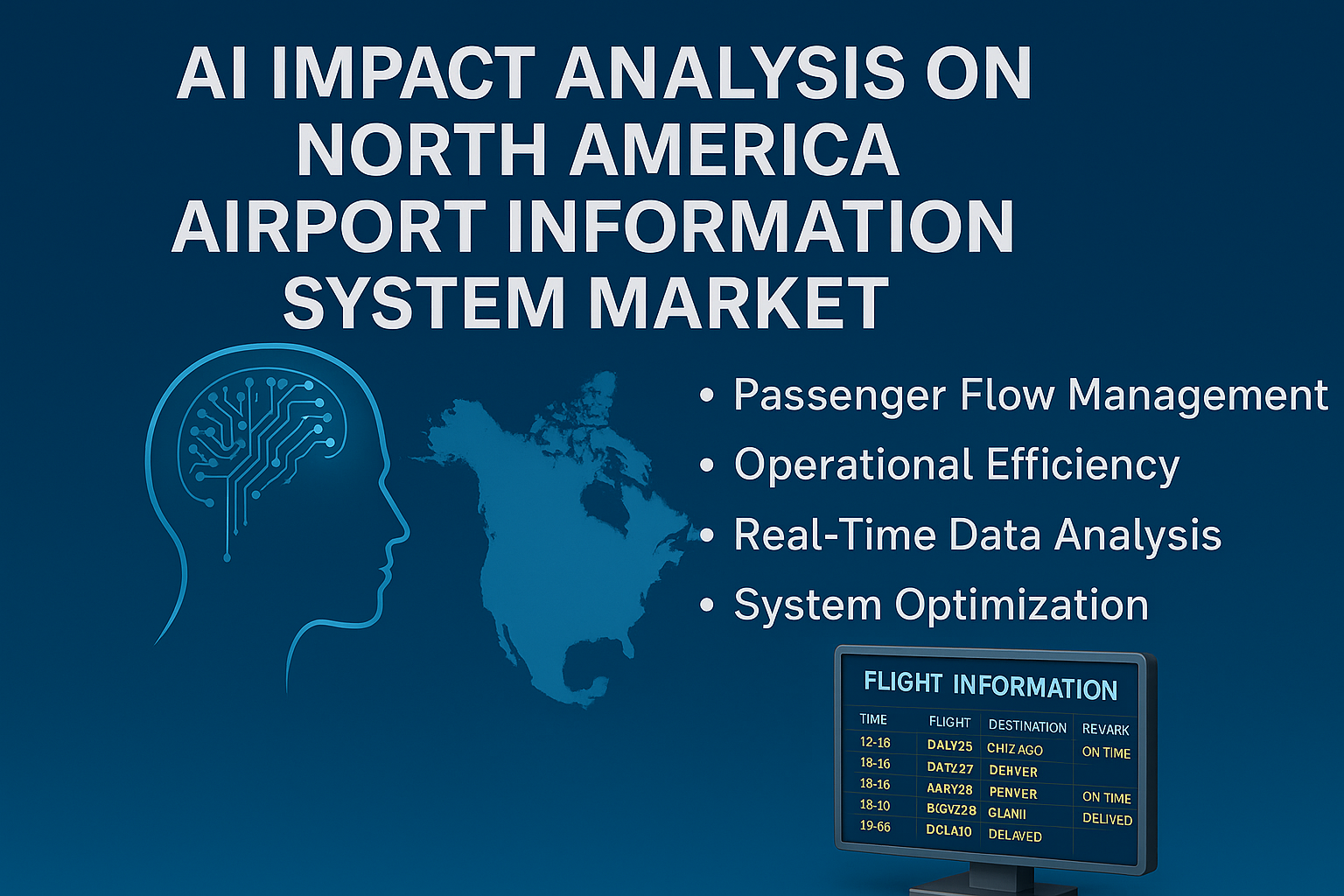
The aviation industry is undergoing a significant transformation with the integration of Artificial Intelligence (AI) into airport information systems. In North America, airports are leveraging AI to enhance efficiency, security, and passenger experience. This comprehensive overview explores the multifaceted impact of AI on various components of airport operations.
AI in Real Time Flight Information Systems
AI algorithms are revolutionizing real time flight information systems by enabling predictive analytics for flight delays and cancellations. By analyzing historical data, weather patterns, and air traffic, AI provides accurate forecasts, allowing airports to proactively manage schedules and inform passengers promptly. This predictive capability enhances the reliability of Airport Management Systems and Passenger Information Systems, ensuring timely updates across various platforms.
Enhanced Passenger Experience Through AI Integration
AI enhances passenger experience by personalizing services and streamlining processes. Chatbots and virtual assistants provide real time information on flight status, gate changes, and baggage claims. Facial recognition technology expedites check in and boarding procedures, reducing wait times. These advancements are integral to Airport Operations Systems, facilitating seamless interactions between passengers and airport services.
AI for Baggage Handling and Tracking
AI improves baggage handling by optimizing routing and tracking systems. Machine learning algorithms analyze baggage flow to predict and prevent bottlenecks, ensuring timely delivery. Integration with Departure Control Systems (DCS) allows for efficient baggage check in and retrieval, minimizing mishandling and enhancing passenger satisfaction.
AI Enabled Security and Surveillance Systems
Security is paramount in airport operations, and AI significantly bolsters surveillance capabilities. Advanced AI systems analyze video feeds to detect unusual behavior and potential threats in real time. Facial recognition and biometric verification enhance access control, ensuring only authorized personnel enter restricted areas. These AI driven security measures are critical components of Airport Control Systems, maintaining safety and compliance.
Smart Resource Allocation and Gate Management
AI optimizes resource allocation by analyzing flight schedules, passenger flow, and operational constraints. Dynamic gate assignment systems utilize AI to adjust gate allocations in real time, reducing delays and improving turnaround times. Airport Operation Control Centers (AOCC) rely on AI to manage resources efficiently, ensuring optimal utilization of facilities and personnel.
AI in Air Traffic Flow Management
AI enhances air traffic flow management by predicting congestion and optimizing flight paths. Machine learning models analyze airspace data to suggest efficient routing, reducing delays and fuel consumption. Integration with Airport Control Systems ensures coordinated efforts between ground operations and air traffic control, maintaining smooth and safe airspace management.
Request Pdf Brochure to Know More About How AI is Transforming Airport Information System Market in North America: https://www.marketsandmarkets.com/pdfdownloadNew.asp?id=978
Maintenance and Operations Efficiency with AI
Predictive maintenance powered by AI minimizes equipment downtime and extends asset lifespan. Sensors collect data on equipment performance, which AI analyzes to forecast maintenance needs. This proactive approach ensures the reliability of critical systems within Airport Operations Systems, reducing unexpected failures and maintenance costs.
AI Driven Decision Support Systems
AI driven decision support systems provide airport authorities with actionable insights for strategic planning. By analyzing vast datasets, AI identifies trends and patterns, aiding in decision making processes. These systems are integral to Airport Management Systems, facilitating informed decisions on infrastructure development, resource allocation, and emergency response planning.
AI and IoT Integration in Airport Infrastructure
The integration of AI and the Internet of Things (IoT) enhances airport infrastructure by enabling real time monitoring and control. Smart sensors collect data on various parameters, such as energy consumption and equipment status. AI analyzes this data to optimize operations, improve energy efficiency, and ensure the smooth functioning of Airport Operations Systems.
Regulatory and Ethical Challenges in AI Deployment
The deployment of AI in airport systems raises regulatory and ethical considerations. Data privacy concerns necessitate stringent measures to protect passenger information. Compliance with regulations such as the General Data Protection Regulation (GDPR) is essential. Moreover, ethical considerations regarding surveillance and decision making transparency must be addressed to maintain public trust in AI driven Airport Control Systems.
AI is transforming the Airport Information System Market in North America by enhancing efficiency, security, and passenger experience. From real time flight information to predictive maintenance, AI's integration into Airport Management Systems, Airport Operations Systems, and Airport Control Systems is revolutionizing the aviation industry. As technology continues to evolve, the adoption of AI will be instrumental in shaping the future of airport operations.
Related Report:
Airport Information System Market by Application (Passenger Processing, Flight Operation, Cargo and Baggage Management, Resource Management, Airside Operations), Type, Implementation and Region - Global Forecast to 2030

This FREE sample includes market data points, ranging from trend analyses to market estimates & forecasts. See for yourself.
SEND ME A FREE SAMPLE






