AI Impact on North American Simulators Market
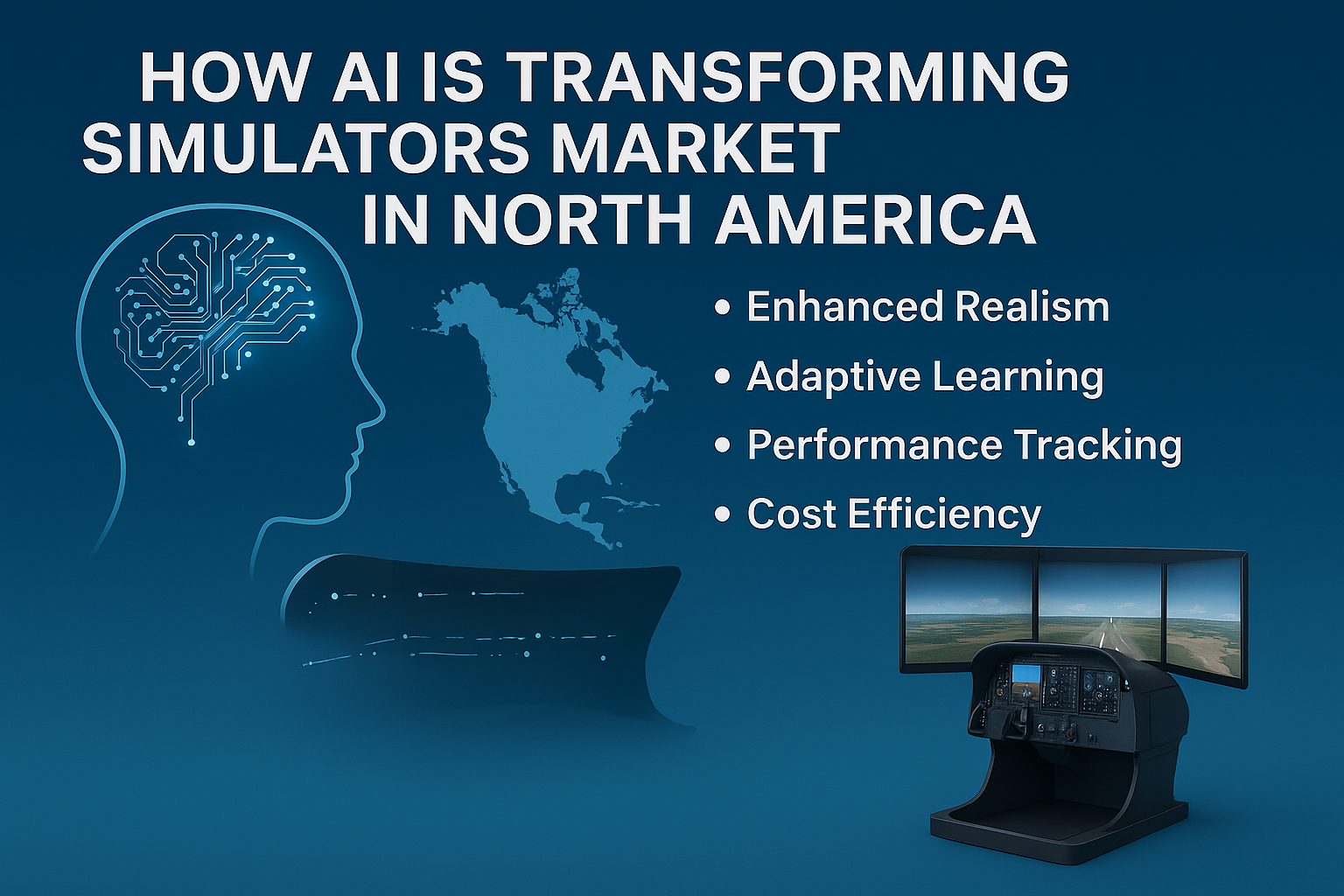
The integration of Artificial Intelligence (AI) into simulators is revolutionizing training across various sectors in North America. From aviation and military to maritime industries, AI driven simulators are enhancing realism, efficiency, and adaptability in training programs. This transformation is driven by the need for more effective training solutions that can keep pace with technological advancements and evolving operational requirements.
AI Driven Realism in Simulation Environments
AI technologies are significantly enhancing the realism of simulation environments. By leveraging machine learning algorithms, simulators can replicate complex human behaviors and environmental dynamics with greater accuracy. This is particularly evident in flight simulators, where AI enables the creation of highly realistic flight conditions, weather patterns, and emergency scenarios. In military simulators, AI allows for the simulation of unpredictable enemy tactics, providing trainees with a more authentic combat experience. Maritime simulators also benefit from AI by accurately modeling sea conditions and vessel responses, improving the training of ship crews.
Predictive Analytics for Simulator Performance Optimization
AI powered predictive analytics are optimizing simulator performance by anticipating faults and scheduling maintenance proactively. This reduces downtime and ensures that simulators are always ready for training sessions. In aviation simulators, predictive maintenance helps identify potential issues in flight control systems before they become critical. Military simulators use predictive analytics to monitor system health and performance, ensuring that training equipment remains operational during critical training periods. Maritime simulators benefit from AI driven analytics by optimizing engine performance and fuel consumption models, leading to more efficient training scenarios.
Personalized Learning in Training Simulators
AI enables personalized learning experiences in training simulators by adapting to individual trainee performance. Machine learning algorithms analyze trainee data to identify strengths and weaknesses, tailoring training programs accordingly. In aviation simulators, this means adjusting flight scenarios to focus on areas where a pilot needs improvement. Military simulators use AI to customize combat scenarios based on a soldier's skill level, enhancing learning outcomes. Maritime simulators adapt training modules to address specific competencies required by different crew members, ensuring comprehensive skill development.
Autonomous Scenario Generation
AI facilitates the autonomous generation of training scenarios, reducing the need for manual scripting and allowing for a broader range of training experiences. In flight simulators, AI can create diverse flight paths, weather conditions, and emergency situations on the fly. Military simulators benefit from AI generated combat scenarios that evolve based on trainee decisions, providing a dynamic training environment. Maritime simulators use AI to simulate various sea conditions and navigational challenges, preparing crews for a wide array of situations.
Natural Language Processing (NLP) for Realistic Interactions
The integration of Natural Language Processing (NLP) into simulators enhances communication training by enabling realistic interactions with virtual entities. In aviation simulators, NLP allows pilots to practice radio communications with air traffic control in a lifelike manner. Military simulators use NLP to simulate interactions with virtual team members and command structures, improving communication skills under stress. Maritime simulators incorporate NLP to train crews in effective communication during emergency situations, ensuring clarity and coordination.
AI in Military Simulators for Tactical Decision Making
AI is transforming military simulators by enhancing tactical decision making training. Through reinforcement learning, AI models simulate enemy behavior and adapt to trainee actions, providing a realistic and challenging training environment. This dynamic interaction helps soldiers develop critical thinking and decision making skills under pressure. AI also enables the analysis of trainee performance, offering insights into decision making processes and areas for improvement.
Request Pdf Brochure to Know More About How AI is Transforming Simulators Market in North America: https://www.marketsandmarkets.com/pdfdownloadNew.asp?id=110549963
AI Powered Visual and Sensory Enhancements
AI enhances visual and sensory elements in simulators, creating more immersive training experiences. In flight simulators, AI driven graphics rendering produces highly detailed and responsive environments, improving pilot situational awareness. Military simulators use AI to generate realistic battlefield visuals and soundscapes, immersing soldiers in combat scenarios. Maritime simulators benefit from AI enhanced visualizations of sea conditions and vessel movements, aiding in navigation and emergency response training.
Integration with Augmented and Virtual Reality (AR/VR)
The integration of AI with AR and VR technologies is revolutionizing simulator training. In aviation, AI powered VR simulators provide pilots with a 360 degree immersive experience, enhancing spatial awareness and decision making skills. Military training programs utilize AI integrated AR to overlay tactical information onto real world environments, improving situational analysis. Maritime simulators employ AI driven VR to replicate shipboard environments, allowing crews to practice procedures in a safe and controlled setting.
Data Driven Feedback and Evaluation Systems
AI enables real time feedback and evaluation in training simulators, allowing trainees to understand their performance instantly. In flight simulators, AI analyzes pilot actions and provides immediate feedback on maneuvers, aiding in skill refinement. Military simulators use AI to assess decision making and tactical execution, offering constructive critiques. Maritime simulators leverage AI to evaluate crew responses to simulated emergencies, identifying areas for improvement and ensuring readiness.
AI’s Role in Cost Reduction and Scalability
AI contributes to cost reduction and scalability in simulator training programs. By automating scenario generation and performance analysis, AI reduces the need for extensive human oversight, lowering operational costs. In aviation, AI driven simulators decrease the reliance on actual flight hours, saving fuel and maintenance expenses. Military training programs benefit from AI's ability to simulate complex scenarios without the logistical challenges of live exercises. Maritime training centers utilize AI to provide scalable training solutions that can be accessed remotely, expanding their reach and efficiency.
The integration of AI into simulators is transforming training across aviation, military, and maritime sectors in North America. By enhancing realism, personalization, and efficiency, AI driven simulators are preparing professionals for the complexities of their respective fields. As technology continues to advance, the role of AI in simulation training is poised to grow, offering even more sophisticated and effective training solutions.
Related Reports:
Simulators Market by Type (Flight Training, Full Flight, Full Mission Flight, Fixed Base, Air Traffic Control, Driving Simulators, Full Mission Bridge Simulators, Vessel Traffic Control Simulators) Application, Solution, Platform, Technique, and Region - Global Forecast to 2028

This FREE sample includes market data points, ranging from trend analyses to market estimates & forecasts. See for yourself.
SEND ME A FREE SAMPLE






