AI in Drones Market Impact Analysis
Autonomous Ascent: How AI is Reshaping the Future of the UAV Industry
The integration of artificial intelligence (AI) in Drone into industry is driving a profound transformation across both commercial and defense domains. As drones progress from remotely operated machines to intelligent, semi-autonomous, and fully autonomous systems, AI is emerging as the central force behind this shift. The industry is moving beyond basic waypoint navigation and manual missions toward complex, data-driven operations, where UAVs can autonomously perceive, analyze, and respond to real-time scenarios.
AI's influence is visible in several transformative areas within the UAV ecosystem. Advanced navigation and obstacle avoidance enabled by deep learning and computer vision are becoming standard features in modern UAV platforms. Real-time image analysis and target recognition empower drones to function as intelligent aerial assets, supporting diverse applications such as surveillance, precision farming, disaster response, and military intelligence. Additionally, AI-powered swarming technology is gaining prominence, particularly in defense, where fleets of drones can operate in synchronized patterns to overwhelm adversary systems, share intelligence, or execute coordinated strikes.
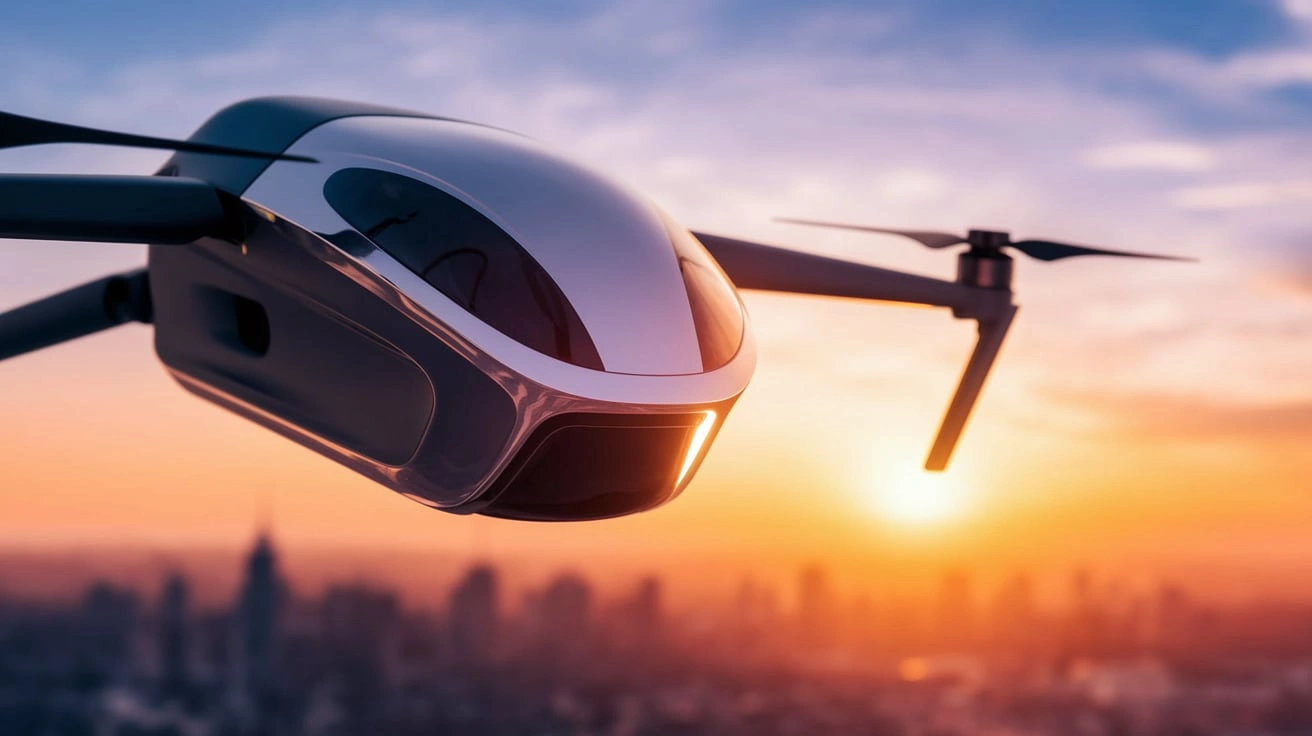
Current market trends show that AI-powered drones are driving the next wave of growth within the UAV sector. Demand is increasing across industries such as energy, logistics, public safety, and environmental monitoring, as AI capabilities reduce human intervention and increase operational efficiency. In defense, autonomous UAVs are becoming central to strategies involving manned-unmanned teaming, reconnaissance missions in GPS-denied environments, and electronic warfare operations. This shift has prompted governments to increase R&D funding and led private companies to invest in advanced AI-algorithms tailored for UAV mission planning, pathfinding, and threat recognition.
Request AI Impact Analysis on UAV (Drone) Industry : https://www.marketsandmarkets.com/pdfdownloadNew.asp?id=43722301
Growth projections for the AI-enabled UAV segment are significantly outpacing the general drone market. Over the next five to seven years, AI-powered UAVs are expected to experience double-digit compound annual growth rates. Factors driving this growth include the increasing deployment of drones in urban air mobility concepts, smart cities, and last-mile delivery, all of which depend on real-time decision-making and adaptive navigation. The scalability of AI-driven UAV services is also leading to expanded use cases in disaster response, border patrol, asset inspection, and wildlife conservation, where human oversight is either limited or impractical.
Strategically, the industry is experiencing a shift toward modular and software-defined platforms. Hardware is increasingly becoming a delivery mechanism for intelligent software, allowing drone manufacturers to tailor AI applications to specific use cases. This shift favors flexible architectures that support frequent software updates and mission-specific payloads, reducing costs and improving mission effectiveness. In addition, there is growing emphasis on edge computing within UAVs, enabling real-time AI processing onboard rather than relying on cloud-based computation, which is crucial for latency-sensitive applications and environments with limited connectivity.
Key players in this evolving landscape include both established defense contractors and fast-scaling tech startups. Companies like Northrop Grumman, Lockheed Martin, and Elbit Systems are incorporating AI into their tactical drone platforms, focusing on autonomous ISR, strike, and EW capabilities. On the commercial front, DJI continues to dominate the consumer and enterprise UAV market with intelligent flight modes and vision-based navigation. Emerging companies such as Skydio, Anduril, and Shield AI are pushing the envelope with fully autonomous drones capable of navigating complex environments without GPS or human input. Additionally, major cloud and AI firms like NVIDIA, Intel, and Microsoft are investing in UAV AI frameworks and processors to capture the growing demand for onboard intelligence and AI model optimization.
Looking forward, the integration of AI into UAVs is set to redefine airspace management, aerial data services, and future warfare doctrine. As regulatory frameworks adapt to autonomous flight and beyond visual line-of-sight operations, AI will become a key determinant of which companies and nations lead the next generation of unmanned aviation. The race to develop safe, scalable, and intelligent drone ecosystems is underway, and artificial intelligence is at the center of this transformation.
Related Report :
Artificial Intelligence (AI) in Drones Market by Solution (Infrastructure, Software, Services), Function (Flight Operations, Maintenance, Ground Control, Asset Health, Simulation, Revenue Optimization), End User, Technology - Global Forecast to 2030

X
GET A FREE SAMPLE
This FREE sample includes market data points, ranging from trend analyses to market estimates & forecasts. See for yourself.
SEND ME A FREE SAMPLE






