AI-Driven Aircraft Lighting Revolution Industry in North America
The aircraft lighting industry in North America is undergoing a transformative phase, driven by the integration of artificial intelligence. Traditional lighting systems that once relied on fixed programming or manual controls are being upgraded to intelligent, adaptive technologies. This new generation of Aviation Lighting enhances safety, passenger comfort, and operational efficiency across commercial, military, and business aviation sectors. In North America, where innovation in avionics and in flight systems is rapidly evolving, the application of AI in Airplane Lighting Systems marks a significant technological leap.
Predictive Maintenance and Failure Anticipation
One of the most impactful ways AI is transforming aircraft lighting systems is through predictive maintenance. Conventionally, lighting components are inspected or replaced on a time based schedule, which can lead to unexpected failures or unnecessary part replacements. AI enables real time monitoring of lighting system performance using embedded sensors that track voltage, temperature, usage hours, and wear indicators. Machine learning algorithms analyze this data to predict when components are likely to fail, triggering alerts well in advance. This proactive approach reduces unplanned downtime, increases aircraft availability, and cuts down maintenance costs. For airlines and operators in North America, the ability to maintain high operational readiness while optimizing costs is a strategic advantage.
Smart Cabin Lighting Enhancing Passenger Experience
Cabin lighting has evolved beyond basic illumination to become a key factor in passenger experience. AI is now being used to enhance Aircraft LED Lighting inside cabins by automatically adjusting light temperature, brightness, and color based on time of day, flight duration, and passenger activity. These dynamic lighting systems can help alleviate jet lag by simulating natural circadian rhythms, offering cooler lighting in the morning and warmer tones in the evening. Some systems even adjust based on biometric inputs, such as heart rate or stress levels, providing a personalized experience. Airlines operating in North America are leveraging these AI powered solutions to differentiate their services and build stronger brand loyalty through ambient enhancements.
Exterior Lighting Upgrades: Safety Meets Intelligence
Exterior Aerospace Lighting plays a crucial role in flight safety, especially during taxi, takeoff, and landing. AI enabled external lights, including anti collision strobes, landing lights, and navigation systems, are now capable of adjusting their intensity and frequency in response to environmental conditions. These adaptive systems can detect fog, rain, or snow, and alter their output to maintain optimal visibility for pilots and ground crews. AI also facilitates smarter diagnostics by identifying flickers, short circuits, or power inconsistencies before they become critical. In complex operational environments, especially across diverse North American climates and terrains, such intelligent adaptability can be a major boost to flight safety.
Energy Efficiency via Intelligent Lighting Control
Sustainability and operational efficiency are critical goals in aviation, and lighting systems are no exception. AI controlled lighting setups are significantly more energy efficient than traditional systems. Intelligent algorithms can dim or shut off unused lights based on occupancy detection, ambient lighting conditions, or aircraft phase of flight. In cabins, AI minimizes power draw during periods of inactivity, while maintaining optimal passenger comfort. In external systems, AI adjusts brightness based on environmental inputs, ensuring both visibility and conservation. By pairing AI with Aircraft LED Lighting, operators achieve higher energy savings, longer component life, and reduced emissions. These benefits align with the broader push in North America for greener aviation technologies.
Personalized Airline Branding with AI
AI doesn't just improve performance it also enhances branding and customer engagement. Modern Airplane Lighting Systems can be programmed to reflect an airline’s brand identity through personalized color schemes and lighting transitions. For example, an airline may use soft blue hues during boarding and warmer tones during meal service or relaxation periods. AI enables dynamic adaptation of these schemes in real time, depending on flight stage or passenger feedback. In North America’s competitive airline market, where customer experience is a key differentiator, AI based lighting customization is being widely adopted to support immersive and memorable brand journeys.
Request Pdf Brochure to Know More About How AI is Aircraft Lighting Market in North America: https://www.marketsandmarkets.com/pdfdownloadNew.asp?id=923
Integration Within the Aircraft IoT Ecosystem
Aircraft systems are becoming more interconnected through the Internet of Things (IoT), and Aircraft LED Lighting is no exception. Lighting is now integrated with avionics, in flight entertainment, and environmental control systems, allowing for centralized monitoring and adjustment. AI algorithms help coordinate this integration by syncing lighting responses with cabin announcements, turbulence alerts, or sudden environmental changes. For instance, lighting might automatically dim when a video is played or flash subtly during turbulence to indicate caution. This seamless communication between lighting and other onboard systems enhances both efficiency and safety, providing a cohesive passenger and crew experience across the aircraft ecosystem.
Enhanced Emergency and Evacuation Lighting
Emergency lighting is critical during in flight incidents and evacuations. AI is adding a new layer of functionality to these systems by enabling real time response based on sensor data. In an emergency, AI driven lights can change color, pulse, or intensify based on the specific hazard be it smoke, fire, or cabin depressurization. Directional lighting paths can be dynamically activated to guide passengers to the nearest exit, accounting for blocked paths or changing conditions. These systems are also being integrated with emergency audio announcements and exit signage to improve response times. AI's role in emergency Aviation Lighting reflects a broader trend toward intelligent safety systems that go beyond static hardware to offer responsive, situational support.
Certification, Standards, and Regulatory Landscape
Implementing AI in Aerospace Lighting introduces complexities in terms of certification and regulation. Aviation authorities in North America are working to develop standards that address the unique characteristics of AI powered systems. Unlike traditional components, AI systems are dynamic, self learning, and data driven, which requires a different approach to testing and validation. Key concerns include system transparency, cybersecurity, and fail safe operation. OEMs and suppliers are now using simulation platforms and digital twins to demonstrate AI system performance under various scenarios for certification approval. While the regulatory environment is evolving, the shift toward AI in lighting is pushing stakeholders to collaborate more closely to ensure both innovation and safety are preserved.
Future Outlook: Smart Lighting by 2030
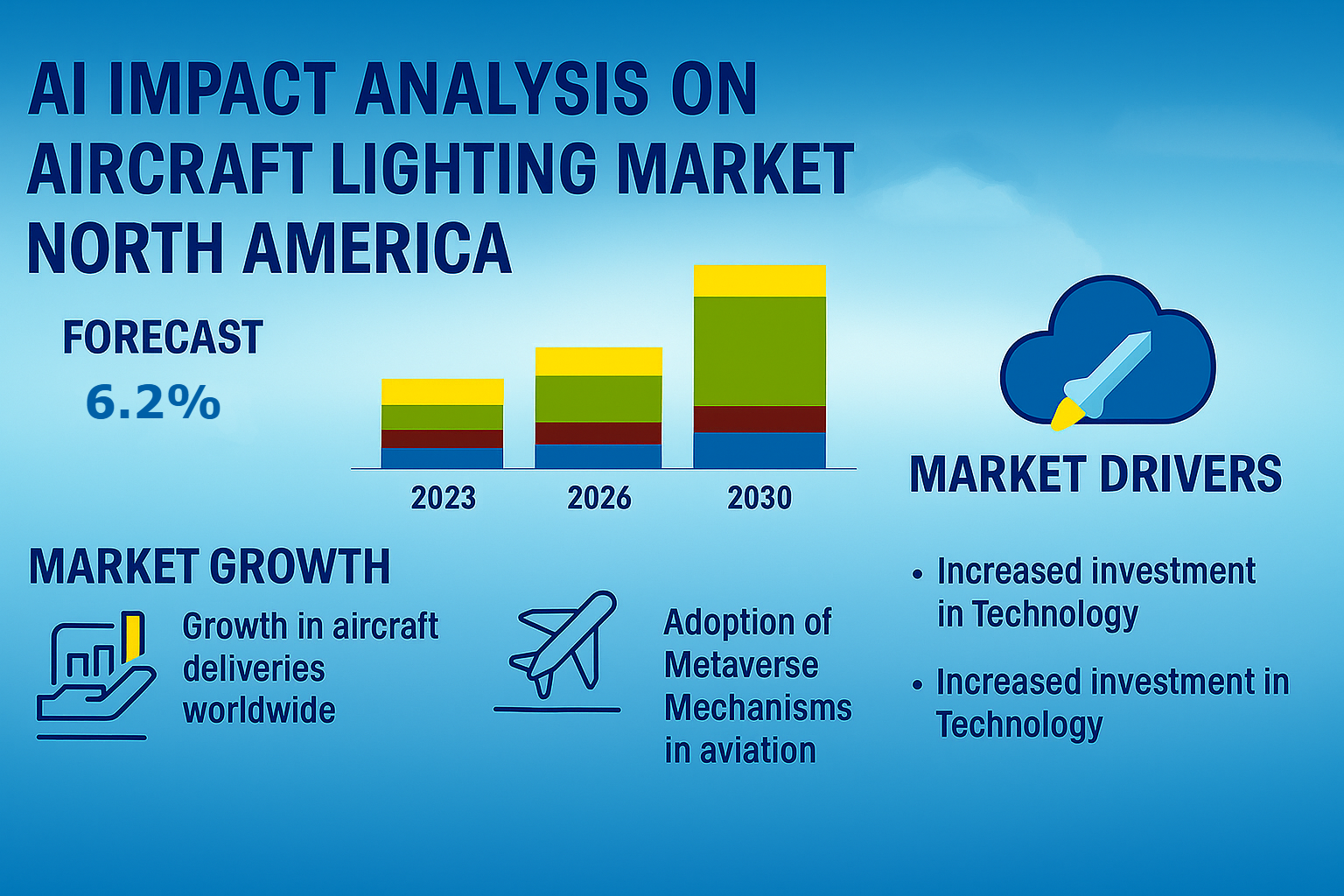
The future of Aircraft LED Lighting in North America is poised to be defined by increasing levels of automation, personalization, and efficiency. As AI technology continues to mature, lighting systems will become even more predictive, interactive, and seamlessly integrated into aircraft operations. Emerging trends such as OLED lighting, laser based illumination, and augmented reality lighting overlays are already in development. These innovations, when combined with AI, will create aircraft cabins and cockpits that are responsive, immersive, and environmentally optimized. Furthermore, as airlines and aerospace manufacturers pursue digital transformation, AI powered lighting will play a central role in building the next generation of smart, sustainable, and passenger centric aircraft.
Key Insights & Takeaways
AI is redefining what aircraft lighting can do. No longer confined to basic illumination, Aviation Lighting has evolved into a strategic system that improves safety, passenger experience, maintenance efficiency, and energy savings. In North America, the convergence of AI, IoT, and LED technology is accelerating this transformation. From predictive diagnostics to dynamic branding and emergency responsiveness, the possibilities are vast. As regulatory frameworks adapt and technology becomes more accessible, the full potential of AI in Airplane Lighting Systems is only beginning to be realized.
The application of AI in Aircraft LED Lighting is not just an upgrade it represents a paradigm shift in aerospace design and operation. North America, with its robust aviation ecosystem and innovation infrastructure, is at the forefront of this transformation. As lighting systems become smarter and more interconnected, they are helping aircraft become safer, greener, and more attuned to the needs of passengers and operators alike. Whether you're an airline executive, systems engineer, or passenger enjoying a smoother journey, the benefits of intelligent Aerospace Lighting are already shining through and the runway ahead is full of opportunity.
Related Report:
Aircraft Lighting Market by Technology (LED, HID, Halogen, NVIS), Light Type (Interior (Signage, Reading, Ceiling & Wall lights), Exterior (Emergency, Anti-collision, Search Lights), Cockpit), End User, Aircraft Type, Region - Global Forecast to 2029

This FREE sample includes market data points, ranging from trend analyses to market estimates & forecasts. See for yourself.
SEND ME A FREE SAMPLE






