Trump Tariffs and Their Impact on Cargo Drones Market
The cargo drones market has emerged as one of the most transformative sectors in the global logistics, military, and commercial industries. These unmanned aerial vehicles are designed to transport packages, heavy equipment, medical supplies, and even humanitarian aid over short and long distances without human pilots. As advancements in autonomous flight control, battery technology, lightweight materials, and navigation systems continue, the cargo drone sector has expanded rapidly, especially in regions like North America, Europe, and Asia-Pacific. Globally, both military and civilian applications are driving the adoption of cargo drones. Their ability to reach remote areas, avoid congested roads, and reduce operational costs offers logistics companies and defense organizations strategic advantages.
Overview of Trump-Era Tariffs and the U.S.-China Trade War
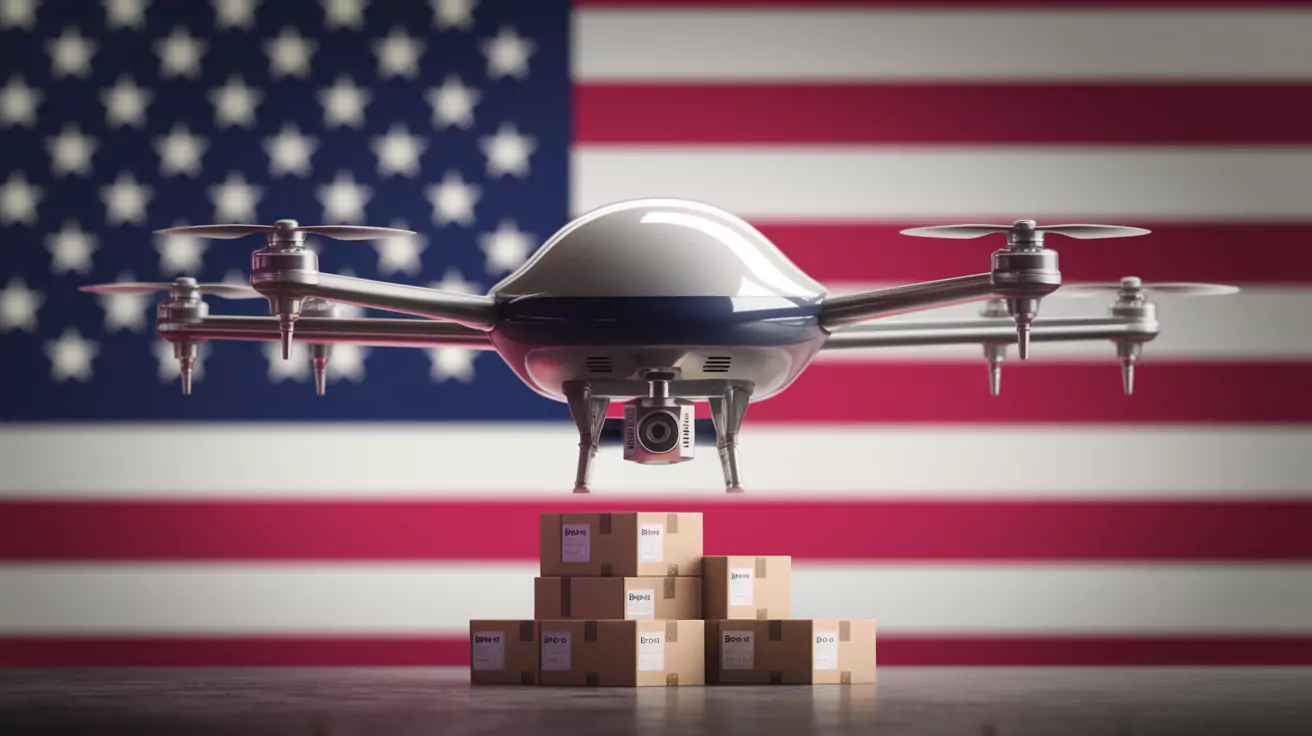
The U.S.-China trade war under the Trump administration significantly altered the economic and trade environment for the technology and defense industries, including the cargo drones market. In 2018, President Trump initiated a series of tariffs targeting Chinese imports, covering electronics, batteries, aluminum, and high-tech components. These measures were introduced with the aim of correcting trade imbalances and addressing intellectual property concerns. However, they triggered retaliatory tariffs from China and created a challenging operating environment for U.S. technology firms. For the cargo drone industry, this trade war impacted the availability of essential components such as lithium batteries, electronic speed controllers, flight control systems, camera modules, and carbon composite frames, most of which were heavily sourced from Chinese manufacturers. The U.S. reliance on China for drone components created vulnerabilities that tariffs quickly exposed.
Impact of Tariffs on Drone Manufacturing Costs
The direct economic impact of Trump-era tariffs was seen in the increased production costs for cargo drones. Since most drone components were subject to 10 to 25 percent tariffs, manufacturers had to either absorb these extra expenses or pass them on to customers. Lithium polymer batteries, electronic sensors, GPS modules, brushless motors, and other parts critical to the operation of cargo drones became significantly more expensive. This increased the overall cost of manufacturing, making it difficult for U.S.-based firms to price their products competitively in both domestic and international markets. Many manufacturers attempted to manage this by renegotiating supplier contracts, redesigning drones to accommodate domestically sourced components, or relocating assembly operations to tariff-free countries. However, these solutions often came with logistical, quality control, or time-to-market challenges. As a result, profit margins tightened, and the growth momentum in the cargo drone market faced temporary setbacks.
Disruption in Supply Chains and Sourcing Challenges
One of the most immediate effects of the trade war was the disruption of global supply chains that were intricately tied to Chinese production facilities. The cargo drone industry, much like the broader technology sector, was heavily dependent on Chinese suppliers for batteries, sensors, camera systems, lightweight materials, and electronics. The imposition of tariffs forced companies to reconsider their supply strategies. Many firms began looking to suppliers in Taiwan, South Korea, Malaysia, and Eastern Europe. Some attempted to scale up domestic production in the U.S., though this posed significant cost and capacity challenges. These disruptions extended production timelines, increased operational risks, and complicated inventory management. The sudden need to qualify new suppliers and recalibrate product designs created additional engineering and certification hurdles, particularly for drones used in commercial and defense sectors where reliability and safety are critical.
Effects on U.S. Drone Exports and Global Competitiveness
The Trump administration’s tariffs not only increased domestic production costs but also triggered retaliatory tariffs from China and other countries. This further affected U.S. drone manufacturers by making their products more expensive in international markets. Countries like China, which was rapidly developing its own commercial and military drone industries, imposed counter-tariffs that reduced the competitiveness of U.S.-made cargo drones. As international buyers faced higher import costs, some turned to alternative suppliers from Europe, Israel, and Asia. For American firms, this resulted in lost contracts and reduced market share in growing international markets. U.S. companies that previously enjoyed leadership positions in sectors like defense logistics, humanitarian aid delivery, and commercial parcel delivery faced stiffer competition from well-funded foreign manufacturers that were unaffected by the tariffs. Global drone shows and defense expos saw increased participation from new non-U.S. entrants, underlining the shift in market dynamics during the trade war.
Book Your “Trump Tariff Threat Assessment” https://www.marketsandmarkets.com/forms/ctaTariffImpact.asp?id=252936360
Changes in Demand for Domestic vs. Foreign Cargo Drones
The shifting cost structure driven by tariffs also impacted buying behavior within the United States. Commercial operators, logistics firms, and government agencies increasingly scrutinized total ownership costs when selecting cargo drone platforms. In some cases, higher-priced U.S.-manufactured drones were bypassed in favor of lower-cost, foreign-made alternatives, which often entered the market through tariff exemptions or third-party resellers. On the other hand, U.S. government and defense contracts began prioritizing domestically manufactured drones due to concerns about security, data integrity, and national policy initiatives like “Buy American.” While tariffs made imported drones more expensive, this also created an opening for small and medium-sized U.S. drone manufacturers to compete for contracts traditionally dominated by larger multinational firms. The trade war’s pressure accelerated this shift, reshaping the demand landscape within the U.S. cargo drone market.
Rise of Domestic Drone Manufacturing and Localization Strategies
Faced with rising costs and supply chain disruptions, many U.S.-based drone manufacturers responded by localizing production and increasing domestic content in their products. This trend was particularly pronounced in the defense and public safety segments where national security considerations limited the use of foreign components. Companies invested in local manufacturing facilities, sourced components from domestic suppliers, and formed partnerships with U.S.-based technology providers for avionics, batteries, and navigation systems. Some firms even acquired or established vertical integration capabilities, manufacturing motors, airframes, and control systems in-house. These localization strategies helped mitigate tariff risks, reduced lead times, and provided manufacturers with greater control over quality and intellectual property. Although initial investments in domestic production were substantial, these moves positioned U.S. drone companies for greater resilience and independence in the long term, reducing exposure to future geopolitical trade disputes.
Policy and Regulatory Implications for Drone Trade
The trade war and its tariffs also had important policy and regulatory implications for the cargo drone market. The Federal Aviation Administration (FAA) and Department of Defense (DoD) both began reevaluating procurement, certification, and cybersecurity policies related to foreign-made drones and components. New guidelines were issued restricting the use of certain imported parts in drones used for government operations, particularly those involving sensitive data or national security missions. The U.S. government introduced additional measures to promote domestic drone manufacturing, including grants, tax incentives, and preferential treatment for American-made UAVs in federal contracts. These policy shifts signaled a broader strategy to reduce U.S. reliance on foreign drone technology. Additionally, changes in export controls affected how U.S. companies could sell advanced drone technologies to foreign buyers, especially in regions considered geopolitically sensitive. The regulatory environment became more complex, requiring drone manufacturers to navigate both trade restrictions and national security regulations simultaneously.
Market Forecast Post-Tariff Era: Recovery and Growth Outlook
As the Trump tariffs began to ease under subsequent administrations, the cargo drone market entered a recovery phase. Supply chains gradually stabilized, and companies resumed or expanded partnerships with Asian and European suppliers. However, the experience of the trade war left a lasting impression on the industry, prompting continued diversification of sourcing and investment in domestic production capabilities. The U.S. cargo drone market is now projected to grow steadily over the next decade, driven by demand from e-commerce, defense logistics, healthcare supply delivery, and infrastructure inspection. Companies that adapted their business models during the trade war by localizing production, investing in new technology, and forming strategic partnerships are expected to outperform competitors. Emerging applications such as urban air mobility and heavy-lift cargo drones will further expand market opportunities, while regulatory advancements promise to simplify commercial drone operations. The market’s resilience in the face of trade conflict has demonstrated its long-term potential as a critical logistics and defense capability.
Strategic Lessons and Future-Proofing the Cargo Drone Industry
The Trump-era trade war provided several strategic lessons for the cargo drone market. Chief among them is the importance of supply chain resilience and diversification. Companies learned the risks of over-reliance on a single country for critical components, particularly when geopolitical tensions can disrupt trade overnight. Investments in domestic manufacturing, alternative supplier networks, and vertical integration proved valuable not just in managing tariff exposure but in enhancing operational control and product quality. The trade conflict also emphasized the value of government partnerships and the strategic advantages of local production, especially in defense and public safety markets. As the cargo drone market continues to grow, firms are future-proofing their operations by embracing automation, data-driven logistics platforms, and AI-driven drone control systems. By balancing global market opportunities with localized production and compliance with evolving trade policies, cargo drone manufacturers are better positioned to navigate future economic and geopolitical challenges.
Related Report:
Cargo Drones Market by Solution (Avionics, Route Planning & Optimization, Ground Control Stations, Service), Industry (Retail, Healthcare, Agriculture, Maritime, Defense), Range (Short, Mid, Long), Type, Payload, and Region - Global Forecast to 2030

This FREE sample includes market data points, ranging from trend analyses to market estimates & forecasts. See for yourself.
SEND ME A FREE SAMPLE

