Drone Package Delivery Market, Trade Wars, and Supply Chains
The global push toward automated logistics and last-mile delivery innovation found one of its most promising frontiers in drone technology. The drone package delivery market, once viewed as a futuristic concept, made substantial headway in the late 2010s as both startups and established tech giants experimented with aerial logistics. However, this momentum collided with a significant geopolitical force—the Trump administration’s aggressive trade war, particularly against China. The implementation of sweeping tariffs disrupted global supply chains, altered cost dynamics, and introduced regulatory uncertainties that reverberated throughout the drone industry. This blog delves into how Trump-era tariffs reshaped the trajectory of the drone package delivery market, expanding on the key economic, technological, and strategic impacts felt during and beyond the trade war.
Trump Tariffs and the Drone Delivery Market: A Grounded Takeoff?
The drone delivery market was poised for rapid takeoff in 2018, buoyed by breakthroughs in lightweight design, GPS navigation, real-time sensors, and machine learning. Major players like Amazon, Google Wing, and UPS Flight Forward were actively testing systems, while dozens of startups across the United States and Europe received venture capital funding to build scalable drone delivery fleets. However, the Trump administration’s tariffs on Chinese imports, including components critical to drone assembly, changed the landscape almost overnight.
The tariffs applied to drone motors, lithium batteries, integrated circuits, and communication modules—many of which were manufactured or assembled in China. These components were the lifeblood of drone delivery systems, and the new cost burdens placed heavy pressure on startups with thin margins and limited cash flow. In many cases, production plans were paused or scaled back to reassess budget feasibility.
Rather than taking off, the U.S. drone delivery market found itself navigating increased operational costs and import bottlenecks, placing its long-term commercial viability into question during a period that should have marked rapid acceleration.
Drone Package Delivery Market Under Pressure: The Trump Trade War Effect
The drone delivery ecosystem is inherently global. Many of the technologies that enable autonomous navigation and package drop-offs rely on a cross-border mesh of research, manufacturing, and logistics. Trump-era trade restrictions didn’t just affect the bottom line—they exposed how fragile and unprepared the drone sector was for geopolitical intervention.
Startups and larger firms alike were forced to reevaluate their supply chain strategies. Some companies attempted to absorb the additional costs, while others passed them down the chain, effectively increasing the price of drone units and future delivery services. This cost inflation discouraged partnerships with retailers and logistics companies, who were already wary of the unproven commercial ROI of drone delivery.
In addition to component costs, the tariffs introduced systemic uncertainty. Companies planning multi-year investments in drone infrastructure found themselves recalculating risks monthly. Questions about tariff duration, potential escalations, and retaliation from other nations led to delays in R&D and pilot programs.
What was once a market fueled by optimism and innovation quickly became one constrained by trade anxiety and operational complexity.
Flying into Trade Turbulence: How Trump Tariffs Disrupted the Drone Delivery Ecosystem
At the heart of the drone delivery market lies a highly specialized and globally integrated supply chain. Key components like brushless motors, GPS modules, flight controllers, and carbon fiber bodies are predominantly sourced from East Asia, especially China. The Trump tariffs directly impacted many of these items, creating cascading effects across drone production pipelines.
As tariffs were implemented, companies had to contend not just with cost increases but also with inventory shortages and procurement delays. Long-standing relationships with Chinese suppliers were strained or severed, forcing firms to scramble for alternative vendors in countries like Taiwan, South Korea, and Vietnam. While this strategy offered tariff relief, it also introduced new problems—quality control issues, longer lead times, and unfamiliar regulatory standards.
Component substitution, particularly for batteries and sensors, also created engineering challenges. Some drone models had to be redesigned to accommodate new parts, delaying time-to-market. These technical obstacles compounded the economic strain, slowing the rollout of commercial drone delivery networks and causing some projects to lose momentum entirely.
Book Your “Trump Tariff Threat Assessment” https://www.marketsandmarkets.com/forms/ctaTariffImpact.asp?id=10580366
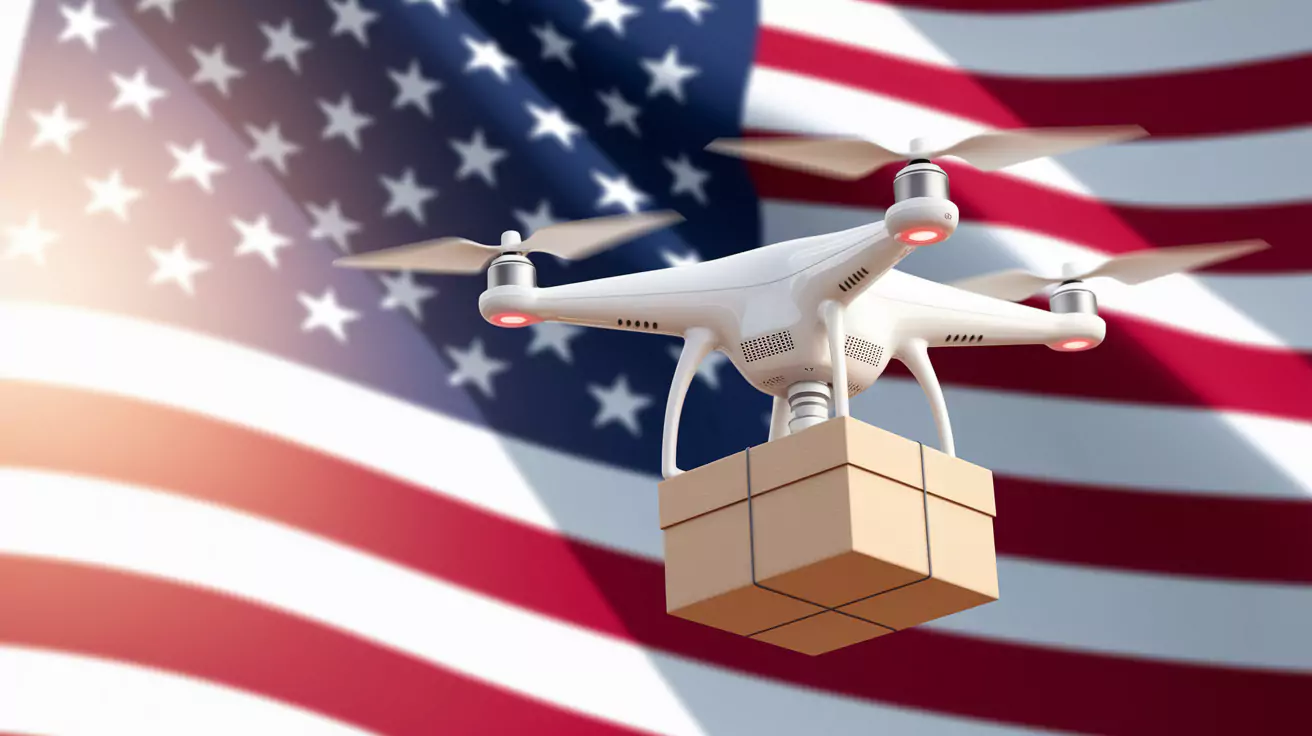
The Economic Fallout of Trump Tariffs on Drone Delivery Startups
Startups in the drone delivery space were particularly vulnerable to the economic shock of Trump-era tariffs. Unlike established corporations with global supply chain divisions and cash reserves, startups often operated with lean teams, tight budgets, and just-in-time inventory models. When tariffs were imposed on key drone components, many startups faced existential crises.
Venture capital firms became more cautious in their evaluation of drone logistics startups, frequently citing tariff uncertainty as a key risk factor. Funding rounds slowed, and several seed-stage companies failed to close subsequent financing. This funding drought coincided with rising costs for production, R&D, and compliance, leaving many startups with no viable path forward.
Some drone companies pivoted to software-only models, focusing on navigation algorithms and fleet management systems rather than hardware production. Others exited the market entirely, unable to reconcile their cost structures with the new tariff-influenced realities. The net effect was a thinning of the startup ecosystem at a time when diversity and experimentation were most needed.
Global Drone Supply Chains vs. Trump Tariffs: What Changed and What’s Next
The Trump tariffs forced a reconfiguration of global supply chains in the drone industry. Companies that had relied on China for nearly 80% of their component needs were now faced with a binary decision—absorb the costs or find new suppliers. In many cases, neither option was ideal.
Some firms experimented with reshoring, attempting to bring drone manufacturing to the United States. While this aligned with the administration’s "America First" rhetoric, it introduced new issues such as labor shortages, lack of specialized manufacturing expertise, and higher operating costs. Others looked to “friend-shoring,” establishing new partnerships with politically aligned countries such as India, Canada, and Australia.
As the trade war dragged on, companies that successfully diversified their supply chains emerged stronger and more resilient. These firms now operate with built-in redundancies, multi-vendor strategies, and geopolitical forecasting teams. The tariff era taught the industry that efficiency alone is no longer a sufficient supply chain strategy—resilience is now equally important.
Tariffs, Tech, and Tensions: The Trump Trade War's Long Tail on Drone Delivery
Even as the Trump administration ended and the Biden administration took over, the legacy of trade war-era tariffs continues to affect the drone delivery market. Many of the tariffs remain in place, and companies continue to make long-term decisions based on the possibility of further geopolitical disruptions.
The chilling effect on innovation has only recently begun to thaw. While new R&D projects are underway and pilot programs have resumed, there’s a noticeable conservatism in strategic planning. Companies are more likely to pursue incremental improvements rather than moonshot projects. The Trump tariffs didn’t just impose costs; they imposed caution.
Moreover, international competition has intensified. Chinese drone companies, many of which received domestic subsidies and benefited from retaliatory tariffs, used the trade war period to expand their technological lead. Today, firms like DJI dominate not only consumer markets but are positioning themselves as major players in commercial delivery as well.
US vs China in the Sky: Drone Delivery Market After Trump Tariffs
The Trump trade war turned the drone delivery market into a microcosm of the larger U.S.-China tech rivalry. On one side were American firms attempting to build commercial drone delivery infrastructure under the weight of tariffs and supply chain disruptions. On the other were Chinese companies, protected and empowered by state support, rapidly advancing their capabilities in hardware, automation, and logistics.
The result is a bifurcated market. In the U.S., drone delivery remains in the pilot and regulatory testing phase, with limited commercial deployment. In China, drone delivery is being used at scale in rural and semi-urban areas, supported by high-speed logistics networks and favorable policy environments.
This divergence has strategic implications for the global logistics landscape. As drones become integral to next-generation supply chains, the ability to manufacture, deploy, and scale these systems will define national competitiveness. The Trump tariffs, by isolating U.S. firms from critical Chinese supply chains, may have inadvertently ceded ground to international competitors.
How Trump-Era Tariffs Shaped Drone Delivery Costs and Consumer Prices
Tariffs do not exist in a vacuum—they eventually filter down to consumers. In the case of drone package delivery, increased component costs led to more expensive units, which in turn affected business models for logistics providers and retailers. Companies had to rethink the economics of drone delivery, which was already competing with established alternatives like ground-based couriers and autonomous vehicles.
Cost modeling showed that the break-even point for drone delivery—initially forecasted to occur within three to five years—would be delayed by at least two years due to tariff-induced inflation. This delay affected investment timelines and partnership discussions with e-commerce platforms and healthcare providers.
Furthermore, pilot programs that had initially promised low-cost or free delivery to customers were recalibrated. In some regions, customers were charged a premium for drone delivery services, undermining one of its key value propositions—speed and affordability.
Tariff-Proofing the Skies: How Drone Delivery Firms Adapted
Despite the challenges, many drone delivery firms showed remarkable adaptability. Strategic pivots included building regional assembly hubs in Latin America and Eastern Europe, investing in domestic battery production, and lobbying for tariff exemptions on specific drone-related components.
Software innovations also played a key role in adaptation. Companies doubled down on simulation-based testing, reducing the need for physical prototypes and thereby limiting exposure to high-cost imported components. Fleet management software and route optimization algorithms became valuable intellectual property, offering a path to profitability even when hardware margins were squeezed.
Some firms even used the trade war as a branding advantage, emphasizing their commitment to local manufacturing and national security—particularly important as drones became more embedded in sensitive supply chains like medical delivery and defense logistics.
Drone Package Delivery Innovation Interrupted: Inside the Trump Tariff Years
Innovation in the drone delivery space did not disappear during the Trump tariff years, but it was undeniably interrupted. Funding dried up, timelines shifted, and R&D teams found themselves working under constraints they had not anticipated. This delay in progress had ripple effects across the entire ecosystem, from component suppliers to regulatory bodies.
Startups that had planned to launch commercial services by 2020 had to push timelines to 2023 or beyond. Larger firms consolidated R&D programs, focusing only on the most commercially viable models. Academic research in drone technology also slowed, as grant funding became harder to secure in a politically volatile environment.
Now, as the market recovers and geopolitical strategies mature, innovation is slowly regaining its footing. But the lessons of the Trump tariff era remain etched into the strategic blueprints of every drone delivery company in operation today.
The drone package delivery market, once viewed as a frontier of limitless potential, encountered a complex set of economic and political hurdles during the Trump administration’s trade war. Tariffs on drone components disrupted supply chains, inflated costs, delayed innovation, and reshaped strategic thinking across the industry. While the market has begun to rebound, the lasting effects of these years are still visible in procurement strategies, global partnerships, and innovation pipelines.
In the end, the Trump tariffs served as both a challenge and a catalyst—forcing the industry to build resilience, diversify operations, and think long-term. As the skies open once again to drone delivery systems, the companies that adapted during the turbulence are now best positioned to lead the next wave of aerial logistics.
Related Report:
Drone Package Delivery Market by Solution (Platform, Infrastructure, Software, Service), Type, Range (Short (<25 km), Medium (25–50 km), Long (>50 km)), Package Size, Duration, End Use, Operation Mode - Global Forecast to 2030

This FREE sample includes market data points, ranging from trend analyses to market estimates & forecasts. See for yourself.
SEND ME A FREE SAMPLE






