Water Taxi Market With Insights Into Growth Drivers, and Future Transport Opportunities
The Water Taxi Market is steadily transforming global urban mobility by introducing flexible and sustainable transportation solutions across coastal cities, islands, and inland waterways. As cities face growing congestion on roads and increasing pressure on public transport networks, water taxis are emerging as an efficient alternative that utilizes existing water infrastructure. The Water Taxi Market is gaining recognition for its ability to connect urban waterfronts, tourist zones, commercial hubs, and residential areas through reliable and time efficient waterborne transport.
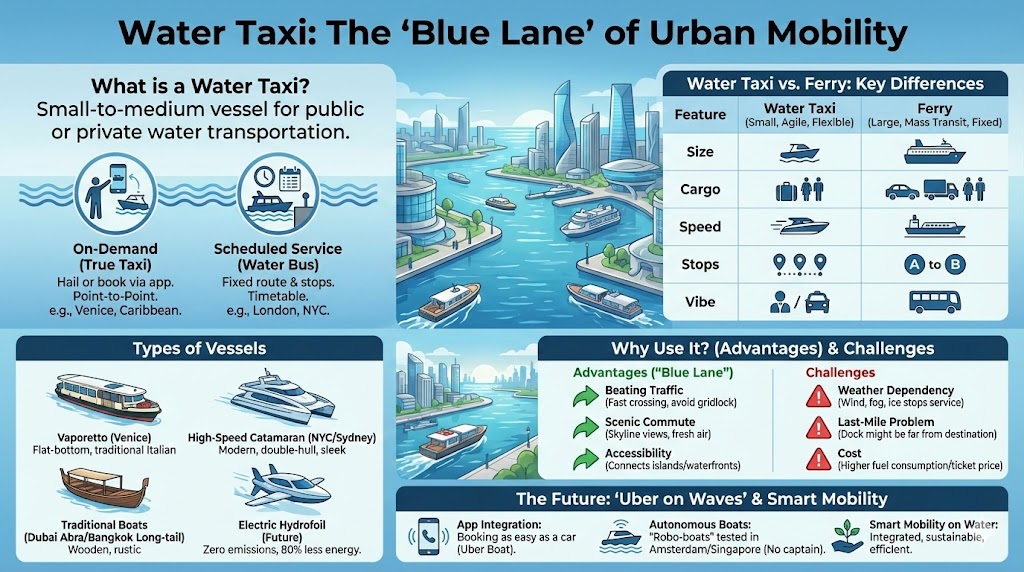
Water taxis offer on demand and scheduled passenger transport services using boats, ferries, and small vessels designed for short distance travel. Unlike conventional ferries, water taxis provide greater flexibility, customized routes, and higher service frequency. This adaptability makes the Water Taxi Market particularly attractive for cities seeking smart mobility solutions and sustainable transit systems. Governments, municipalities, and private operators are investing in water taxi networks to reduce road congestion, improve last mile connectivity, and enhance overall urban transport resilience.
The growing emphasis on tourism development, waterfront revitalization, and low emission transport modes is further strengthening the Water Taxi Industry. With innovations in electric propulsion, digital ticketing, and integrated urban transport systems, water taxis are becoming a core component of modern multimodal transportation ecosystems.
Evolution of the Water Taxi Market in Urban Mobility
The Water Taxi Market has evolved significantly from simple boat based travel used primarily in tourist destinations to a structured mode of urban transportation. Modern water taxi services are integrated with city transit networks, offering seamless connections to buses, metro systems, and pedestrian zones. This integration is enhancing travel convenience and expanding daily commuter adoption.
Urban planners increasingly recognize waterways as underutilized transport corridors. The Water Taxi Market capitalizes on this opportunity by reducing pressure on land based infrastructure while offering predictable travel times in congested metropolitan areas. Waterfront cities with rivers, harbors, and canals are particularly well positioned to adopt water taxi networks as part of long term urban mobility planning.
The shift toward smart cities is also accelerating market evolution. Digital platforms now enable real time tracking, route optimization, mobile ticketing, and service scheduling, improving operational efficiency and passenger experience. These advancements are elevating the Water Taxi Market from a niche transportation option to a mainstream urban solution.
To Know About the Assumptions Considered for the Study Download the PDF Brochure
Key Drivers Shaping the Water Taxi Market
Urban Congestion and Infrastructure Constraints
One of the strongest drivers of the Water Taxi Market is the growing challenge of urban congestion. Expanding populations and limited road expansion capacity are forcing cities to seek alternative transport modes. Water taxis provide an effective way to bypass traffic bottlenecks while offering comfort and reliability for passengers.
Tourism and Waterfront Development
Tourism remains a major contributor to the Water Taxi Market. Coastal resorts, historic waterfronts, island destinations, and riverfront cities rely heavily on water taxis to transport tourists efficiently. Additionally, governments investing in waterfront revitalization projects often integrate water taxi services to improve accessibility and stimulate economic activity.
Shift Toward Sustainable Transportation
Environmental sustainability is increasingly influencing transportation policies worldwide. The Water Taxi Market benefits from the transition toward low emission mobility solutions. Electric and hybrid water taxi vessels are reducing environmental impact while aligning with sustainability goals. This shift is accelerating adoption among cities committed to reducing carbon emissions.
Advancements in Vessel Design and Propulsion
Technological innovation is reshaping the Water Taxi Market. Modern vessels are quieter, more energy efficient, and optimized for passenger comfort. Advances in hull design, electric propulsion systems, and autonomous navigation technologies are improving operational performance and lifecycle efficiency.
Trends Transforming the Water Taxi Market
Electrification and Low-Emission Fleets
One of the most impactful trends in the Water Taxi Market is the growing deployment of electric water taxis. Electrification reduces noise pollution, operational costs, and environmental impact, making water taxi services more attractive to city authorities and residents alike.
Digitalization and Smart Operations
Digital transformation is playing a crucial role in market development. Operators are leveraging mobile apps, real time analytics, and predictive maintenance systems to enhance service reliability and customer satisfaction. Smart scheduling and demand based routing are optimizing fleet utilization across the Water Taxi Market.
Integration with Multimodal Transport Systems
Water taxis are increasingly being integrated with broader urban transport systems. This integration allows passengers to transition seamlessly between water taxis, buses, rail networks, and micromobility options. Such connectivity strengthens the role of the Water Taxi Market within comprehensive urban mobility frameworks.
Growth of On-Demand Water Taxi Services
On demand water taxi services are gaining popularity by offering flexible routes and personalized travel experiences. This model is particularly appealing for business travelers, tourists, and premium commuters seeking convenience and privacy.
Challenges Affecting the Water Taxi Market
Regulatory and Operational Barriers
Regulatory frameworks governing maritime operations can vary significantly across regions, affecting route approvals, safety compliance, and licensing. These factors can slow service expansion and increase operational complexity within the Water Taxi Market.
Weather and Seasonal Constraints
Weather conditions and seasonal variations influence service reliability, particularly in regions with harsh climates. Addressing these challenges requires robust vessel design and adaptive operational planning to maintain consistent service levels.
Market Segmentation in the Water Taxi Market
By Vessel Type
The Water Taxi Market includes conventional motorized boats, high speed vessels, catamarans, and increasingly, electric and hybrid designs. Each vessel type serves different route lengths, passenger capacities, and operational requirements.
By Service Type
Services range from scheduled commuter routes to on demand and charter operations. The diversity of service models allows the Water Taxi Market to address both daily commuting needs and leisure travel demands.
By End User
The market serves a wide range of end users, including daily commuters, tourists, corporate travelers, and government agencies. This broad customer base enhances revenue stability and long term growth potential.
Regional Outlook for the Water Taxi Market
North America
Coastal and river based cities in North America have actively adopted water taxis as part of urban mobility strategies. Strong tourism, established maritime infrastructure, and environmental initiatives support continuous market development.
Europe
Europe demonstrates strong demand for water taxis due to historic canal networks and dense urban waterways. Many European cities emphasize sustainability and public transport integration, creating favorable conditions for the Water Taxi Market.
Asia Pacific
Rapid urbanization, expanding tourism, and waterfront city development are driving strong growth across Asia Pacific. Metropolitan areas with extensive river systems are increasingly investing in water taxi connectivity.
Middle East and Other Regions
Water taxis play a vital role in connecting island developments, coastal projects, and tourism hubs. Infrastructure investments and smart city initiatives support regional market expansion.
Competitive Landscape of the Water Taxi Market
The Water Taxi Market includes global operators, regional service providers, vessel manufacturers, and technology firms. Competition is centered on service reliability, fleet efficiency, customer experience, and sustainability performance.
Key Players in the Water Taxi Market
Barton Marine Transport: Barton Marine Transport operates specialized water taxi services supporting urban mobility and tourism. The company emphasizes safety, customer service, and efficient fleet management within the Water Taxi Market.
NY Waterway: NY Waterway plays a central role in commuter water taxi services, offering reliable transit across busy urban waterways. Its integration with public transport networks positions it as a key contributor to market maturity.
Vaporetto Services: Vaporetto Services provide structured water based public transportation within historic canal cities. Their operations demonstrate how water taxis can function as essential urban transit modes rather than seasonal services.
Thames Clippers: Thames Clippers exemplifies large scale water taxi operations integrated into urban transport systems. Its focus on speed, efficiency, and passenger comfort highlights the evolving sophistication of the Water Taxi Market.
Sydney Ferries: Sydney Ferries operates water based passenger services that blend commuter transport with tourism. Continuous fleet modernization and digital ticketing improvements strengthen its competitive position.
Future Outlook of the Water Taxi Market
The future of the Water Taxi Market is closely tied to sustainable urban development and smart mobility initiatives. As cities seek resilient transportation systems that reduce congestion and emissions, water taxis will play an increasingly strategic role. Continued investment in electric vessels, automated navigation, and digital platforms will improve operational efficiency and passenger experience.
Urban planners are expected to integrate waterfront mobility more deeply into city infrastructure, supporting long term growth. The Water Taxi Market is positioned to transition from supplementary transport to a core element of urban transit networks, particularly in cities with strong maritime potential.
Relates Report:
Water Bus Market by Propulsion (Fully Electric, Fuel-Powered, Hybrid Electric), Capacity (<25 Pax, 26–50 Pax, 51-75 Pax), Operation (Intercity, Intra City), and Region Global Forecast to 2030

This FREE sample includes market data points, ranging from trend analyses to market estimates & forecasts. See for yourself.
SEND ME A FREE SAMPLE

