AI Impact Analysis on Aerospace Riveting Equipment Industry
AI in Aerospace Riveting Equipment
The aerospace industry has always been a pioneer in adopting advanced manufacturing technologies, and riveting stands as one of its most critical processes. Riveting is essential for assembling aircraft structures, from fuselage panels to wing assemblies, where precision, reliability, and durability are paramount. Traditionally, riveting was performed manually or through semi automated systems, but the increasing demand for faster production rates, improved quality, and reduced human error has created the need for transformation. Artificial intelligence is now playing a crucial role in reshaping the aerospace riveting equipment market by bringing autonomy, data driven insights, and unmatched precision to the process. By integrating AI into riveting equipment, aerospace manufacturers are not only improving efficiency but also unlocking new levels of safety and performance that align with the industry’s stringent standards.
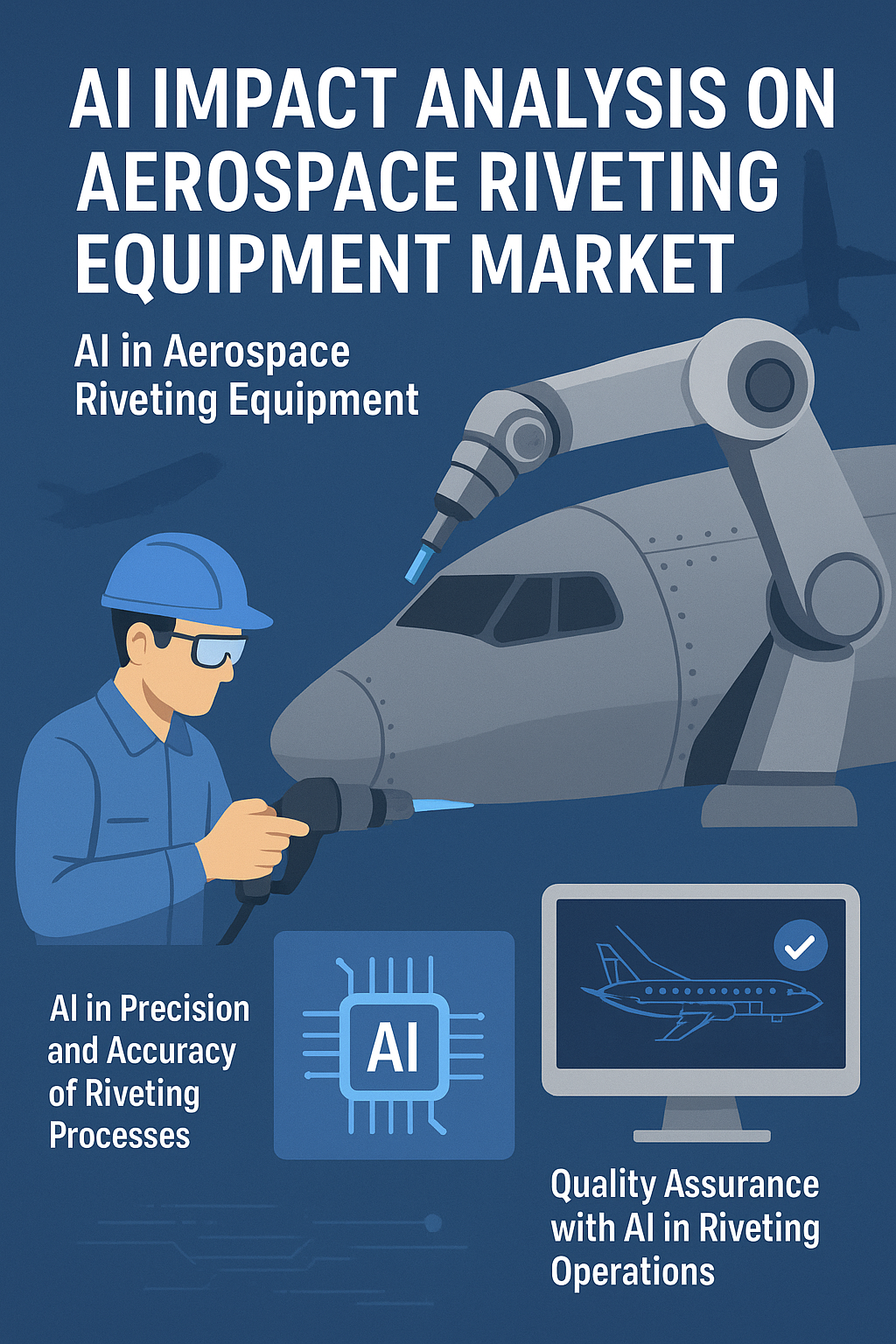
AI in Precision and Accuracy of Riveting Processes
Precision and accuracy are non negotiable in aerospace assembly, as even the slightest error can compromise structural integrity. AI driven riveting systems are addressing these challenges by incorporating adaptive algorithms that adjust the force, depth, and angle of riveting in real time. Machine learning models analyze past performance data to ensure consistent results, reducing variability across multiple riveting cycles. AI also enables riveting systems to detect inconsistencies in material thickness, rivet size, and alignment, automatically correcting the process without requiring manual intervention. This ensures that every rivet placed meets aerospace grade specifications, eliminating the risk of costly rework or structural deficiencies. The ability to adapt dynamically in real time is one of the most significant advantages that AI brings to riveting processes, setting a new benchmark for manufacturing excellence in the aerospace sector.
AI-Powered Robotic Riveting Systems
Robotic riveting systems have become increasingly prevalent in aerospace assembly lines, and AI is taking their performance to the next level. Unlike traditional robotic systems that follow rigid programming, AI powered robots can adapt to variations in parts and materials, making them more versatile and efficient. These intelligent systems are capable of identifying the optimal riveting sequence, reducing cycle times, and improving overall throughput. Collaborative robots, also known as cobots, are gaining traction in the aerospace riveting equipment market, as they can work safely alongside human operators. AI enhances the functionality of cobots by allowing them to learn from human operators, refining their techniques, and reducing errors over time. The fusion of AI and robotics is not only improving the quality of aerospace assemblies but also reshaping the workforce by enabling human machine collaboration on the factory floor.
Predictive Maintenance for Riveting Equipment
Riveting equipment, like any other machinery, is prone to wear and tear that can disrupt production schedules and increase operational costs. Predictive maintenance powered by AI is revolutionizing equipment reliability in aerospace manufacturing. By continuously monitoring sensor data from riveting systems, AI can identify early warning signs of component degradation or impending failure. Instead of relying on scheduled maintenance, manufacturers can now implement maintenance activities only when required, significantly reducing downtime. Predictive models also provide actionable insights into the root causes of equipment issues, enabling engineers to take corrective measures before they escalate. This proactive approach not only extends the lifespan of riveting equipment but also ensures uninterrupted production, which is critical for meeting tight delivery deadlines in the aerospace industry.
Quality Assurance with AI in Riveting Operations
Quality assurance is central to aerospace manufacturing, and AI has emerged as a game changer in this domain. Traditional quality checks often rely on manual inspections, which are time consuming and prone to human error. AI powered vision systems now enable real time inspection of riveted joints, instantly detecting defects such as cracks, misalignments, or incomplete rivets. These systems use deep learning algorithms trained on vast datasets to distinguish between acceptable and defective rivets with high accuracy. By integrating quality assurance directly into the riveting process, manufacturers can achieve zero defect production goals while ensuring compliance with stringent aerospace safety standards. AI not only improves defect detection but also generates comprehensive quality reports that enhance traceability and accountability across the supply chain.
AI in Workforce Optimization and Human-Machine Collaboration
The introduction of AI into aerospace riveting equipment does not mean the replacement of human workers; rather, it marks a shift toward more collaborative and optimized workflows. AI systems can guide operators during manual riveting by providing real time feedback on rivet placement, force, and alignment. This reduces the learning curve for new workers and minimizes errors among experienced operators. Additionally, semi autonomous riveting systems powered by AI reduce physical strain and fatigue for human workers, allowing them to focus on supervisory and decision making roles. Human machine collaboration in riveting operations is creating a safer and more productive work environment, ultimately improving job satisfaction and workforce efficiency. As aerospace companies face labor shortages and rising demand, AI’s role in workforce optimization is proving to be indispensable.
Get AI Impact Analysis on Aerospace Riveting Equipment Market, Request Pdf Brochure: https://www.marketsandmarkets.com/pdfdownloadNew.asp?id=187704646
Cost Efficiency and Production Scalability with AI
Cost efficiency is a key driver for adopting AI in aerospace riveting, as manufacturers seek to balance rising production demands with tight budget constraints. AI analytics optimize resource allocation by analyzing material usage, rivet placement efficiency, and cycle times. This reduces waste, lowers energy consumption, and ensures maximum utilization of resources. AI also plays a vital role in production scalability, as it allows riveting systems to handle increasing complexity and higher volumes without compromising on quality. By reducing rework, minimizing downtime, and streamlining operations, AI driven riveting equipment delivers substantial cost savings. These savings are particularly critical for aerospace companies navigating fluctuating market conditions and growing competition.
AI in Digital Twin and Simulation for Riveting
Digital twin technology has gained prominence in aerospace manufacturing, and its integration with AI is transforming riveting processes. By creating virtual replicas of riveting equipment and processes, manufacturers can simulate different scenarios and optimize performance before physical implementation. AI enhances digital twin models by analyzing real time data from actual equipment, ensuring that simulations remain accurate and relevant. These simulations allow engineers to test different riveting sequences, identify potential issues, and refine strategies without interrupting production. The use of AI in digital twins not only accelerates innovation but also reduces the risks associated with trial and error approaches, making it an essential tool for modern aerospace manufacturing.
AI-Driven Data Analytics in Aerospace Manufacturing
Data is a valuable asset in aerospace manufacturing, and AI is unlocking its full potential through advanced analytics. Riveting equipment generates massive amounts of data related to force, alignment, cycle times, and quality outcomes. AI driven analytics platforms process this data to provide predictive insights, enabling manufacturers to make informed decisions. These insights help identify inefficiencies, optimize workflows, and anticipate future production needs. For instance, AI can reveal patterns that indicate when a specific riveting process may need adjustment, thereby improving consistency and reducing variability. By transforming raw data into actionable intelligence, AI is elevating decision making across the aerospace riveting equipment market.
Future Outlook: AI in Next-Gen Aerospace Riveting Systems
The future of aerospace riveting is intrinsically linked to artificial intelligence, which will continue to drive innovation and competitiveness. As aircraft designs incorporate advanced materials such as lightweight alloys and composites, riveting systems must evolve to handle these materials with precision and efficiency. AI is expected to play a central role in this evolution by enabling riveting systems to adapt to new materials and optimize techniques in real time. Moreover, the integration of AI with robotics, digital twins, and advanced sensors will create fully autonomous riveting systems capable of operating with minimal human oversight. These advancements will not only enhance manufacturing capabilities but also shape global aerospace competitiveness, as nations and companies that embrace AI driven riveting will be positioned as leaders in the industry.
Related Reports:
Aerospace Riveting Equipment Market by Rivet Type (Solid, Blind, Semi-tubular), End Use (OEM, MRO), Equipment Type (Pneumatic, Hydraulic, Electric), Mobility (Fixed, Portable), Technology (Automated, Manual), and Region - Global Forecast to 2028

This FREE sample includes market data points, ranging from trend analyses to market estimates & forecasts. See for yourself.
SEND ME A FREE SAMPLE






