AI Impact Analysis on In-flight Content Industry
The aviation industry is undergoing a digital transformation, and one of the most passenger facing aspects of this change is the evolution of in-flight content. Traditionally limited to basic movies and music, in-flight entertainment has expanded into a sophisticated ecosystem of multimedia offerings, interactive services, and real time content delivery. Artificial Intelligence is at the heart of this transformation. From tailoring content experiences to predicting passenger preferences and optimizing bandwidth use, AI is creating a personalized, connected, and immersive journey for travelers. This shift is not just enhancing customer satisfaction but also opening up new revenue streams and engagement models for airlines. As carriers adapt to rising expectations in a competitive travel environment, AI powered in-flight content solutions are emerging as a key differentiator and value driver.
AI-Powered Personalization in In-Flight Content Delivery
Artificial Intelligence is fundamentally changing how airlines deliver in-flight content by enabling personalized experiences tailored to individual passenger profiles. Traditional in-flight entertainment systems offered the same generic catalog to every traveler, regardless of preferences or demographic. With AI, content curation becomes dynamic. Passenger data, including previous flight behavior, language, destination, age group, and even device usage, is used to recommend relevant movies, music, games, and articles. AI algorithms analyze behavioral patterns to adjust recommendations mid flight, ensuring ongoing engagement. A frequent business traveler may be served productivity focused content and news, while a family on vacation may receive kids' shows, games, and travel documentaries. This level of personalization not only elevates passenger satisfaction but also boosts content consumption rates, allowing airlines to monetize engagement more effectively. The more tailored the experience, the more likely travelers are to interact with the platform throughout the flight.
Real-Time Content Streaming and AI Bandwidth Optimization
One of the most notable advancements in the in-flight content market is the shift from stored media to real time streaming. Delivering high quality streaming content aboard an aircraft, however, presents unique challenges, especially around bandwidth limitations and latency. AI is solving these problems through intelligent bandwidth management and dynamic content delivery optimization. AI systems monitor bandwidth availability in real time, prioritizing content based on passenger demand and connection quality. Predictive models forecast peak usage periods and pre buffer content accordingly. Compression algorithms enhanced by AI reduce data load without compromising video quality. Furthermore, AI driven caching strategies determine which content to pre load onto onboard servers based on passenger profiles and route analytics. This ensures that passengers receive a seamless streaming experience without interruptions or buffering delays, even when multiple users are consuming media simultaneously. As satellite connectivity becomes more widespread, AI will be essential in ensuring consistent quality and minimal operational costs.
Enhanced Passenger Engagement Through Predictive Analytics
AI’s role in enhancing passenger engagement extends beyond entertainment content. Airlines are leveraging predictive analytics to understand what types of content, services, and notifications passengers are most likely to respond to. These models consider factors such as passenger travel history, booking data, social media sentiment, and in-flight behavior. For instance, an AI system might determine that a passenger who watches sports content is more likely to respond positively to a promotion for destination based adventure tours or inflight gaming. This level of insight allows airlines to present targeted content and offers that align with passenger interests, increasing conversion rates for ancillary services. Predictive analytics also play a role in adjusting the tone, format, and timing of content delivery. By understanding when passengers are most attentive during boarding, post meal, or pre landing airlines can maximize engagement with timely and relevant messaging, boosting both satisfaction and commercial performance.
Voice and Gesture Control for Smart In-Flight Systems
As aircraft cabins become more connected, AI is enabling new interfaces for interacting with in-flight content. Voice recognition and gesture control systems are emerging as intuitive ways for passengers to navigate menus, select media, or control cabin settings. These interfaces are especially valuable in premium cabins, where comfort and convenience are paramount. Natural language processing (NLP) allows systems to understand passenger commands in multiple languages, making the interface accessible and inclusive. Gesture recognition, powered by AI enhanced sensors, lets passengers control screens, lights, or recline features with minimal physical interaction, enhancing hygiene and user experience. These smart interfaces are part of a broader shift toward the ambient cabin, where passengers interact with systems naturally rather than through clunky remotes or touchscreens. As AI continues to refine voice and gesture detection, the future of in-flight entertainment will become more immersive, seamless, and responsive to passenger needs.
AI in Multilingual Content Customization and Subtitling
Serving a global passenger base requires content that is accessible in multiple languages. AI is dramatically streamlining the process of localizing in-flight content through automated translation and subtitling tools. Traditional subtitling processes involved manual effort and long lead times. Today, natural language generation (NLG) and AI based translation engines can subtitle entire libraries of media quickly and accurately. These systems adapt to linguistic nuances and cultural sensitivities, ensuring that translations are appropriate and contextually correct. AI also enables real time language switching and personalized content playback, where passengers can choose audio tracks or subtitle options that match their language preferences. This multilingual capability enhances accessibility and expands the appeal of the in-flight content library to diverse audiences. It also positions airlines to better serve international travelers, strengthening brand loyalty and broadening global reach without significantly increasing content production costs.
Integration of AI With E-Commerce and In-Flight Retail
The in-flight content platform is increasingly being used as a gateway to e-commerce and retail experiences. AI enables personalized shopping suggestions and dynamic pricing models that respond to individual preferences and real time inventory. Passengers engaging with entertainment systems can receive AI curated recommendations for duty free products, food and beverage options, or destination experiences. These offers are based on travel behavior, past purchases, and current trends. AI can even prompt real time promotions such as discounts on certain items during specific flight phases or limited time bundles to encourage conversions. Payment systems are integrated seamlessly, allowing passengers to transact with minimal friction. This creates a unified inflight experience where entertainment, retail, and hospitality converge. Airlines benefit from higher ancillary revenue and deeper customer insights, while passengers enjoy a more convenient and personalized journey. As AI continues to advance, in-flight commerce will become more contextually aware, interactive, and profitable.
Get AI Impact Analysis on In-flight Content Market, Request Pdf Brochure: https://www.marketsandmarkets.com/pdfdownloadNew.asp?id=168217393
Content Rights Management and Compliance Using AI
Managing content rights across multiple jurisdictions is one of the most complex challenges facing in-flight entertainment providers. Licensing agreements vary depending on geography, content type, and distribution model. AI is helping streamline this process by automating content rights tracking, renewal alerts, and regional compliance checks. AI systems scan content metadata and cross reference it with legal databases to ensure that only approved media is available on specific routes. These systems also generate reports for rights holders, ensuring transparency and preventing unauthorized use. Furthermore, AI can adjust content availability in real time if route changes alter the legal context. By automating this intricate process, airlines can mitigate legal risk, reduce administrative overhead, and maintain a consistent entertainment experience for passengers. This is especially important as airlines expand content offerings through streaming partnerships and third party platforms that introduce additional compliance layers.
Content Performance Analytics and Feedback Loop With AI
Understanding how passengers interact with in-flight content is essential for improving offerings and making data-informed licensing decisions. AI-powered analytics platforms track engagement metrics such as content starts, completion rates, session duration, and skip behavior. These insights help airlines determine which genres, formats, or media types resonate most with specific demographics or routes. For instance, a sharp increase in documentary viewership on long haul routes to Asia might prompt an airline to invest in exclusive travel content for that segment. AI also supports A/B testing of new content layouts, interfaces, or recommendation algorithms to optimize engagement. Additionally, sentiment analysis tools process passenger feedback from surveys, reviews, and social media to gauge satisfaction and identify pain points. This continuous feedback loop enables airlines to refine their content strategy, improve ROI on licensing, and deliver more engaging experiences that align with passenger expectations and brand positioning.
AI-Driven Accessibility Features in In-Flight Content Systems
AI is playing a transformative role in making in-flight content more inclusive. For passengers with hearing or vision impairments, AI enabled features such as automated closed captioning, audio description, and interface narration are creating more accessible entertainment environments. Speech to text and text to speech technologies allow passengers to interact with systems using their preferred sensory modalities. These features are not only mandated by accessibility regulations in many jurisdictions but also align with growing expectations around inclusive travel. By proactively integrating AI driven accessibility tools, airlines demonstrate social responsibility and expand the reach of their in-flight offerings. Moreover, these features are becoming standard expectations, particularly among younger and tech savvy travelers. As AI capabilities improve, the personalization of accessibility features will become more sophisticated, allowing passengers to pre configure preferences and receive tailored support throughout their journey.
Future Outlook: AI as a Strategic Asset in In-Flight Content Market
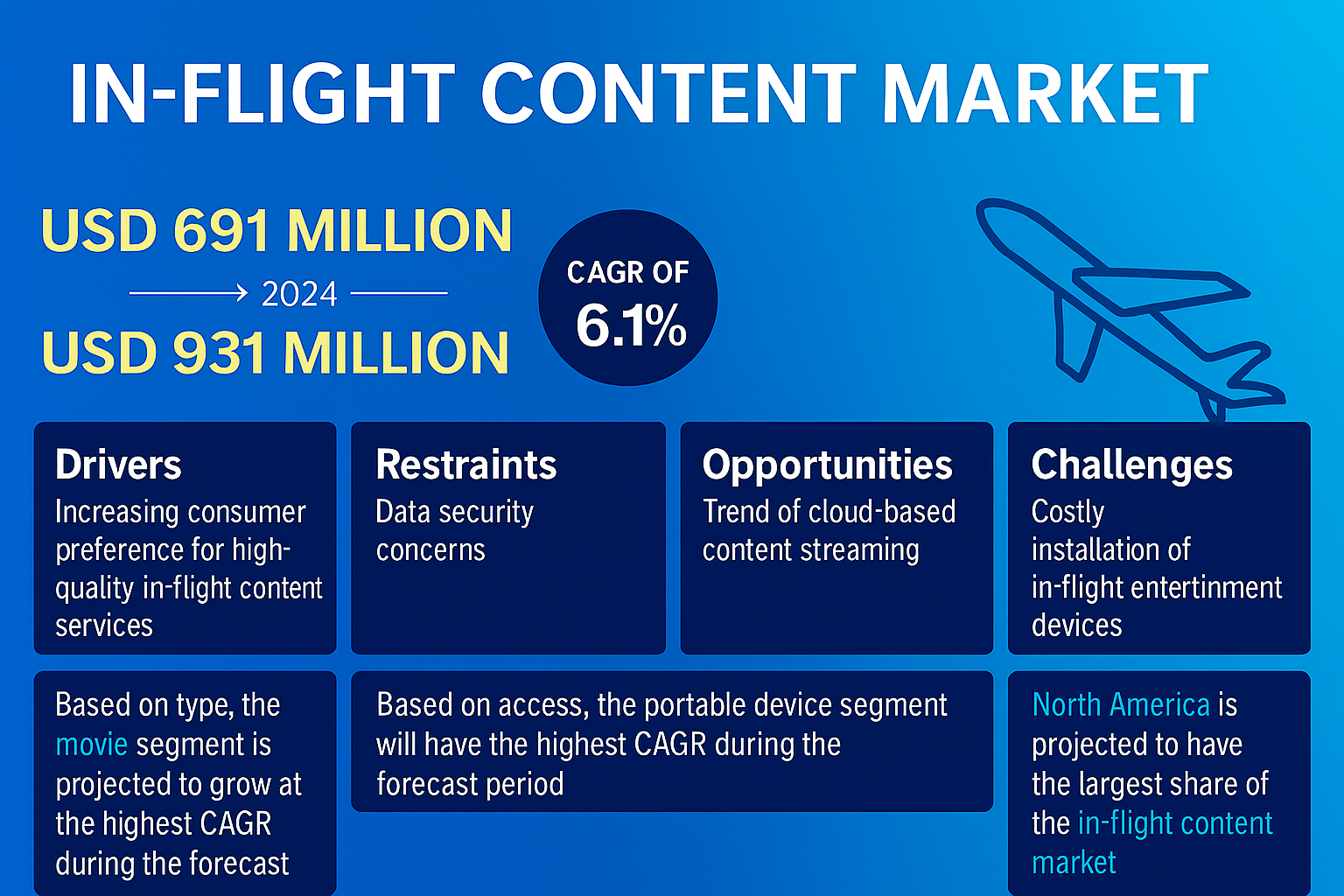
The in-flight content market is evolving rapidly, and Artificial Intelligence is emerging as a strategic asset that will define its future. Airlines that embrace AI driven content platforms are gaining a competitive edge by delivering superior passenger experiences, optimizing operational costs, and unlocking new revenue channels. As aircraft become more connected and passenger expectations continue to rise, AI will be central to enabling real time adaptability, hyper personalized service, and predictive insights. Future innovations will likely include AI generated content tailored to each flight's context, fully immersive AR/VR entertainment ecosystems, and blockchain secured media licensing systems. The market will also see growing partnerships between airlines, tech firms, content creators, and connectivity providers to create integrated ecosystems where AI acts as the orchestrator of engagement, commerce, and operational efficiency. As this digital transformation accelerates, AI’s role in in-flight content will move from enhancement to core infrastructure, redefining how airlines think about passenger engagement and brand loyalty in the sky.
The in-flight content market is undergoing a dynamic transformation powered by Artificial Intelligence. From personalized media experiences and predictive engagement analytics to e-commerce integration and multilingual accessibility, AI is enhancing every facet of the passenger journey. These innovations are not only improving customer satisfaction but also driving operational efficiencies and unlocking new revenue streams for airlines. As digital maturity grows and technology partnerships deepen, the role of AI in in-flight entertainment will continue to expand, setting new standards for what passengers expect during their time in the air. For airlines, investing in AI driven content strategies is no longer a luxury it's a competitive imperative that will shape the future of air travel and customer experience.
Related Report:
In-flight Content Market by Type (Movie, TV Shows, Music, Games, Magazine, News), Access (Seatback Display Unit, Portable Device), Operation (Stored, Streamed) , Platform (Commercial Aviation, Business Aviation) and Region - Global Forecast

This FREE sample includes market data points, ranging from trend analyses to market estimates & forecasts. See for yourself.
SEND ME A FREE SAMPLE






