AI Impact Analysis on Solid Rocket Motors Industry
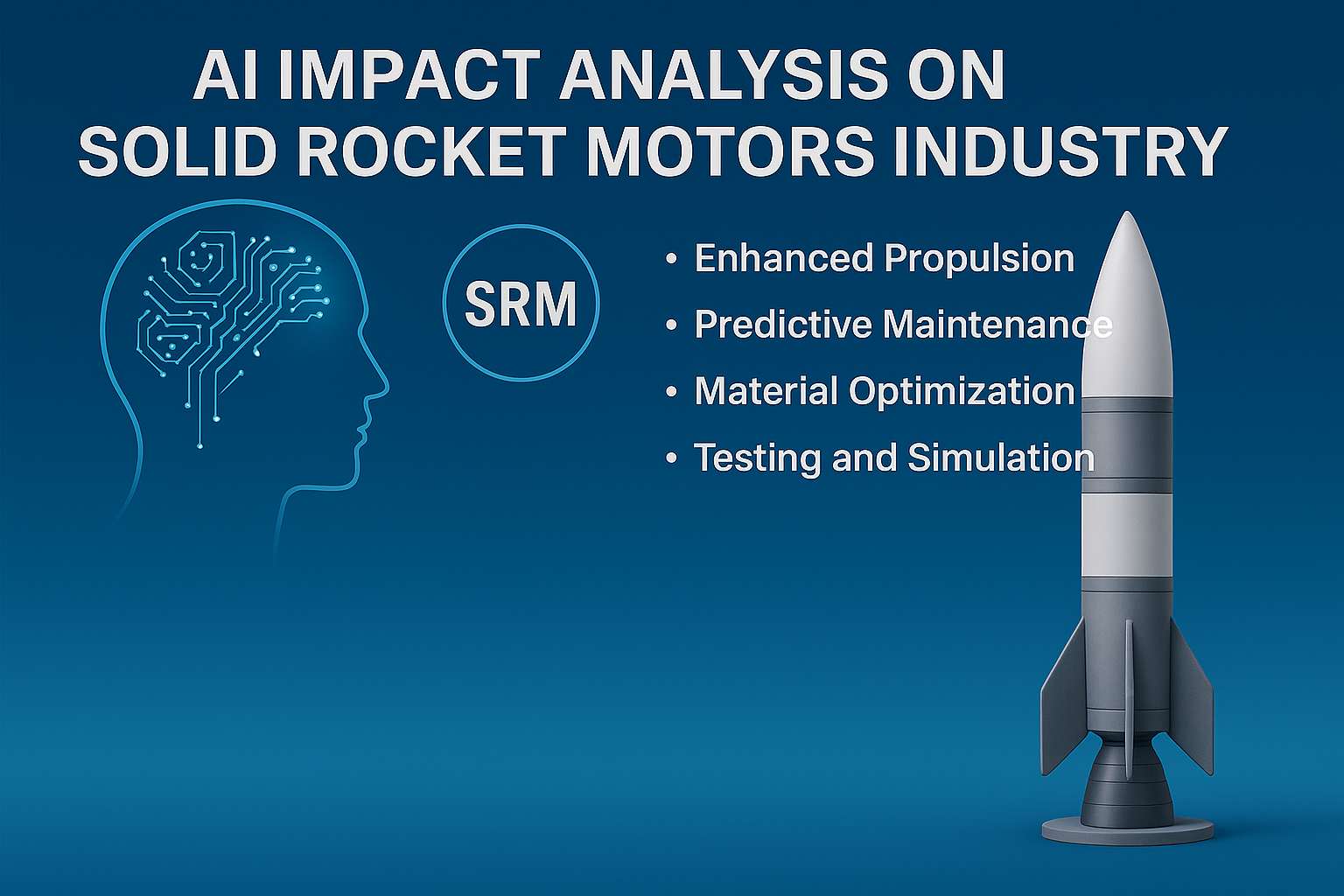
Solid rocket motors (SRMs) have long been a cornerstone in aerospace and defense applications, known for their simplicity, reliability, and high thrust capabilities. As the demand for more efficient and safer propulsion systems grows, the integration of Artificial Intelligence (AI) into the SRM market is becoming increasingly significant. AI technologies are transforming various aspects of SRM development, from design optimization to predictive maintenance, leading to advancements in performance and safety.
1. AI Driven Design Optimization in Solid Rocket Motors
The design phase of SRMs is critical, involving complex calculations to ensure optimal performance. AI algorithms, particularly machine learning models, are now being employed to analyze vast datasets and identify optimal design parameters. These models can simulate various design scenarios, allowing engineers to predict performance outcomes and make informed decisions. By leveraging AI, the design process becomes more efficient, reducing time and costs associated with traditional methods.
2. AI in Propellant Formulation and Testing
Developing effective propellant formulations is essential for SRM performance. AI aids in this process by analyzing chemical compositions and predicting their behavior under different conditions. Machine learning models can simulate combustion processes, enabling researchers to identify optimal formulations without extensive physical testing. This approach accelerates the development cycle and enhances the safety and efficiency of SRMs.
3. Predictive Maintenance and Health Monitoring
Maintenance of SRMs is crucial for ensuring reliability and safety. AI technologies facilitate predictive maintenance by monitoring system parameters and identifying potential issues before they lead to failures. Sensors collect data on temperature, pressure, and vibration, which AI algorithms analyze to detect anomalies. This proactive approach minimizes downtime and extends the lifespan of SRMs.
4. Quality Control and Manufacturing Process Automation
Manufacturing SRMs involves precision and consistency. AI enhances quality control by automating inspection processes and detecting defects in real time. Computer vision systems, powered by AI, can identify imperfections in components, ensuring only high quality products proceed through the production line. Additionally, AI driven automation streamlines manufacturing processes, improving efficiency and reducing human error.
5. AI in Thrust Vector Control Systems
Thrust vector control (TVC) systems are vital for maneuvering rockets during flight. AI contributes to TVC by analyzing flight data and adjusting control surfaces in real time to maintain stability and trajectory. Machine learning models can predict aerodynamic forces and optimize control responses, enhancing the precision and safety of rocket flights.
6. Supply Chain and Logistics Optimization
The SRM industry relies on complex supply chains for materials and components. AI optimizes these supply chains by forecasting demand, managing inventory, and identifying potential disruptions. Predictive analytics enable companies to make data driven decisions, ensuring timely delivery of materials and efficient production schedules. This optimization reduces costs and enhances overall operational efficiency.
Get AI Impact Analysis on Solid Rocket Motors Market, Request Pdf Brochure: https://www.marketsandmarkets.com/pdfdownloadNew.asp?id=161743301
7. AI Powered Simulation and Testing
Testing SRMs is a resource intensive process. AI powered simulations offer a cost effective alternative by modeling various scenarios and predicting outcomes. These simulations can replicate extreme conditions, allowing engineers to assess performance and identify potential issues without physical testing. AI driven simulations accelerate the development process and improve the reliability of SRMs.
8. Autonomous Launch Decision Support Systems
Launch decisions are critical and require comprehensive analysis of numerous variables. AI supports this process by integrating data from various sources and providing real time assessments. Decision support systems powered by AI can evaluate weather conditions, system readiness, and potential risks, assisting mission controllers in making informed launch decisions. This integration enhances the safety and success rate of launches.
9. AI for Market Forecasting and Competitive Analysis
Understanding market trends is essential for strategic planning in the SRM industry. AI analyzes market data, customer behavior, and competitor activities to forecast demand and identify opportunities. These insights enable companies to adapt to changing market conditions, develop competitive strategies, and make informed investment decisions. AI driven market analysis supports growth and innovation in the SRM sector.
10. AI’s Role in Regulatory Compliance and Documentation
Compliance with regulatory standards is mandatory in the aerospace industry. AI streamlines compliance processes by automating documentation and ensuring adherence to regulations. Natural language processing algorithms can review and generate compliance reports, reducing the administrative burden on organizations. AI also monitors changes in regulations, ensuring that companies remain up to date and compliant.
The integration of AI into the solid rocket motors market is revolutionizing the industry, enhancing design, safety, efficiency, and competitiveness. From optimizing design processes to predictive maintenance and market analysis, AI technologies are driving innovation and growth. As AI continues to evolve, its impact on the SRM industry will expand, leading to more advanced and reliable propulsion systems. Embracing AI is essential for companies aiming to lead in the future of aerospace and defense.
Related Report:
Solid Rocket Motors Market by Platform (Missiles, Rocket Artillery, Space Launch Vehicles), End User (Government & Defense, Commercial), Component (Propellants, Nozzle, Igniter, Motor Casing) and Region - Global Forecast to 2029

This FREE sample includes market data points, ranging from trend analyses to market estimates & forecasts. See for yourself.
SEND ME A FREE SAMPLE






