Rail Asset Management Market

Rail Asset Management Market by Offering (Solutions (Condition Monitoring, Predictive Maintenance, Security, Asset Planning & Scheduling) and Services), Application (Rolling Stock and Infrastructure), and Region - Global Forecast to 2030




OVERVIEW
Source: Secondary Research, Interviews with Experts, MarketsandMarkets Analysis
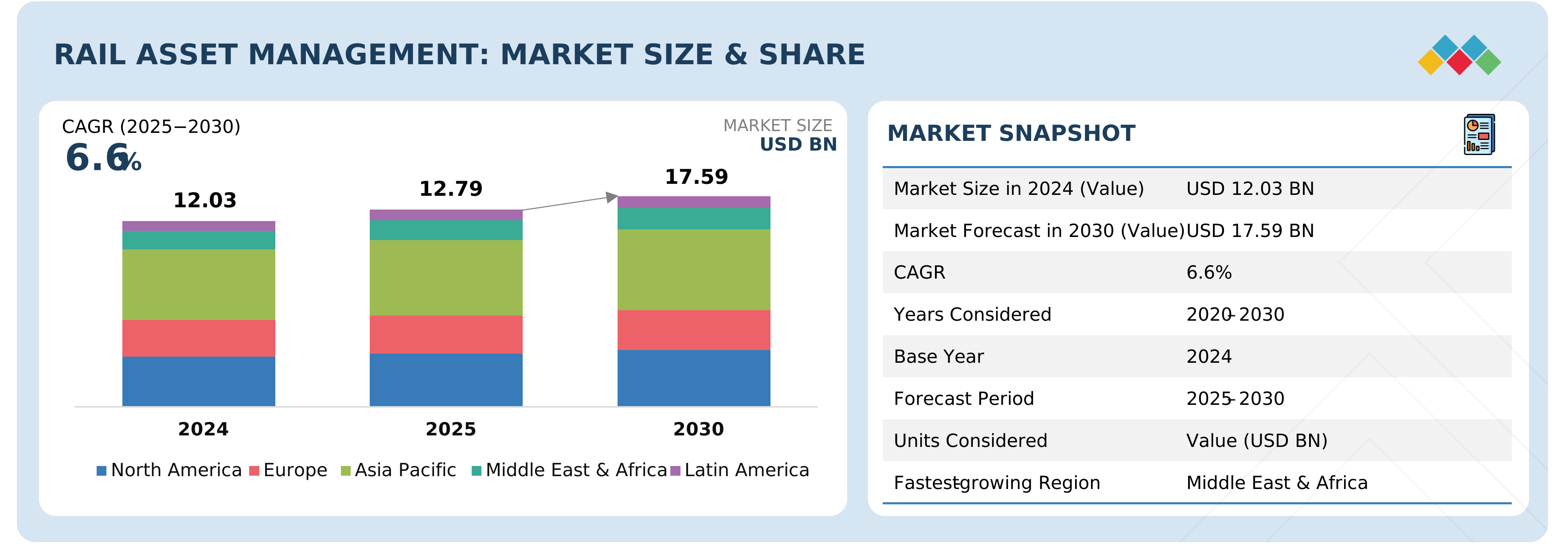
The rail asset management market is projected to expand from USD 12.79 billion in 2025 to USD 17.59 billion by 2030, at a CAGR of 6.6% during the forecast period. The rail industry plays a vital role in shaping the economic and financial position of a country. It carries billions of passengers and freights daily and generates huge revenues. The simplicity and comfort of transportation has led to a rapid rise in the reliance on railroads for both passenger and freight transit. Several countries are making significant investments in train infrastructure to give their citizens a smooth travel experience. Because of its enormous carrying capacity in a single run, railways also assist governments in reducing the cost of moving both passengers and commodities. The strain on the current rail system is rising as a result of our increased reliance on railroads. Due to system wear and tear, malfunctions, damages, and repair requirements, this results in a number of unplanned and unscheduled maintenance tasks for both rolling stock and infrastructure.
Market Size and Forecast:
- Market Size in 2024: USD 12.03 Billion
- 2025 Market Size: USD 12.79 Billion
- 2030 Forecasted Market Size: USD 17.59 Billion
- Growth Rate (2025-2030): CAGR of 6.6%
- Forecast period: 2025–2030
- Asia Pacific accounted for 38.1% of rail asset management market revenue share.
Key Market Trends and Insights
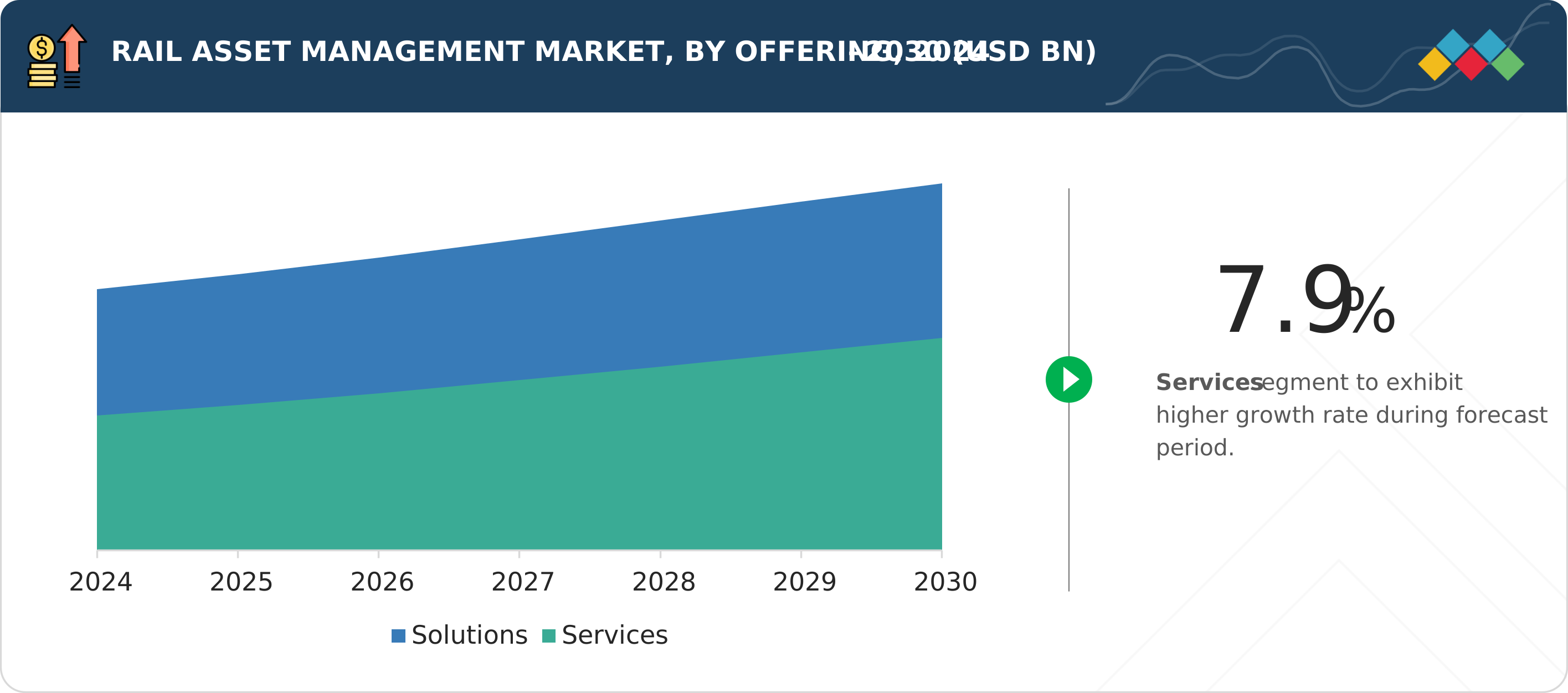
- Segment Acceleration: The Services segment is expected to register the highest CAGR of 7.9% during the forecast period.
-
Growth Opportunities: AI, IoT, and 5G adoption enable predictive maintenance, asset optimization, and network management.
- Growth Drivers: High demographic growth and hyper-urbanization drive transport network expansion and rail asset investments.
- Market Share Analysis: Solutions segment holds the largest share, driven by demand for centralized asset monitoring.
KEY TAKEAWAYS
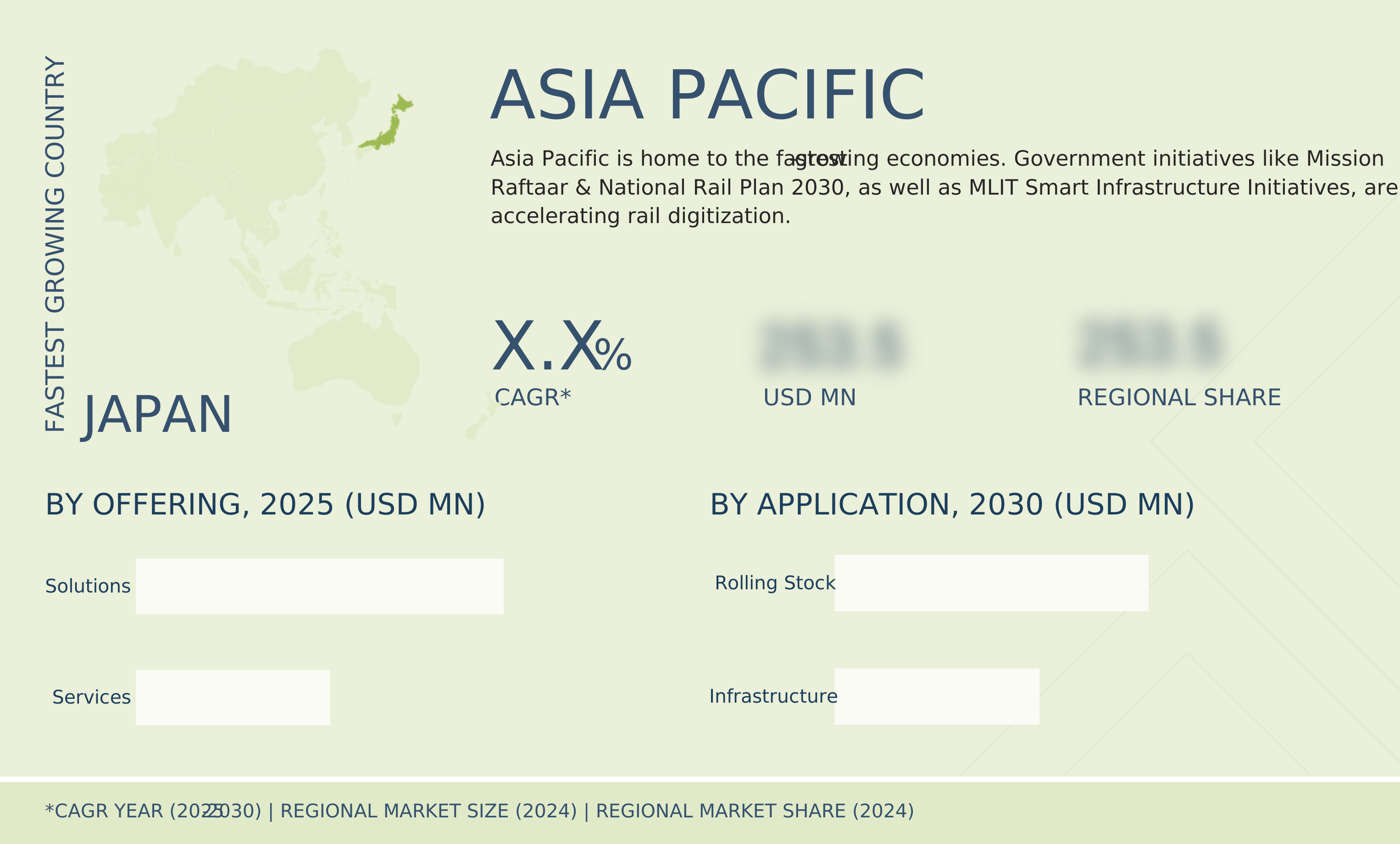
- The Asia Pacific rail asset management market accounted for a 38.1% revenue share in 2025.
- By offering, the services segment is expected to register the highest CAGR of 7.9%.
- By application, the infrastructure segment is projected to grow at the fastest rate from 2025 to 2030.
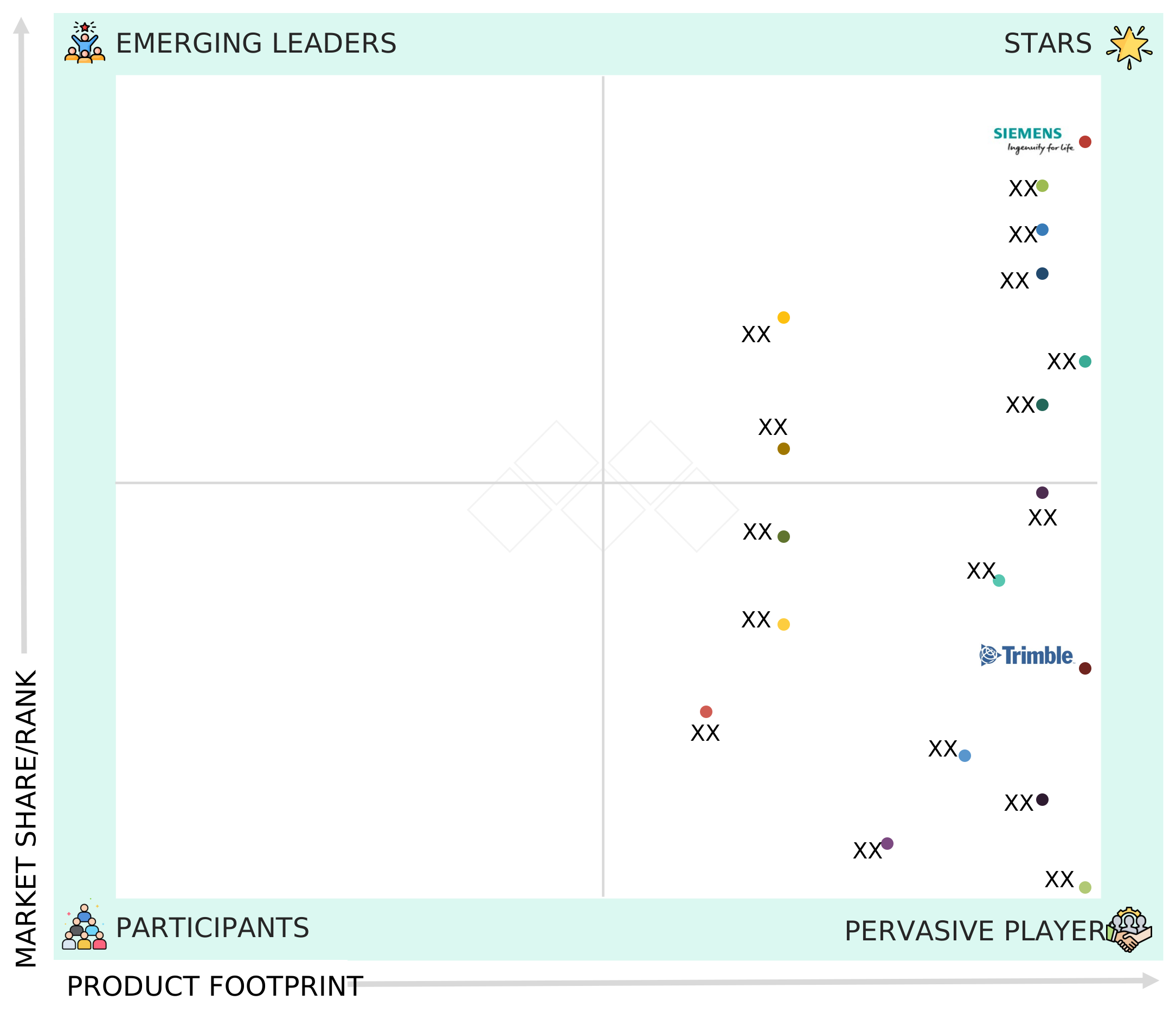
- Company Siemens, Hitachi, and Alstom were identified as some of the star players in the rail asset management market (global), given their strong market share and product footprint.
- Companies Simplyway, Uptake, and ZEDAS among others, have distinguished themselves among startups and SMEs by securing strong footholds in specialized niche areas, underscoring their potential as emerging market leaders
The key driving factor in rail asset management market is high demographic growth and hyper-urbanization leading to an expansion in transport networks. Hyper-urbanization is another word for building smart cities with rapid infrastructural development and advanced capital investments. The global urban population is rising considerably, which would eventually increase urban congestion and create the need for expansion and development of transport networks and comprehensive management. The exponentially growing urban population has intensified the need to develop infrastructures and deploy solutions for effective rail asset management in urban areas.
TRENDS & DISRUPTIONS IMPACTING CUSTOMERS' CUSTOMERS
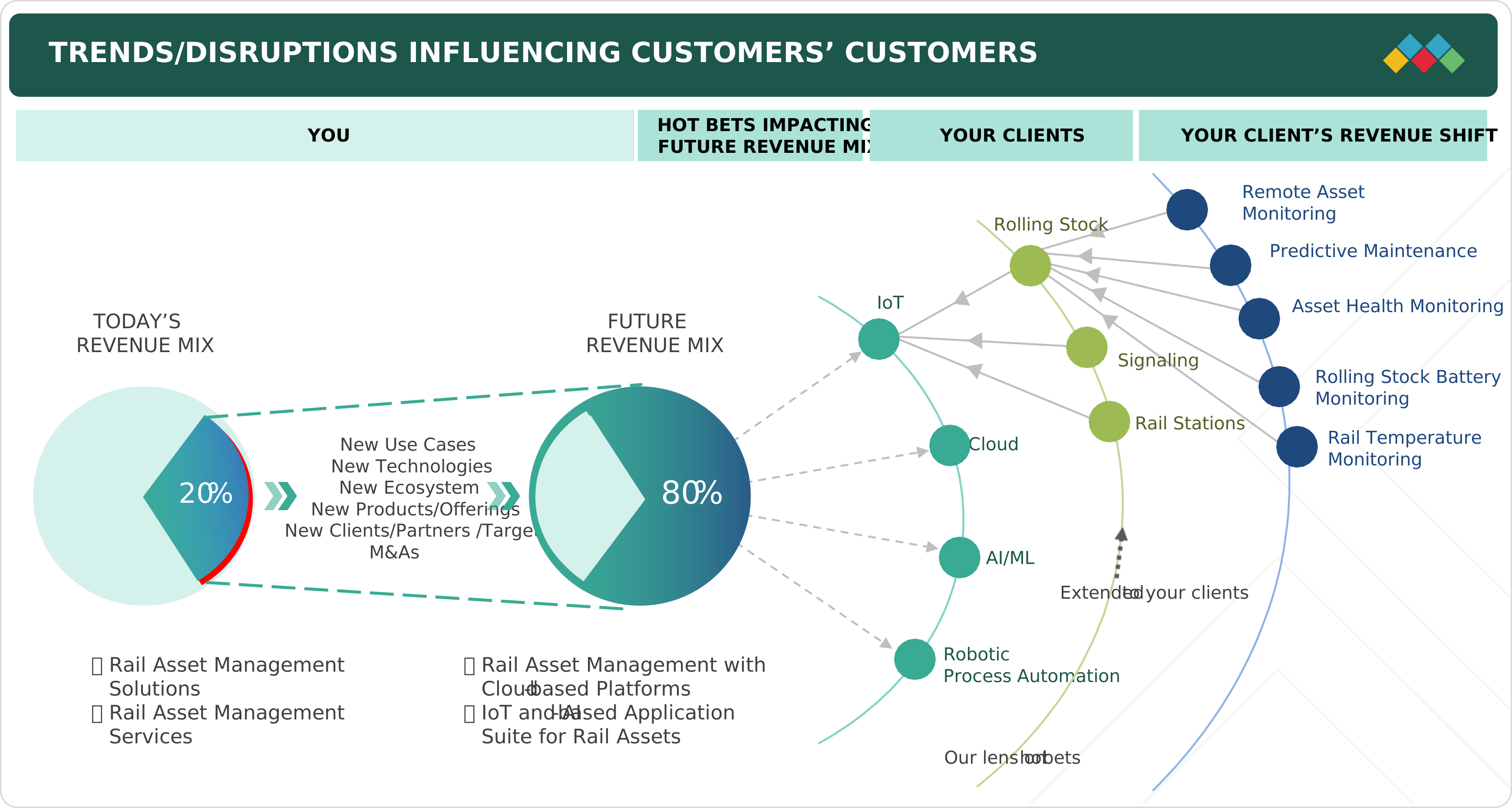
The impact on consumers’ business emerges from customer trends or disruptions. Hot bets are the clients of rail asset management solution providers, and target applications are the clients of rail asset management solution providers. Shifts, which are changing trends or disruptions, will impact the revenues of end users. The revenue impact on end users will affect the revenue of hotbets, which will further affect the revenues of rail asset management solution providers.
Source: Secondary Research, Interviews with Experts, MarketsandMarkets Analysis
MARKET DYNAMICS

Level
-
Rising need for efficient rail operations

-
Increase in government initiatives and public-private partnership model


Level
-
High initial cost of deployment

-
Lack of standardization and interoperability


Level
-
Increased demand for cloud-based solutions

-
Emerging trend of smart cities


Level
-
Integration complexities with legacy infrastructure

-
Data security and privacy issues related to IoT devices

Source: Secondary Research, Interviews with Experts, MarketsandMarkets Analysis
Driver: Rising need for efficient rail operations
Effective rail asset scheduling, monitoring, and maintenance are necessary for an efficient rail operation. Scheduled maintenance causes downtime, which lowers asset productivity. Due to the low success rate of manual diagnostics, this downtime is further prolonged. Rail authorities are investing a lot of effort into condition-based and predictive maintenance solutions in order to increase productivity and cut down on time. These solutions reduce downtime by assisting with effective asset scheduling and timely monitoring. Reliance on manual diagnostics is reduced by condition-based and predictive maintenance performed on real-time information. The widespread use of GPS sensors and detectors, as well as Radio Frequency Identification (RFID), in rail assets and infrastructures has also been made possible by IoT technology. Consequently, this makes it possible to gather, transmit, and analyze a variety of variables, including temperature, heat, pressure, condition, and position.
Restraint: High initial cost of deployment
Project financing for significant initial capital expenditures is one of the main obstacles to the expansion of the rail asset management business. It is now the primary duty of the national and local governments to make significant investments in the process of rail infrastructure reform. It is easy to understand that even while governments possess the need, vision, and clarity for such transformations, the lack of budgetary allocations for any large-scale implementations hinders the pace of the transformation process, either directly or indirectly. Future general budgets may suffer as a result of such significant investments, which may also increase the financial strain on already indebted governments or local municipal authorities. Before evaluating new technological deployments, like IoT, government regulatory bodies must monetise these systems and guarantee a substantial role. Though smarter infrastructure helps reduce the operating costs and increase efficiency, the initial costs required pose a major barrier.
Opportunity: Increased demand for cloud-based solutions
Cloud-based services, analytics, and internet technologies are becoming more and more popular because of their dependable security environment and effective IT administration. Unquestionably, rail transportation has the greatest chance to accept the evolving structure of data and make the most of it thanks to the big data cloud paradigm. All rail management firms could experience a significant change as a result, giving them the ability to improve operations and infrastructure. Because of the expanding amount of data, new technologies, and the increasing requirement to maximize cost-efficiency, it is anticipated that the complexity of big data applications would rise in tandem with their rapid expansion. The expansion of new analytics platforms and data storage is anticipated to be impacted by these variables.
Challenge: Integration complexities with legacy infrastructure
Railway technology systems combine several technological components, including networks, software, and hardware, which can occasionally be difficult to configure. It could get complicated to integrate various hardware components and rail asset management software over the legacy system infrastructure. Implementing the digital infrastructure is challenging without a robust prior IT environment and qualified staff. Railway operators have the ability to completely revamp the IT system, but the expenses involved would take a long time to pay off. Due to protocol problems, legacy systems frequently cannot be integrated with smart devices of the new generation. These systems lack the necessary capabilities to effectively communicate with more sophisticated technical systems. These integration challenges are anticipated to impede market expansion in emerging regions in the upcoming years, given that the majority of these nations continue to rely on their legacy infrastructure
Rail asset management market: COMMERCIAL USE CASES ACROSS INDUSTRIES
| COMPANY | USE CASE DESCRIPTION | BENEFITS |
|---|---|---|
 |
Deployment of predictive maintenance platforms using IoT sensors and digital twins to monitor rolling stock health in real-time. | Minimizes downtime, reduces maintenance costs, extends asset lifecycle, and improves safety. |
 |
Implementation of integrated rail asset management systems combining data from rolling stock, signaling, and infrastructure for unified monitoring. | Enhances operational efficiency, provides better decision-making, and reduces operational risks. |
 |
Use of condition-based monitoring solutions for signaling systems and rolling stock to detect anomalies before failure occurs. | Increases reliability of services, improves punctuality, and reduces unexpected failures. |
 |
Leveraging AI-driven analytics and cloud-based asset management platforms (Maximo) for rail infrastructure and rolling stock. | Optimizes maintenance schedules, enables proactive asset management, and lowers operational expenses. |
 |
Deployment of railway performance management systems including fuel efficiency monitoring, asset tracking, and predictive analytics. | Improves energy efficiency, enhances fleet utilization, and supports sustainable rail operations. |
Logos and trademarks shown above are the property of their respective owners. Their use here is for informational and illustrative purposes only.
MARKET ECOSYSTEM
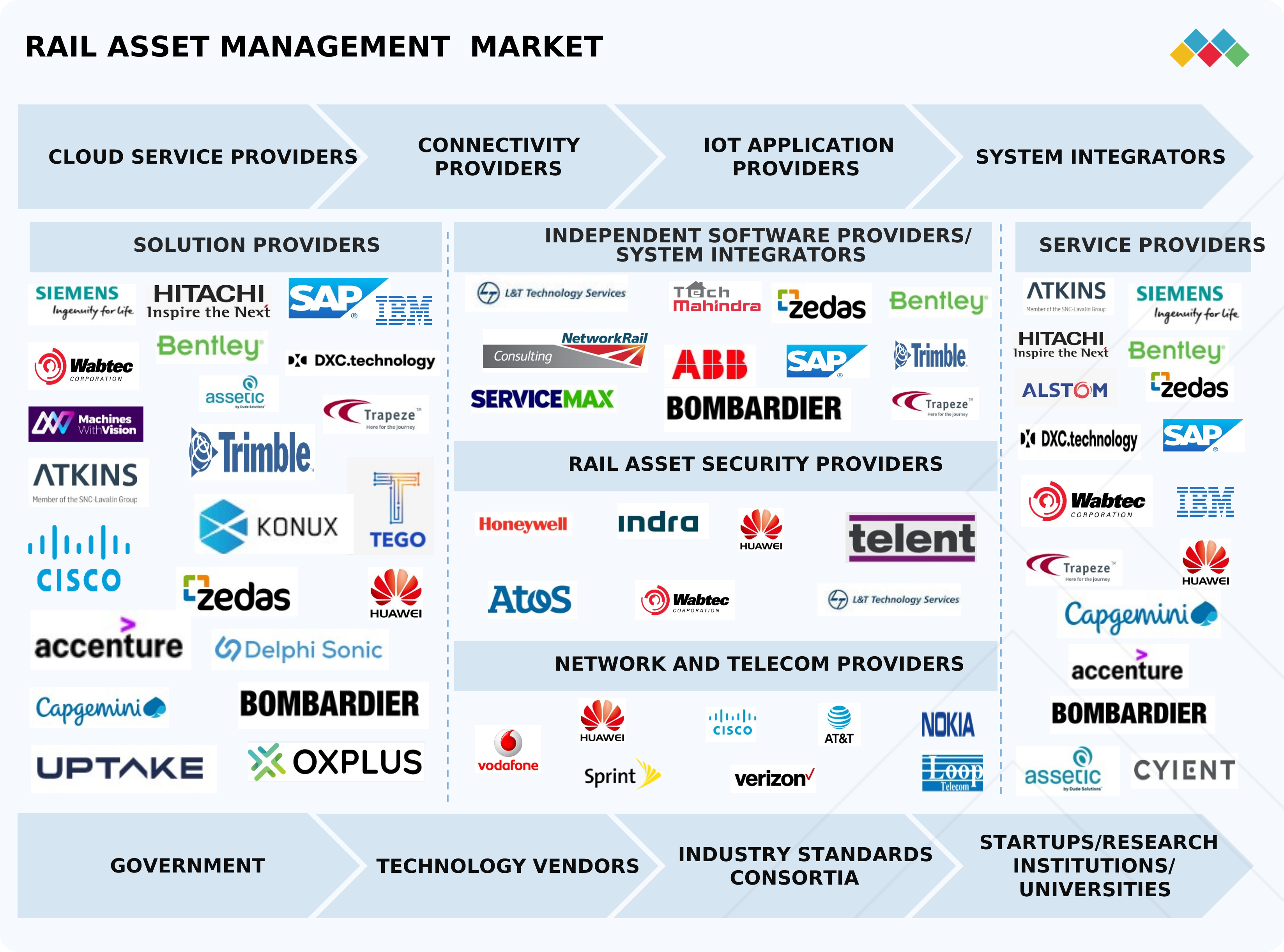
The rail asset management market is highly competitive and comprises many vendors who offer solutions to a specific or niche market segment. Several changes have occurred in the market in recent years. The vendors are involved in various partnerships and collaborations to develop comprehensive solutions that address a wide range of requirements.
Logos and trademarks shown above are the property of their respective owners. Their use here is for informational and illustrative purposes only.
MARKET SEGMENTS
Source: Secondary Research, Interviews with Experts, MarketsandMarkets Analysis
Rail Asset Management Market, By Offering
The solutions segment is projected to hold the largest market size during the forecast period. The overall rail industry is heavily asset-intensive. This factor leads to the demand for effective rail asset management solutions for these assets. A significant amount is invested annually in the procurement and management of a range of physical rail assets, including rolling stock, track, signals, switches, platforms, and overhead wiring. Rail assets need to be understood as long-term investments and have to be managed accordingly to ensure optimum performance and low lifecycle costs. Increasing passenger and freight demand across the rail Industry has led to an increasing strain on aging asset infrastructure and new investment requirements. This further encourages rail asset management vendors to focus on delivering improved service levels, often with reduced funding. The solutions segment in the rail asset management market is segmented into asset performance management, analytics, asset planning and scheduling, security, workforce management, network management, and others (incident management, warranty management, and material management).
REGION
Asia Pacific to account for largest market share during forecast period
Asia Pacific is predicted to have the largest market share in rail asset management. Most of the potential economies in the region include Australia, Singapore, China, Korea, Hong Kong, and India, which are said to be rapidly investing in technological transformation. With untapped potential markets, the high penetration of advanced technologies, the growing freight usage in various industries, economic developments, and government regulations are expected to drive the rail asset management market growth at the highest rate in Asia Pacific during the forecast period. The United Nations Economic and Social Commission for Asia and the Pacific (UNESCAP) promotes development and digitization of the Trans-Asian Railway (TAR) network, a that is a backbone for regional connectivity. The TAR network covers about 128,000 km across 28 countries and acts as critical infrastructure facilitating intra- and inter-regional trade and transport. The high population growth rate in the region has intensified the need for the transformation and expansion of the existing rail infrastructure. With untapped potential markets, high penetration of advanced technologies, growth in freight usage in various industries, and economic developments and government regulations, the rail asset management market is expected to grow at the highest rate in Asia Pacific during the forecast period.
Rail asset management market: COMPANY EVALUATION MATRIX
In the rail asset management market matrix, Siemens AG (Star) leads with an extensive product portfolio and strong market presence, driving large-scale adoption in rolling stock and infrastructure management worldwide. Siemens’ advanced digital twin and predictive maintenance solutions position it as a front-runner in transforming rail operations. Trimble Inc. (Pervasive Player) continues to hold significant ground with specialized rail asset management and monitoring solutions, particularly in infrastructure lifecycle and field data integration. While Siemens dominates with scale and innovation leadership, Trimble maintains widespread adoption with its focused, reliable solutions across global railway operators.
Source: Secondary Research, Interviews with Experts, MarketsandMarkets Analysis
KEY MARKET PLAYERS
MARKET SCOPE
| REPORT METRIC | DETAILS |
|---|---|
| Market Size in 2024 (Value) | USD 12.03 Billion |
| Market Forecast in 2030 (Value) | USD 17.59 Billion |
| Growth Rate | CAGR of 6.6% from 2025-2030 |
| Actual Data | 2020–2030 |
| Base Year | 2024 |
| Forecast Period | 2025–2030 |
| Units Considered | Value (USD Million/Billion) |
| Report Coverage | Revenue forecast, company ranking, competitive landscape, growth factors, and trends |
| Segments Covered |
|
| Regional Scope | North America, Europe, Asia Pacific, Middle East & Africa, and Latin America |
WHAT IS IN IT FOR YOU: Rail asset management market REPORT CONTENT GUIDE
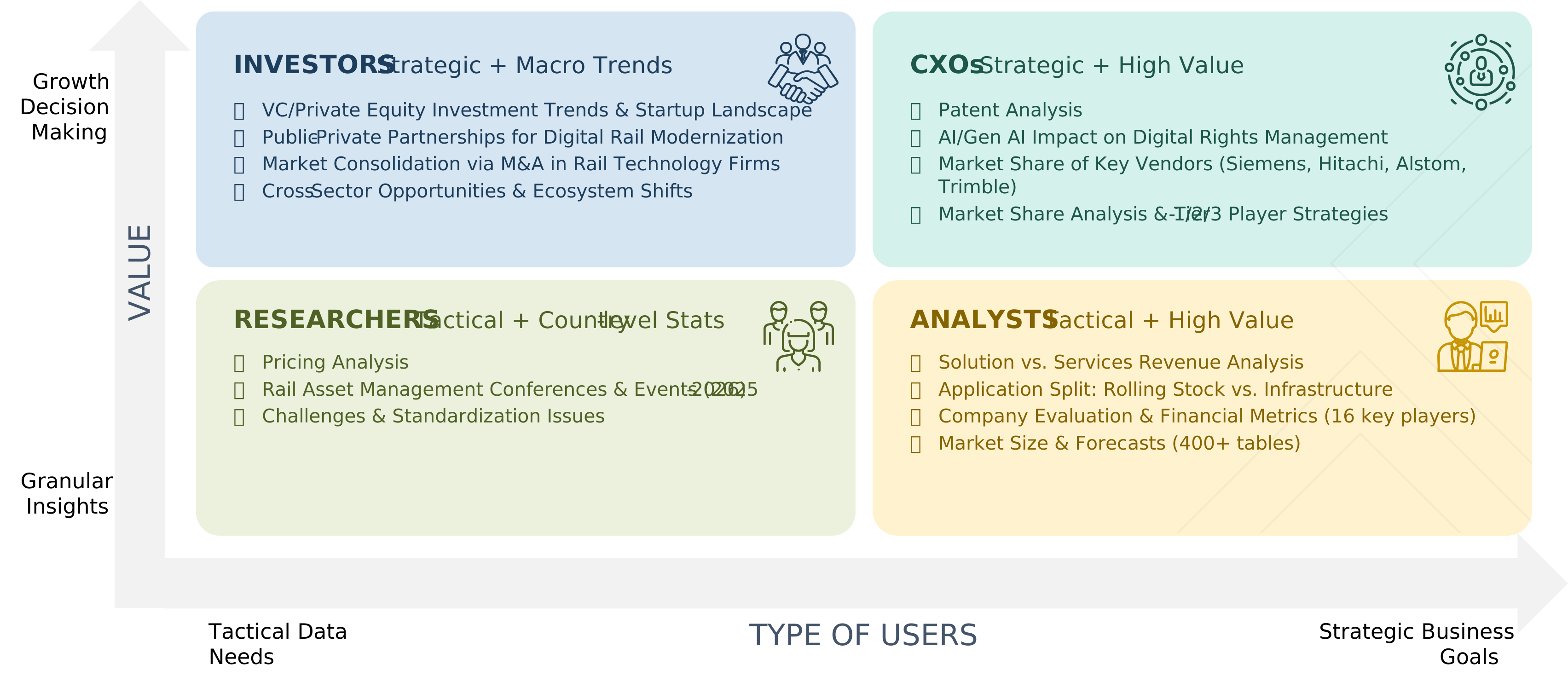
DELIVERED CUSTOMIZATIONS
We have successfully delivered the following deep-dive customizations:
| CLIENT REQUEST | CUSTOMIZATION DELIVERED | VALUE ADDS |
|---|
RECENT DEVELOPMENTS
- May 2025 : Alstom signed a five-year service level contract with Storstockholms Lokaltrafik (SL) to support and advance the digital systems in the Movia C20 and C30 fleets in the Stockholm metro network. The contract includes 24/7 technical support, ongoing software maintenance updates, and cybersecurity enhancements, in addition to providing predictable maintenance via Alstom's Health Hub for reliability and efficiency in operations. The contract also reinforces Alstom's continued commitment to providing reliable digital solutions and its power incumbency position in the Swedish rail market.
- March 2025 : ABB entered into a partnership with Stadler to provide traction converters and Pro Series Traction Batteries for new trainsets in the US, including full battery-powered train sets for Metra in Illinois, and hydrogen-powered trainsets for Caltrans in California, with the intention to promote sustainable railways.
- March 2025 : Wabtec acquired Dellner Couplers, an established global leader in train connection systems for passenger rail. This acquisition aims to improve Wabtec's Transit business and serves as a complementary offering in the company's portfolio, expands recurring revenues, and would benefit from Dellner's global installed base of couplers and gangways. The acquisition is expected to boost Wabtec's financial performance and innovation in passenger rail.
- January 2025 : Hitachi Rail agreed to acquire Omnicom from Balfour Beatty to enhance its new HMAX digital asset management platform. Omnicom’s AI-powered rail monitoring technology will support real-time infrastructure insights, boosting predictive maintenance and operational efficiency across global rail networks
Table of Contents
 Exclusive indicates content/data unique to MarketsandMarkets and not available with any competitors.
Methodology
The study involved four major activities in estimating the current size of the rail asset management market. Exhaustive secondary research was done to collect information on the logistics industry. The next step was to validate these findings, assumptions, and sizing with industry experts across the value chain using primary research. Both top-down and bottom-up approaches were employed to estimate the total market size. After that, the market breakup and data triangulation procedures were used to estimate the market size of the segments and sub-segments of the rail asset management market.
Secondary Research
In the secondary research process, various sources were referred to for identifying and collecting information for the study. The secondary sources included annual reports, press releases, and investor presentations of companies; white papers, journals, and certified publications; and articles from recognized authors, directories, and databases. The data was also collected from secondary sources, such as the OECD and the International Railway Journal, and information from the Railway Gazette International and the US DoT. Additionally, railway spending of various countries was extracted from their respective transportation associations, such as Société Nationale Des Chemins De Fer Français (SNCF), Taiwan Railways Administration (TRA), Passenger Rail Agency of South Africa (PRASA), European Rail Freight Association, and European Union (EU) Agency for Railways.
Primary Research
In the primary research process, various primary sources from both supply and demand sides were interviewed to obtain qualitative and quantitative information about the market. The primary sources from the supply side included various industry experts, such as Chief Experience Officers (CXOs), Vice Presidents (VPs), directors from business development, marketing, product development/innovation teams, related key executives from rail asset management solution vendors, system integrators, professional and Managed Service Providers (MSPs), industry associations, independent asset management and railway consultants, and key opinion leaders.
Primary interviews were conducted to gather insights, such as market statistics, data on revenue collected from the products and services, market breakups, market size estimations, market forecasting, and data triangulation. Furthermore, primary research helped in understanding the various trends related to technology, application, deployment mode, and region. Stakeholders from the demand side such as Chief Information Officers (CIOs), Chief Technology Officers (CTOs), Chief Strategy Officers (CSOs), and installation teams of governments/end users using rail asset management solutions were interviewed to understand the buyer’s perspective on suppliers, products, and service providers and their current usage of rail asset management solutions, which will affect the overall rail asset management market.
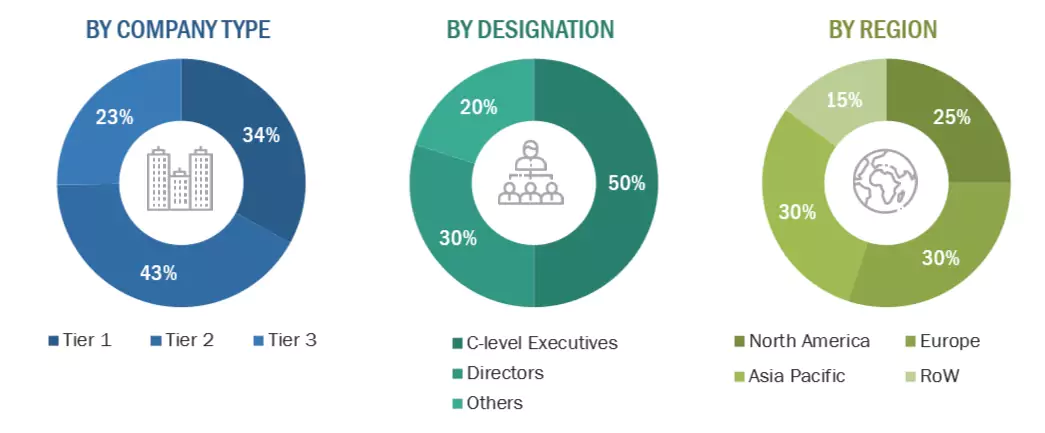
Note: Tier 1 companies have revenues over USD 1 billion; tier 2 companies have revenues ranging
from USD 500 million to USD 1 billion, and tier 3 companies have revenues ranging from USD 100 million to
USD 500 million
*Others include sales managers, marketing managers, and product managers.
**Rest of the World (RoW) includes MEA and Latin America.
Source: Industry Experts
To know about the assumptions considered for the study, download the pdf brochure
Market Size Estimation
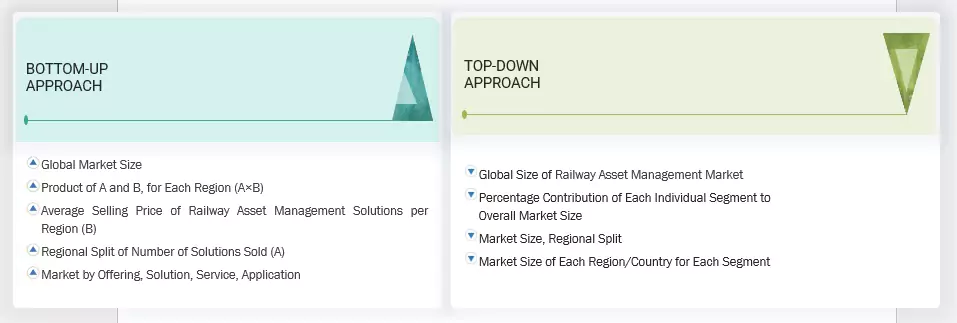
The top-down and bottom-up approaches were used to estimate and validate the size of the global rail asset management market and various other dependent submarkets in the overall market. An exhaustive list of all the vendors offering solutions and services in the rail asset management market was prepared while using the top-down approach. The market share for all the vendors in the market was estimated through annual reports, press releases, funding, investor presentations, paid databases, and primary interviews. Each vendor was evaluated based on its offering (solutions and services). The aggregate of all companies’ revenues was extrapolated to reach the overall market size.
Further, each subsegment was studied and analyzed for its global market size and regional penetration. The markets were triangulated through both primary and secondary research. The primary procedure included extensive interviews with industry leaders, such as Chief Executive Officers (CEOs), Vice Presidents (VPs), directors, and managers, for key insights.
Rail Asset Management Market : Top-Down and Bottom-Up Approach
Data Triangulation
After arriving at the overall market size using the market size estimation processes as explained above, the market was split into several segments and subsegments. The data triangulation and market breakup procedures were employed, wherever applicable, to complete the overall market engineering process and arrive at the exact statistics of each market segment and subsegment. The data was triangulated by studying various factors and trends from both the demand and supply sides.
Market Definition
The rail asset management system is a safe, reliable, substantial, and efficient approach to managing the entire rail infrastructure. It includes all the systems, procedures, methods, and tools that are used to optimize the performance, costs, and risks for the entire rail infrastructure lifecycle. The system helps reduce operational costs for rail infrastructure assets, such as signals, electrification systems, rail tracks, and rolling stocks. It further helps in ensuring top-notch performance, which elevates the reliability of the rail services. Rail asset management includes Asset Performance Management (APM), analytics, asset planning and scheduling, security, workforce management, and network management.
Stakeholders
- Rail Asset Management Vendors
- Network and System Integrators (SIs)
- Cloud Service Providers
- Rail Asset Management Infrastructure Providers
- Rail Asset Management Support Service Providers
- National Railway Governing Authorities/Regulators/Bodies
- Railway Operators and Agencies
- Value-added Resellers (VARs) and Distributors
Report Objectives
- To describe and forecast the size of the rail asset management market by offering, application, and region
- To describe and forecast the size of the market segments with respect to five main regions: North America, Europe, Asia Pacific (APAC), Latin America, and the Middle East & Africa (MEA)
- To provide detailed information regarding drivers, restraints, opportunities, and challenges influencing the growth of the rail asset management market
- To analyze micromarkets with respect to the individual growth trends, prospects, and contributions to the overall rail asset management market
- To analyze opportunities in the market for stakeholders by identifying the high-growth segments
- To profile key market players, including top vendors and startups, provide comparative analysis based on business overviews, regional presence, product offerings, business strategies, and key financials, and provide a detailed competitive landscape of the market
- To analyze competitive developments, such as mergers and acquisitions (M&A); new product launches and product enhancements; agreements, partnerships, and collaborations; expansions; and research and development (R&D) activities in the market
Available Customizations
With the given market data, MarketsandMarkets offers customizations as per the company’s specific needs. The following customization options are available for the report:
Country-wise information
- Analysis for additional countries (up to five)
Company Information
- Detailed analysis and profiling of additional market players (up to 5)
Key Questions Addressed by the Report
What is the projected market value of the global rail asset management market?
The global rail asset management market size is expected to grow from USD 12.79 billion in 2025 to USD 17.59 billion by 2030, at a CAGR of 6.6% during the forecast period.
What is the definition of the rail asset management market?
A rail asset management system is a safe, reliable, substantial, and efficient approach to managing the entire rail infrastructure. It includes all the systems, procedures, methods, and tools that are used to optimize the performance, costs, and risks for the entire rail infrastructure lifecycle. The system helps reduce operational costs for rail infrastructure assets, such as signals, electrification systems, rail tracks, and rolling stocks. It further helps in ensuring top-notch performance, which elevates the reliability of the rail services. Rail asset management includes Asset Performance Management (APM), analytics, asset planning and scheduling, security, workforce management, and network management.
What are the major drivers of the rail asset management market?
Adoption of IoT and other automation technologies to enhance optimization, high demographic growth, and hyper-urbanization, leading to an expansion in transport networks, are the key driving factors in the rail asset management market.
What are the key technological trends prevailing in the rail asset management market?
The rail asset management market is witnessing the adoption of key technologies such as AI for automation and optimization, IoT for real-time data, and 5G for enhanced connectivity. These technologies aim to improve asset planning and scheduling, predictive maintenance, and network management.
Who are the major vendors in the rail asset management market?
Major vendors in the rail asset management market are Siemens (Germany), Alstom (France), Hitachi (Japan), Wabtec (US), IBM (US), SAP (Germany), Capgemini (France), Cisco (US), Huawei (China), Accenture (Ireland), Trimble (US), Bentley Systems (US), Atkins (UK), DXC Technology (US), Trapeze Group (Canada), L&T Technology Services (India), and Cyient (India).


Personalize This Research
- Triangulate with your Own Data
- Get Data as per your Format and Definition
- Gain a Deeper Dive on a Specific Application, Geography, Customer or Competitor
- Any level of Personalization
Let Us Help You
- What are the Known and Unknown Adjacencies Impacting the Rail Asset Management Market
- What will your New Revenue Sources be?
- Who will be your Top Customer; what will make them switch?
- Defend your Market Share or Win Competitors
- Get a Scorecard for Target Partners

Custom Market Research Services
We Will Customise The Research For You, In Case The Report Listed Above Does Not Meet With Your Requirements
Get 10% Free CustomisationTESTIMONIALS
- Canada Rail Asset Management Market
- US Rail Asset Management Market
- UK Rail Asset Management Market
- China Rail Asset Management Market
- Nigeria Rail Asset Management Market
- Brazil Rail Asset Management Market
- France Rail Asset Management Market
- Germany Rail Asset Management Market
- Rest Of Europe Rail Asset Management Market
- India Rail Asset Management Market
- Japan Rail Asset Management Market
- Rest Of Asia Pacific Rail Asset Management Market
- Mexico Rail Asset Management Market
- Rest Of Latin America* Rail Asset Management Market
- South Africa Rail Asset Management Market






Growth opportunities and latent adjacency in Rail Asset Management Market