Asset Performance Management Market

Asset Performance Management Market by Solution (Predictive Maintenance & Analytics, Asset Reliability & Condition Monitoring, Sustainability & Emission), Asset Type (Infrastructure, Fixed, IT/OT, Rotary Assets, Mobile Assets) - Global Forecast to 2032




OVERVIEW
Source: Secondary Research, Interviews with Experts, MarketsandMarkets Analysis
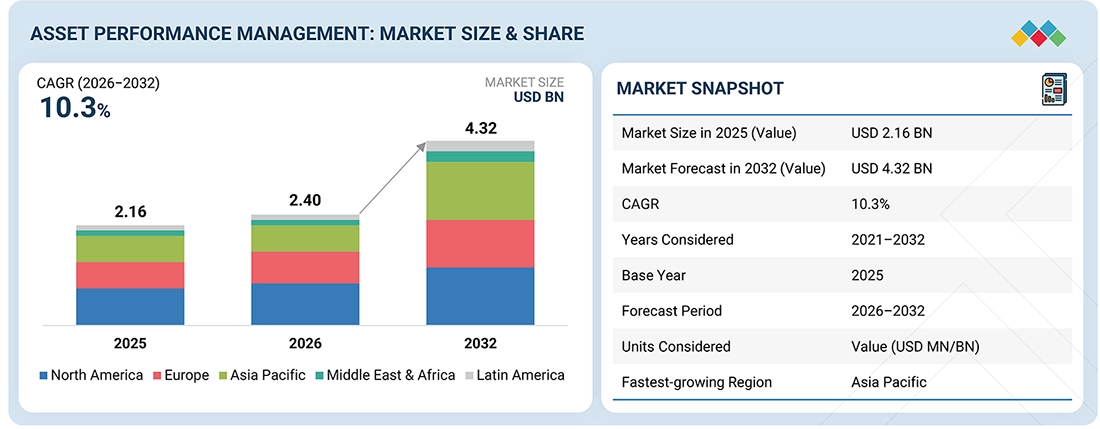
The Asset Performance Management (APM) market is expected to grow from USD 2.40 billion in 2026 to USD 4.32 billion by 2032, registering a CAGR of 10.3%. This growth is fueled by the increasing need to optimize asset utilization, reduce unplanned downtime, and enhance operational efficiency. The adoption of predictive analytics, IoT-enabled monitoring, and AI-driven diagnostics is accelerating, enabling enterprises to make data-informed decisions, extend asset life cycles, and improve return on investment (ROI). As industries digitize their operations, APM is becoming a strategic lever for resilience, sustainability, and cost optimization.
Market Size and Forecast:
- 2025 Market Size: USD 2.16 Billion
- 2026 Projected Market Size: USD 2.40 Billion
- 2032 Forecasted Market Size: USD 4.32 Billion
- Growth Rate (2026-2032): CAGR of 10.3%
- Data available from 2021 to 2032
- Forecast period: 2026-2032
Key Market Trends and Insights
- key opportunities: expansion of renewable energy and storage assets creates significant growth
-
Driving Industries Growth: capital-intensive verticals primarily manufacturing, energy and utilities, and oil and gas drive the growth
- Latest Trends: The market trends lean toward AI diagnostics, digital twin integration, and sustainability-linked health scoring.
- Future Outlook: market is projected to witness significant growth, driven by AI diagnostics
KEY TAKEAWAYS
-
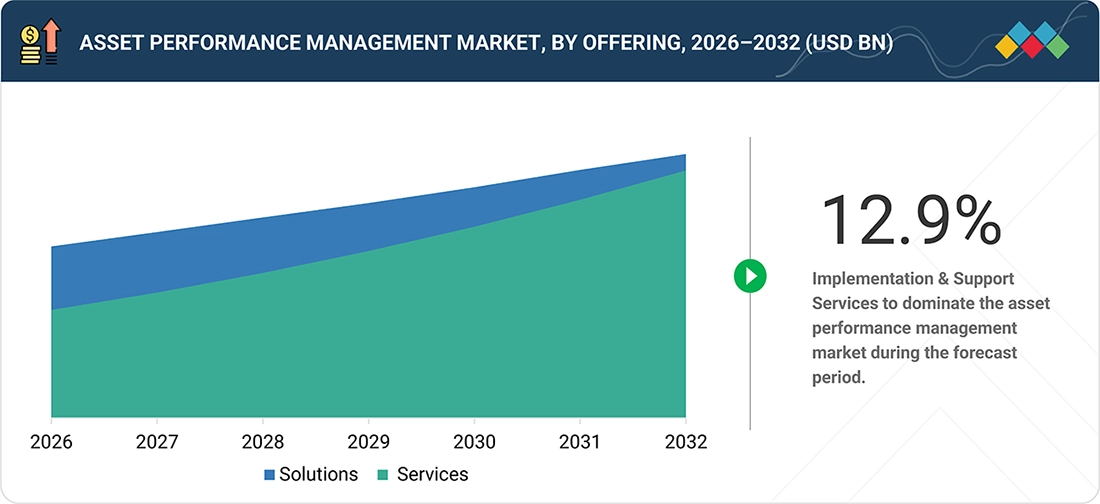
BY OFFERINGThe asset performance management (APM) market by offering is shaped by strong demand for solutions and rapid growth in implementation and support services. Enterprises increasingly deploy AI-native platforms with edge-ready capabilities and sustainability-linked KPIs, while relying on expert-led services to accelerate adoption. This reflects a shift toward integrated, value-driven APM strategies that enhance reliability, efficiency, and compliance.
-
BY ASSET TYPEFixed assets will hold the largest market share, as efficient management of plants, utilities, and warehouses directly reduces operating costs and safeguards high-value investments. According to ABB’s July 2023 survey, unplanned downtime costs businesses about USD 125,000 per hour, reinforcing the importance of APM solutions that ensure uptime, extend asset lifecycles, and optimize performance in capital-intensive environments.
-
BY APPLICATIONRemote asset monitoring and control will see the highest growth, as industries demand real-time visibility across distributed assets to improve uptime, compliance, and decision-making speed. Edge-based monitoring combined with AI-native diagnostics is enabling closed-loop control, reducing unplanned equipment failures while helping oil and gas and energy & utilities sectors strengthen safety and sustainability practices.
-
BY DEPLOYMENT TYPEOn-premises APM will hold the largest market share, as operators in regulated sectors demand deterministic performance, strict data residency, and seamless integration with control systems. These deployments provide predictable latency and offline resilience, making them critical for industries such as nuclear, oil and gas, and government & defense, where uninterrupted operations and compliance are essential.
-
BY ORGANIZATION SIZELarge enterprises will hold the largest market share, driven by their complex, multi-site operations that require scalable platforms integrated with Enterprise Resource Planning (ERP), Manufacturing Execution Systems (MES), and Supervisory Control and Data Acquisition (SCADA). Security-certified and interoperable Asset Performance Management (APM) solutions are increasingly preferred, as they deliver measurable reliability and compliance improvements while aligning with sustainability-linked Key Performance Indicators (KPIs) across global operations.
-
BY VERTICALManufacturing will hold the largest market share, as producers depend on uninterrupted throughput, robotics, and automated production lines. APM platforms support predictive maintenance, digital twins, and real-time analytics to minimize downtime, optimize energy use, and improve product quality, making them indispensable to factories advancing toward Industry 4.0 and smart manufacturing ecosystems.
-
BY REGIONAsia Pacific is expected to record the fastest growth in the Asset Performance Management (APM) market, driven by rapid industrialization in China, India, and Southeast Asia, along with large-scale renewable energy and smart manufacturing investments. Strong government support for digital infrastructure, advanced supply chain ecosystems, and growing sustainability-linked initiatives make the region highly attractive for enterprises adopting predictive, real-time, and cloud-enabled APM solutions.
-
COMPETITIVE LANDSCAPEMajor market players in the asset performance management market have adopted both organic and inorganic strategies, including partnerships, technology integrations, and investments. For instance, Aveva (UK), GE Digital (US), ABB (Switzerland), IBM (US), and SAP (Germany) have established collaborations and enhanced their APM portfolios to address growing demand for predictive maintenance, real-time monitoring, and analytics-driven decision-making across industries.
The asset performance management market is witnessing steady growth, driven by the rising adoption of predictive and prescriptive maintenance to minimize failures, the rapid shift to cloud and SaaS-based APM solutions for scalability and flexibility, and the integration of AI, IoT, and digital twin technologies to enable real-time monitoring and actionable insights. The high cost of downtime further accelerates ROI-based investments in advanced APM platforms.
TRENDS & DISRUPTIONS IMPACTING CUSTOMERS' CUSTOMERS
The impact on businesses emerges from customer trends and disruptions. Oil & gas, energy & utilities, manufacturing, and healthcare & life sciences represent key clients of APM providers, while their customers are the ultimate beneficiaries. Shifts in predictive analytics, compliance, and digitalization will influence end-user revenues, and these revenue changes will further affect the revenues of APM providers.
Source: Secondary Research, Interviews with Experts, MarketsandMarkets Analysis
MARKET DYNAMICS

Level
-
AI-driven failure prediction transforms asset performance management

-
Digital twin integration accelerates APM adoption in infrastructure industries


Level
-
Reliance on legacy systems by industrial enterprises

-
High dependence on industrial data governance


Level
-
Emergence of renewable energy and storage assets

-
Rising application of generative AI maintenance copilots


Level
-
Connecting APM insights with maintenance execution systems

-
Scaling APM from pilot projects to enterprise-wide deployment

Source: Secondary Research, Interviews with Experts, MarketsandMarkets Analysis
Driver: AI-driven failure prediction transforms asset performance management
AI-driven failure prediction is elevating asset performance management from a monitoring tool to a proactive decision-support platform. Unlike traditional systems that mainly track condition, alarms, and performance deviations, AI-enabled APM identifies degradation patterns before failures occur, allowing maintenance teams to take corrective action earlier. This improves uptime, supports more accurate maintenance planning, and reduces unplanned downtime. The growing value of this capability is reflected in vendor-backed outcomes; for example, IBM indicated that AI-driven predictive maintenance can reduce total downtime by 35–45% and lower maintenance costs by 25–30%. These benefits are directly strengthening adoption, as enterprises increasingly seek measurable returns from APM investments. The shift is also changing how organizations use APM within broader reliability strategies, helping them prioritize interventions, optimize resource allocation, and avoid costly production losses. As vendors continue integrating predictive and prescriptive AI into their platforms, AI-driven failure prediction is becoming a key growth driver for APM across asset-intensive industries seeking stronger operational continuity and improved asset life.
Restraint: Reliance on legacy systems by industrial enterprises
Reliance on legacy asset management systems continues to restrain enterprise-scale APM adoption. Many industrial organizations still operate traditional CMMS, EAM, and ERP environments designed for recordkeeping and basic maintenance workflows rather than predictive analytics. This limits integration of real-time sensor data, AI models, and condition-based insights into unified APM platforms. As a result, enterprises delay large-scale deployments until core systems are modernized, asset data is harmonized, and interoperability improves, slowing full-scale implementation and moderating overall APM market growth
Opportunity:Emergence of renewable energy and storage assets
The emergence of renewable energy and storage assets is creating a significant growth opportunity for APM vendors. These assets operate under variable conditions and require continuous monitoring, predictive analytics, and performance optimization to maintain reliability and maximize output. As renewable portfolios expand, operators need scalable APM solutions to manage geographically dispersed assets and support data-driven decision-making. This trend is increasing demand for advanced APM capabilities, enabling vendors to expand into high-growth segments and strengthen long-term market potential.
Challenge:Connecting APM insights with maintenance execution systems
The Asset Performance Management market faces a major challenge in connecting predictive insights with maintenance execution systems. In many industrial environments, APM outputs remain separated from work-order creation, inspection planning, and maintenance scheduling, which limits timely action on detected asset risks. As a result, enterprises may gain predictive visibility but still struggle to convert insights into measurable operational improvements. Addressing this challenge requires stronger workflow integration, better system alignment, and closer linkage between analytics platforms and maintenance execution processes.
ASSET PERFORMANCE MANAGEMENT MARKET: COMMERCIAL USE CASES ACROSS INDUSTRIES
| COMPANY | USE CASE DESCRIPTION | BENEFITS |
|---|---|---|
 |
Optimize nuclear power generation through predictive asset management at Bruce power | optimized nuclear power generation with improved reliability, efficiency, and safety, reduced unplanned downtime, compliance with regulations |
 |
Enhancing fleet reliability with predictive analytics at Duke Energy | Optimized asset performance through low-cost sensors, improved operations via contextualized insights and predictive analysis, achieved significant financial impact, including USD 34 million saved in a single early-catch event |
 |
Godrej & Boyce elevates asset performance and operational efficiency with HXGN EAM implementation | asset uptime increased from 60% to over 95%, labor Utilization improved by 70%, inventory costs reduced by 45%, managed approximately 95,000 work orders annually, maintained 1.5-million-part references and 125,000 documents of asset data, mobile access for field teams |
 |
SOCAR Turkey achieves world-class asset integrity and extended inspection intervals with Ge Vernova APM implementation | average inspection intervals were extended from 1 year to 5 years for 1,335 assets, average of 20 days of planned inspection downtime was avoided, integration of real-time monitoring and IOWs contributed to world-class asset integrity standards |
 |
Lucid Motors enhances manufacturing efficiency and OEE with Neomatrix ignition-based asset performance management solution | real-time Andon dashboards enabled quick reactions to equipment, automated CMMS integration enhanced accuracy, timeliness, and reduced manual data entry, improved production efficiency, quality, and overall performance |
Logos and trademarks shown above are the property of their respective owners. Their use here is for informational and illustrative purposes only.
MARKET ECOSYSTEM
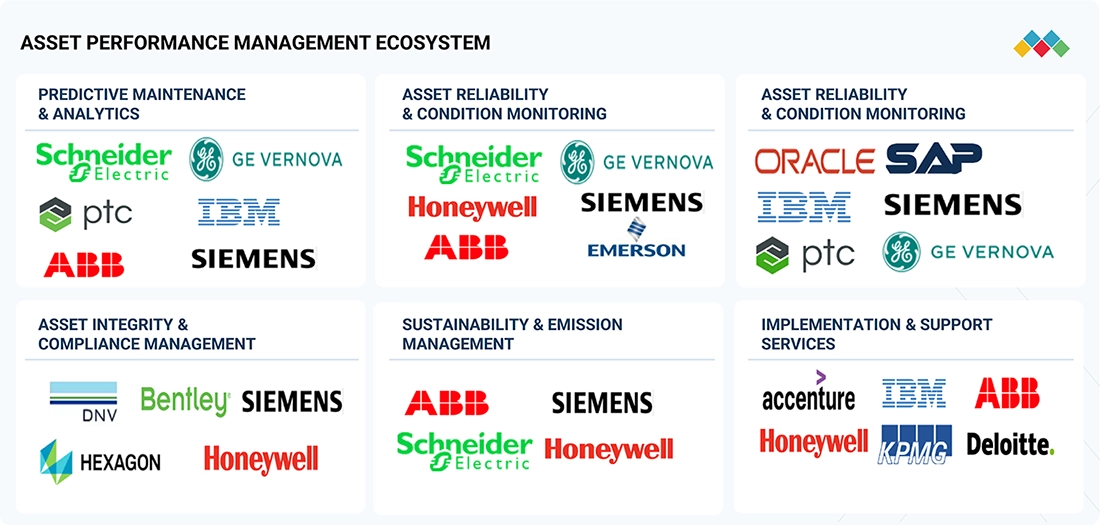
The Asset Performance Management ecosystem is a modular and collaborative framework comprising technology vendors and service integrators. It spans predictive maintenance, real-time monitoring, asset integrity, compliance, and sustainability. While vendors deliver the digital and operational backbone, service partners ensure scalable deployment, integration, and continuous improvement. Together, they drive innovation, regulatory alignment, and operational resilience across asset-intensive industries.
Logos and trademarks shown above are the property of their respective owners. Their use here is for informational and illustrative purposes only.
MARKET SEGMENTS
Source: Secondary Research, Interviews with Experts, MarketsandMarkets Analysis
Asset Performance Management Market, By Offering
The Solutions segment will hold the largest market share in the Asset Performance Management market. Organizations are heavily investing in predictive maintenance, real-time monitoring, and compliance tools to manage critical equipment and infrastructure. The growing deployment of IoT sensors, digital twins, and machine learning models directly drives adoption. These platforms deliver measurable gains in uptime, energy efficiency, safety, and regulatory reporting. Emerging AI-native APM capabilities and sustainability-linked KPIs further reinforce solution demand.
Asset Performance Management Market, By Asset Type
Fixed assets will hold the largest market share in the Asset Performance Management market. Buildings, utilities, and critical systems directly impact efficiency, compliance, and sustainability. Enterprises are adopting IoT-enabled monitoring, digital twins, and analytics to reduce outages, extend lifecycles, and optimize energy use. In December 2024, ABB extended its Global Framework Agreement with bp to deploy automation, electrical, and control systems. This collaboration highlights how APM improves facility asset performance, safety, and lifecycle management.
Asset Performance Management Market, By Application
Remote asset monitoring and control will command the largest share. Distributed industries increasingly require secure, real-time visibility and predictive insights. These capabilities reduce downtime, improve compliance, and extend asset lifecycles. In March 2024, ABB enhanced its Ability Condition Monitoring platform with remote diagnostics and control for rotating equipment. The update underscores the role of advanced monitoring in large-scale industrial operations. Vendors are now embedding AI-native diagnostics and edge deployments to make monitoring more autonomous and efficient.
Asset Performance Management Market, By Deployment Type
On-premises APM holds the largest market share. Asset-intensive industries demand deterministic performance, strict data residency, and seamless integration with control systems. Operators prioritize predictable latency, offline resilience, and compliance-first deployments. In October 2023, AVEVA launched its PI Data Infrastructure to unify plant and edge data. Vendors see strong opportunities in certified integrations, compliance frameworks, and modular service packages that reduce deployment risk. Edge-ready APM deployments with embedded AI capabilities are strengthening the value of on-premises models.
Asset Performance Management Market, By Organization Size
Large enterprises hold the largest market share as their complex, multi-site operations require scalable APM platforms that integrate seamlessly with ERP, MES, and SCADA while ensuring strict security and governance. In November 2024, GE Vernova expanded its collaboration with AWS to deliver enterprise-ready APM on the cloud, reflecting how large organizations prioritize integrated, flexible solutions that enhance reliability, compliance, and business resilience across global operations.
Asset Performance Management Market, By Vertical
Manufacturing will hold the largest market share as producers rely on Asset Performance Management (APM) to keep production lines running at peak efficiency. Factories depend on reliable machinery, and APM enables predictive maintenance that prevents costly unplanned stoppages. By integrating with Manufacturing Execution Systems (MES), Supervisory Control and Data Acquisition (SCADA), and Enterprise Resource Planning (ERP) systems, APM delivers real-time visibility, optimizes asset lifecycles, and supports sustainability targets. These capabilities directly enhance throughput, quality, and energy efficiency, making APM indispensable to modern manufacturing operations.
REGION
North America to be largest-growing region in global asset performance management market during forecast period
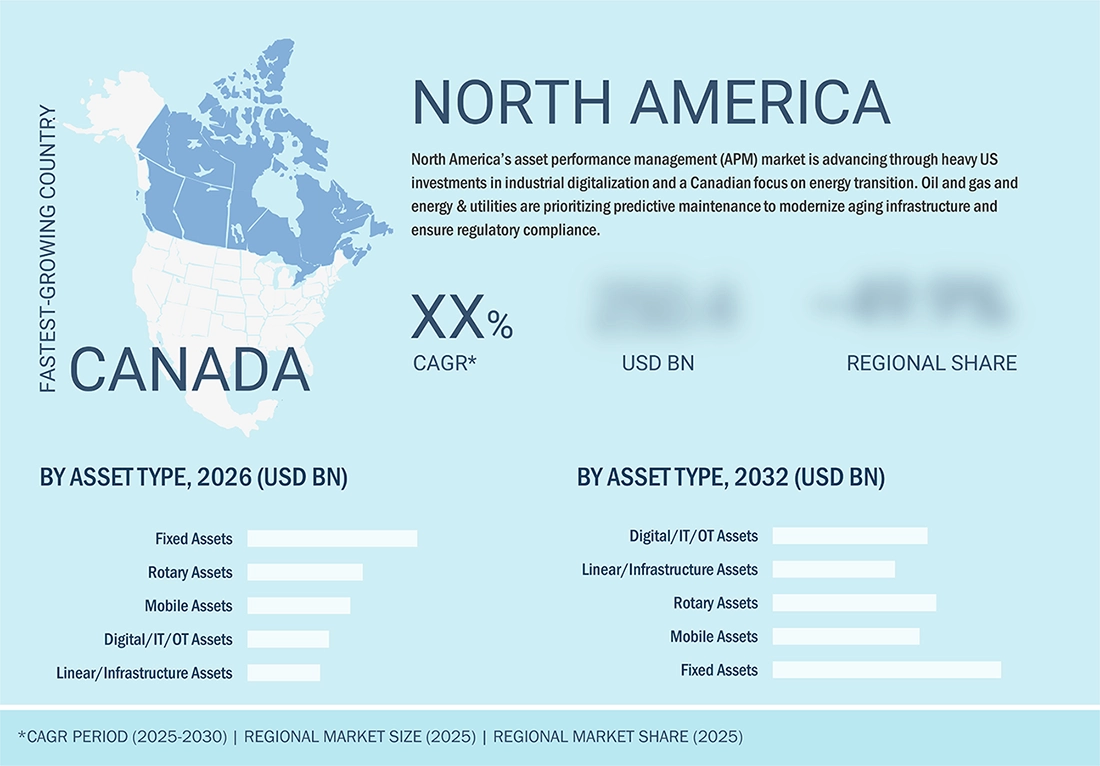
North America is projected to be the largest-growing region in the global Asset Performance Management (APM) market, driven by its advanced industrial base, widespread digital adoption, and stringent regulatory frameworks. Key sectors such as utilities, oil & gas, and manufacturing are investing heavily in predictive and prescriptive maintenance to enhance asset reliability and reduce downtime. Federal sustainability mandates and safety standards further accelerate APM adoption. With a mature technology ecosystem and strong vendor presence, North America is well-positioned to lead in APM innovation and deployment.
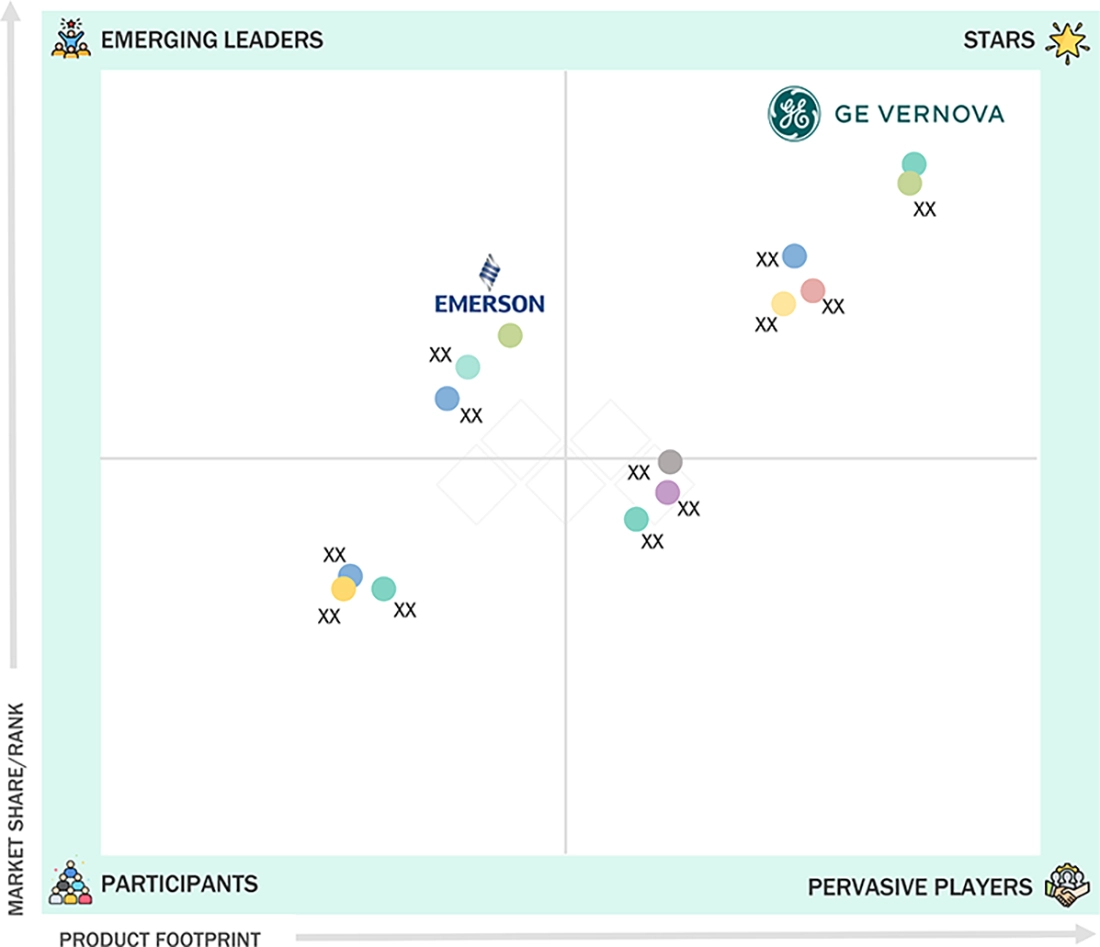
ASSET PERFORMANCE MANAGEMENT MARKET: COMPANY EVALUATION MATRIX
In the Asset Performance Management (APM) market matrix, GE Vernova (Star) leads with a strong market share and extensive solution footprint, driven by its advanced predictive analytics, digital twin technologies, and deep penetration across power generation, utilities, and industrial sectors. Emerson (Emerging Leader) is gaining visibility with its specialized risk management and asset integrity solutions, strengthening its position through domain expertise in energy and maritime industries.
Source: Secondary Research, Interviews with Experts, MarketsandMarkets Analysis
KEY MARKET PLAYERS
- GE Vernova (US)
- AVEVA (UK)
- ABB (Switzerland)
- IBM (US)
- SAP (Germany)
- Fluke (US)
- Emerson (US)
- Rockwell Automation (US)
- Honeywell (US)
- Bentley Systems (US)
- Oracle (US)
- DNV (Norway)
- Siemens Energy (Germany)
- Yokogawa (Japan)
MARKET SCOPE
| REPORT METRIC | DETAILS |
|---|---|
| Market Size in 2025 (Value) | USD 2.16 Billion |
| Market Forecast in 2032 (value) | USD 4.32 Billion |
| Growth Rate | CAGR of 10.3% from 2026-2032 |
| Years Considered | 2021-2032 |
| Base Year | 2025 |
| Forecast Period | 2026-2032 |
| Units Considered | Value (USD Million/Billion) |
| Report Coverage | Revenue forecast, company ranking, competitive landscape, growth factors, and trends. |
| Segments Covered |
|
| Regions Covered | North America, Europe, Asia Pacific, Middle East & Africa, and Latin America |
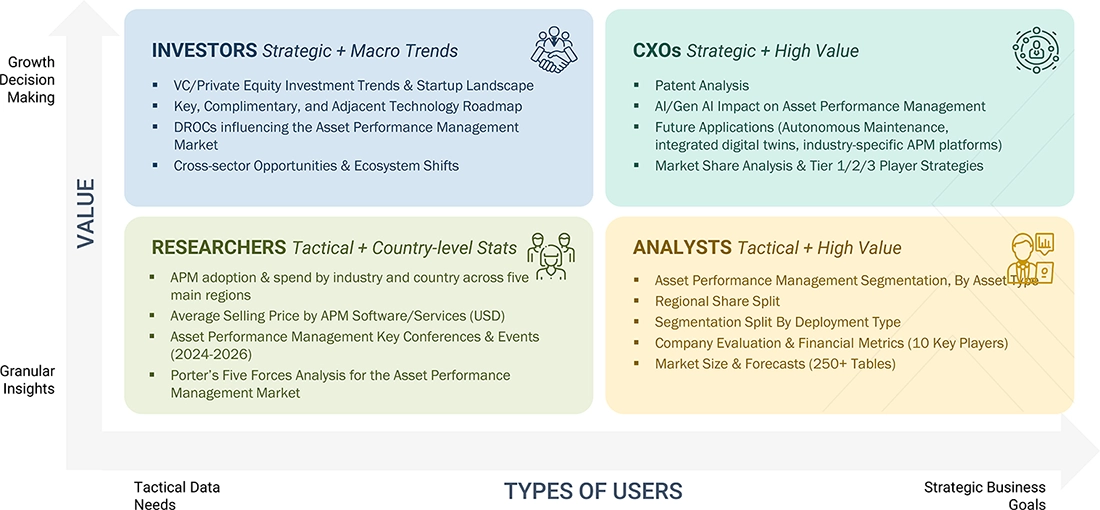
WHAT IS IN IT FOR YOU: ASSET PERFORMANCE MANAGEMENT MARKET REPORT CONTENT GUIDE
RECENT DEVELOPMENTS
- July 2025 : Norwegian energy company Aker BP implemented SAP Asset Performance Management to enhance predictive maintenance and operational excellence. By leveraging SAP S/4HANA and AI, the company automated maintenance processes, enabling proactive, data-driven decision-making. This digital approach aims to reduce costs, improve safety, and minimize downtime for its critical equipment.
- June 2025 : Fluke Reliability and Treon have announced a strategic partnership to advance predictive maintenance through the integration of Treon’s wireless sensor technology with Fluke’s AI-driven diagnostics and eMaint CMMS platform. This collaboration enhances asset performance, reduces downtime, extends equipment life, and delivers scalable, data-driven insights for improved operational efficiency and reliability.
- April 2025 : DEME Group appointed Cohesive, a part of Bentley Systems, to enhance its enterprise asset management capabilities by upgrading to the IBM Maximo Application Suite. This project is designed to improve the management of its 100-vessel fleet, using an integrated platform with AI and IoT to optimize asset performance and reduce operational downtime.
- April 2025 : AVEVA has partnered with ServiceNow to integrate AI-driven Operational Technology Management tools within AVEVA’s CONNECT industrial intelligence platform. The collaboration aims to unify IT and OT systems, enhance workflow automation, improve asset reliability, support proactive operations, and enable data-driven decision-making across complex industrial environments.
- March 2025 : ABB Motion announced a strategic investment and partnership with AI startup UptimeAI to advance asset health and performance management. This collaboration combines machine learning with expert systems to provide actionable insights into rotating equipment health. The initiative will initially target the Cement, Metals, and Water Pipes industries in India.
Table of Contents
 Exclusive indicates content/data unique to MarketsandMarkets and not available with any competitors.
Methodology
This research study on the asset performance management market drew on extensive secondary sources, including directories, IEEE Communication-Efficient: Algorithms and Systems, the International Journal of Innovation and Technology Management, and paid databases. Primary sources were mainly industry experts from core and related industries, preferred asset performance management providers, third-party and consulting service providers, end users, and other commercial enterprises. In-depth interviews with primary respondents, including key industry participants and subject matter experts, were conducted to gather and verify critical qualitative and quantitative information and to assess the market’s prospects.
Secondary Research
In the secondary research process, various sources were consulted to identify and collect information for this study. Secondary sources included annual reports, press releases, and investor presentations from companies; white papers, journals, and certified publications; and articles by recognized authors, directories, and databases. Data was also collected from other secondary sources, such as journals, government websites, blogs, and vendors’ websites. Additionally, asset performance management spending for various countries was extracted from the respective sources.
Primary Research
In the primary research process, interviews were conducted with various sources from the supply and demand sides to gather qualitative and quantitative market information. The primary sources from the supply side included industry experts such as Chief Experience Officers (CXOs), Vice Presidents (VPs), and directors specializing in business development, marketing, and asset performance management service providers. It also included key executives from asset performance management vendors, system integrators (SIs), professional service providers, industry associations, and other key opinion leaders.
Breakup of primary profiles:
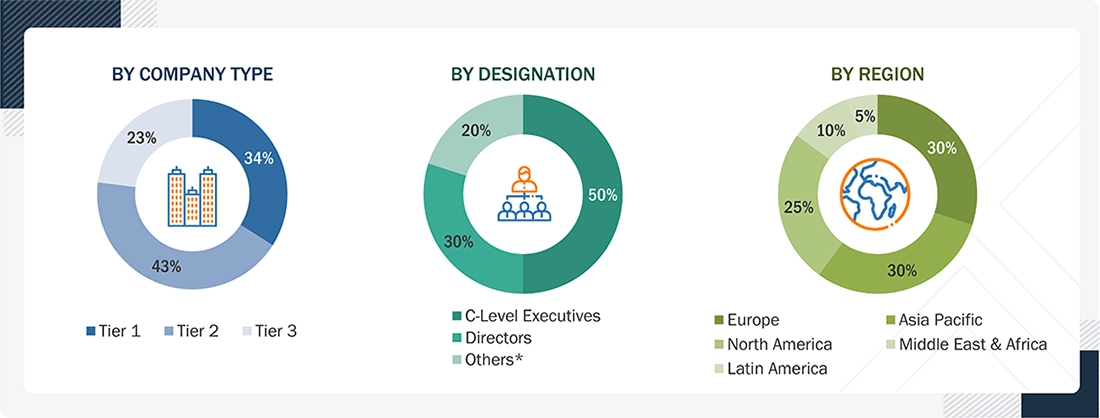
Note: Tier 1 companies’ revenues are more than USD 10 billion; tier 2 companies’ revenues range between USD 1 and 10 billion; and tier 3 companies’ revenues range between USD 500 million and USD 1 billion. Other designations include sales managers, marketing managers, and product managers.
To know about the assumptions considered for the study, download the pdf brochure
Market Size Estimation
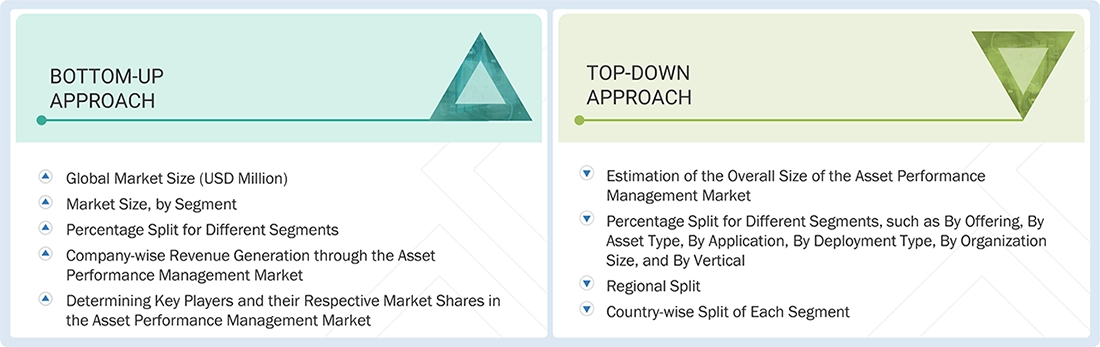
Multiple approaches were adopted to estimate and forecast the asset performance management market. The first approach involved estimating the market size by companies’ revenue generated through the sale of asset performance management products.
Market Size Estimation Methodology: Top-down Approach
The top-down approach prepared an exhaustive list of all the vendors offering products in the asset performance management market. The revenue contribution of the market vendors was estimated through annual reports, press releases, funding, investor presentations, paid databases, and primary interviews. Each vendor’s offerings were evaluated based on platform, degree of customization, type, application, end user, and region. The markets were triangulated through primary and secondary research. The primary procedure included extensive interviews for key insights from industry leaders, such as CIOs, CEOs, VPs, directors, and marketing executives. The market numbers were further triangulated with the existing MarketsandMarkets’ repository for validation.
Market Size Estimation Methodology: Bottom-up Approach
The bottom-up approach identified the adoption rate of the asset performance management products among different verticals in key countries, considering their regions contributing the most to the market share. For cross-validation, the adoption of asset performance management products among enterprises and other use cases for their regions was identified and extrapolated. Use cases identified in different areas were weighed for the market size calculation.
Based on the market numbers, the regional split was determined by primary and secondary sources. The procedure included an analysis of the asset performance management market’s regional penetration. Based on secondary research, the regional spending on Information and Communications Technology (ICT), socioeconomic analysis of each country, strategic vendor analysis of major asset performance management service providers, and organic and inorganic business development activities of regional and global players were estimated.
Asset Performance Management Market : Top-Down and Bottom-Up Approach
Data Triangulation
After determining the overall market size using the market size estimation processes as explained above, the market was split into several segments and subsegments. Data triangulation and market breakup procedures were employed, wherever applicable, to complete the overall market engineering process and arrive at the exact statistics of each market segment and subsegment. The overall market size was then used in the top-down procedure to estimate the size of other individual markets via percentage splits of the market segmentation.
Market Definition
Asset performance management (APM) is the strategic use of data, software, and services to maximize the reliability, availability, and efficiency of physical assets throughout their lifecycle. It goes beyond traditional maintenance by combining predictive analytics, condition monitoring, digital twins, and risk-based assessment to prevent unexpected failures and reduce downtime. APM integrates real-time operational data with enterprise systems, enabling organizations to make informed decisions about maintenance schedules, asset utilization, and resource allocation. By applying machine learning and IoT sensors, APM solutions can predict potential issues before they escalate, extend asset lifespans, and optimize performance. Industries such as manufacturing, energy, utilities, oil & gas, transportation, and mining widely adopt APM to ensure safety, regulatory compliance, and cost control. Ultimately, APM shifts organizations from reactive or time-based maintenance to proactive and predictive asset strategies, driving operational excellence, sustainability, and long-term return on investment.
According to IBM, “APM is a strategic method of managing physical assets that any organization utilizes in their daily business operations. It helps organizations optimize the performance of valuable assets such as buildings, machinery, equipment, vehicles, software, and other technology.
Key Stakeholders
- Asset performance management solution providers
- Asset performance management service providers
- Independent software vendors (ISVs)
- Investors and venture capitalists (VCs)
- Managed service providers
- Support and maintenance service providers
- System integrators (SIs)/Migration service providers
- Value-added resellers (VARs) and distributors
Report Objectives
- To define, describe, and forecast the asset performance management market based on offering, asset type, type, application, deployment type, organization size, vertical, and region
- To forecast the market size of the five major regional segments: North America, Europe, Asia Pacific, the Middle East & Africa, and Latin America
- To strategically analyze the market subsegments with respect to individual growth trends, prospects, and contributions to the total market
- To provide detailed information related to the major factors influencing market growth (drivers, restraints, opportunities, and challenges)
- To strategically analyze macro and micro markets with respect to growth trends, prospects, and their contribution to the overall market
- To analyze industry trends, patents and innovations, and pricing data related to the market
- To analyze the opportunities in the market for stakeholders and provide details of the competitive landscape for major players
- To profile key players in the market and comprehensively analyze their market share/ranking and core competencies
- To track and analyze competitive developments, such as mergers & acquisitions, product developments, and partnerships & collaborations in the market
Available customizations:
With the given market data, MarketsandMarkets offers customizations as per the company’s specific needs. The following customization options are available for the report:
Product Analysis
- The product matrix provides a detailed comparison of the product portfolio of each company.
Geographic Analysis based on feasibility
- Further breakup of the North American asset performance management market
- Further breakup of the European asset performance management market
- Further breakup of the Asia Pacific asset performance management market
- Further breakup of the Middle East & African asset performance management market
- Further breakup of the Latin American asset performance management market
Company Information
- Detailed analysis and profiling of additional market players (up to five)
Key Questions Addressed by the Report
What is the current market size of the Asset Performance Management market?
The global Asset Performance Management market was valued at USD 2.40 billion in 2026 and is projected to reach USD 4.32 billion by 2032, growing at a CAGR of 10.3% from 2026 to 2032.
Which region leads the market?
North America leads the asset performance management market, followed by Europe and Asia Pacific, with Asia Pacific advancing fastest due to aggressive Industry 4.0 adoption, large-scale integration of IIoT and AI-driven condition monitoring, and rising government-backed digital infrastructure modernization programs.
What are the emerging trends in the Asset Performance Management market?
Key emerging trends in the asset performance management market include the deployment of generative AI-driven diagnostics, the fusion of APM with enterprise asset ecosystems such as MES and ERP, the adoption of autonomous asset orchestration through edge analytics, and the shift toward sustainability-aligned asset health scoring models.
Who are the key companies in this market?
Leading players in the market include GE Vernova (US), IBM (US), Aveva (UK), SAP (Germany), and ABB (Switzerland).
What factors are driving market growth?
The asset performance management market is driven by large-scale industrial digitalization, convergence of operational and information technologies, demand for prescriptive analytics in high-value assets, and enterprise-wide initiatives to standardize asset intelligence across multi-site, mission-critical operations.


Personalize This Research
- Triangulate with your Own Data
- Get Data as per your Format and Definition
- Gain a Deeper Dive on a Specific Application, Geography, Customer or Competitor
- Any level of Personalization
Let Us Help You
- What are the Known and Unknown Adjacencies Impacting the Asset Performance Management Market
- What will your New Revenue Sources be?
- Who will be your Top Customer; what will make them switch?
- Defend your Market Share or Win Competitors
- Get a Scorecard for Target Partners

Custom Market Research Services
We Will Customise The Research For You, In Case The Report Listed Above Does Not Meet With Your Requirements
Get 10% Free CustomisationTESTIMONIALS
- Brazil Asset Performance Management Market
- Mexico Asset Performance Management Market
- Rest Of Europe Asset Performance Management Market
- Rest Of Asia Pacific Asset Performance Management Market
- US Asset Performance Management Market
- Canada Asset Performance Management Market
- UK Asset Performance Management Market
- Germany Asset Performance Management Market
- France Asset Performance Management Market
- Italy Asset Performance Management Market
- China Asset Performance Management Market
- India Asset Performance Management Market
- Japan Asset Performance Management Market
- South Korea Asset Performance Management Market
- Singapore Asset Performance Management Market
- Saudi Arabia Asset Performance Management Market
- UAE Asset Performance Management Market
- South Africa Asset Performance Management Market






Growth opportunities and latent adjacency in Asset Performance Management Market