The Role of Timing in Successful Lead Nurturing
March 04, 2026
In enterprise sales, timing is not a soft skill. It is the difference between a closed deal and a stalled pipeline. Most sales organizations understand what to say to prospects. They struggle with when to say it.
Lead nurturing timing determines whether your message lands during a budget cycle or after it closes. Whether you reach a VP of Sales when they are evaluating solutions or when they have already chosen a competitor. Whether your follow-up feels relevant or intrusive.
The challenge is that traditional lead nurturing operates on static cadences. Send an email every three days. Follow up after a week. Call again in two weeks. These timelines are invented, not intelligent. They ignore what is actually happening inside the account.
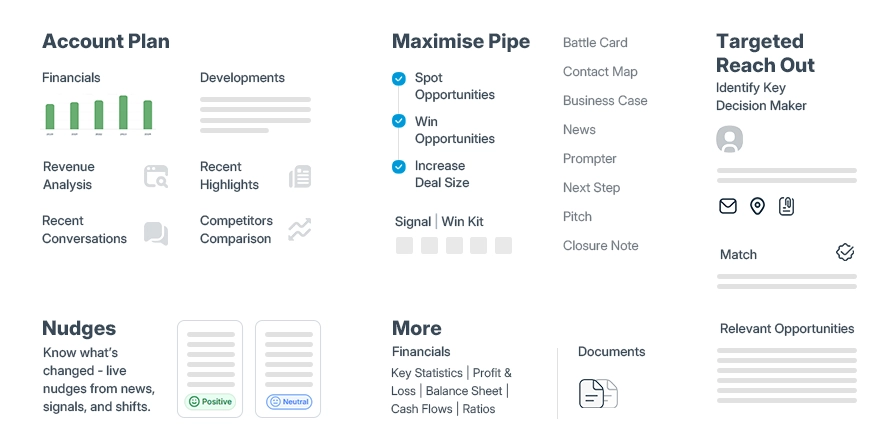
SalesPlay by MarketsandMarkets changes this. By continuously monitoring target accounts through Salesforce integration and tracking business movement, budget shifts, and personnel changes in real time, SalesPlay enables sales teams to nurture based on account signals, not arbitrary calendars. The result is higher response rates, faster deal cycles, and pipeline that converts.
Lead nurturing is the process of building relationships with potential buyers over time, even when they are not ready to purchase immediately. It involves delivering relevant content, maintaining engagement, and staying visible until the prospect enters an active buying cycle.
In B2B enterprise sales, lead nurturing is not optional. Sales cycles span months or quarters. Decision-makers change. Budgets shift. Priorities evolve. Without a structured nurture strategy, deals die in silence.
But here is where most teams fail: they treat lead nurturing as a content distribution problem instead of a timing problem.
1. Static Cadences That Ignore Account Reality
Most nurture campaigns run on fixed schedules. Email one on day one. Email two on day four. Email three on day seven. This approach assumes every account moves at the same speed and cares about the same things at the same time. They do not.
2. Batch-and-Blast Messaging Disconnected from Business Events
A company announces a new funding round, appoints a Chief Revenue Officer, or launches a digital transformation initiative. Your nurture email that week talks about a feature update. The timing disconnect kills relevance.
3. No Visibility into When Accounts Are Actually Moving
Sales teams do not know when a target account started evaluating solutions, when budget was allocated, or when internal priorities shifted. They nurture in the dark and hope something sticks.
SalesPlay solves this through Account Intelligence capabilities, which continuously track what is changing inside target accounts and surface the moments that matter. Instead of guessing when to follow up, sellers see exactly when accounts are moving and why. Learn more about operationalizing account intelligence for your team.
Timing in lead nurturing is not about speed. It is about synchronization. The best follow-up is not the fastest follow-up. It is the follow-up that arrives when the prospect is actually thinking about the problem you solve.
Research shows that 80% of sales require five or more follow-up attempts, yet 44% of sales reps give up after one follow-up. The gap is not effort. It is timing intelligence. Reps do not know when to persist and when to pause.
Enterprise deals are not linear. They stall, restart, expand, and collapse based on forces outside the sales rep's control. Budget freezes. Leadership changes. Competing priorities. Regulatory shifts.
In this environment, a nurture email sent at the wrong time does more harm than good. It signals that you do not understand the account. It wastes attention. It trains prospects to ignore you.
Effective lead nurturing timing requires:
This is where SalesPlay's approach to pipeline generation becomes critical. It does not just find opportunities. It tells you why now. What signal triggered the opportunity. What changed inside the account. Which product offering aligns. This context enables precise nurture timing tied to actual business events. Discover what pipeline generation really means in enterprise sales.
Stop Guessing When to Follow up
Explore Opportunity-Driven NurturingThe following strategies are not theoretical. They reflect how enterprise sales teams actually operate when they have the right intelligence and automation.
Most nurture campaigns are time-based. Wait three days. Wait a week. Wait a month. This ignores the fundamental reality of enterprise buying: it happens in response to triggers, not calendars.
Signal-triggered nurture means initiating or accelerating outreach when specific events occur:
SalesPlay's signal-driven revenue execution framework surfaces these moments automatically. Instead of batching nurture emails based on arbitrary intervals, sellers engage when accounts are actually moving. This increases response rates and shortens time-to-close. Learn how to turn account changes into qualified pipeline automatically.
Not all opportunities deserve the same follow-up rhythm. A high-relevance opportunity with multiple supporting signals and active stakeholder engagement should move faster. A medium-relevance opportunity with weaker signals should nurture more slowly.
SalesPlay categorizes opportunities by relevance (high, medium, low) and shows supporting sub-signals. This allows sales teams to adjust cadence intelligently:
This prevents wasted effort on weak opportunities and ensures high-potential deals get the attention they need. Understand common pipeline gaps sales leaders miss when they fail to prioritize properly.
Enterprise deals involve multiple decision-makers. A VP of Sales operates on a different timeline than a procurement manager. A CFO engages differently than a RevOps director. Generic nurture cadences ignore these differences.
Effective lead nurturing timing requires contact-level intelligence. When should you reach the economic buyer versus the technical evaluator? When should you loop in the champion versus the end user?
SalesPlay's contact enrichment capabilities solve this by providing deep stakeholder context. Sellers can understand opportunities relevant to specific individuals and why each opportunity matters to them. This enables contact-aware nurture timing. Explore contact enrichment strategies for higher conversion:
Manual personalization does not scale. Sales reps cannot hand-write every nurture email across hundreds of accounts. But generic automation fails because it lacks context.
The solution is intelligent automation that personalizes based on account signals, opportunity relevance, and contact role.
SalesPlay's sales automation creates personalized email nurture campaigns automatically. Sellers select opportunities, select contacts, choose the number of touches, and set timing. SalesPlay drafts every email, personalizes by opportunity and individual, ensures each message is different, and runs the campaign after approval.
This enables sales teams to maintain high-touch nurture at scale without sacrificing relevance. The timing is still strategic. The messaging is still personalized. The execution is just automated. Read about streamlining sales workflows with intelligent automation.
The following considerations separate effective nurture timing from guesswork.
Enterprise sales cycles range from three months to over a year. Nurture timing must reflect this reality. Early-stage nurture focuses on education and credibility. Mid-stage nurture shifts to differentiation and proof. Late-stage nurture drives urgency and decision-making.
SalesPlay enables stage-appropriate nurture by providing battle cards, elevator pitches, talking points, and next-step guidance that evolve as deals progress. The messaging adapts as the deal advances. The timing accelerates as stakeholders engage. Discover how AI sales pipeline management transforms this process.
Enterprise deals require multiple stakeholders. But contacting everyone simultaneously can overwhelm the account and create internal confusion. Effective lead nurturing timing sequences contacts strategically:
SalesPlay's integration of opportunities, contacts, and account intelligence ensures sellers see the full buying center and can orchestrate outreach timing across stakeholders without duplication. Learn about account-based intelligence for targeting high-value prospects.
Follow-up persistence is necessary. Follow-up harassment is fatal. The line between the two is timing intelligence.
Respectful persistence means:
SalesPlay provides this intelligence by showing what is changing inside the account. If engagement drops but signals suggest continued interest, sellers can adjust messaging while maintaining cadence. If the account goes silent and signals weaken, sellers can slow down without abandoning the opportunity. Understand how to identify new pipeline opportunities inside dormant accounts.
Enterprise deals are competitive. Timing your nurture in isolation is insufficient. You must time it relative to competitor movements.
When a competitor relationship weakens or a contract renewal approaches, nurture timing should accelerate. When a competitor wins a deal or a prospect publicly commits to an alternative, nurture should pause or pivot.
SalesPlay's Account Intelligence tracks business developments, including vendor relationships and contract timelines. This enables sales teams to time nurture strategically around competitive dynamics, not just internal calendars.
Most sales teams approach lead nurturing with a mix of CRM data, intuition, and arbitrary cadences. This results in inconsistent follow-up, missed opportunities, and wasted effort.
SalesPlay by MarketsandMarkets replaces this fragmented approach with a unified system that continuously monitors accounts, detects signals, identifies opportunities, and guides nurture timing with precision. Understand why traditional pipeline generation breaks at scale.
Step 1: Continuous Account Monitoring
SalesPlay connects to Salesforce and watches target accounts in real time. It tracks financial data, business developments, personnel changes, and market movements. This creates a living account view that updates as conditions change. Learn more about the rise of account intelligence platforms.
Step 2: Signal Detection and Opportunity Identification
The platform's intelligence capabilities work together to identify when accounts show buying signals. These are not generic intent signals. They are specific triggers tied to budget, initiatives, pain points, and stakeholder activity. Discover how to surface buying opportunities across target accounts.
Step 3: Relevance-Based Prioritization
Not all opportunities are equal. SalesPlay categorizes opportunities by relevance (high, medium, low) and shows why each opportunity exists. This allows sales teams to allocate nurture effort intelligently and adjust cadence based on strength.
Step 4: Contact-Aware Messaging and Timing
The system ensures sellers know who to contact, when, and with what message. Instead of generic outreach, sellers deliver personalized, opportunity-specific messaging at the right time.
Step 5: Automated Execution with Strategic Oversight
Sales automation handles campaign execution while maintaining personalization. Sellers define the strategy (which opportunities, which contacts, how many touches, timing), and SalesPlay executes with precision. Read about advanced sales automation strategies for complex B2B sales.
This approach transforms lead nurturing from a content distribution problem into a revenue execution system. See how SalesPlay helps sellers know where to focus.
The following scenarios illustrate how SalesPlay's timing intelligence works in practice.
Traditional Approach: Continue nurture cadence as scheduled. Maybe update messaging in the next quarterly campaign.
SalesPlay Approach: The system detects the CFO transition immediately. Account intelligence updates stakeholder context. The seller sees this change in real time and adjusts timing. Instead of waiting for the next scheduled touchpoint, the seller sends a congratulatory message to the new CFO and introduces relevant opportunities tied to their priorities. The timing is immediate and contextual.
Traditional Approach: Discover this weeks later through manual research. Follow up when the window has passed.
SalesPlay Approach: The platform flags the budget allocation within hours. Relevant opportunities tied to that budget surface automatically. The seller receives an alert and engages immediately. The nurture timing is synchronized with the account's internal timeline, not a generic calendar. Learn about building predictable pipeline from strategic accounts.
Traditional Approach: Continue periodic check-ins. Hope the contact volunteers new opportunities.
SalesPlay Approach: The seller searches for the known contact in the platform. SalesPlay shows all opportunities relevant to that person, explains why each opportunity matters to them, and provides battle cards and messaging. The seller can time outreach based on specific opportunities the contact cares about, rather than generic check-ins.
Traditional Approach: Continue weekly follow-ups. Eventually mark the deal as lost.
SalesPlay Approach: Account intelligence continues monitoring the account. When a new signal appears (executive hire, budget shift, competitor exit), the seller is alerted. Instead of giving up or pestering, the seller re-engages at the exact moment the account becomes active again. The timing is reactive to account movement, not arbitrary persistence. Discover how sales teams build pipeline without cold outreach.
Ready to Stop Guessing When to Follow Up?
Book Your SalesPlay Demo TodayLead nurturing timing effectiveness cannot be measured by email open rates or click-through rates alone. The metrics that matter are revenue metrics.
How quickly does your team respond when a high-value signal appears? SalesPlay provides this visibility by time-stamping signals and tracking when sellers engage. Faster response correlates with higher conversion. Learn about intent data for B2B sales.
Which signals produce the best opportunities? SalesPlay categorizes opportunities by triggering signal. Sales leaders can see which signal types convert best and adjust nurture focus accordingly.
Compare deals that originated from signal-triggered outreach versus time-triggered nurture. SalesPlay users consistently see shorter cycles when nurture timing aligns with account signals.
Track not just whether prospects respond, but whether responses advance deals. SalesPlay's revenue intelligence capabilities show which nurture sequences produce meaningful progression versus surface-level engagement. Understand how sales leaders use revenue intelligence to create pipeline.
The ultimate metric: do deals nurtured with signal-based timing close at higher rates? SalesPlay enables this analysis by tagging opportunities with the signals and timing strategies that drove them.
Enterprise accounts are not leads. They are complex organizations with multiple stakeholders, competing priorities, and dynamic budgets. One-size-fits-all nurture timing fails because it ignores account-level complexity.
Solution: Use SalesPlay's Account Intelligence to tailor nurture timing to each account's specific context and movement. Learn about lead-based and account-based pipeline generation differences.
More touches do not equal better results. Poorly timed, irrelevant outreach trains prospects to ignore you. Quality and timing matter more than quantity.
Solution: Focus nurture effort on high-relevance opportunities identified by signal-based intelligence. Let low-relevance opportunities nurture passively. See how to find real pipeline instead of vanity metrics.
Your nurture cadence exists in a competitive context. If a competitor is actively engaging while you wait for your next scheduled touchpoint, you lose momentum.
Solution: Monitor account developments through continuous intelligence. Adjust timing reactively based on competitive signals and contract timelines.
Most teams do not track which timing strategies produce results. They repeat the same cadences without learning.
Solution: Use revenue intelligence reporting to correlate signal timing, nurture cadence, and deal outcomes. Iterate based on data. Read about understanding revenue intelligence fundamentals.
The next evolution in lead nurturing timing is predictive intelligence. Instead of reacting to signals, sales teams will anticipate them.
Predictive nurture timing will identify accounts likely to enter buying cycles before explicit signals appear. It will recommend optimal contact sequences based on historical conversion patterns. It will adjust cadence dynamically as account conditions change in real time.
SalesPlay by MarketsandMarkets is built for this future. By continuously learning from account behavior, signal patterns, and deal outcomes, the platform enables sales teams to move from reactive nurture to proactive revenue execution. Explore advanced AI sales strategies shaping the future.
See how SalesPlay's signal-based intelligence eliminates guesswork and accelerates pipeline.
Get Started with SalesPlayLead nurturing timing refers to the strategic scheduling and sequencing of sales outreach based on account signals, stakeholder readiness, and business events rather than arbitrary calendars. It matters because enterprise buying decisions happen in response to specific triggers—budget cycles, leadership changes, competitive shifts, and strategic initiatives. Poorly timed outreach wastes attention and trains prospects to ignore you. Precision timing, powered by platforms like SalesPlay, increases response rates, shortens sales cycles, and improves win rates by synchronizing outreach with when accounts are actually moving.
Traditional CRM systems operate on static cadences and manual research. SalesPlay continuously monitors target accounts through Salesforce integration, tracks business movements in real time, and surfaces actionable signals automatically. The platform detects when accounts show buying triggers, categorizes opportunities by relevance, and creates personalized campaigns based on account context. Instead of generic time-triggered sequences, SalesPlay enables signal-triggered nurture that aligns with actual account dynamics, resulting in faster response times and higher conversion rates.
There is no universal ideal cadence because enterprise accounts move at different speeds based on internal priorities, budget cycles, and competitive dynamics. High-relevance opportunities with strong signals and active stakeholder engagement require aggressive follow-up with frequent touchpoints. Medium-relevance opportunities need moderate cadence with value-focused messaging. Low-relevance opportunities should nurture passively with long intervals. SalesPlay enables dynamic cadence adjustment by categorizing opportunities and showing signal strength, allowing sales teams to allocate effort intelligently rather than applying one-size-fits-all timing.
Respectful persistence means following up when new information makes the conversation more relevant, pausing when accounts signal disinterest, and offering value in every touchpoint rather than just requests. SalesPlay provides timing intelligence by showing what is changing inside accounts. If engagement drops but signals suggest continued interest, sellers can adjust messaging while maintaining cadence. If accounts go silent and signals weaken, sellers can slow down without abandoning opportunities. Account intelligence tracks account movements continuously, enabling sellers to time persistence based on account readiness rather than arbitrary schedules.
Time-based nurturing operates on fixed schedules: send an email every three days, follow up after a week, call again in two weeks. These timelines ignore what is actually happening inside accounts. Signal-based nurturing initiates or accelerates outreach when specific events occur—leadership changes, budget allocations, competitor exits, contract renewals, strategic announcements. SalesPlay's intelligence capabilities surface these moments automatically, enabling sellers to engage when accounts are actually moving rather than when a calendar says so. This increases response rates because outreach arrives when prospects are thinking about the problem you solve.
Revenue metrics matter more than engagement metrics. Track time-to-response after signal detection (faster response correlates with higher conversion), nurture-to-opportunity conversion rate by signal type (which signals produce the best opportunities), average sales cycle length (signal-triggered versus time-triggered nurture), engagement quality by cadence type (do responses advance deals or just create surface-level engagement), and deal win rate by nurture timing strategy. SalesPlay enables this analysis by tagging opportunities with the signals and timing strategies that drove them, allowing sales leaders to correlate timing with outcomes and iterate based on data.
Lead nurturing timing is not a marketing tactic. It is a revenue execution discipline. In enterprise sales, where deals span months and involve multiple stakeholders, the ability to engage at the right moment with the right message determines who wins.
Traditional approaches to lead nurturing fail because they treat timing as a scheduling problem instead of an intelligence problem. Static cadences, batch-and-blast messaging, and manual research cannot compete in a world where accounts move faster and buying committees grow more complex.
SalesPlay by MarketsandMarkets solves this by continuously monitoring target accounts, detecting signals, identifying opportunities, and guiding nurture timing with precision. The platform replaces fragmented selling with focused, signal-based execution. Sellers know where to act, who to engage, and when. The result is faster response times, shorter sales cycles, and higher win rates.
For sales leaders evaluating revenue intelligence platforms, the question is simple: Do you want your team nurturing on calendars or on intelligence?
Explore more about sales intelligence for enterprise scaling and discover the complete guide to revenue intelligence platforms.
See how SalesPlay transforms lead nurturing from guesswork to precision revenue execution.
Request Your SalesPlay Demo Now

Category: Uncategorized Tags: ai, AIOps, Artificial Intelligence, cloud, cloud platform, Cybersecurity, Information and Communications Technology , VR