What Technologies Are Powering the Avionics Testing Systems Market Growth
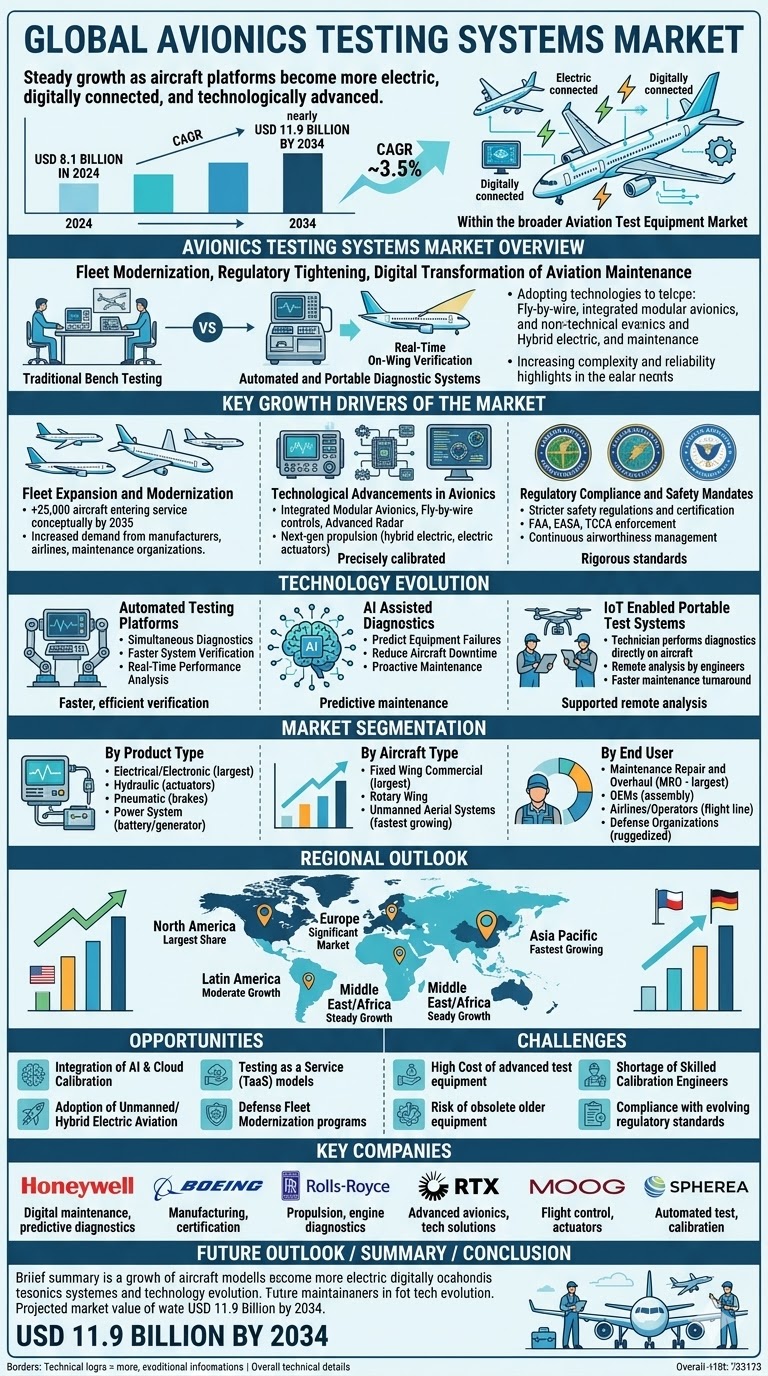
The Global Avionics Testing Systems Market is witnessing steady growth as aircraft platforms become more electric, digitally connected, and technologically advanced. Within the broader Aviation Test Equipment Market, the industry is valued at approximately USD 8.1 billion in 2024 and is projected to reach nearly USD 11.9 billion by 2034, registering a compound annual growth rate of about 3.5% during the forecast period.
The increasing complexity of modern aircraft systems is transforming how aviation testing is conducted. Aircraft manufacturers and maintenance providers now rely heavily on advanced avionics testing systems capable of verifying electrical, hydraulic, pneumatic, and digital systems. As aviation platforms adopt technologies such as fly by wire controls, integrated modular avionics, and hybrid electric propulsion, demand for sophisticated testing equipment continues to expand.
To Know About the Assumptions Considered for the Study Download the Pdf Brochure
The Avionics Testing Systems Market is also benefiting from rapid digitalization within aviation maintenance ecosystems. Maintenance, repair, and overhaul providers are increasingly integrating automated testing platforms, IoT enabled diagnostic tools, and cloud based calibration systems to minimize aircraft downtime and improve operational efficiency.
Avionics Testing Systems Market Overview
The Avionics Testing Systems Market is evolving in response to three major industry shifts: fleet modernization, regulatory tightening, and the digital transformation of aviation maintenance operations.
Modern aircraft platforms contain increasingly complex avionics systems including advanced navigation electronics, radar altimeters, flight control computers, and communication modules. These systems must undergo extensive testing and calibration to ensure safety, reliability, and compliance with aviation regulations.
The transition toward more electric aircraft architectures has also increased reliance on electrical testing solutions. Aircraft systems that were traditionally hydraulic or pneumatic are now controlled electronically, requiring advanced test equipment capable of analyzing power distribution, signal integrity, and control system performance.
As a result, aviation testing solutions are shifting from traditional bench testing toward automated and portable diagnostic systems capable of performing real time on wing verification.
Key Growth Drivers of the Avionics Testing Systems Market
Fleet Expansion and Modernization
The expansion of global aircraft fleets is one of the primary drivers of the Avionics Testing Systems Market. More than 25,000 commercial aircraft are expected to enter service worldwide by 2035. This fleet expansion significantly increases demand for testing and calibration equipment across manufacturing facilities, airline maintenance bases, and defense depots.
Aircraft manufacturers require sophisticated test systems to verify avionics performance during assembly and certification stages. Airlines and maintenance organizations also depend on portable test equipment to monitor aircraft health throughout their operational lifecycle.
Technological Advancements in Avionics
The rapid evolution of avionics technologies is another key driver of the Avionics Testing Systems Market. Integrated modular avionics architectures, fly by wire flight control systems, and advanced radar technologies require precise calibration and testing.
Next generation propulsion systems, including hybrid electric engines and electric actuators, also demand advanced power system testing platforms to ensure operational safety and reliability.
Regulatory Compliance and Safety Mandates
Aviation authorities worldwide continue to implement stricter safety regulations and certification requirements. Regulatory agencies such as the Federal Aviation Administration, the European Union Aviation Safety Agency, and Transport Canada Civil Aviation enforce rigorous testing standards for aircraft systems.
Continuous airworthiness management programs require periodic testing and calibration of avionics systems to maintain certification and operational safety. These regulatory requirements sustain long term demand for avionics testing systems.
Technology Evolution in the Avionics Testing Systems Market
Automated Testing Platforms
Automation is transforming the Avionics Testing Systems Market by enabling faster and more efficient system verification. Automated test equipment can perform multiple diagnostics simultaneously, reducing manual intervention and improving testing accuracy.
These systems integrate software driven diagnostics with advanced sensors to analyze avionics system performance in real time.
AI Assisted Diagnostics
Artificial intelligence is emerging as a powerful tool in aviation testing systems. AI algorithms analyze operational data and identify potential equipment failures before they occur.
Predictive maintenance capabilities allow airlines and maintenance providers to address issues proactively, reducing aircraft downtime and maintenance costs.
IoT Enabled Portable Test Systems
Portable test equipment equipped with IoT connectivity allows technicians to perform diagnostics directly on aircraft systems. These devices transmit testing results to centralized maintenance platforms where engineers can analyze system performance remotely.
This capability supports faster maintenance turnaround and enhances operational efficiency across airline fleets.
Market Segmentation in the Avionics Testing Systems Market
By Product Type
Electrical and electronic test equipment represents the largest segment in the Avionics Testing Systems Market. These systems include automatic test systems, power supply analyzers, and avionics test sets designed to evaluate aircraft electronics.
Hydraulic test equipment is used to validate actuator performance and hydraulic system integrity. Pneumatic testing systems support environmental control and braking system diagnostics.
Power system test equipment is gaining importance as aircraft adopt more electric propulsion architectures requiring advanced battery and generator testing.
By Aircraft Type
Fixed wing commercial aircraft represent the largest segment of the Avionics Testing Systems Market due to their extensive use of avionics systems.
Rotary wing aircraft also require specialized testing equipment for navigation systems, flight controls, and engine monitoring systems.
Unmanned aerial systems represent the fastest growing segment as drone platforms increasingly require portable diagnostic tools for propulsion and payload systems.
By End User
Maintenance repair and overhaul providers represent the largest consumers of avionics testing systems because aircraft require regular testing and calibration throughout their service life.
Original equipment manufacturers use testing systems during aircraft assembly and certification processes. Airlines and aircraft operators also deploy portable test systems for on wing diagnostics and flight line verification.
Defense organizations rely on ruggedized testing platforms for military aircraft and unmanned aerial vehicle fleets.
Regional Outlook of the Avionics Testing Systems Market
North America holds the largest share of the Avionics Testing Systems Market due to the presence of major aircraft manufacturers and avionics technology providers. Strong regulatory oversight and extensive defense procurement programs further support regional market growth.
Europe represents another significant market supported by a strong avionics supply chain and stringent regulatory standards established by the European Union Aviation Safety Agency.
Asia Pacific is expected to be the fastest growing region in the Avionics Testing Systems Market. Rapid fleet expansion in countries such as China, India, Indonesia, and Vietnam is driving strong demand for aviation testing equipment. The development of regional maintenance hubs and aircraft manufacturing programs is also contributing to market expansion.
The Middle East and Africa region is witnessing steady growth due to expanding airline fleets and investments in regional maintenance facilities.
Latin America is experiencing moderate growth as aviation companies upgrade testing infrastructure to meet international certification standards.
Opportunities in the Avionics Testing Systems Market
The integration of artificial intelligence and cloud based calibration management platforms presents new opportunities in the Avionics Testing Systems Market. Service based models such as testing as a service are emerging as maintenance providers seek flexible solutions.
The increasing adoption of unmanned aircraft and hybrid electric aviation platforms is expanding the application scope of avionics testing systems. These emerging technologies require specialized testing equipment capable of analyzing advanced propulsion and communication systems.
Defense fleet modernization programs across the United States, Europe, India, and Japan also present significant opportunities for test equipment manufacturers.
Challenges in the Avionics Testing Systems Market
Despite stable growth prospects, the Avionics Testing Systems Market faces several challenges. The high cost of advanced test equipment can limit adoption among smaller maintenance providers.
Another challenge is the shortage of skilled calibration engineers capable of operating sophisticated avionics testing platforms. As avionics technologies evolve rapidly, older testing equipment may become obsolete sooner than expected.
Maintaining compliance with evolving regulatory standards also increases operational complexity for testing equipment manufacturers and maintenance providers.
Key Companies in the Avionics Testing Systems Market
The Avionics Testing Systems Market features a combination of major aerospace manufacturers and specialized instrumentation companies.
Honeywell International Inc. plays a significant role in developing advanced avionics testing platforms and digital maintenance solutions that support predictive diagnostics and aircraft health monitoring.
The Boeing Company utilizes sophisticated testing equipment across its aircraft manufacturing and certification processes, ensuring the reliability of avionics systems used in commercial and defense aircraft.
Rolls-Royce Holdings plc contributes advanced propulsion testing technologies and diagnostic systems used for engine and power system verification.
RTX Corporation develops advanced avionics technologies and testing solutions used in both civil and military aviation programs.
Moog Inc. specializes in testing solutions for flight control systems, electric actuators, and hydraulic components used in modern aircraft platforms.
SPHEREA Test & Services SAS provides automated test systems and calibration solutions designed for avionics verification and aerospace maintenance operations.
These companies continue to invest heavily in research and development to deliver innovative testing solutions capable of supporting next generation aircraft technologies.
Future Outlook of the Avionics Testing Systems Market
The Avionics Testing Systems Market is expected to demonstrate stable growth through 2034 as aircraft technologies continue to evolve. The transition toward more electric aircraft, digital maintenance ecosystems, and predictive diagnostics will significantly influence market development.
Automated testing platforms, AI driven diagnostics, and cloud based calibration systems will play an increasingly important role in aviation maintenance operations.
As global aviation fleets expand and regulatory oversight intensifies, the demand for advanced avionics testing systems will remain strong across commercial, defense, and unmanned aviation sectors.
The Avionics Testing Systems Market represents a vital component of the aviation industry’s safety and maintenance ecosystem. With market value projected to reach USD 11.9 billion by 2034, the industry is positioned for steady long term growth.
Fleet modernization, advanced avionics technologies, and digital transformation of maintenance operations are driving demand for innovative testing solutions. Companies that invest in automation, predictive diagnostics, and regulatory compliance will be best positioned to capitalize on future opportunities in this evolving market.
80% of the Forbes Global 2000 B2B companies rely on MarketsandMarkets to identify growth opportunities in emerging technologies and use cases that will have a positive revenue impact.
- Food Packaging Market Size Set for Strong Growth Through 2030 Amid Rising Demand for Convenience Foods
- Crop Protection Chemical Market Size, Share & Growth Forecast (2025–2030)
- Mulch Films Market: Driving Sustainable Agriculture Through Innovation
- Agricultural Adjuvants Market Analysis, Trends, and Growth Outlook (2026–2031)
- Japan Enterprise Asset Management Market Growth: AI and Smart Infrastructure Drive Demand