

Home/ Aerospace and Defense / can-saf-bridge-gap-between-aviation-growth-net-zero-emissions

Can Sustainable Aviation Fuel Bridge the Gap Between Aviation Growth and Net-Zero Emissions?

MarketsandMarkets™ Research Private Ltd,, 24 Jun 2026
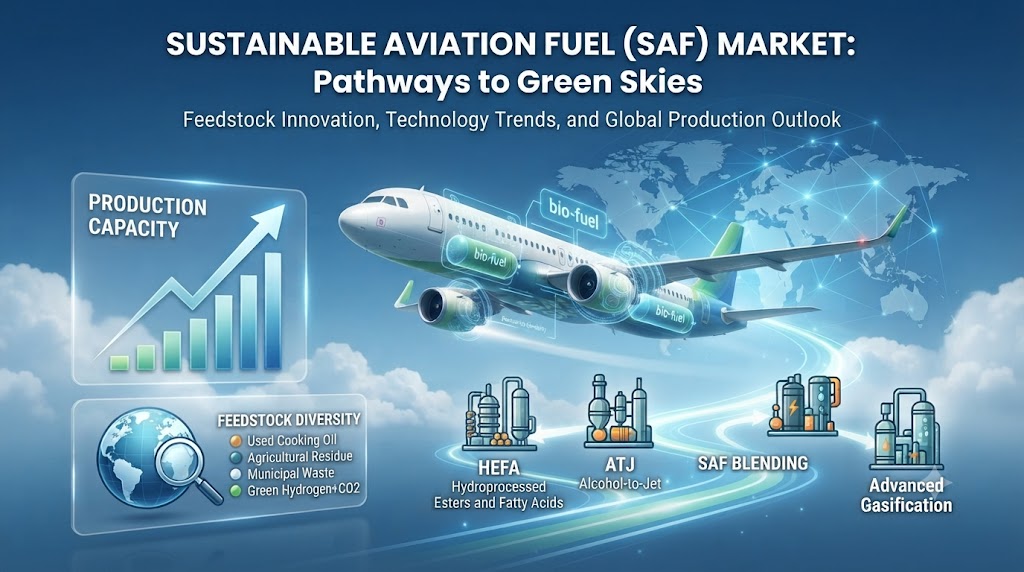
The aviation industry faces one of the most complex sustainability challenges of any transportation sector. Global air travel demand continues to rise, driven by economic growth, expanding middle-class populations, and increasing international connectivity. At the same time, governments, regulators, airlines, and investors are intensifying pressure on the industry to reduce greenhouse gas emissions and align with global climate objectives. This growing tension between aviation expansion and environmental responsibility has placed Sustainable Aviation Fuel (SAF) at the center of the industry's decarbonization strategy. As the most commercially viable alternative to conventional jet fuel currently available, SAF is increasingly viewed as a critical tool for bridging the gap between aviation growth and net-zero emissions.

Aviation's Decarbonization Challenge

Aviation remains one of the most difficult sectors to decarbonize due to its reliance on high-energy-density liquid fuels. While electric vehicles are transforming road transportation and renewable energy is reshaping power generation, commercial aircraft require fuel solutions capable of supporting long-haul flights, heavy payloads, and demanding operational conditions.

Although technologies such as hydrogen-powered aircraft and electric aviation are advancing, widespread commercial deployment remains years away for most large-scale aviation applications. As a result, the industry requires practical solutions that can deliver immediate emissions reductions without disrupting existing operations. Sustainable Aviation Fuel has emerged as the leading option to address this challenge.

Download PDF Brochure : https://www.marketsandmarkets.com/pdfdownloadNew.asp?id=70301163

Sustainable Aviation Fuel Offers Immediate Emissions Reductions

One of the most significant advantages of SAF is its compatibility with current aviation infrastructure. Sustainable Aviation Fuel can be blended with conventional jet fuel and used in existing aircraft engines, airport fueling systems, and distribution networks without major modifications.

Depending on the feedstock and production pathway, SAF can significantly reduce lifecycle carbon emissions compared to traditional petroleum-based aviation fuels. These emissions reductions make SAF one of the few scalable solutions available today that can help airlines lower their environmental impact while continuing to operate existing fleets.

This drop-in capability allows the aviation industry to begin reducing emissions immediately while longer-term technologies continue to mature.

Airline Commitments Are Accelerating Adoption

Airlines around the world are increasingly incorporating Sustainable Aviation Fuel into their long-term sustainability strategies. Many major carriers have announced ambitious net-zero targets and entered into long-term SAF procurement agreements designed to secure future fuel supplies.

These investments reflect growing recognition that SAF will play a central role in achieving emissions reduction goals. Airlines are not only seeking to comply with evolving regulations but are also responding to investor expectations, corporate sustainability requirements, and growing passenger demand for environmentally responsible travel options.

As more carriers commit to sustainable fuel adoption, SAF demand is expected to increase substantially over the coming decade.

Government Policies Are Supporting Market Growth

Public policy is becoming a major driver of Sustainable Aviation Fuel deployment. Governments across multiple regions are introducing SAF blending mandates, emissions reduction targets, tax incentives, production subsidies, and funding programs aimed at accelerating industry development.

These initiatives are creating stronger market signals and encouraging investment in fuel production facilities, infrastructure, and research programs. Regulatory support is particularly important because SAF production remains more expensive than conventional jet fuel, and policy mechanisms can help narrow this cost gap while supporting market expansion.

As climate regulations become more stringent, government involvement is expected to remain a key factor in driving SAF adoption.

Technological Innovation Is Expanding Production Potential

The long-term success of Sustainable Aviation Fuel depends heavily on continued technological innovation. Current commercial production is largely based on feedstocks such as used cooking oil, animal fats, and waste oils through Hydroprocessed Esters and Fatty Acids (HEFA) technology. While these pathways have enabled initial market growth, future demand will require broader feedstock diversity and greater production capacity.

Emerging technologies such as Alcohol-to-Jet (ATJ), Fischer-Tropsch synthesis, Power-to-Liquid (PtL) fuels, and electro-Sustainable Aviation Fuel (e-SAF) are expanding production opportunities. Advances in green hydrogen production and carbon capture technologies are further supporting the development of synthetic aviation fuels capable of achieving even greater emissions reductions.

These innovations are expected to improve scalability and strengthen the industry's ability to meet growing demand.

Significant Challenges Remain

Despite its strong potential, Sustainable Aviation Fuel is not without challenges. One of the most pressing concerns is production scale. Current SAF output represents only a small fraction of total global aviation fuel consumption, and substantial investment will be required to expand capacity to commercially meaningful levels.

Feedstock availability also remains a concern. As demand increases, competition for waste oils and other sustainable feedstocks may intensify, making it necessary to develop alternative production pathways. Additionally, SAF continues to be more expensive than conventional jet fuel, creating economic barriers for widespread adoption.

Addressing these challenges will require coordinated efforts among governments, fuel producers, airlines, investors, and technology providers.

Green Hydrogen and e-SAF Could Transform the Market

Looking toward the future, green hydrogen and e-SAF technologies could significantly enhance the industry's ability to achieve net-zero emissions. Unlike bio-based pathways that rely on finite feedstock resources, e-SAF is produced using renewable electricity, green hydrogen, and captured carbon dioxide.

This approach offers the potential for large-scale fuel production with minimal lifecycle emissions. As renewable energy infrastructure expands and hydrogen production costs decline, synthetic fuels could become an increasingly important component of the aviation decarbonization ecosystem.

The development of these technologies may ultimately determine how effectively SAF can support long-term sustainability goals.

SAF Alone May Not Deliver Net-Zero Aviation

While Sustainable Aviation Fuel is expected to play a critical role in reducing aviation emissions, most industry experts agree that it is unlikely to achieve net-zero aviation independently. Instead, SAF will form part of a broader decarbonization strategy that includes aircraft efficiency improvements, operational optimization, carbon management solutions, hydrogen technologies, and future electric aviation systems.

The aviation industry's transition to net-zero emissions will require multiple complementary solutions working together over several decades. However, SAF remains the most immediately available and scalable option capable of delivering meaningful emissions reductions in the near term.

The Path Forward

The coming decade will be crucial for determining the long-term role of Sustainable Aviation Fuel in global aviation. Continued investment in production facilities, technological innovation, feedstock diversification, and policy support will be essential for accelerating adoption and improving market economics.

As airlines seek practical pathways toward sustainability and governments strengthen climate commitments, SAF is expected to become an increasingly important component of aviation fuel supply chains worldwide.

Conclusion

Sustainable Aviation Fuel has the potential to bridge a significant portion of the gap between continued aviation growth and the industry's net-zero emissions ambitions. Its compatibility with existing aircraft and infrastructure, combined with growing regulatory support and airline investment, makes it the most practical near-term solution for aviation decarbonization. While challenges related to cost, feedstock availability, and production scale remain, ongoing technological advancements and industry collaboration are strengthening the outlook for SAF. Although it may not be the sole answer to achieving net-zero aviation, Sustainable Aviation Fuel is poised to become a cornerstone of the sector's transition toward a more sustainable and low-carbon future.

DMCA.com Protection Status

