

AeroVironment Highlights Counter-Drone Leadership as Counter-UAS Market Accelerates Toward 2030
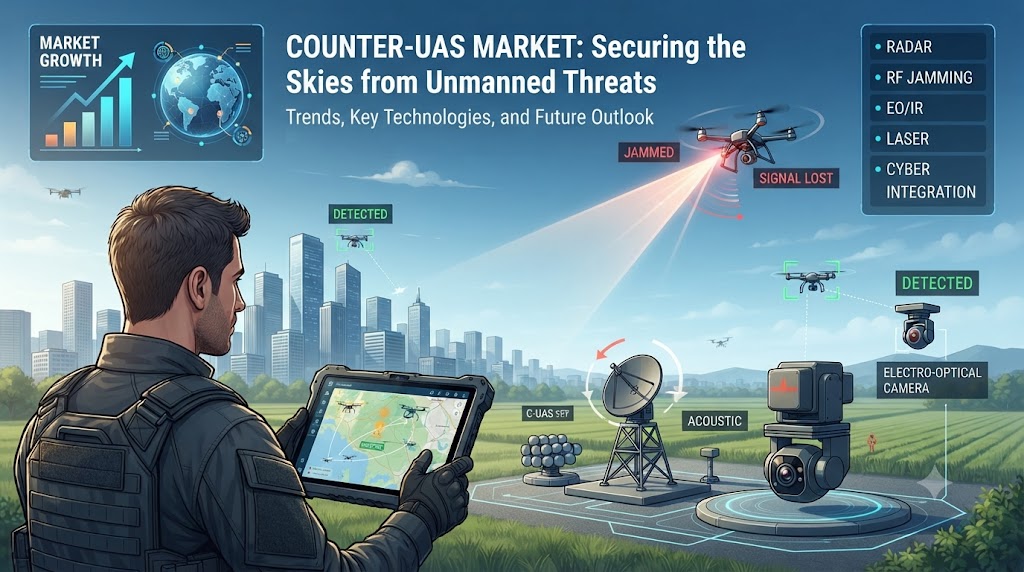
The global Counter Drone market is entering a new phase of growth as governments, defense agencies, airports, and critical infrastructure operators respond to the rapidly evolving threat posed by unmanned aerial systems. Against this backdrop, AeroVironment's recent announcement regarding its expanding counter-drone capabilities and a remarkable 500% production ramp has captured significant attention across the defense technology sector.
The company's comments at the Wells Fargo Industrials Conference highlight a broader industry trend: counter-drone technologies are no longer considered niche defense solutions. Instead, they are becoming essential components of national security strategies, military modernization programs, airport protection systems, and critical infrastructure security frameworks worldwide.
Get More Information:
https://www.marketsandmarkets.com/pdfdownloadNew.asp?id=4197284
As drone technology becomes more affordable, autonomous, and accessible, the demand for advanced counter-drone solutions is expected to accelerate dramatically through 2030. AeroVironment's aggressive production expansion reflects growing confidence in the future of the Counter-UAS market and underscores the strategic importance of drone defense technologies in the coming decade.
The Growing Threat Landscape Driving Counter-UAS Adoption
Over the last decade, drones have transformed military operations, commercial activities, logistics, surveillance, agriculture, and infrastructure monitoring. While these advancements have created significant benefits, they have also introduced new security risks.
Unauthorized drones can disrupt airport operations, gather intelligence, smuggle contraband, interfere with critical infrastructure, and conduct hostile surveillance activities. In conflict zones, drones are increasingly used for reconnaissance, target acquisition, electronic warfare, and precision attacks.
Recent geopolitical conflicts have demonstrated how low-cost drones can create substantial operational challenges for even the most advanced military forces. As a result, governments worldwide are prioritizing investments in technologies capable of detecting, tracking, identifying, and neutralizing aerial threats before they can cause damage.
This evolving threat environment is creating strong demand for Counter-UAS systems capable of providing real-time situational awareness and rapid threat response capabilities.
AeroVironment's Strategic Position in the Counter-Drone Ecosystem
AeroVironment has long been recognized as a leader in unmanned systems and advanced defense technologies. The company has built a strong reputation through its portfolio of tactical drones, autonomous systems, and defense solutions used by military organizations around the world.
Its growing emphasis on counter-drone technologies reflects the changing priorities of defense customers seeking integrated solutions that can address both offensive and defensive unmanned system requirements.
By highlighting a 500% increase in production capacity, AeroVironment signals that customer demand for counter-drone solutions is expanding at an unprecedented pace. Such a significant manufacturing ramp demonstrates confidence in long-term market growth and positions the company to respond rapidly to increasing procurement requirements.
The production expansion also suggests that defense agencies are moving beyond pilot programs and limited deployments toward larger-scale operational implementation of counter-drone technologies.
Why the Counter-UAS Market Is Accelerating Toward 2030
Several factors are contributing to the rapid growth of the Counter-UAS market.
The first driver is the increasing proliferation of drones. Commercial and military drones are becoming more capable, affordable, and widely available. This growth increases the likelihood of unauthorized drone activity and security incidents.
The second factor is rising geopolitical uncertainty. Defense organizations worldwide are increasing investments in technologies that can enhance battlefield survivability and protect strategic assets from emerging aerial threats.
The third driver is critical infrastructure protection. Energy facilities, transportation hubs, government buildings, communication networks, and industrial complexes are increasingly vulnerable to drone-related risks.
A fourth factor is regulatory evolution. Governments are establishing frameworks that support the deployment of counter-drone technologies while balancing airspace management requirements and privacy considerations.
Together, these trends are creating a favorable environment for sustained Counter-UAS market growth through 2030 and beyond.
Artificial Intelligence Is Transforming Counter-Drone Operations
Artificial intelligence has become one of the most important technologies shaping the future of counter-drone systems.
Traditional detection methods often generate large volumes of sensor data that require extensive human analysis. AI-powered systems can process information from multiple sensors simultaneously, identifying potential threats in real time with greater speed and accuracy.
Machine learning algorithms can distinguish between birds, authorized drones, and hostile UAVs while continuously improving performance based on operational experience.
AI also enables predictive threat analysis by identifying unusual flight patterns and potential attack scenarios before they fully develop.
As drone threats become increasingly sophisticated, artificial intelligence will play an essential role in helping operators maintain situational awareness and respond effectively to rapidly changing conditions.
Companies such as AeroVironment are well positioned to benefit from this trend as customers seek intelligent counter-drone solutions capable of autonomous threat assessment and response.
Sensor Fusion Is Becoming a Competitive Advantage
One of the most significant developments in the Counter-UAS market is the growing adoption of sensor fusion technologies.
Modern counter-drone systems rarely rely on a single detection method. Instead, they combine multiple technologies including radar, radio frequency monitoring, electro-optical cameras, infrared sensors, acoustic detection systems, and AI analytics platforms.
By integrating data from diverse sensor sources, operators gain a more complete understanding of the operational environment.
Sensor fusion improves detection accuracy, reduces false alarms, and enhances threat classification capabilities.
For AeroVironment and other industry leaders, the ability to deliver integrated multi-sensor solutions represents a key differentiator in an increasingly competitive market.
Autonomous Counter-Drone Systems Gain Momentum
Automation is rapidly becoming a central feature of next-generation counter-drone platforms.
As drone attacks become more complex and potentially involve multiple aircraft operating simultaneously, human operators may struggle to manage threat response effectively.
Autonomous systems can significantly reduce response times by automatically detecting threats, assessing risk levels, selecting appropriate countermeasures, and initiating defensive actions.
Advanced counter-drone systems are increasingly incorporating autonomous interception capabilities, allowing interceptor drones to engage unauthorized UAVs without direct human control.
The growing integration of automation technologies is expected to enhance operational efficiency while reducing manpower requirements across both military and civilian applications.
Airport Security Represents a Major Growth Opportunity
Airports have emerged as one of the largest commercial opportunities within the Counter-UAS market.
Unauthorized drone activity near airports can create serious safety risks and disrupt flight operations. Several major airports around the world have experienced temporary shutdowns due to drone incursions, resulting in significant economic losses and passenger disruptions.
As air traffic volumes continue to increase, airport operators are investing heavily in drone detection and mitigation technologies designed to maintain safe and secure airspace.
AI-powered surveillance systems, radar-based detection platforms, and automated response capabilities are becoming increasingly common across major aviation hubs.
The airport security segment is expected to remain one of the fastest-growing areas of the Counter-UAS market through 2030.
Critical Infrastructure Protection Drives New Investments
Beyond defense and aviation, critical infrastructure protection is becoming an increasingly important application area.
Power plants, oil and gas facilities, telecommunications networks, transportation systems, water treatment facilities, and government installations all face potential drone-related risks.
These facilities often require persistent surveillance capabilities and rapid threat response mechanisms capable of operating in complex environments.
Counter-drone technologies provide a proactive approach to protecting valuable assets from surveillance, sabotage, smuggling, and physical attacks.
As governments strengthen critical infrastructure resilience programs, demand for advanced Counter-UAS solutions is expected to rise significantly.
Startups Are Entering the Counter-Drone Innovation Race
While major defense contractors continue to dominate large-scale procurement programs, startups are playing an increasingly important role in driving innovation.
Emerging companies are developing specialized solutions focused on artificial intelligence, cloud-based command platforms, autonomous interception technologies, advanced RF detection systems, and drone swarm defense.
Venture capital investment in defense technology has increased substantially in recent years, reflecting growing investor confidence in the sector's long-term growth prospects.
The Counter-UAS market offers startups opportunities to address emerging security challenges while leveraging advances in AI, automation, edge computing, and software-defined architectures.
As a result, the industry is witnessing the emergence of a dynamic ecosystem where established defense firms and innovative startups collaborate to accelerate technology development.
Regional Growth Trends Support Long-Term Expansion
North America currently leads the Counter-UAS market due to strong defense spending, technological leadership, and extensive deployment of advanced security systems.
Europe continues to invest heavily in military modernization and critical infrastructure protection programs, supporting demand for advanced counter-drone technologies.
Meanwhile, Asia Pacific is expected to experience the fastest growth through 2030. Countries including China, India, Japan, South Korea, and Australia are increasing investments in drone defense capabilities to address evolving security challenges.
These regional growth patterns create substantial opportunities for companies capable of delivering scalable and adaptable counter-drone solutions.
Outlook for the Counter-UAS Market Through 2030
The future of the Counter-UAS market appears exceptionally promising, Advances in artificial intelligence, automation, sensor fusion, cloud computing, and autonomous systems are transforming how organizations protect airspace and critical assets from drone-related threats.
AeroVironment's decision to significantly expand production capacity reflects confidence in sustained market demand and highlights the growing importance of counter-drone technologies across military and civilian sectors.
As drone adoption continues to expand globally, the need for effective detection, tracking, and mitigation capabilities will become increasingly critical. Organizations that successfully integrate AI-driven analytics, autonomous response mechanisms, and multi-layered defense architectures will be well positioned to capitalize on emerging opportunities.
By 2030, Counter-UAS systems are expected to become a standard component of modern security infrastructure, supporting national defense, public safety, critical infrastructure protection, and commercial operations worldwide. AeroVironment's recent announcement serves as a powerful indicator that the industry is entering a new era of growth, innovation, and strategic significance.
80% of the Forbes Global 2000 B2B companies rely on MarketsandMarkets to identify growth opportunities in emerging technologies and use cases that will have a positive revenue impact.
- Food Packaging Market Size Set for Strong Growth Through 2030 Amid Rising Demand for Convenience Foods
- Mulch Films Market: Driving Sustainable Agriculture Through Innovation
- Agricultural Adjuvants Market Analysis, Trends, and Growth Outlook (2026–2031)
- Crop Protection Chemical Market Size, Share & Growth Forecast (2025–2030)
- Japan Enterprise Asset Management Market Growth: AI and Smart Infrastructure Drive Demand


