

Satellite Antenna Repair Market: Technology and Future Trends
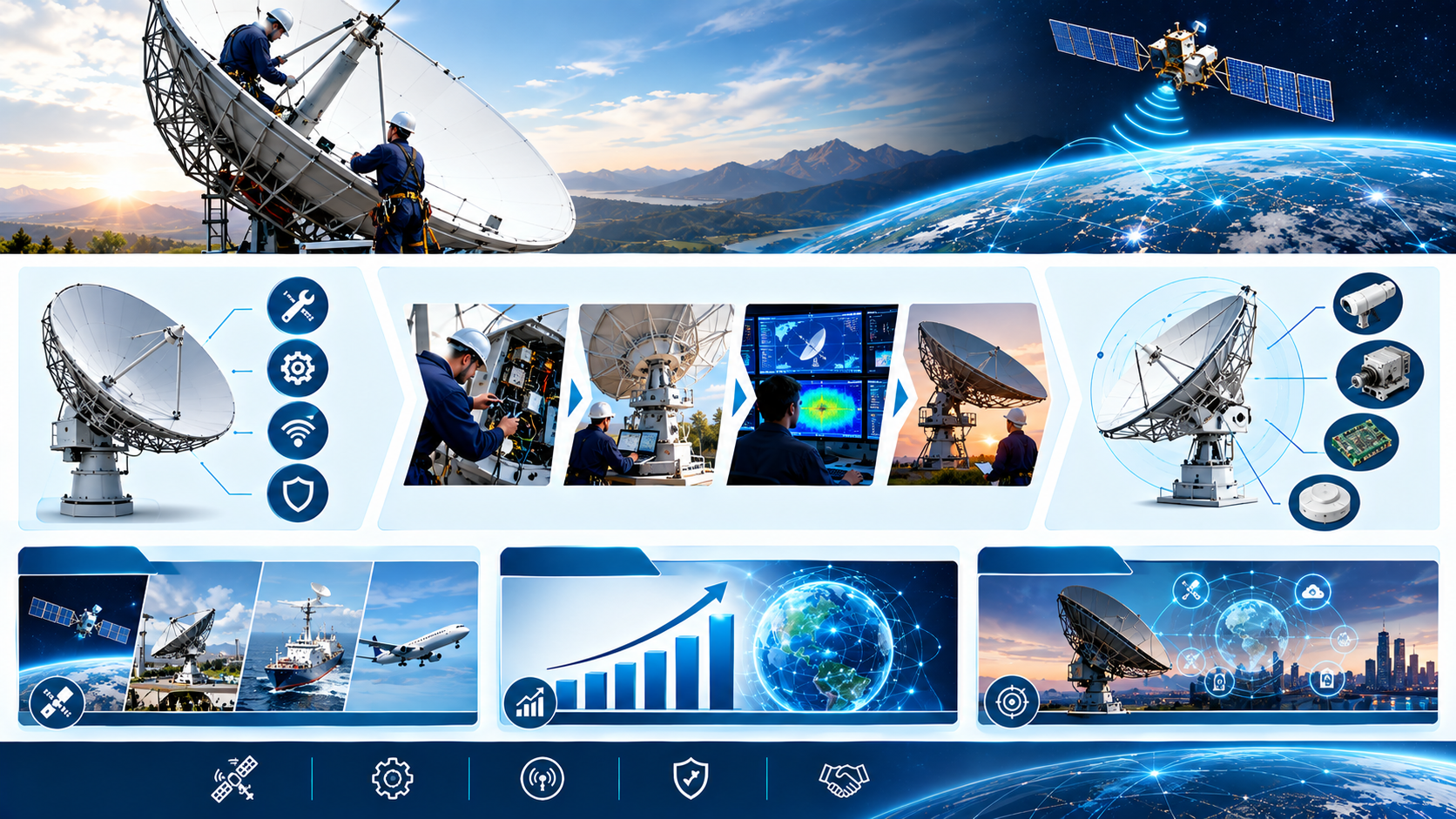
The global satellite communications industry is entering a new phase of connectivity expansion as organizations increasingly depend on reliable communication across aircraft, ships, vehicles, remote sites, and critical operations centers. Satellite communication systems are becoming increasingly important where terrestrial communication networks are unavailable, unreliable, or difficult to deploy. This transformation is creating sustained demand for SATCOM equipment while also increasing the importance of services that keep satellite communication infrastructure operational.
The Satellite Antenna Repair and Maintenance Services Market is emerging as an important part of this broader SATCOM ecosystem. Satellite antennas are critical components of satellite communication networks because they enable the transmission and reception of signals between ground infrastructure, mobile platforms, and satellites. As SATCOM networks become more widely deployed across defense, aviation, maritime, telecommunications, and enterprise applications, organizations require dependable maintenance, inspection, repair, calibration, testing, and lifecycle support for antenna systems.
The market is also evolving beyond traditional corrective maintenance. SATCOM users are increasingly seeking preventive maintenance, remote diagnostics, performance monitoring, component replacement, system testing, and technical support designed to minimize communication downtime. This is creating opportunities for service providers that can combine field engineering expertise with digital monitoring, diagnostics, connectivity technologies, and advanced maintenance practices.
Satellite Antenna Repair and Maintenance Services Market Enters an Investment Driven Growth Phase
Satellite communication infrastructure is attracting greater investment because users increasingly require reliable connectivity across environments where terrestrial networks cannot always provide adequate coverage. Aircraft, ships, vehicles, remote facilities, and critical operations centers depend on satellite communication to maintain voice, data, and broadband connectivity. As the installed base of SATCOM equipment expands, the requirement for maintaining this infrastructure also becomes more important.
According to the supplied MarketsandMarkets information, the Global Satellite Communication Equipment Market is projected to grow from USD 29.05 billion in 2026 to USD 56.12 billion by 2032, registering a CAGR of 11.6% during the forecast period. The growth is being supported by increasing demand for reliable connectivity across aircraft, ships, vehicles, remote sites, and critical operations centers.
This expansion creates a broader service opportunity around SATCOM equipment. Satellite antennas require periodic inspection, alignment, component replacement, testing, troubleshooting, and performance verification. Service providers can therefore benefit from the increasing deployment of terminals, antennas, modems, routers, radios, and related communication equipment.
The investment environment is also becoming more technology focused. Service organizations are increasingly able to use digital diagnostics, remote monitoring, predictive maintenance, automated testing, and connected maintenance systems to improve service delivery. This is creating opportunities across the maintenance value chain, from field services and spare parts to software enabled diagnostics and lifecycle management.
Satellite Antenna Maintenance Is Becoming a Critical Connectivity Requirement
Satellite antennas operate in demanding environments. Antennas installed on aircraft, ships, vehicles, remote sites, and other mobile platforms can be exposed to vibration, temperature changes, weather, mechanical stress, saltwater exposure, dust, and other environmental conditions.
A degradation in antenna performance can affect the quality and reliability of satellite communication. As organizations become more dependent on broadband and secure communications, extended equipment downtime can create operational challenges. This makes preventive maintenance increasingly important.
Maintenance activities can include physical inspection, antenna alignment, mechanical checks, connector inspection, cable testing, component replacement, signal testing, calibration, software related checks, and system level performance verification. The exact requirements depend on the antenna architecture, platform, operating environment, and communication application.
The increasing deployment of SATCOM systems across multiple sectors is consequently creating a larger installed base requiring technical support throughout its operational lifecycle.
AI and Digital Diagnostics Are Transforming Satellite Antenna Maintenance
Artificial intelligence and digital technologies are changing how equipment maintenance is performed across communication infrastructure. Satellite antenna service providers can increasingly combine equipment data, historical maintenance records, operating parameters, and diagnostic information to identify potential problems.
Traditional maintenance models often depend on scheduled inspections or troubleshooting after a failure occurs. Digital maintenance approaches can support earlier identification of abnormal equipment behavior. Monitoring systems can detect changes in performance and provide technicians with information that helps identify potential problems before they become major service interruptions.
AI enabled diagnostics can also support fault classification and maintenance planning. When combined with remote monitoring, these technologies can reduce the need for unnecessary physical inspections and help maintenance teams prioritize equipment requiring attention.
For organizations operating large numbers of satellite communication systems, digital diagnostics can become particularly valuable because maintenance teams can monitor multiple installations while reducing dependence on manual inspection alone.
Preventive Maintenance Is Creating Recurring Service Opportunities
Preventive maintenance is becoming increasingly important as organizations seek to maximize equipment availability and extend the operating life of SATCOM infrastructure.
Satellite antenna systems contain mechanical, electrical, electronic, and communication components that may require periodic inspection and servicing. Preventive maintenance programs can help identify wear, degradation, alignment issues, connector problems, environmental damage, and other conditions that could affect system performance.
For service providers, preventive maintenance also creates recurring revenue opportunities. Instead of relying entirely on emergency repair contracts, companies can establish long term maintenance agreements covering regular inspection, testing, replacement of selected components, technical support, and system performance verification.
This model is particularly relevant for customers operating SATCOM equipment across multiple locations. A structured maintenance agreement can provide access to specialized technical resources without requiring customers to maintain all capabilities internally.
Corrective Repair Services Remain Essential
Preventive maintenance can reduce the likelihood of unexpected failures, but corrective repair remains an essential part of the satellite antenna service ecosystem.
Equipment can experience unexpected mechanical, electrical, environmental, or communication related problems. When an antenna stops operating correctly, organizations may require rapid troubleshooting and repair to restore connectivity.
Corrective services can involve fault identification, component replacement, antenna realignment, cable and connector repair, equipment testing, system configuration, and final performance verification. The ability to diagnose problems quickly can be particularly important for mission critical users.
Defense organizations, aviation operators, maritime users, telecommunications companies, and enterprises operating remote facilities can have different requirements for response times and service availability. This creates opportunities for specialized service providers with field engineering capabilities and geographically distributed support networks.
Defense Applications Are Supporting Demand for Reliable SATCOM Maintenance
Defense is an important application area for satellite communications because military organizations require reliable connectivity across geographically distributed operations. SATCOM can support voice, data, broadband communication, and connectivity between operational platforms and command centers.
The supplied market information identifies defense as one of the major demand areas for SATCOM equipment.
Military SATCOM antennas can be deployed on fixed installations, vehicles, ships, aircraft, and other platforms. These systems can operate in demanding environments and may require specialized maintenance capabilities.
Maintenance providers serving defense customers may therefore need expertise in platform specific antenna systems, communication equipment, environmental conditions, secure operating environments, and operational continuity requirements.
As defense organizations expand their reliance on connected platforms, maintenance becomes an important element of maintaining communication readiness.
Aviation Is Expanding the Need for Specialized Antenna Services
Aircraft increasingly depend on satellite communication for connectivity across flight operations. SATCOM systems can support communications and broadband connectivity, particularly when aircraft operate outside the coverage of terrestrial networks.
Aircraft mounted antenna systems are exposed to unique environmental and operational conditions. Vibration, temperature variation, aerodynamic conditions, and continuous aircraft operation can influence maintenance requirements.
This creates a specialized opportunity for companies capable of providing inspection, repair, testing, and lifecycle support for aviation SATCOM antenna systems.
Maintenance providers may also need to coordinate with aircraft operators, maintenance organizations, equipment manufacturers, and other aviation stakeholders. The ability to provide technically qualified service while minimizing aircraft downtime can become an important competitive factor.
Maritime SATCOM Maintenance Creates Long Term Opportunities
Maritime applications represent another important area for satellite communication equipment. Ships often operate far from terrestrial communication infrastructure, making satellite connectivity an important communications option.
The supplied market information specifically identifies ships and maritime users as important areas of SATCOM demand.
Maritime antenna systems operate in challenging environments characterized by saltwater, humidity, vibration, wind, and continuous movement. These conditions can increase the importance of inspection and maintenance.
Maintenance services can include antenna inspection, mechanical servicing, alignment checks, cable and connector testing, component replacement, and system level performance checks.
Service providers with maritime field support capabilities can therefore access opportunities associated with commercial shipping, offshore operations, maritime communications, and other vessel based applications.
Remote Sites Are Increasing Demand for Field Maintenance
Remote facilities represent one of the strongest use cases for satellite communications because terrestrial networks may be unavailable or difficult to deploy in isolated locations.
The supplied information identifies remote sites among the environments driving demand for reliable SATCOM connectivity.
When satellite communication equipment is installed in remote locations, maintenance can become more complicated. Technicians may need to travel significant distances to reach the installation, while spare parts and specialized equipment may not be immediately available.
This increases the value of preventive maintenance, remote diagnostics, condition monitoring, and efficient spare parts planning.
Service providers that can combine remote troubleshooting with strategically located field engineering resources can potentially reduce response times and improve equipment availability.
Antennas Are Becoming Part of a Larger SATCOM Service Ecosystem
Satellite antennas cannot be considered in isolation from the wider communication system. SATCOM infrastructure can include terminals, antennas, modems, routers, radios, and other communication components.
This creates opportunities for service providers to expand from antenna repair into broader equipment support.
A customer experiencing connectivity problems may not immediately know whether the underlying issue is associated with the antenna, modem, router, radio, cabling, configuration, or another system component. Integrated technical support can therefore provide greater value than isolated antenna repair.
Companies capable of troubleshooting the broader communication chain can position themselves as lifecycle service providers rather than simple repair contractors.
Remote Monitoring Is Changing Maintenance Operations
Remote monitoring is becoming an important technology for managing distributed SATCOM infrastructure. Instead of relying entirely on physical inspections, operators can increasingly collect system information remotely.
Remote monitoring can provide information about equipment performance, connectivity status, system alerts, and potential faults. Maintenance teams can use this information to determine whether a technician needs to be dispatched.
This can be particularly valuable for remote installations, ships, vehicles, and other platforms where physical access can be difficult.
Remote diagnostics can also improve technician efficiency. Engineers can potentially review system information before arriving at a site, allowing them to prepare the necessary tools and replacement components.
Predictive Maintenance Could Increase Equipment Availability
Predictive maintenance represents a further evolution from preventive maintenance. Rather than servicing equipment only according to a fixed schedule, predictive approaches seek to identify signs of degradation based on equipment behavior and operating data.
For satellite antenna systems, predictive maintenance could support earlier identification of mechanical or performance related issues. Historical service data can also help identify components that frequently require replacement.
As more SATCOM systems become connected and digitally monitored, the amount of data available for maintenance analysis is likely to increase.
This can create opportunities for software companies and maintenance providers to develop specialized analytics platforms capable of supporting equipment lifecycle decisions.
Spare Parts Management Is Becoming a Strategic Service Capability
Repair and maintenance services depend heavily on the availability of appropriate replacement components. Delays in obtaining spare parts can extend equipment downtime.
Service providers can therefore differentiate themselves through effective spare parts management. Maintaining inventories of commonly required components can help reduce response times.
For organizations operating equipment across multiple geographic locations, regional inventories can provide additional value. Digital inventory management can also help maintenance teams track component usage, replacement cycles, and equipment history.
The convergence of maintenance services and digital inventory systems can consequently create a more integrated lifecycle support model.
Skilled Technicians Remain Central to the Market
Despite increasing automation and remote diagnostics, skilled technical personnel remain important for satellite antenna repair and maintenance.
Technicians may need to understand antenna systems, communication equipment, mechanical components, electrical systems, signal behavior, testing procedures, and platform specific requirements.
As SATCOM systems become more advanced, technicians may also need familiarity with software, digital monitoring, network connectivity, and diagnostic tools.
This creates opportunities for companies that invest in technical training and specialized service capabilities. The workforce requirement is likely to evolve from traditional equipment repair toward multidisciplinary technical expertise.
Cybersecurity Is Becoming Important for Connected SATCOM Maintenance
The growing connectivity of SATCOM equipment creates new cybersecurity considerations. Modern communication systems increasingly depend on digital control, software, network connectivity, and data exchange.
Maintenance activities can involve access to system information and diagnostic interfaces. Protecting these systems from unauthorized access is therefore becoming increasingly important.
Service organizations may need to incorporate secure access practices, authentication, controlled maintenance interfaces, data protection, and secure remote diagnostics into their service operations.
The integration of cybersecurity into maintenance workflows can become an important consideration for defense, critical infrastructure, telecommunications, and enterprise customers.
Mobile Platforms Are Increasing the Complexity of Maintenance
SATCOM antennas installed on aircraft, ships, and vehicles face different operating conditions from fixed installations. Mobile platforms introduce vibration, movement, environmental exposure, and access challenges.
Maintenance providers serving mobile platforms therefore require platform specific capabilities.
For vehicles, antenna systems may need to operate while moving through challenging terrain. Maritime systems must withstand vessel movement and environmental exposure. Aviation systems require maintenance processes compatible with aircraft operational schedules.
These requirements create opportunities for specialized service providers with expertise across mobile SATCOM platforms.
Telecom Backhaul Is Creating New Service Requirements
The supplied market information identifies telecom backhaul as another area contributing to SATCOM equipment demand.
Satellite connectivity can support communication infrastructure in locations where terrestrial connectivity is limited. Antennas and associated equipment used in these applications can become critical components of network availability.
Maintenance providers supporting telecom infrastructure may therefore need to offer rapid fault response, preventive maintenance, remote monitoring, component replacement, and technical support.
The requirement for continuous connectivity can make service availability and response capability important considerations when organizations select maintenance partners.
Enterprise Connectivity Is Expanding the Service Ecosystem
Enterprise organizations are also becoming users of satellite connectivity, particularly when operations extend into remote or underserved locations.
SATCOM can provide connectivity where terrestrial infrastructure does not offer adequate coverage. This creates a requirement for reliable equipment throughout the lifecycle of the installation.
Enterprise customers may increasingly seek maintenance contracts that provide predictable service costs, technical support, equipment inspection, and rapid repair capabilities.
This can encourage the transition from one time repair services toward comprehensive equipment lifecycle management.
Service Providers Are Moving Toward Integrated Lifecycle Support
The future Satellite Antenna Repair and Maintenance Services Market is likely to move toward integrated lifecycle support. Customers may increasingly prefer service providers capable of managing equipment from installation through operation, maintenance, repair, upgrades, and eventual replacement.
This model allows service providers to establish longer term relationships with customers.
Integrated support can also improve visibility into equipment performance and maintenance history. This information can help organizations make decisions about repair versus replacement and determine when equipment upgrades are economically justified.
The broader growth of SATCOM equipment creates a foundation for this service model because a larger installed equipment base creates more opportunities for lifecycle support.
Challenges Could Slow Satellite Antenna Maintenance Market Expansion
Despite the growth opportunities, several challenges remain. Satellite antenna systems can vary significantly by platform, manufacturer, communication architecture, and operating environment. This can make standardized maintenance difficult.
Geographically distributed equipment can also create logistical challenges. Technicians may need to travel to remote installations, ships, vehicles, or other difficult to access locations.
Another challenge is the availability of skilled technical personnel. Advanced SATCOM systems require technicians with specialized knowledge, while customers increasingly expect faster service response.
Equipment obsolescence can create additional challenges. As communication technologies evolve, organizations may need to decide whether to continue repairing older equipment or replace it with newer systems.
Service providers must therefore balance technical expertise, geographic coverage, spare parts availability, response times, and digital capabilities.
Investment and Innovation Are Expanding Across the SATCOM Ecosystem
The projected expansion of the SATCOM Equipment Market is creating opportunities across the broader communication ecosystem. According to the supplied information, the market is projected to increase from USD 29.05 billion in 2026 to USD 56.12 billion by 2032 at a CAGR of 11.6%.
This growth is supported by demand from defense, aviation, maritime, telecommunications, and enterprise users.
As equipment deployments increase, the service ecosystem surrounding these systems can also expand. Antenna repair companies, field service organizations, equipment manufacturers, communications integrators, software providers, diagnostic technology companies, and spare parts suppliers can all participate in the growing lifecycle support opportunity.
Innovation is likely to focus increasingly on reducing downtime, improving diagnostic accuracy, supporting remote maintenance, and extending equipment operating life.
Future Outlook for the Satellite Antenna Repair and Maintenance Services Market
The future of the Satellite Antenna Repair and Maintenance Services Market is expected to be shaped by the expansion of satellite communication infrastructure and the increasing importance of reliable connectivity across fixed and mobile environments.
The supplied MarketsandMarkets information indicates that SATCOM equipment demand is being driven by the need for reliable connectivity across aircraft, ships, vehicles, remote sites, and critical operations centers, while defense, aviation, maritime, telecom backhaul, and enterprise users are contributing to market expansion.
As the installed base of SATCOM terminals and antennas expands, maintenance requirements can increase accordingly. Preventive maintenance, corrective repair, remote diagnostics, predictive maintenance, spare parts management, and technical support are likely to become increasingly integrated.
AI and digital technologies can further transform maintenance operations by enabling better diagnostics and equipment monitoring. Remote support can reduce unnecessary site visits, while predictive approaches can help identify potential failures earlier.
The market can consequently move from reactive repair toward intelligent lifecycle management.
Satellite Antenna Services Are Becoming Intelligent Connectivity Support Systems
The Satellite Antenna Repair and Maintenance Services Market is evolving alongside the broader SATCOM industry. The expansion of satellite communication equipment is increasing the importance of keeping antennas, terminals, and associated communication systems operational across demanding environments.
The supplied SATCOM Equipment Market outlook indicates growth from USD 29.05 billion in 2026 to USD 56.12 billion by 2032, reflecting a CAGR of 11.6%.
The opportunity extends beyond conventional repair activities. Preventive maintenance, remote diagnostics, predictive maintenance, field engineering, spare parts management, digital monitoring, and lifecycle support are becoming interconnected elements of the SATCOM service ecosystem.
For defense organizations, aviation operators, maritime companies, telecom providers, enterprises, and remote site operators, reliable satellite connectivity can depend heavily on the condition and performance of antenna infrastructure.
For service providers, the market creates opportunities across technical repair, maintenance contracts, remote monitoring, diagnostics, equipment lifecycle management, and specialized field support.
As satellite communication networks continue to expand, antenna maintenance is likely to become an increasingly important component of connectivity reliability. The next stage of the market will not be defined only by the number of antennas deployed, but also by how effectively service providers can monitor, maintain, repair, upgrade, and support those systems throughout their operational lifecycle.
80% of the Forbes Global 2000 B2B companies rely on MarketsandMarkets to identify growth opportunities in emerging technologies and use cases that will have a positive revenue impact.
- Food Packaging Market Size Set for Strong Growth Through 2030 Amid Rising Demand for Convenience Foods
- Crop Protection Chemical Market Size, Share & Growth Forecast (2025–2030)
- Mulch Films Market: Driving Sustainable Agriculture Through Innovation
- Agricultural Adjuvants Market Analysis, Trends, and Growth Outlook (2026–2031)
- Japan Enterprise Asset Management Market Growth: AI and Smart Infrastructure Drive Demand


