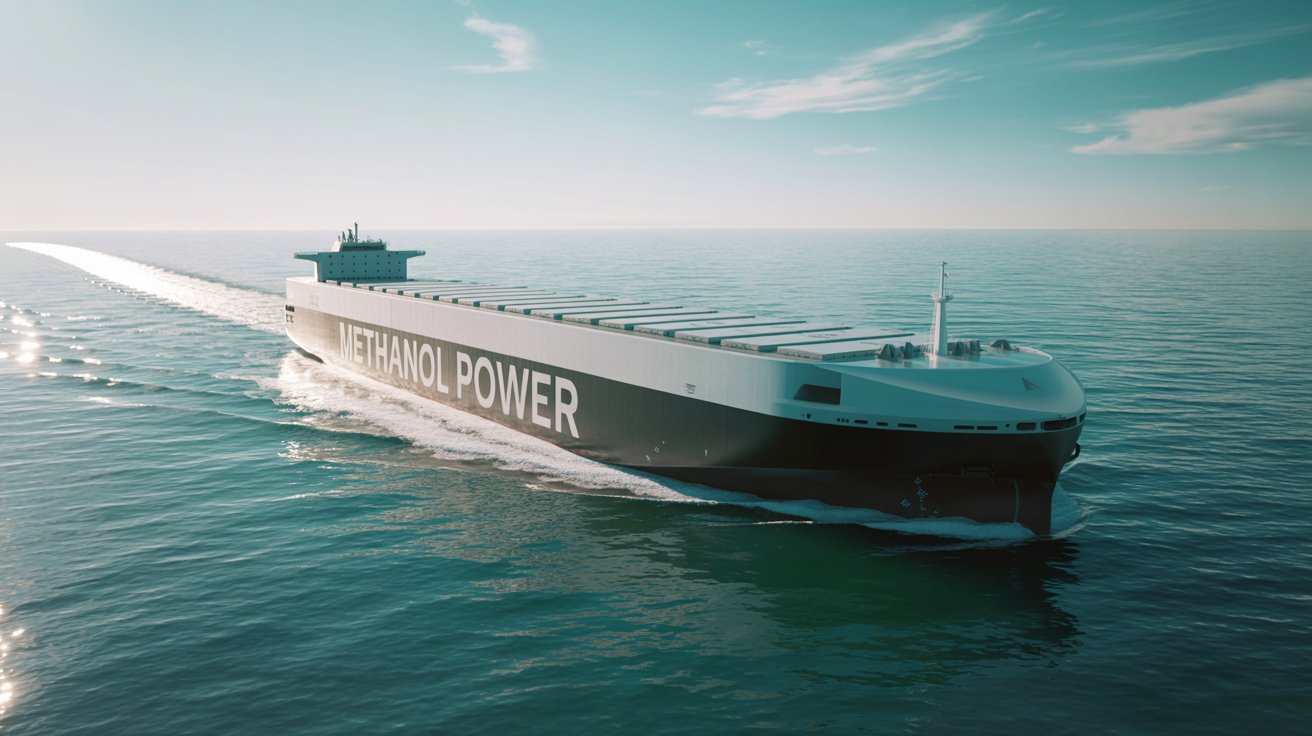
The Rise of Methanol in Maritime Transport: Environmental Benefits, Market Growth of $30.98 Billion Green Shipping Industry by 2035
Growing Market Confidence in Green Methanol Shipping
The green methanol ships market is estimated to be valued at USD 4.29 billion in 2025 and is projected to reach USD 15.25 billion by 2030, growing at a CAGR of 28.9% between 2025 and 2030. Further expansion is expected to drive the market to USD 30.98 billion by 2035, with an overall CAGR of 21.9% during 2025–2035. This growth reflects increasing trust in methanol's environmental benefits and its alignment with long-term sustainability goals.
Key growth drivers include the global shift to sustainable maritime practices, IMO decarbonization goals, and strong corporate ESG commitments by shipping companies. Adoption is also fueled by technological advancements such as dual-fuel engines that offer operational flexibility and improved fuel efficiency. Additionally, investments in renewable methanol production—from biomass and green hydrogen—and the development of methanol bunkering infrastructure at major ports are enabling greater scalability.
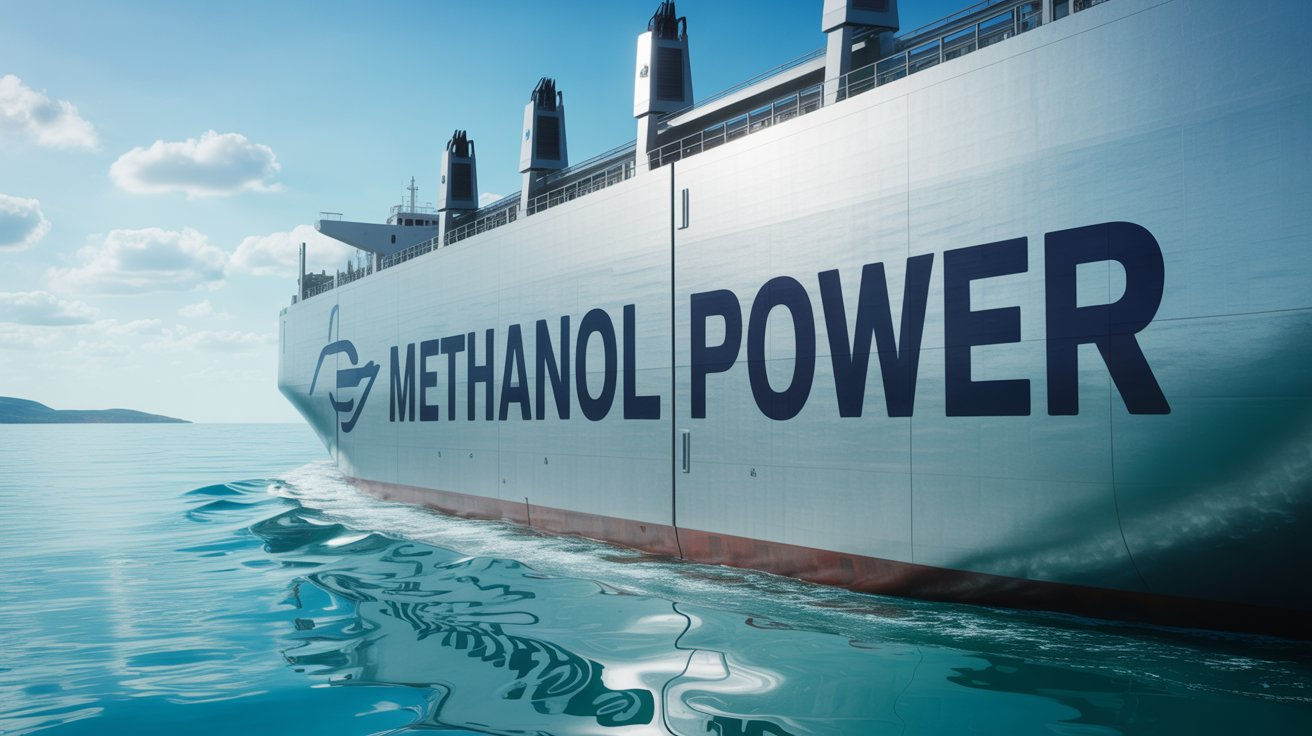
The market presents attractive opportunities across segments and geographies. Countries such as Brazil and Mexico are making significant investments in green methanol infrastructure. Meanwhile, passenger vessels are anticipated to play a key role, with their segment projected to reach USD 8.4 billion by 2035, at a CAGR of 11.2%. Collaborations, contracts, and partnerships across the value chain are expected to further accelerate market penetration in the coming years.
Environmental Benefits of Methanol Fuel in Shipping
As the global shipping industry intensifies its decarbonization efforts, methanol is emerging as a cleaner alternative to conventional marine fuels like heavy fuel oil (HFO) and marine diesel. With increasing regulatory pressure from the International Maritime Organization (IMO) and growing awareness about the environmental footprint of maritime transport, methanol offers a promising pathway toward more sustainable shipping.
1. Reduced Greenhouse Gas Emissions
Methanol significantly reduces greenhouse gas (GHG) emissions compared to fossil-based marine fuels. Depending on the production method—especially when derived from biomass or captured CO2—green or e-methanol can be nearly carbon-neutral, offering long-term decarbonization potential for the shipping industry.
2. Lower Air Pollutants
Methanol combustion generates no sulfur oxides (SOx) and substantially lower nitrogen oxides (NOx) and particulate matter (PM) compared to traditional fuels. This helps ships comply with IMO’s stringent sulfur cap (0.5% global limit) and regional emission control areas (ECAs), improving air quality in port cities and coastal regions.
3. Biodegradable and Water-Soluble
In case of a spill, methanol is less environmentally harmful than heavy fuel oil. It is biodegradable, water-soluble, and evaporates quickly, minimizing the ecological damage to marine ecosystems.
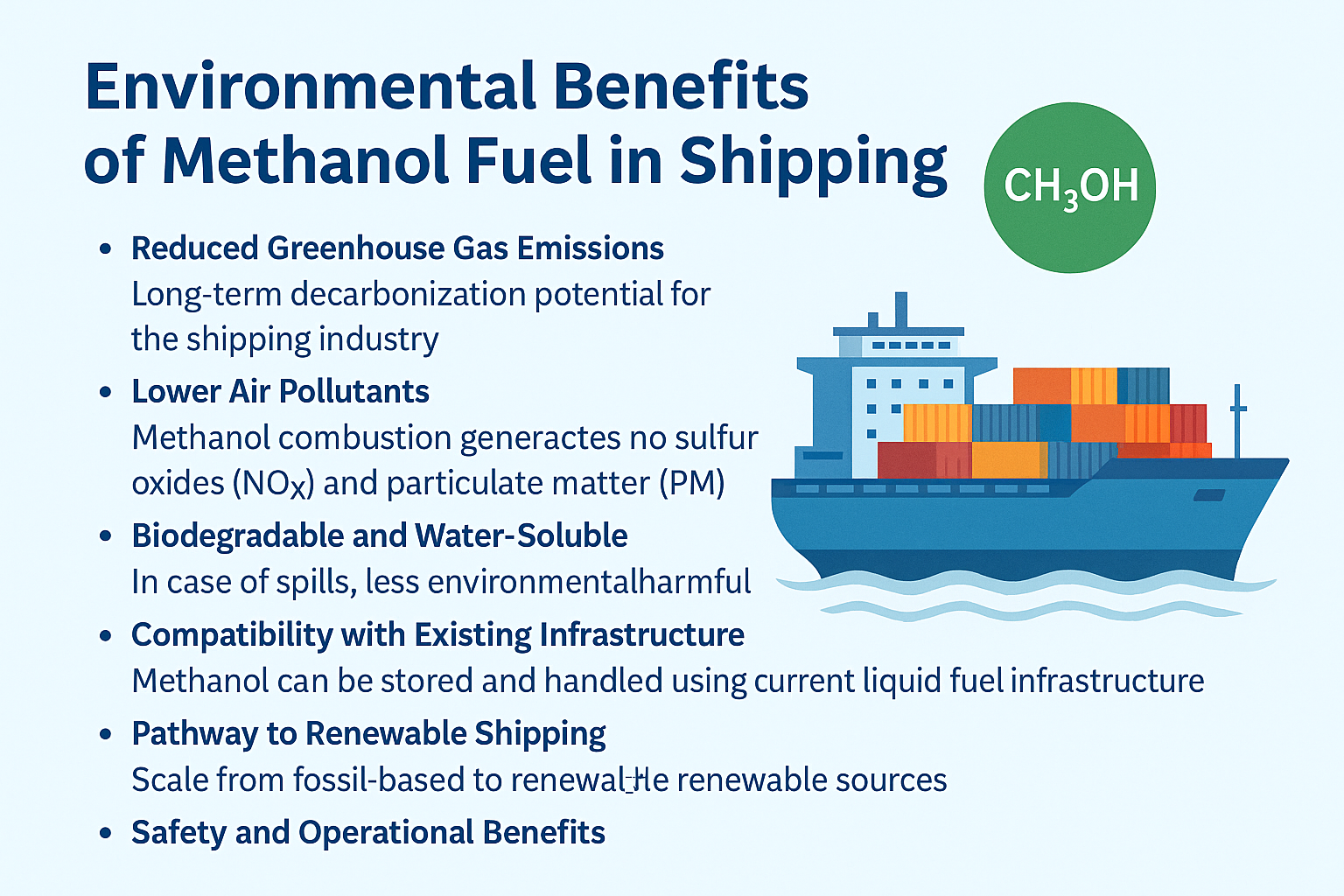
4. Compatibility with Existing Infrastructure
Methanol can be stored and handled using existing liquid fuel infrastructure with minor modifications, allowing for smoother adoption across global ports without massive capital investment or retrofitting.
5. Pathway to Renewable Shipping
Methanol is one of the few fuels that can scale from fossil-based to renewable sources, offering shipowners a transition fuel today and a fully green solution tomorrow. As production of bio-methanol and e-methanol expands, the shipping industry can achieve significant reductions in lifecycle emissions.
6. Safety and Operational Benefits
Methanol is less flammable than LNG and has a high flashpoint, making it safer to handle aboard ships. Its simple molecular structure also ensures complete combustion, reducing engine deposits and maintenance.
Top Key Market Players
The report profiles key players such as HD Hyundai Heavy Industries (South Korea), Samsung Heavy Industries (South Korea), COSCO Shipping Industries Co., Ltd. (China), Huangpu Wenchong Shipbuilding Company Limited (China), and Shanghai Waigaoqiao Shipbuilding Co., Ltd. (China), Damen Shipyards Group (Netherlands), VARD AS (Norway), Sanlorenzo Yachts Limited (England) and Archipelago Expedition Yachts (England) among others.
With strong policy support, increasing investments, and accelerating technology development, methanol is no longer just a low-emission alternative, it’s fast becoming a cornerstone of green shipping.
Methanol’s environmental advantages, operational flexibility, and pathway to carbon neutrality position it as a vital fuel in the transition toward sustainable, future-ready maritime transport.
80% of the Forbes Global 2000 B2B companies rely on MarketsandMarkets to identify growth opportunities in emerging technologies and use cases that will have a positive revenue impact.
- Food Packaging Market Size Set for Strong Growth Through 2030 Amid Rising Demand for Convenience Foods
- Crop Protection Chemical Market Size, Share & Growth Forecast (2025–2030)
- Mulch Films Market: Driving Sustainable Agriculture Through Innovation
- Agricultural Adjuvants Market Analysis, Trends, and Growth Outlook (2026–2031)
- Japan Enterprise Asset Management Market Growth: AI and Smart Infrastructure Drive Demand