

Methanol Engines Technology Innovation: Key Trends, Growth Drivers and Opportunities
Introduction to Methanol Engines Technology
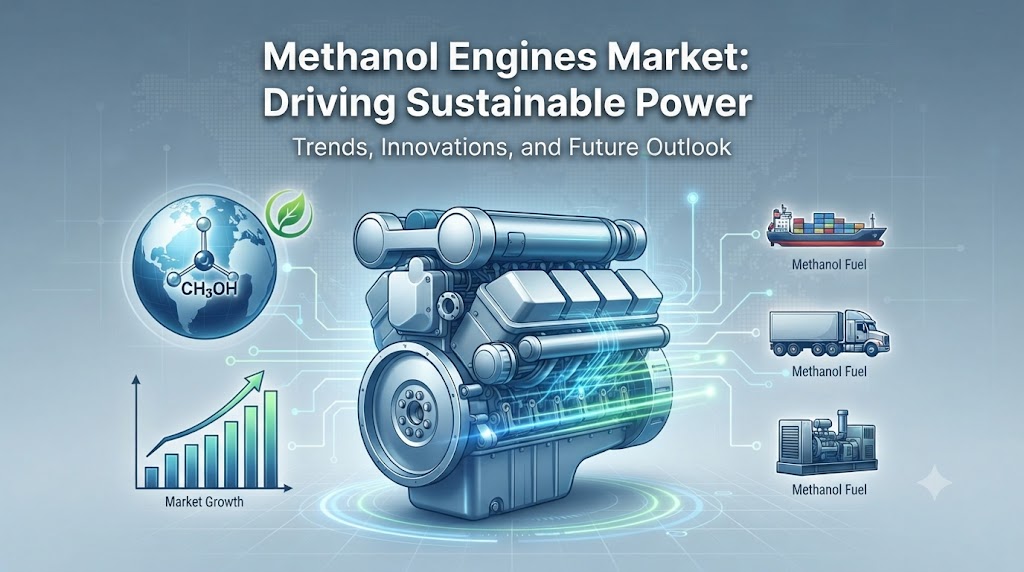
In the rapidly evolving energy and transportation landscape, methanol engines have emerged as a promising technology for supporting the transition toward cleaner and more sustainable propulsion solutions. Methanol is a versatile liquid fuel that can be produced from natural gas, coal, biomass, and increasingly from renewable sources such as green hydrogen and captured carbon dioxide. Methanol engines are designed to utilize methanol as a fuel, providing an alternative to conventional fossil fuels across marine, automotive, power generation, and other heavy-duty applications.
As governments and industries worldwide focus on reducing greenhouse gas emissions and achieving ambitious decarbonization targets, methanol is gaining attention as a potential low-carbon and scalable fuel. Unlike some alternative energy technologies that require significant infrastructure changes, methanol can be stored and transported as a liquid fuel using established fuel-handling systems, creating opportunities for its adoption in existing and next-generation engines. The development of advanced methanol engines is also being supported by innovations in fuel injection, combustion control, engine optimization, hybridization, and digital monitoring. As we explore the future of methanol engine technology, we uncover a rapidly developing field of innovation that promises to reshape the transportation and energy sectors while supporting the global transition toward lower-carbon fuels.
History of Methanol Engines Technology
The use of methanol as an engine fuel has been explored for several decades. Methanol has historically been considered an alternative fuel for internal combustion engines due to its high octane rating and combustion characteristics. Research and development activities have investigated methanol blending and dedicated methanol-fueled engines for automotive and industrial applications. Over time, advancements in engine design and fuel delivery systems have improved the performance and efficiency of methanol-powered engines. The growing focus on alternative fuels has renewed interest in methanol, particularly as the global transportation industry seeks solutions to reduce dependence on conventional petroleum-based fuels.
In the maritime sector, methanol has gained increasing attention as a potential lower-emission alternative fuel for commercial vessels. The development of dual-fuel and methanol-capable marine engines has accelerated the adoption of methanol as shipping companies explore pathways toward decarbonization. Today, technological innovation is expanding the potential applications of methanol engines across marine transportation, commercial vehicles, power generation, and other heavy-duty sectors.
Benefits of Methanol Engines Technology
Methanol engine technology offers numerous advantages over conventional fossil-fuel-based propulsion systems:
-
Lower Emission Potential: Methanol can help reduce certain emissions compared with conventional fuels, particularly when produced from low-carbon or renewable sources.
-
Fuel Flexibility: Methanol can be produced from multiple feedstocks, including natural gas, biomass, and renewable energy pathways, providing flexibility in fuel sourcing.
-
Existing Infrastructure Compatibility: As a liquid fuel, methanol can be stored, transported, and distributed using infrastructure systems that are relatively familiar to the energy industry.
-
Decarbonization Potential: Renewable or green methanol can provide a pathway toward lower-carbon transportation and energy systems, particularly in hard-to-abate sectors such as maritime transportation.
Current Market Size and Growth Trends of Methanol Engines Industry
The global Methanol Engines market is witnessing significant growth as industries increasingly explore alternative fuels to reduce emissions and improve energy sustainability. The growing focus on decarbonization, particularly in maritime transportation and heavy-duty applications, is encouraging investments in methanol-compatible engines and supporting infrastructure.
According to MarketsandMarkets, the global Methanol Engines Market size was valued at USD 0.79 Billion in 2026 and is projected to reach USD 5.39 Billion by 2035, growing at a CAGR of 24.0% from 2026 to 2035.
This rapid growth can be attributed to several factors, including:
-
Increasing global focus on reducing greenhouse gas emissions from transportation and energy sectors
-
Growing adoption of methanol as an alternative and lower-carbon fuel
-
Rising investments in green methanol and renewable methanol production
-
Increasing demand for cleaner propulsion solutions in the maritime industry
-
Advancements in dual-fuel and methanol-compatible engine technologies
As industries continue searching for scalable alternatives to conventional fossil fuels, methanol engines are expected to become increasingly important in the transition toward cleaner and more sustainable energy systems.
Key Drivers and Factors Influencing the Future of Methanol Engines
Several key drivers and factors are shaping the future of methanol engine technology:
-
Decarbonization Initiatives: Governments and industries are implementing ambitious emission-reduction strategies, creating demand for alternative fuels and low-carbon propulsion technologies.
-
Growth of Green Methanol: The development of renewable methanol produced using renewable hydrogen and captured carbon dioxide is creating new opportunities for low-carbon engine applications.
-
Maritime Industry Transformation: The shipping industry is increasingly exploring alternative fuels to reduce emissions, supporting demand for methanol-capable marine engines.
-
Technological Advancements: Improvements in combustion technology, fuel injection systems, engine control, and dual-fuel configurations are enhancing the efficiency and performance of methanol engines.
-
Energy Security and Fuel Diversification: Methanol can be produced from diverse feedstocks, helping countries and industries diversify their energy sources and reduce dependence on traditional petroleum-based fuels.
Emerging Trends in Methanol Engines Technology
The future of methanol engines is shaped by several exciting trends and innovations:
-
Dual-Fuel Methanol Engines: Advanced engines capable of operating on methanol and conventional fuels are gaining attention because they provide operators with greater fuel flexibility during the transition to cleaner energy.
-
Green Methanol Integration: The increasing availability of renewable and low-carbon methanol is expected to strengthen the environmental benefits of methanol-powered engines.
-
Digital Engine Management: Advanced sensors, artificial intelligence, and real-time monitoring systems are improving combustion control, fuel efficiency, and predictive maintenance.
-
Marine Methanol Propulsion: Methanol-powered engines are becoming increasingly important in the maritime sector as shipping companies seek scalable solutions for reducing carbon emissions.
-
Hybrid Methanol Power Systems: Methanol engines are increasingly being considered alongside batteries, fuel cells, and other energy technologies to create efficient hybrid propulsion and power-generation systems.
Opportunities and Challenges in the Methanol Engines Market
As the Methanol Engines market continues to evolve, it presents numerous opportunities for businesses and industries alike:
-
Market Expansion: The growing demand for alternative fuel technologies across marine transportation, commercial vehicles, power generation, and industrial applications offers significant growth opportunities for companies operating in this market.
-
Innovation and Product Differentiation: Companies that invest in advanced combustion technologies, dual-fuel engines, digital controls, and high-efficiency methanol propulsion systems can gain a competitive advantage.
-
Green Methanol Ecosystem Development: The expansion of green methanol production, storage, distribution, and bunkering infrastructure presents opportunities across the entire methanol value chain.
However, the Methanol Engines market also faces several challenges that need to be addressed:
-
Methanol Production and Availability: Expanding the supply of affordable low-carbon and renewable methanol remains an important challenge for large-scale adoption.
-
Infrastructure Development: The development of dedicated methanol storage, transportation, fueling, and bunkering infrastructure is essential for supporting widespread deployment.
-
Fuel Cost Considerations: The cost competitiveness of methanol compared with conventional fuels and other alternative energy sources can influence adoption decisions.
-
Safety and Handling Requirements: Methanol has specific toxicity and handling characteristics that require appropriate safety procedures, infrastructure, and workforce training.
Innovations and Advancements in Methanol Engines Technology
The future of methanol engines is being shaped by a multitude of innovative technologies and advancements:
-
Advanced Fuel Injection Systems: Modern fuel injection technologies are improving the precision of methanol delivery, supporting better combustion efficiency and engine performance.
-
Dual-Fuel Engine Technology: Dual-fuel engines enable vessels and vehicles to operate using methanol alongside conventional fuels, providing flexibility during the transition to alternative energy.
-
Intelligent Combustion Management: Advanced electronic engine control systems can optimize combustion parameters in real time to improve efficiency and reduce emissions.
-
Hybrid Propulsion Systems: Methanol engines can be combined with battery-electric systems and other technologies to optimize energy consumption and reduce overall emissions.
-
Integration with Green Methanol: The development of renewable methanol production technologies is creating opportunities for engines to operate using fuels with significantly lower lifecycle carbon emissions.
Future Applications and Industries That Will Benefit from Methanol Engines Technology
The future of methanol engine technology holds immense potential across a wide range of applications and industries:
-
Maritime Industry: Commercial ships, container vessels, tankers, ferries, and other marine platforms are expected to benefit from methanol-capable propulsion systems as the shipping industry seeks to reduce emissions.
-
Automotive and Commercial Transportation: Methanol engines may find applications in selected commercial vehicles and heavy-duty transportation sectors where liquid alternative fuels can provide operational flexibility.
-
Power Generation: Methanol engines can be used for distributed and backup power generation, particularly in regions seeking fuel diversification and lower-emission energy solutions.
-
Industrial Applications: Industrial facilities can utilize methanol-powered engines for specialized power and energy applications where reliable and flexible fuel sources are required.
-
Hybrid Energy Systems: Methanol engines can be integrated with batteries and renewable energy technologies to create flexible hybrid power systems for transportation and stationary applications.
-
Marine and Port Infrastructure: The growth of methanol-powered shipping is expected to create opportunities for methanol bunkering, fuel storage, distribution, and related infrastructure services at major ports.
Conclusion: The Promising Future of Methanol Engines Technology
The future of Methanol Engines technology is filled with exciting possibilities and transformative advancements. As industries worldwide accelerate their transition toward cleaner energy systems, methanol is emerging as a flexible alternative fuel capable of supporting decarbonization across several hard-to-abate sectors. From dual-fuel marine engines and advanced fuel injection systems to green methanol integration and hybrid propulsion technologies, the future of methanol engines promises to contribute significantly to the development of lower-carbon transportation and energy solutions.
However, realizing the full potential of methanol engines will require continued research and development, addressing challenges related to fuel availability, production costs, infrastructure development, safety, and lifecycle emissions. Collaboration among engine manufacturers, fuel producers, shipping companies, governments, and infrastructure providers will be crucial in accelerating the adoption of methanol-powered technologies. As we look ahead, one thing is certain: the future of methanol engines is promising, and their impact will increasingly be felt across the global transportation and energy landscape, supporting the transition toward more flexible, efficient, and sustainable power solutions.
Discover the latest advancements and solutions in Methanol Engines technology by exploring comprehensive market research and industry analysis. Stay ahead of emerging trends and explore how advanced methanol propulsion technologies, green methanol production, and dual-fuel engine systems are shaping the future of sustainable transportation and energy.
Download Sample Research Report for Methanol Engines Market Future:
https://www.marketsandmarkets.com/Market-Reports/methanol-engines-market-127504365.html
80% of the Forbes Global 2000 B2B companies rely on MarketsandMarkets to identify growth opportunities in emerging technologies and use cases that will have a positive revenue impact.
- Food Packaging Market Size Set for Strong Growth Through 2030 Amid Rising Demand for Convenience Foods
- Crop Protection Chemical Market Size, Share & Growth Forecast (2025–2030)
- Mulch Films Market: Driving Sustainable Agriculture Through Innovation
- Agricultural Adjuvants Market Analysis, Trends, and Growth Outlook (2026–2031)
- Japan Enterprise Asset Management Market Growth: AI and Smart Infrastructure Drive Demand

