

How Satellite Communications Services Market Are Transforming Connectivity
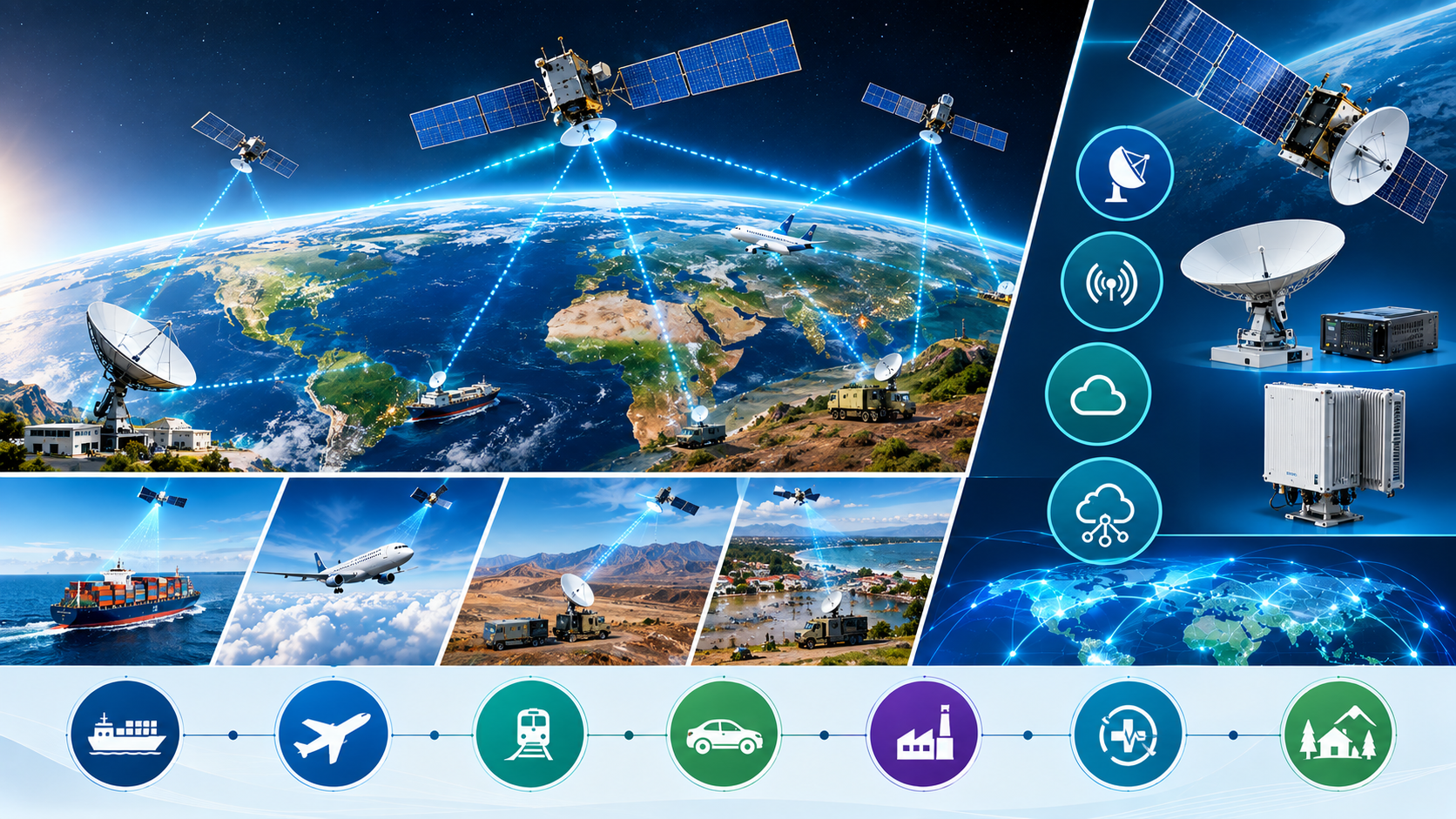
The global communications industry is entering a new phase of connectivity expansion as organizations increasingly depend on reliable voice, data, broadband, and secure communication across fixed and mobile environments. Satellite communication is becoming increasingly important in locations where terrestrial networks are unavailable, difficult to deploy, or unable to provide the required level of connectivity. This transformation is expanding the role of satellite communications services across defense, aviation, maritime, telecommunications, enterprise, remote infrastructure, and critical operations.
The Satellite Communications Service Market is evolving beyond traditional satellite connectivity. Service providers are increasingly supporting a broader ecosystem that includes satellite terminals, antennas, modems, routers, radios, network management, connectivity services, technical support, and operational assistance. As users demand continuous connectivity across aircraft, ships, vehicles, remote sites, and critical operations centers, satellite communication services are becoming an important component of modern communication infrastructure.
The market is also moving toward more integrated and intelligent service models. Providers are increasingly focused on reliable broadband connectivity, secure voice and data communication, network management, remote monitoring, technical support, and lifecycle services. The result is a transition from basic satellite connectivity toward integrated communication services capable of supporting increasingly distributed and mobile users.
Satellite Communications Service Market Enters an Investment Driven Growth Phase
Satellite communications services are attracting increasing investment because organizations require reliable connectivity across locations where terrestrial communication networks cannot always provide sufficient coverage. Aircraft, ships, vehicles, remote sites, and critical operations centers can depend on satellite communication to maintain voice, data, and broadband connectivity.
According to the supplied MarketsandMarkets information, the Global Satellite Communication Equipment Market is projected to grow from USD 29.05 billion in 2026 to USD 56.12 billion by 2032, registering a CAGR of 11.6% during the forecast period. The market is being supported by increasing demand for reliable connectivity across aircraft, ships, vehicles, remote sites, and critical operations centers.
This expansion of the SATCOM ecosystem creates opportunities for service providers across connectivity, network management, equipment support, technical assistance, and communication infrastructure management.
The investment environment is also expanding beyond traditional satellite operators. Communication service providers, equipment manufacturers, network integrators, software companies, technology developers, and specialized support organizations can participate in the broader satellite communications services ecosystem.
Satellite Connectivity Is Becoming a Critical Communication Requirement
Satellite communication services provide an important connectivity option in environments where terrestrial infrastructure may not be available.
Remote locations, aircraft, ships, vehicles, and critical facilities can face connectivity challenges because of geographic isolation or limited terrestrial infrastructure. Satellite communication can provide a connection between these locations and broader communication networks.
The increasing dependence on connectivity is making service reliability an important consideration. Users increasingly require communication systems capable of supporting voice, data, and broadband applications.
This is creating demand for services that extend beyond connectivity itself. Network management, technical support, equipment monitoring, troubleshooting, maintenance, and service optimization are becoming increasingly important components of the satellite communications ecosystem.
AI Is Transforming Satellite Communications Services
Artificial intelligence is becoming an important technology across modern communication networks. AI can support network monitoring, anomaly detection, traffic analysis, predictive maintenance, and service optimization.
Satellite communication networks can generate significant amounts of operational information. AI based systems can analyze this information to identify unusual behavior, detect potential performance issues, and support more efficient network management.
AI can also help service providers understand network utilization and identify potential capacity requirements. This can support better resource allocation and service planning.
As satellite communications services become more complex, AI can therefore become increasingly important for managing connectivity across geographically distributed users and platforms.
Advanced Network Management Is Expanding Service Capabilities
Satellite communications services increasingly depend on sophisticated network management capabilities. Users may operate multiple terminals, communication links, platforms, and locations.
Managing these systems requires visibility into connectivity status, equipment performance, network utilization, and service availability.
Network management platforms can provide centralized monitoring and operational control. Service providers can use these platforms to identify connectivity issues and support customers across multiple locations.
This is particularly relevant for enterprise, defense, aviation, maritime, and telecom customers that require consistent communication across geographically distributed operations.
Secure Communication Is Supporting Market Expansion
Security is becoming increasingly important as organizations depend on satellite communications for voice and data connectivity.
The supplied information identifies demand for secure voice, data, and broadband communication across fixed and mobile platforms as an important factor supporting the SATCOM ecosystem.
Service providers therefore need to consider communication security as part of their overall service architecture.
Secure communication can involve protected network access, controlled user authentication, secure data transmission, and appropriate network management practices.
For defense and critical operations users, secure communication capabilities can be particularly important because communication networks may support operationally important activities.
Defense Applications Are Expanding Satellite Communications Services
Defense represents an important application area for satellite communications. Military organizations can operate across geographically distributed environments where reliable terrestrial connectivity is not always available.
The supplied information identifies defense as one of the sectors contributing to SATCOM equipment demand.
Satellite communication services can support voice, data, broadband communication, and connectivity between operational platforms and command centers.
Defense users can also require communication across vehicles, aircraft, ships, remote locations, and fixed facilities.
This creates opportunities for service providers capable of delivering reliable connectivity across multiple platforms and operational environments.
Aviation Is Creating New Opportunities for Satellite Communication Services
Aviation is another important application area for satellite communications. Aircraft can operate over large geographic areas where terrestrial communication coverage is limited or unavailable.
The supplied information identifies aviation among the sectors contributing to SATCOM market growth.
Satellite communication services can support aircraft connectivity and communication requirements across flight operations.
The aviation environment also creates specialized service requirements. Communication systems must operate reliably under demanding conditions, while aircraft operators seek to minimize service interruptions.
Service providers can therefore support the aviation sector through connectivity, equipment support, network management, diagnostics, and technical services.
Maritime Connectivity Is Creating Long Term Service Opportunities
Maritime users represent another important market for satellite communications services. Ships frequently operate far from terrestrial communication infrastructure, making satellite connectivity an important communication option.
The supplied market information identifies ships and maritime users among the environments driving demand for reliable SATCOM connectivity.
Satellite communication services can support voice, data, broadband, operational communication, and other connectivity requirements for maritime platforms.
The maritime environment also presents technical challenges because communication equipment must operate under conditions involving movement, weather exposure, humidity, and saltwater.
Service providers can therefore offer specialized connectivity management, technical support, equipment monitoring, and maintenance services for maritime customers.
Remote Sites Are Increasing Demand for Satellite Communication Services
Remote sites represent one of the strongest use cases for satellite communications because terrestrial networks may not always be available.
The supplied information identifies remote sites as an important environment contributing to SATCOM equipment demand.
Organizations operating remote facilities may depend on satellite connectivity for communication with centralized operations.
This creates demand for reliable service management, remote monitoring, technical support, equipment maintenance, and troubleshooting.
Service providers that can support customers without requiring frequent physical intervention can create additional value through remote network management and diagnostics.
Satellite Terminals Are Becoming Important Service Components
Satellite terminals are an important part of the SATCOM equipment ecosystem identified in the supplied market information.
Terminals provide the interface between users and satellite communication networks. Their performance can influence overall connectivity quality.
Satellite communications service providers can support terminal installation, configuration, monitoring, troubleshooting, maintenance, and operational management.
As organizations deploy terminals across multiple locations, centralized terminal management can become increasingly important.
This can create opportunities for service providers that combine connectivity with equipment lifecycle support.
Antennas Are Expanding the Technical Service Ecosystem
Antennas are another important component of satellite communication systems.
Antenna performance can influence communication quality, particularly across mobile platforms and demanding operating environments.
Service providers can support antenna installation, inspection, alignment, testing, repair, and maintenance.
The integration of antenna services with broader satellite communication offerings can enable providers to deliver more comprehensive connectivity support.
This also creates opportunities for specialized technical service companies operating within the broader SATCOM ecosystem.
Modems and Routers Are Increasing the Importance of Network Services
The supplied information identifies modems and routers as important components of SATCOM equipment.
These components help connect satellite communication systems with broader networks and user equipment.
As communication networks become increasingly complex, service providers need to support not only satellite links but also the equipment responsible for processing and distributing connectivity.
This can create opportunities in network configuration, troubleshooting, monitoring, software support, equipment replacement, and lifecycle management.
Radio Equipment Is Supporting Broader Communication Services
Radios are another important component of the SATCOM equipment ecosystem.
Radio equipment can support voice and data communication across fixed and mobile environments.
The integration of radios with satellite communication infrastructure can expand service requirements beyond simple satellite connectivity.
Service providers can therefore develop integrated offerings covering equipment support, communication management, network monitoring, troubleshooting, and technical assistance.
Telecom Backhaul Is Creating Additional Service Demand
Telecom backhaul represents another important application area identified in the supplied information.
Satellite communication can support network connectivity in locations where terrestrial backhaul infrastructure is limited or unavailable.
This creates opportunities for service providers to support telecom operators with connectivity management, equipment support, monitoring, troubleshooting, and network availability services.
As telecom operators expand connectivity into remote locations, satellite based backhaul can become an important component of broader network architectures.
Enterprise Connectivity Is Expanding the Customer Base
Enterprise users are also contributing to the demand for satellite communication services.
Organizations operating across geographically distributed locations can use satellite communication when terrestrial networks cannot provide sufficient coverage.
Enterprise customers can require reliable broadband connectivity, voice communication, data transfer, network management, and technical support.
This creates opportunities for service providers to develop flexible satellite communication solutions designed around enterprise operational requirements.
Fixed and Mobile Platforms Are Expanding the Service Opportunity
Satellite communication services increasingly need to support both fixed and mobile platforms.
Fixed sites can include critical operations centers and remote facilities, while mobile platforms can include aircraft, ships, and vehicles. The supplied information identifies these environments as important sources of SATCOM demand.
Each platform presents different service requirements.
Fixed installations can emphasize network availability, equipment monitoring, and infrastructure support. Mobile platforms can require specialized connectivity management, mobility support, antenna operation, and equipment servicing.
Service providers capable of supporting both fixed and mobile environments can address a broader customer base.
Remote Monitoring Is Changing Satellite Communications Operations
Remote monitoring is becoming increasingly important as satellite communication infrastructure becomes more geographically distributed.
Service providers can use monitoring platforms to track equipment performance, connectivity status, network conditions, and service availability.
Remote monitoring can reduce the need for physical intervention and help service providers identify potential issues earlier.
This is particularly valuable for remote sites, ships, vehicles, and other installations where physical access can be difficult.
The growing use of digital monitoring can therefore improve operational efficiency while supporting more proactive service delivery.
Predictive Maintenance Could Improve Service Reliability
Predictive maintenance can support the transition from reactive service management toward proactive equipment support.
Satellite communication systems include multiple components that can experience performance degradation over time. By analyzing equipment behavior and historical information, service providers can identify potential problems before they result in significant interruptions.
Predictive maintenance can support equipment inspections, component replacement planning, service scheduling, and lifecycle decisions.
As more SATCOM systems become digitally connected, the availability of equipment data can increase, creating additional opportunities for predictive analytics.
Cloud Based Management Is Increasing Service Flexibility
Cloud based technologies can support centralized management of satellite communication services across geographically distributed locations.
Service providers can use cloud platforms to provide network monitoring, equipment information, service management, analytics, and customer support.
Centralized systems can be particularly useful for enterprises and organizations operating communication infrastructure across multiple locations.
Cloud based service management can also support collaboration between customers, network operators, equipment providers, and maintenance teams.
This can help create a more integrated satellite communication service ecosystem.
Cybersecurity Becomes a Critical Requirement
The increasing digitalization of satellite communication services creates additional cybersecurity considerations.
Communication networks depend on terminals, antennas, modems, routers, radios, software, network connections, and data systems. Protecting these components is increasingly important.
Service providers may need to incorporate secure access, authentication, data protection, monitoring, and appropriate cybersecurity practices into their service architecture.
For defense and critical operations customers, cybersecurity can be an important requirement for satellite communications services.
The integration of cybersecurity into network management and service delivery is therefore likely to become increasingly important as connectivity becomes more digital and interconnected.
Service Providers Are Moving Toward Integrated Lifecycle Support
The satellite communications services ecosystem is increasingly moving toward integrated lifecycle support.
Customers may prefer providers that can manage connectivity, equipment installation, configuration, monitoring, maintenance, troubleshooting, upgrades, and technical support through a unified service relationship.
This approach can provide greater visibility into equipment performance and service availability.
It can also create longer term relationships between service providers and customers.
As the SATCOM equipment installed base expands, lifecycle services can become an increasingly important component of the overall market opportunity.
Challenges Could Slow Satellite Communications Service Adoption
Despite strong growth opportunities, several challenges remain.
Satellite communications services can involve complex technology architectures that integrate terminals, antennas, modems, routers, radios, networks, and satellite infrastructure.
Supporting these systems requires specialized technical expertise and coordination across multiple components.
Remote and mobile operating environments can also create logistical challenges. Service providers may need to support aircraft, ships, vehicles, and remote sites where physical access can be difficult.
Another challenge is the requirement for reliable and secure connectivity. Customers increasingly expect high service availability, while communication failures can create significant operational consequences.
Service providers must therefore invest in network management, technical expertise, cybersecurity, monitoring capabilities, and customer support.
Investment and Innovation Are Expanding Globally
The expansion of satellite communication is creating opportunities across multiple sectors and geographic environments.
According to the supplied information, the SATCOM Equipment Market is projected to grow from USD 29.05 billion in 2026 to USD 56.12 billion by 2032 at a CAGR of 11.6%.
This growth is being supported by demand across defense, aviation, maritime, telecom backhaul, and enterprise applications.
As satellite communication equipment becomes more widely deployed, the service ecosystem around these systems can also expand.
Opportunities can emerge across connectivity services, network management, equipment support, technical services, remote monitoring, cybersecurity, maintenance, and lifecycle management.
Future Outlook for the Satellite Communications Service Market
The future of the Satellite Communications Service Market is expected to be shaped by increasing dependence on reliable connectivity across fixed and mobile environments.
The supplied information indicates that the SATCOM Equipment Market is projected to reach USD 56.12 billion by 2032 from USD 29.05 billion in 2026, reflecting a CAGR of 11.6%.
The growth of SATCOM equipment creates a broader opportunity for service providers because communication infrastructure requires continuous management and technical support throughout its operating life.
Satellite communications services are likely to evolve toward integrated offerings that combine connectivity, network management, equipment support, monitoring, diagnostics, cybersecurity, and lifecycle services.
AI and advanced analytics can support more intelligent network operations, while remote monitoring can help service providers manage geographically distributed infrastructure more efficiently.
The future market is therefore likely to focus increasingly on service reliability, intelligent network management, secure connectivity, and integrated lifecycle support.
Satellite Communications Services Are Becoming Intelligent Connectivity Platforms
The Satellite Communications Service Market is moving into a new phase defined by growing connectivity requirements, broader equipment deployment, digital network management, and increasing dependence on reliable communication.
The Supplied SATCOM Market outlook indicates growth from USD 29.05 billion in 2026 to USD 56.12 billion by 2032, at a CAGR of 11.6%.
The opportunity extends beyond satellite connectivity itself. Terminals, antennas, modems, routers, and radios are becoming components of a larger communication ecosystem requiring network management, technical support, monitoring, maintenance, security, and lifecycle services.
For defense organizations, aviation operators, maritime users, telecom companies, enterprises, and remote site operators, satellite communications can provide connectivity where terrestrial networks are not always available.
For technology and service providers, the market creates opportunities across connectivity, network management, equipment support, remote diagnostics, cybersecurity, maintenance, and integrated lifecycle services.
As satellite communication adoption expands, the next stage of the industry will increasingly be defined by how effectively service providers can deliver secure, reliable, intelligent, and continuously managed connectivity across fixed and mobile platforms.
80% of the Forbes Global 2000 B2B companies rely on MarketsandMarkets to identify growth opportunities in emerging technologies and use cases that will have a positive revenue impact.
- Food Packaging Market Size Set for Strong Growth Through 2030 Amid Rising Demand for Convenience Foods
- Crop Protection Chemical Market Size, Share & Growth Forecast (2025–2030)
- Mulch Films Market: Driving Sustainable Agriculture Through Innovation
- Agricultural Adjuvants Market Analysis, Trends, and Growth Outlook (2026–2031)
- Japan Enterprise Asset Management Market Growth: AI and Smart Infrastructure Drive Demand


