
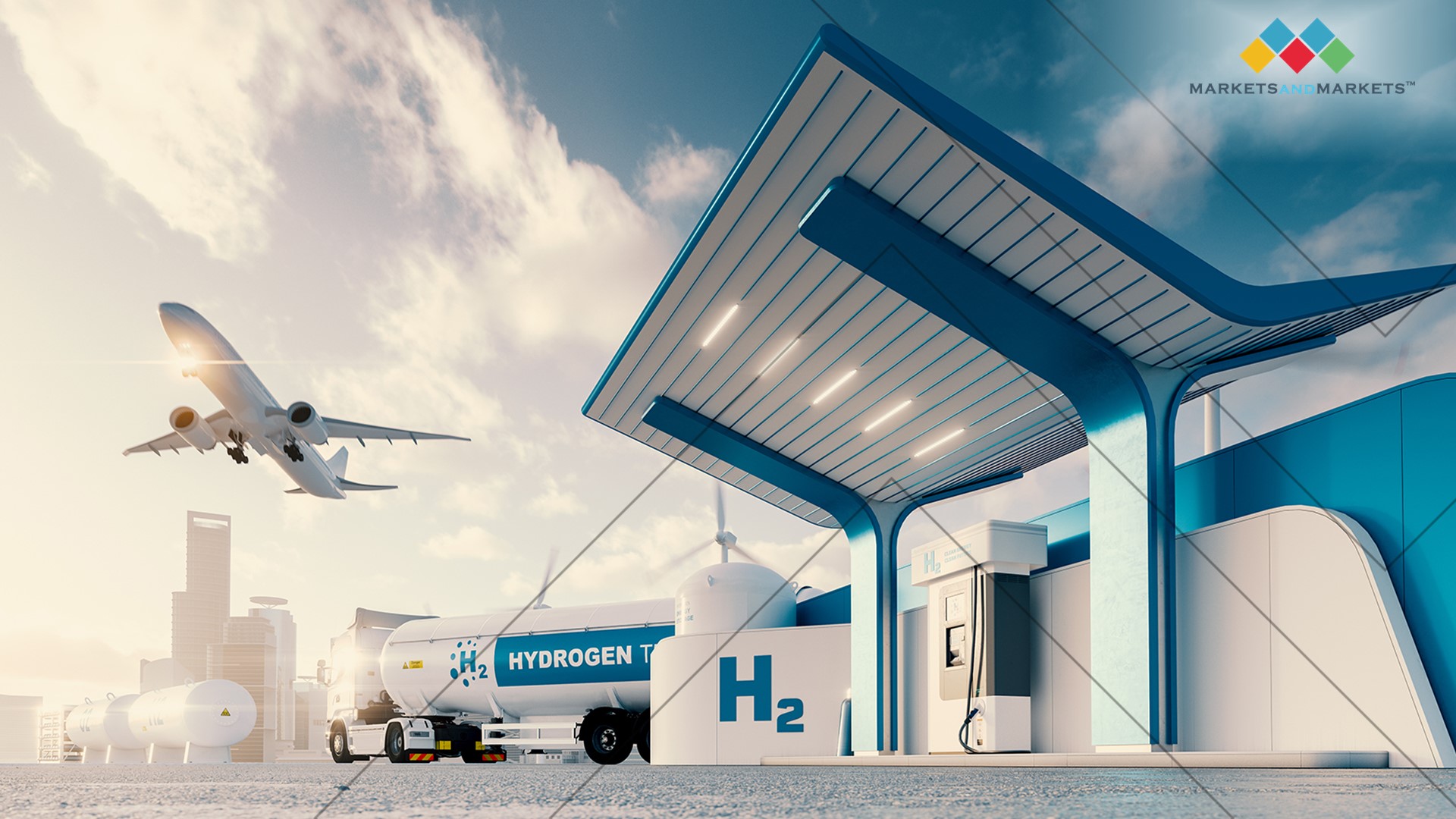
2025 Could Be Big For Hydrogen Technologies
Hydrogen Market: Driving the Future of Clean Energy
The Hydrogen Market is emerging as a cornerstone of the global energy transition, driven by decarbonization mandates, technological innovation, and the urgent need for sustainable fuel alternatives. From green hydrogen production to advanced storage and distribution infrastructure, the sector is experiencing rapid transformation and investment.
The global hydrogen market in terms of revenue expected to reach $410.6 billion by 2030, growing at a CAGR of 7.8%.
The global hydrogen market is rapidly evolving, positioning itself at the forefront of the clean energy revolution. As nations and industries strive to reduce carbon emissions and transition toward sustainable energy sources, hydrogen has emerged as a versatile and promising solution. Its unique ability to serve as a clean fuel, industrial feedstock, and energy carrier makes hydrogen a key player in the journey toward a net-zero future.
Key drivers include:
- Decarbonization targets set by governments and corporations worldwide.
- Energy security through diversification of fuel sources.
- Industrial demand for clean hydrogen in refining, ammonia, and methanol production.
- Emergence of hydrogen mobility in fuel cell vehicles, trains, and ships.
Understanding the Hydrogen Market Landscape
Hydrogen is not a new player in the industrial sector, but its role is expanding far beyond traditional uses in refining and ammonia production. Today, hydrogen is being recognized as a critical enabler for decarbonizing sectors that are otherwise hard to abate, such as heavy industry, long-haul transport, and power generation. The market is witnessing a significant shift, with increasing investments in green hydrogen—produced using renewable energy sources—and the development of infrastructure to support its production, storage, and distribution.
Technological Advancements and Innovations
Innovation is at the heart of the hydrogen market’s growth. The cost of electrolyzers is declining, making green hydrogen more competitive with traditional fuels. Large-scale projects are being launched, integrating hydrogen production with renewable energy sources like solar and wind. Hydrogen hubs—clusters that combine production, storage, and distribution—are emerging in key regions, facilitating efficient supply chains. Digital technologies and IoT solutions are being deployed to monitor hydrogen purity, flow, and safety in real time, ensuring operational efficiency and regulatory compliance.
Challenges and Opportunities
Despite its promise, the hydrogen market faces several challenges. The cost of producing green hydrogen remains higher than that of conventional fuels, although this gap is narrowing with technological progress and economies of scale. Infrastructure for hydrogen transport, storage, and refueling is still underdeveloped in many regions, requiring substantial investment. Regulatory frameworks and certification schemes for “clean” hydrogen are evolving, creating some uncertainty for investors and developers. Safety is another critical consideration, as hydrogen’s flammability demands advanced leak detection and handling protocols.
However, these challenges also present opportunities. Companies that invest early in scalable electrolyzer technologies, infrastructure development, and digital safety solutions are likely to gain a competitive edge. Public-private partnerships can help de-risk large-scale projects and accelerate innovation. As the market matures, the integration of renewable-powered hydrogen generation and circular economy models will further enhance sustainability.
Regional Insights
The hydrogen market exhibits distinct regional dynamics. Europe is leading the charge with robust policy support, significant investments in green hydrogen projects, and the development of cross-border infrastructure. The Asia-Pacific region, particularly Japan, South Korea, and China, is investing heavily in hydrogen mobility and industrial decarbonization. North America is witnessing growing adoption in both mobility and industrial applications, supported by incentives for clean hydrogen production. Other regions are in the early stages, focusing on pilot projects and international collaborations.
The Role of Fuel Cells in the Hydrogen Market
Fuel cells are a critical technology propelling the hydrogen market forward, offering a clean and efficient way to convert hydrogen into electricity. Unlike traditional combustion engines, fuel cells generate power through an electrochemical reaction between hydrogen and oxygen, producing only water and heat as byproducts. This makes them an attractive solution for reducing emissions in sectors such as transportation, stationary power generation, and backup energy systems. Fuel cell electric vehicles (FCEVs)—including cars, buses, trucks, and trains—are gaining momentum globally, supported by expanding refueling infrastructure and government incentives. Beyond mobility, fuel cells are being deployed in industrial settings and remote locations to provide reliable, off-grid power. As fuel cell technology continues to advance and scale, it is expected to play a pivotal role in accelerating the adoption of hydrogen as a mainstream energy carrier, further strengthening the market’s growth trajectory.
Competitive Landscape
The competitive landscape of the hydrogen market is characterized by the involvement of major industrial gas companies, energy majors, and technology providers. Companies such as Linde plc (Ireland), Air products and Chemicals, Inc. (US), Air Liquide (France), Worthington Industries (US), Cryolor (France), Hexagon Purus (Norway), NPROXX (Netherlands) are investing across the hydrogen value chain, from production and storage to distribution and end-use applications. These companies have been operating in the market for several years and possess a diversified product portfolio, state-of-the-art technologies, and strong global sales and marketing networks
Download PDF Brochure: https://www.marketsandmarkets.com/pdfdownloadNew.asp?id=132975342
Strategic Recommendations
- Invest in scalable, modular electrolyzer technologies to reduce costs and support flexible deployment.
- Prioritize infrastructure development—pipelines, storage, and refueling—to enable market growth.
- Foster public-private partnerships to accelerate innovation and de-risk large-scale projects.
- Implement digital and safety solutions for real-time monitoring and regulatory compliance.
- Advance sustainability initiatives by focusing on renewable-powered hydrogen and circular economy models.
Looking ahead, the hydrogen market is poised for robust growth. As costs continue to fall and infrastructure develops, hydrogen will play an increasingly central role in global energy systems. Strategic investments in technology, infrastructure, and partnerships will be crucial to unlocking the full potential of hydrogen. By embracing innovation and sustainability, stakeholders across the value chain can drive the transition to a cleaner, more resilient energy future.
80% of the Forbes Global 2000 B2B companies rely on MarketsandMarkets to identify growth opportunities in emerging technologies and use cases that will have a positive revenue impact.
- Food Packaging Market Size Set for Strong Growth Through 2030 Amid Rising Demand for Convenience Foods
- Crop Protection Chemical Market Size, Share & Growth Forecast (2025–2030)
- Mulch Films Market: Driving Sustainable Agriculture Through Innovation
- Agricultural Adjuvants Market Analysis, Trends, and Growth Outlook (2026–2031)
- Japan Enterprise Asset Management Market Growth: AI and Smart Infrastructure Drive Demand

