

Food as Medicine Market Size, Share, Growth Trends, and Forecast to 2031
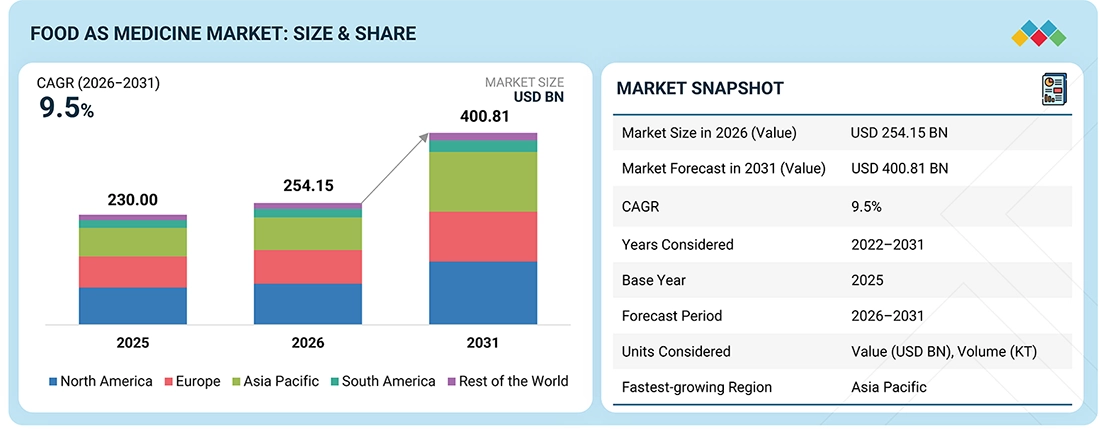
The global food as medicine market is witnessing remarkable expansion as healthcare systems, consumers, and food manufacturers increasingly recognize the role of nutrition in disease prevention and health management. According to MarketsandMarkets, the market is projected to grow from USD 254.15 billion in 2026 to USD 400.81 billion by 2031, registering a CAGR of 9.5% during the forecast period.
The growing prevalence of chronic diseases, rising consumer awareness regarding preventive healthcare, and increasing demand for personalized nutrition are transforming food from a source of basic nutrition into a scientifically supported health solution. Functional foods, medical foods, nutraceuticals, and therapeutic nutrition products are becoming integral components of modern healthcare strategies.
Market Highlights
- Market Size (2026): USD 254.15 Billion
- Projected Market Size (2031): USD 400.81 Billion
- CAGR (2026–2031): 9.5%
- Largest Product Segment: Functional Foods
- Fastest Growing Function: Cognitive & Mental Health
- Leading Region: Asia Pacific
What is Driving the Food as Medicine Market?
Several interconnected factors are accelerating the adoption of food-as-medicine solutions across global markets.
- The increasing incidence of diabetes, cardiovascular diseases, obesity, gastrointestinal disorders, and metabolic conditions has encouraged consumers to seek nutrition-based interventions alongside conventional treatments. Rather than focusing solely on disease treatment, healthcare providers are emphasizing preventive nutrition and lifestyle modifications.
- Advancements in nutrigenomics, microbiome research, and precision nutrition have also enabled companies to develop evidence-based products tailored to individual nutritional requirements. As scientific validation improves, consumer confidence in functional and therapeutic foods continues to grow.
- Government initiatives promoting healthier eating habits, expanding healthcare expenditures, and growing awareness of nutrition's role in long-term wellness further contribute to market expansion.
Emerging Trends Shaping the Food as Medicine Industry
Several long-term trends are expected to influence future market development:
- Growing consumer preference for preventive healthcare over reactive treatment continues to reshape purchasing behavior.
- Increasing integration of nutrition into clinical care and chronic disease management is creating stronger collaboration between healthcare providers and food manufacturers.
- Rapid adoption of microbiome-based nutrition, precision health technologies, and scientifically validated functional ingredients is expanding product innovation.
- The growing popularity of medically tailored meals and therapeutic nutrition programs is further supporting market growth across hospitals, healthcare institutions, and wellness organizations.
Download PDF Brochure: https://www.marketsandmarkets.com/pdfdownloadNew.asp?id=94945332
Functional Foods Continue to Dominate
Among product categories, functional foods account for the largest share of the Food as Medicine Market. Consumers increasingly prefer foods that offer health benefits beyond basic nutrition, including digestive support, immune enhancement, heart health, and metabolic wellness.
Manufacturers are investing heavily in fortified foods, probiotic products, high-protein formulations, and nutrient-enriched beverages to meet evolving consumer expectations.
Personalized Nutrition Creates New Growth Opportunities
One of the most significant opportunities within the Food as Medicine Market lies in personalized nutrition.
Advances in digital health technologies, genetic testing, wearable health devices, and artificial intelligence enable companies to develop customized nutrition plans based on individual health profiles. Personalized dietary recommendations are improving patient outcomes while creating new business models for healthcare providers, nutrition companies, and food manufacturers.
The integration of personalized nutrition into preventive healthcare programs is expected to become a major growth catalyst over the coming years.
Plant-Based Ingredients Gain Momentum
Consumers increasingly favor plant-based ingredients due to their perceived health benefits, sustainability, and clean-label appeal.
Plant-derived proteins, dietary fibers, botanical extracts, probiotics, vitamins, minerals, and bioactive compounds are becoming essential ingredients in food-as-medicine formulations. This shift aligns with growing consumer demand for natural, minimally processed, and science-backed nutritional products.
Request Sample Pages: https://www.marketsandmarkets.com/requestsampleNew.asp?id=94945332
Cognitive and Mental Health Applications Expand Rapidly
While food-as-medicine solutions have traditionally focused on metabolic and cardiovascular health, cognitive and mental wellness is emerging as one of the fastest-growing application areas.
Consumers are increasingly seeking nutritional products designed to support brain function, stress management, memory enhancement, mood improvement, and overall cognitive performance. This trend is encouraging manufacturers to invest in innovative formulations targeting mental well-being.
Asia Pacific Leads Global Market Growth
The Asia Pacific region represents the largest regional market, supported by expanding healthcare infrastructure, growing middle-class populations, rising disposable incomes, and increasing awareness of preventive healthcare.
Countries throughout the region are experiencing rapid adoption of functional foods, personalized nutrition products, and medical nutrition solutions, creating substantial opportunities for manufacturers and healthcare providers.
Competitive Landscape
The Food as Medicine Market features a combination of established global nutrition companies and emerging innovators focused on specialized healthcare nutrition.
Leading market participants continue investing in research and development, product innovation, strategic collaborations, personalized nutrition technologies, and evidence-based clinical nutrition solutions to strengthen their competitive positions.
Leading Food as Medicine Companies:
- Nestlé Health Science (Switzerland)
- Danone (France)
- Abbott Nutrition (US)
- Novonesis (Denmark)
- Amway (US)
- Herbalife (US)
- FrieslandCampina (Netherlands)
- Yakult Honsha Co., Ltd. (Japan)
- Reckitt Mead Johnson (UK)
- Herbalife (US)
- Unilever (UK)
- Otsuka Holdings (Japan)
- Probi AB (Sweden)
- Church & Dwight Co., Inc. (US)
- Meiji Holdings (Japan)
- Jamieson Wellness (Canada)
Future Outlook
The future of the Food as Medicine Market remains highly promising as consumers increasingly prioritize wellness, preventive healthcare, and personalized nutrition. Continued advances in nutrition science, healthcare integration, and functional ingredient development are expected to generate significant opportunities across developed and emerging markets.
As food continues evolving from a nutritional necessity into a clinically supported health intervention, industry participants that invest in scientific research, innovative formulations, and personalized health solutions are well positioned to benefit from the market's sustained expansion through 2031.
Make an Inquiry: https://www.marketsandmarkets.com/Enquiry_Before_BuyingNew.asp?id=94945332
Frequently Asked Questions:
What is the current size of the Food as Medicine Market?
The global Food as Medicine Market is valued at USD 254.15 billion in 2026 and is projected to reach USD 400.81 billion by 2031, growing at a CAGR of 9.5% during the forecast period. Rising consumer awareness of preventive healthcare and increasing demand for functional nutrition continue to support market expansion.
What factors are driving the growth of the Food as Medicine Market?
The Food as Medicine Market is growing due to the increasing prevalence of chronic diseases, greater emphasis on preventive healthcare, rising adoption of functional foods, expanding personalized nutrition solutions, advances in nutrition science, growing healthcare investments, and increasing consumer preference for foods that deliver clinically supported health benefits.
Which segment holds the largest share in the Food as Medicine Market?
Functional foods represent the largest segment of the Food as Medicine Market. Consumers increasingly seek foods enriched with vitamins, minerals, probiotics, dietary fibers, and bioactive ingredients that support immune health, digestive wellness, cardiovascular health, and overall well-being.
What are the major trends shaping the Food as Medicine Market?
Major trends include personalized nutrition, microbiome-based dietary solutions, plant-based functional ingredients, AI-enabled nutrition recommendations, medically tailored meals, clean-label product innovation, evidence-based nutritional formulations, and stronger collaboration between healthcare providers and food manufacturers.
Which region offers the greatest growth opportunities in the Food as Medicine Market?
Asia Pacific is expected to remain the leading growth region due to expanding healthcare infrastructure, increasing disposable income, rapid urbanization, growing health awareness, and rising demand for preventive nutrition products and functional foods.
80% of the Forbes Global 2000 B2B companies rely on MarketsandMarkets to identify growth opportunities in emerging technologies and use cases that will have a positive revenue impact.
- Food Packaging Market Size Set for Strong Growth Through 2030 Amid Rising Demand for Convenience Foods
- Mulch Films Market: Driving Sustainable Agriculture Through Innovation
- Agricultural Adjuvants Market Analysis, Trends, and Growth Outlook (2026–2031)
- Crop Protection Chemical Market Size, Share & Growth Forecast (2025–2030)
- Japan Enterprise Asset Management Market Growth: AI and Smart Infrastructure Drive Demand

Emerging Trends and Growth Opportunities in the Food as Medicine Market
For In-depth Analysis on Food as Medicine Market
