
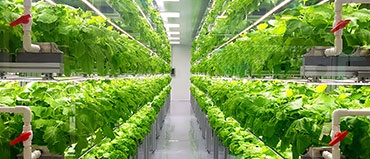
Asia Pacific Leads the Indoor Farming Technology Market Share Expansion
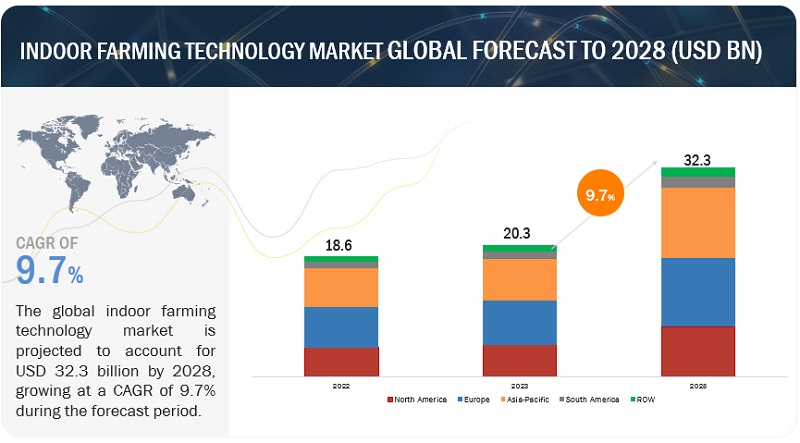
The global indoor farming technology industry is transforming how we grow food. Valued at USD 18.6 billion in 2022, the indoor farming technology market size is projected to reach USD 32.3 billion by 2028, expanding at a CAGR of 9.7% between 2023 and 2028. This growth is driven by the rising demand for fresh, high-nutrition produce, the need for efficient land and water usage, and the minimal influence of external weather conditions.
Indoor farming allows crops to be cultivated in controlled environments where temperature, humidity, light, and nutrients are precisely managed. As cities expand and arable land decreases, this approach is emerging as a key solution for sustainable food production.
Rising Demand for Fresh and Nutritious Produce
Consumers today are more health-conscious and prefer food that is locally produced, pesticide-free, and nutrient-rich. Indoor farming supports this shift by enabling year-round cultivation of leafy greens, herbs, vegetables, and microgreens.
Since it manages plant nutrients directly, food grown through this system is healthier and free from agrochemical residues. This shift aligns with the growing preference for organic and sustainable produce while reducing the carbon footprint associated with conventional farming.
Get Business-Specific Data to Meet Your Exact Needs
Limitations on Crop Variety
While promising, indoor farming is not yet suitable for every type of crop. Only certain varieties such as fruits, vegetables, and herbs thrive efficiently indoors. Crops like rice, sugarcane, and wheat, which require abundant sunlight and water, remain difficult to cultivate in controlled environments.
Managing factors like temperature, water supply, and nutrient balance adds complexity, making it more challenging to diversify crops under this system.
Opportunities Through Innovation
The indoor farming technology market trends highlight an ongoing focus on innovation. Advancements in LED lighting, artificial intelligence, and automation are improving crop yields and reducing operational costs.
Many indoor farming technology companies are developing cost-effective, automated solutions to minimize labor requirements and carbon footprints. As these technologies mature, fully automated vertical farms are expected to become more common, driving the next phase of agricultural modernization.
Funding and Investment Challenges
One of the main challenges for the industry is attracting consistent investment. The lack of long-term data and high initial setup costs can discourage potential investors. However, notable funding rounds, such as Aerofarms securing USD 50 million from major financial institutions, indicate that investor confidence is rising.
As technology becomes more accessible and profitable, financial support for new ventures in this field is expected to increase.
Weather-Independent Agriculture
Indoor farming’s greatest advantage lies in its independence from unpredictable weather conditions. Using hydroponic systems, vertical stacking, and climate control, crops can be grown regardless of external climate challenges such as droughts, floods, or extreme temperatures.
By reusing up to 95% of water, indoor farms help conserve a critical resource, making them a practical solution for drought-prone regions. As global weather patterns become more erratic, this method ensures stable food supply and consistent crop quality.
Higher Yields with Less Land and Water
Indoor farming delivers higher yields per square foot compared to traditional agriculture. Controlled environments allow plants to grow faster and healthier while using minimal space. Vertical stacking enables farms to produce more on the same land area, addressing the challenge of shrinking arable land.
Moreover, advanced irrigation systems recycle water, reducing wastage by up to 95%. This combination of efficiency and sustainability positions indoor farming as a cornerstone of future food security.
Regional Outlook: Asia Pacific Leads the Way
The indoor farming technology market share is growing rapidly across the Asia Pacific region. Countries such as Japan, Singapore, China, and India are investing heavily in advanced agricultural systems to improve productivity and crop quality.
Governments and private companies are embracing technology-driven solutions like LED lighting, automation, and IoT-based monitoring to strengthen local food production. In 2020, Asia Pacific accounted for over 30% of the global market value, and its growth momentum continues.
Key Market Players
Leading indoor farming technology companies are expanding their global reach through innovation and partnerships. Major players include:
- Scotts Company LLC (US)
- Signify Holding (Netherlands)
- EVERLIGHT ELECTRONICS CO., LTD (Taiwan)
- NETAFIM (Israel)
- Heliospectra AB (Sweden)
- Argus Control Systems Limited (Canada)
- Lumigrow, Inc (Canada)
- weisstechnik (US)
- Priva (Netherlands)
- LOGIQS.B.V. (Netherlands)
Other participants such as Certhon, Bluelab, Barton Breeze, Green Sense Farms, and Sky Greens are also shaping the market with cutting-edge urban agriculture solutions.
The Future of Indoor Farming
The future of agriculture is moving indoors. With rising climate challenges, urban population growth, and consumer demand for clean produce, indoor farming represents the next evolution of global food systems. As automation, lighting, and hydroponic technologies advance, the industry will continue to expand its role in ensuring food security worldwide.
Frequently Asked Questions
1. What is driving the growth of the global indoor farming technology industry?
The market is expanding due to rising demand for fresh, nutritious produce, increasing urbanization, water scarcity, and advancements in controlled-environment agriculture systems.
2. Which crops are best suited for indoor farming?
Crops like leafy greens, herbs, berries, and microgreens perform best in controlled environments due to their shorter growth cycles and compact size.
3. What are the main challenges faced by indoor farming technology companies?
Challenges include high initial setup costs, limited crop diversity, energy consumption, and restricted access to funding for large-scale projects.
4. Which region is expected to dominate the market in the coming years?
The Asia Pacific region is projected to lead market growth due to strong investment, technological adoption, and increasing focus on sustainable food systems.
5. How does indoor farming help address climate change?
Indoor farming minimizes reliance on weather, uses significantly less water, and reduces transportation emissions by enabling local food production—all of which contribute to sustainability.
80% of the Forbes Global 2000 B2B companies rely on MarketsandMarkets to identify growth opportunities in emerging technologies and use cases that will have a positive revenue impact.
- Food Packaging Market Size Set for Strong Growth Through 2030 Amid Rising Demand for Convenience Foods
- Crop Protection Chemical Market Size, Share & Growth Forecast (2025–2030)
- Mulch Films Market: Driving Sustainable Agriculture Through Innovation
- Agricultural Adjuvants Market Analysis, Trends, and Growth Outlook (2026–2031)
- Japan Enterprise Asset Management Market Growth: AI and Smart Infrastructure Drive Demand

