
How Precision Feeding and Smart Tech Are Driving Swine Farming Growth
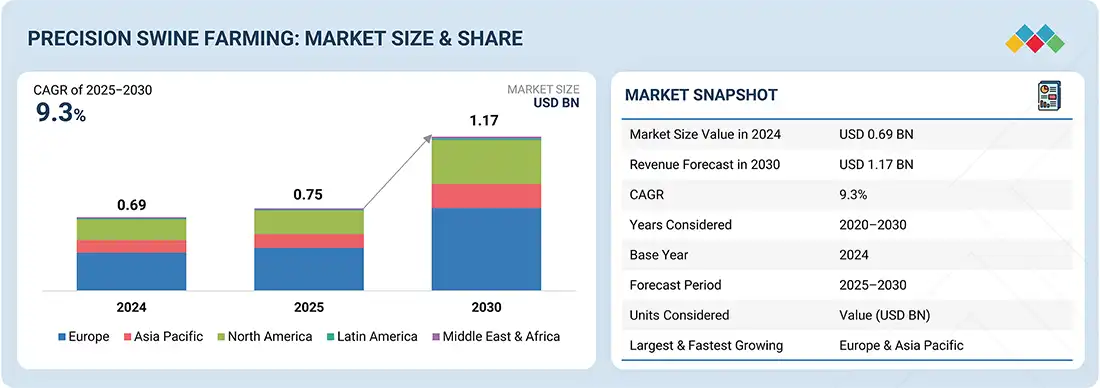
According to a recent research report, “Precision Swine Farming Market by System (Swine Monitoring Systems and Precision Feeding Systems), Offering (Hardware, Software, and Services), Farm Size (Small Farms, Mid-sized Farms, and Large Farms), and Region – Global Forecast to 2030” published by MarketsandMarkets, the global precision swine farming market size is projected to grow from USD 0.75 billion in 2025 to USD 1.17 billion by 2030, registering a CAGR of 9.3%.
This growth reflects the industry’s rising focus on technology adoption, transparency, and sustainability, which are shaping the future of livestock production.
Key Market Driver: Precision Feeding Techniques
Feed costs account for more than half of total expenses in swine production, making feed management a top priority for farmers. Precision feeding systems are transforming the industry by tailoring nutrient delivery to each pig’s weight, growth stage, and health status. This target-based approach reduces waste, optimizes feed conversion, and boosts profitability. Such advancements are major contributors to precision swine farming market growth worldwide.
Key Market Opportunity: Supply Chain Integration
Beyond the farm, integration with supply chains presents a significant opportunity. By adopting IoT, blockchain, and traceability tools, swine farms can provide real-time insights into feed consumption, animal health, and welfare compliance. This transparency improves trust in pork quality, creates stronger partnerships, and aligns with sustainability standards. Supply chain connectivity is also influencing evolving precision swine farming market trends across regions.
Software Segment Leads Market Expansion
Among offerings, software solutions are expected to hold a significant precision swine farming market share. These platforms integrate data from feeding systems, climate controllers, and health sensors, providing farmers with actionable insights. They also enhance compliance with stringent food safety standards in Europe and North America. Software’s scalability and flexibility make it indispensable to farms of all sizes.
Swine Identification & Tracking Takes Center Stage
Identification and tracking systems—using RFID tags, ear tags, and digital IDs—are becoming central to modern herd management. These tools enable precise monitoring of animal health and growth, while ensuring full traceability in pork production. With rising consumer and regulatory pressure, swine producers are increasingly partnering with innovative precision swine farming companies to implement these solutions.
Europe Leads Precision Swine Farming Adoption
Europe is expected to remain the largest market during the forecast period, driven by strict animal welfare regulations, high investment in smart technologies, and strong EU policy support. Countries like Denmark, Germany, and the Netherlands lead the way in deploying automated feeding, climate control, and monitoring tools. This robust ecosystem underpins Europe’s leadership in shaping the global precision swine farming market trends.
Request Personalized Data Insights for Your Business Goals
Key Industry Players
Leading companies shaping the market include:
- Merck & Co., Inc. (US)
- Nedap N.V. (Netherlands)
- Hotraco (Netherlands)
- VDL Agrotech (Netherlands)
- AcuShot Needle Free (Canada)
- Pulse NeedleFree Systems (US)
- Henke Sass Wolf (Germany)
- Fancom B.V. (Netherlands)
Frequently Asked Questions
Q1. What is the expected growth of the precision swine farming market?
The global precision swine farming market size is projected to grow from USD 0.75 billion in 2025 to USD 1.17 billion by 2030, at a CAGR of 9.3%. This growth is driven by increasing adoption of smart feeding, monitoring, and farm management systems that improve efficiency and profitability.
Q2. What factors are driving precision swine farming adoption?
Key drivers include the need to reduce feed costs, improve animal welfare, and meet sustainability standards. Precision feeding, monitoring tools, and supply chain integration are enabling strong precision swine farming market growth worldwide.
Q3. What are the main market trends?
Current precision swine farming market trends include digitalization of livestock farming, adoption of IoT and AI-driven monitoring, blockchain-based traceability, and growing demand for ethically produced, high-quality pork. These trends are shaping the future of global pork production.
Q4. Which companies are leading in precision swine farming?
Top precision swine farming companies include Merck & Co., Inc. (US), Nedap N.V. (Netherlands), Hotraco (Netherlands), VDL Agrotech (Netherlands), and Fancom B.V. (Netherlands). These players are innovating in feeding systems, monitoring tools, and farm automation.
Q5. Which region holds the largest market share?
Europe currently leads the global precision swine farming market due to advanced farm infrastructure, strict animal welfare regulations, and high investment in smart technologies. Countries such as Denmark, Germany, and the Netherlands are at the forefront of adoption.
Q6. Which technologies dominate the market?
Software platforms and swine identification systems are leading technologies. Software helps farmers collect and analyze real-time data, while identification systems ensure accurate tracking of animal health, growth, and feed use—both critical for boosting precision swine farming market share.
80% of the Forbes Global 2000 B2B companies rely on MarketsandMarkets to identify growth opportunities in emerging technologies and use cases that will have a positive revenue impact.
- Food Packaging Market Size Set for Strong Growth Through 2030 Amid Rising Demand for Convenience Foods
- Crop Protection Chemical Market Size, Share & Growth Forecast (2025–2030)
- Mulch Films Market: Driving Sustainable Agriculture Through Innovation
- Agricultural Adjuvants Market Analysis, Trends, and Growth Outlook (2026–2031)
- Japan Enterprise Asset Management Market Growth: AI and Smart Infrastructure Drive Demand

