

Specialty Enzymes Market Expansion Through 2029 – What’s Driving the Growth
The global specialty enzymes market is projected to grow from USD 6.1 billion in 2024 to USD 9.2 billion by 2029, recording a CAGR of 8.5%. This expansion reflects strong momentum in the biopharmaceutical sector, increasing adoption of enzyme engineering technologies, and rising demand for sustainable solutions. The specialty enzymes market growth is being driven by pharmaceuticals, biotechnology, and diagnostics, each contributing to broader applications and higher demand.
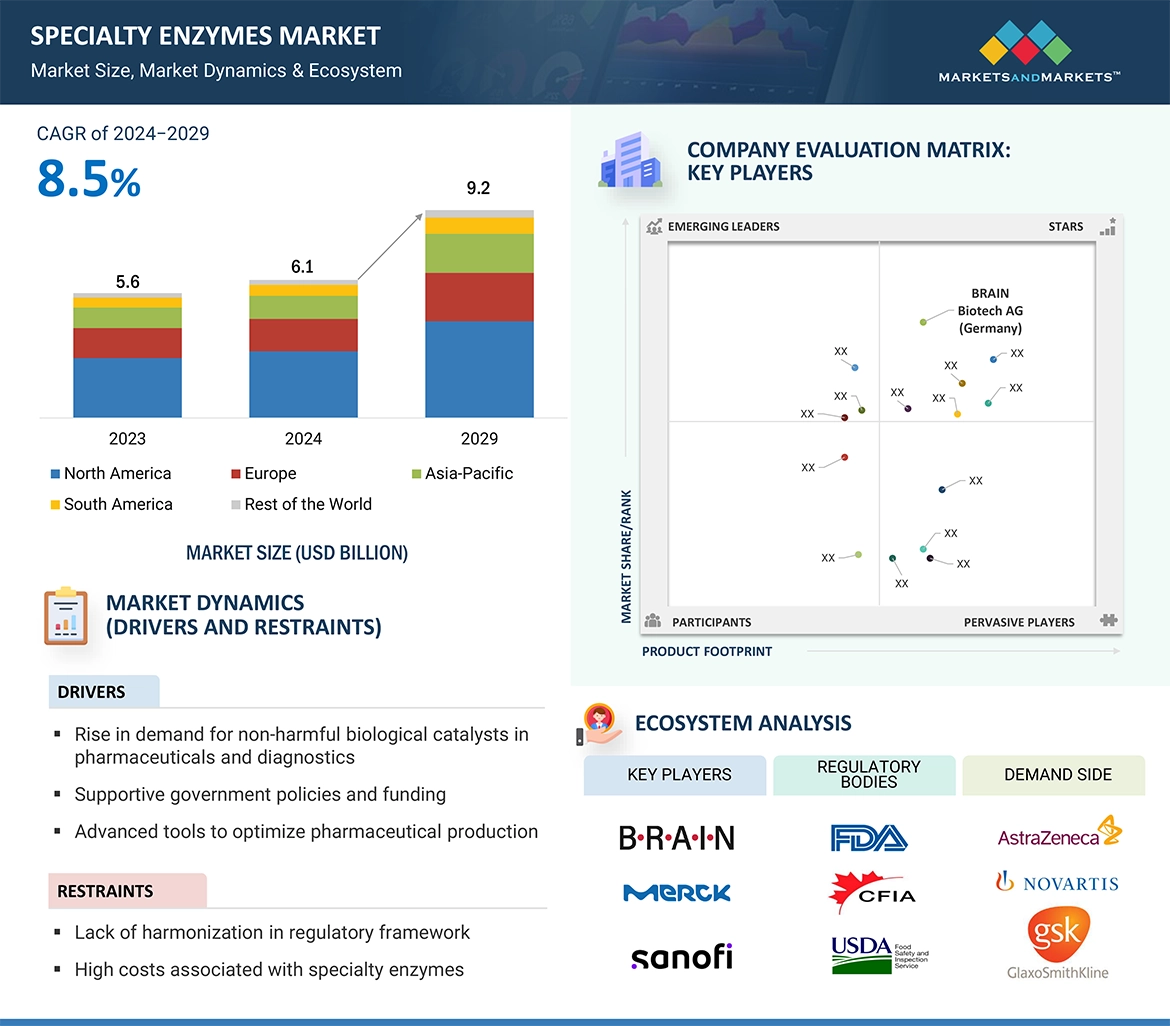
Biopharma Boom Driving Enzyme Demand
Specialty enzymes are critical in modern biopharmaceutical manufacturing, supporting processes such as protein expression, purification, and modification. They are vital in the production of biologics like monoclonal antibodies, vaccines, and gene therapies. With an aging population and the growing prevalence of chronic diseases, demand for biopharmaceuticals is accelerating, which in turn strengthens the specialty enzymes industry.
Innovation at the Core: Enzyme Engineering
Developments in enzyme engineering have enabled the discovery of new enzymes from natural sources that are both safe and efficient. These advances are opening opportunities in pharmaceuticals as well as eco-friendly solutions.
Recent milestones include biocatalytic depolymerization research from the University of Notre Dame, offering sustainable plastic treatment methods, and a directed evolution platform from the Manchester Institute of Biotechnology to enhance plastic degradation capabilities. Such breakthroughs highlight emerging specialty enzymes market trends that link biotechnology with environmental sustainability.
Proteases: The Fastest Growing Segment
Proteases are expected to register the highest growth among enzyme types, given their role in drug formulation and therapeutic protein synthesis for conditions such as cancer, diabetes, and autoimmune diseases. They are also widely used in biotechnology for protein engineering and modification.
A practical example is their use in large-scale insulin production, where companies like Novo Nordisk apply proteases to improve yield and efficiency. The increasing investment in biotech research ensures that proteases remain central to innovation in this market.
Make an Inquiry to Address your Specific Business Needs
Animal-Derived Enzymes Maintain Strong Market Share
Enzymes sourced from animals remain important due to their high specificity and efficiency in catalyzing biochemical reactions. Examples include trypsin and chymotrypsin in drug formulation, lactase in diagnostic kits, and thrombin in surgical applications to promote blood clotting.
Their reliability in pharmaceutical, diagnostic, and industrial applications makes them a vital part of specialty enzymes players portfolios, ensuring continued demand in both medical and non-medical sectors.
North America Leads the Charge
North America is expected to dominate the market during the forecast period. The region benefits from a well-established pharmaceutical and biotechnology industry, significant R&D investments, advanced healthcare systems, and favorable regulatory environments.
Key companies such as Codexis, Inc. (US), BRAIN Biotech AG (Germany), Novozymes A/S (Denmark), and Merck KGaA (Germany) are leading advancements in enzyme engineering and expanding their reach across industries.
Key Questions Addressed by Specialty Enzymes Market Report
1. How is the demand for specialty enzymes changing?
Demand is increasing rapidly due to growth in the biopharmaceutical sector, advancements in enzyme engineering, and expanding applications in diagnostics and sustainable industrial processes.
2. What role do animal-derived enzymes play in the market?
Animal-derived enzymes are valued for their high specificity and efficiency. They are widely used in pharmaceutical production, clinical diagnostics, food processing, and surgical applications.
3. Which factors are driving innovation in enzyme engineering?
Innovation is being driven by advances in biotechnology, genetic engineering, and sustainability goals. New techniques like directed evolution are enabling the creation of enzymes with improved performance and new capabilities.
4. What industries outside pharmaceuticals use specialty enzymes?
In addition to healthcare, specialty enzymes are used in food processing, biofuels, textiles, and environmental management, such as waste treatment and recycling.
5. How do specialty enzymes contribute to sustainability?
They are key in eco-friendly applications like biodegradable plastics processing, bio-based chemical production, and cleaner manufacturing methods, reducing environmental impact.
6. What challenges could limit the market’s growth?
High production costs, stability issues during storage and transport, and stringent regulatory requirements may pose challenges to wider adoption.
80% of the Forbes Global 2000 B2B companies rely on MarketsandMarkets to identify growth opportunities in emerging technologies and use cases that will have a positive revenue impact.
- Food Packaging Market Size Set for Strong Growth Through 2030 Amid Rising Demand for Convenience Foods
- Crop Protection Chemical Market Size, Share & Growth Forecast (2025–2030)
- Mulch Films Market: Driving Sustainable Agriculture Through Innovation
- Agricultural Adjuvants Market Analysis, Trends, and Growth Outlook (2026–2031)
- Japan Enterprise Asset Management Market Growth: AI and Smart Infrastructure Drive Demand

