25 Leading AI in Clinical Trials Companies Shaping Innovation and Market Growth to 2030
Discover the top 25 companies driving innovation in the AI in clinical trials market. This in-depth analysis explores competitive advantages, transformative trends, and key players poised to influence pharmaceutical research, biotechnology, precision medicine, and clinical development through 2030. Access the comprehensive market research report here for further insights.
Spotlights on the Industry's Top AI in Clinical Trials Market Companies
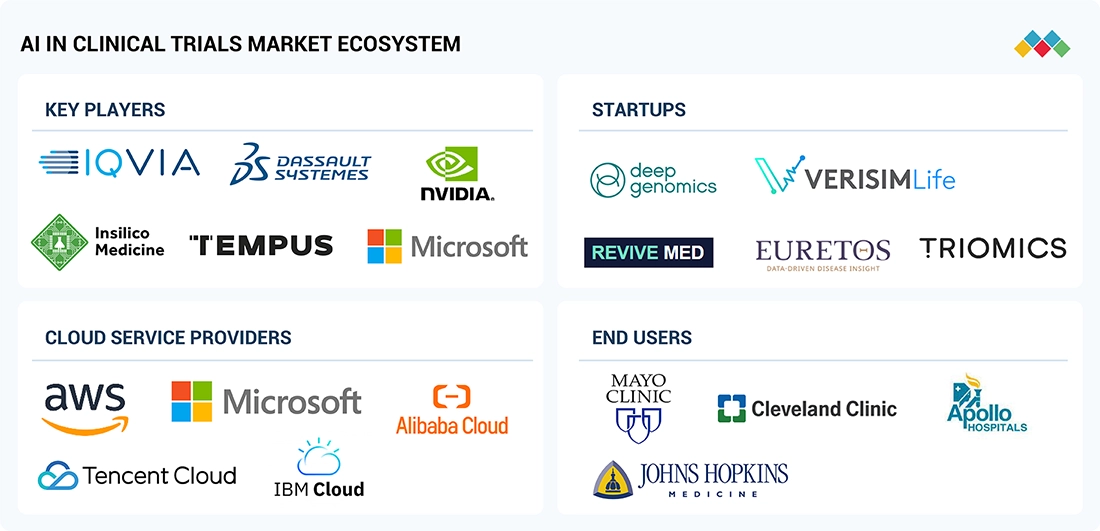
The AI in clinical trials market is evolving as pharmaceutical and biotechnology companies increasingly adopt artificial intelligence to improve clinical research efficiency, patient recruitment, protocol design, and trial data management. Machine learning, natural language processing, predictive analytics, generative AI, and digital twin technologies are helping research teams identify suitable participants, optimize study designs, monitor data quality, and evaluate potential trial outcomes. Competition is intensifying among clinical technology providers, healthcare data platforms, AI developers, and precision medicine companies. As adoption expands, data privacy, model validation, regulatory compliance, interoperability, and the reliability of AI-generated evidence remain important considerations for industry stakeholders.
1. IQVIA Inc.
IQVIA Inc. combines healthcare data, advanced analytics, technology, and clinical research services to support pharmaceutical and biotechnology development. Its clinical technology portfolio includes solutions for patient engagement, site management, clinical data analytics, and trial financial management. By integrating AI and machine learning with clinical and real-world data, IQVIA helps sponsors improve recruitment strategies, identify operational risks, and make informed development decisions. Its global research infrastructure and established life sciences relationships strengthen its position in AI-enabled clinical trial optimization.
2. Dassault Systèmes (Medidata)
Dassault Systèmes, through its Medidata business, provides a digital platform supporting clinical trial planning, execution, data capture, and analysis. Medidata's AI capabilities help research teams simulate trial outcomes, optimize protocols, automate study setup, and identify potential operational risks. Its solutions also support electronic data capture, clinical data management, and patient-centric research workflows. The company's experience with clinical trial datasets and its integration across the study lifecycle make it an important participant in the development of AI-enabled clinical research infrastructure.
3. Insilico Medicine
Insilico Medicine develops AI-driven technologies for drug discovery and development, including generative AI, biological target identification, and predictive modeling. Its platform supports the identification of therapeutic candidates and the design of molecules for further preclinical and clinical evaluation. Although its core focus extends beyond clinical trial operations, its computational approach can help inform candidate selection, indication strategy, and development planning. Insilico Medicine is relevant to the broader AI in clinical trials ecosystem because improved early-stage predictions can support more focused and evidence-driven clinical development programs.
4. Tempus AI, Inc.
Tempus AI, Inc. combines clinical and molecular data with AI-driven analytics to support precision medicine and pharmaceutical research. Its capabilities include patient cohort identification, biomarker analysis, clinical data insights, and tools for drug development, particularly in oncology. By connecting real-world clinical information with molecular and diagnostic data, Tempus helps researchers investigate patient populations and evaluate potential clinical development strategies. Its multimodal data infrastructure and AI models support efforts to improve trial feasibility, refine patient selection, and advance evidence-based precision medicine research.
5. NVIDIA Corporation
NVIDIA Corporation provides accelerated computing hardware, AI software, and development platforms used to build and deploy advanced machine learning applications. In clinical research, its technologies can support medical imaging analysis, biological modeling, generative AI, and computational drug development. NVIDIA's computing infrastructure enables researchers and life sciences organizations to train models and process complex datasets used in research and clinical development workflows. Its contribution to the AI in clinical trials market is primarily technology-enabling, providing foundational computing capabilities rather than serving as a dedicated clinical trial management provider.
6. Saama
Saama develops AI-powered clinical data analytics and automation solutions designed to help life sciences organizations manage complex clinical research workflows. Its technologies support data integration, data review, quality checks, and analytics across clinical trial datasets. By automating repetitive processes and identifying inconsistencies in study data, Saama helps research teams improve data visibility and operational efficiency. Its specialization in clinical data management and analytics positions the company within the market for AI-enabled trial execution, where timely, reliable, and traceable data are essential for decision-making and regulatory submissions.
7. PHESI
The supplied company name PHESI requires verification before publication. If the intended company is Phesi, it provides AI-driven clinical development analytics through its Trial Accelerator platform. Its capabilities include protocol optimization, digital patient profiles, digital twins, and clinical trial performance modeling. These tools help sponsors assess study feasibility, understand patient populations, evaluate investigator sites, and explore alternative trial designs. Phesi's patient-centric analytical approach is relevant to efforts to improve recruitment planning and reduce avoidable protocol changes. The company name should be confirmed as Phesi before this profile is finalized.
8. PathAI, Inc.
PathAI, Inc. develops AI-powered pathology technologies that help researchers interpret tissue images and extract clinically meaningful information from pathology data. Its capabilities support biomarker discovery, disease characterization, and the development of diagnostic methods for pharmaceutical research. In clinical trials, AI-assisted pathology can contribute to patient stratification, endpoint assessment, and the evaluation of treatment responses, particularly in oncology and other disease areas where tissue biomarkers are important. PathAI's expertise in computational pathology makes it relevant to precision medicine programs seeking more consistent and data-driven clinical research outcomes.
9. Unlearn.AI, Inc.
Unlearn.AI, Inc. develops AI-powered digital twin technology to support clinical trial design and analysis. Its models generate individualized predictions of patient outcomes, which researchers can use to investigate disease progression and evaluate approaches to trial comparison. Digital twins and model-based external control strategies may help improve statistical efficiency and inform decisions about study design, subject allocation, and sample size. Unlearn's focus on clinical development and quantitative modeling distinguishes it within the AI in clinical trials market, where researchers are exploring ways to generate reliable evidence while reducing unnecessary participant burden.
10. Deep 6 AI
Deep 6 AI focuses on AI-enabled clinical trial recruitment and patient matching. Its technology uses natural language processing and clinical data analysis to help identify patients whose medical records may meet a study's inclusion and exclusion criteria. This approach can help healthcare organizations and research teams search structured and unstructured clinical information more efficiently than manual screening alone. By supporting cohort identification and recruitment workflows, Deep 6 AI addresses a persistent challenge in clinical research: finding eligible participants in time to meet enrollment targets, especially for complex conditions and specialized studies.
11. Microsoft
Microsoft contributes to AI-enabled clinical research through its cloud computing, data analytics, and artificial intelligence technologies. Microsoft Azure provides infrastructure for processing healthcare datasets, developing machine learning models, and deploying secure applications, while its broader AI ecosystem supports research and data-intensive workflows. Clinical research organizations can use these capabilities to integrate information from multiple sources, automate selected processes, and analyze complex datasets. Microsoft's role in the AI in clinical trials market is primarily that of a technology and cloud infrastructure provider, enabling organizations to build solutions suited to their research and compliance requirements.
12. IBM
IBM provides enterprise AI, hybrid cloud, data management, and analytics technologies applicable to pharmaceutical research and clinical development. Its AI and data platforms can help organizations integrate complex information, automate workflows, and generate insights from scientific and operational datasets. In clinical trials, these capabilities may support research data analysis, knowledge discovery, document processing, and operational decision-making when implemented within validated systems. IBM's enterprise technology expertise and focus on data governance are relevant to organizations seeking scalable AI infrastructure while managing the security, traceability, and compliance requirements associated with regulated clinical research.
13. ConcertAI
ConcertAI develops real-world data and AI-powered analytics solutions for oncology, clinical development, and life sciences research. Its capabilities help pharmaceutical companies and research organizations analyze patient populations, generate clinical insights, and investigate treatment patterns using real-world evidence. These datasets can support trial feasibility assessments, patient identification strategies, biomarker research, and the interpretation of outcomes beyond conventional trial settings. ConcertAI's specialization in oncology and its focus on data-driven evidence generation make it relevant to AI-enabled clinical development, particularly where researchers need to understand complex patient populations and unmet medical needs.
14. AiCure
AiCure develops AI-powered technologies that support patient monitoring, engagement, and adherence in clinical research. Its solutions use digital interactions and data analysis to help research teams assess participant behavior and monitor selected study activities remotely. These capabilities can provide greater visibility into trial participation and help teams identify issues that may affect adherence or data completeness. AiCure's emphasis on patient-level insights is particularly relevant to decentralized and hybrid clinical trials, where maintaining engagement and collecting reliable information outside traditional research sites are important operational priorities.
15. Median Technologies
Median Technologies develops medical imaging analytics and AI-powered imaging solutions, with a focus on oncology and clinical research applications. Its eyonis platform supports AI-assisted medical image analysis, while its imaging services have applications in clinical trials and the assessment of treatment response. By helping standardize image interpretation and extract quantitative information from scans, the company addresses an important aspect of evidence generation in imaging-intensive studies. Median Technologies is relevant to AI-enabled clinical development where consistent imaging endpoints, specialized analysis, and reliable assessment of disease progression are important to evaluating therapeutic performance.
16. Lantern Pharma Inc.
Lantern Pharma Inc. applies AI and machine learning to oncology drug discovery and development. Its RADR platform analyzes biological, genomic, and clinical datasets to identify patterns that may inform drug response, biomarker selection, and therapeutic development strategies. The company uses these insights to help prioritize drug candidates and investigate patient populations that may be more likely to benefit from particular treatments. Although its activities span the broader drug development pipeline, Lantern Pharma's computational approach is relevant to clinical research by supporting precision oncology strategies and data-informed decisions about candidate advancement and patient selection.
17. Citeline, a Norstella Company
Citeline, a Norstella Company, provides clinical trial intelligence, drug development information, investigator data, and research tools used by pharmaceutical companies and clinical research organizations. Its resources help users assess the competitive landscape, identify investigators and trial sites, examine clinical development activity, and evaluate study feasibility. These insights can inform recruitment planning, site selection, and strategic decisions about trial design. Citeline's relevance to the AI in clinical trials market lies in its clinical development intelligence and data resources, which can complement analytics and AI applications used to plan and execute research programs.
18. TriNetX, LLC
TriNetX, LLC operates a global health research network that enables researchers to analyze de-identified electronic health record data and investigate patient populations across participating healthcare organizations. Its platform supports feasibility assessments, cohort identification, observational research, and the evaluation of potential clinical trial populations. By providing access to real-world clinical data, TriNetX can help sponsors assess whether eligible participants may be available for a proposed study and refine recruitment strategies. Its role in AI-enabled clinical research is grounded in data-driven patient discovery and evidence generation, subject to applicable privacy, governance, and data access requirements.
19. ReviveMed Inc.
ReviveMed Inc. applies artificial intelligence and metabolomics to biological discovery and therapeutic research. Its approach uses machine learning to analyze complex metabolomic data and identify disease-related biological patterns that may inform drug discovery and development. These insights can contribute to biomarker research, disease characterization, and the investigation of potential treatment targets. ReviveMed's role in the AI in clinical trials ecosystem is primarily connected to upstream translational research rather than direct trial management. Its technologies may help researchers generate biological hypotheses and identify measurable signals for further validation during clinical development.
20. Euretos
Euretos develops AI-powered knowledge discovery and biomedical data analysis technologies for life sciences research. Its platform integrates information from scientific literature, biological databases, and other research sources to help users explore relationships among diseases, genes, pathways, and therapeutic targets. These capabilities can support target validation, biomarker research, and the development of scientific hypotheses that inform clinical development strategies. Euretos is relevant to the wider AI in clinical trials market because better integration of biomedical knowledge can help researchers refine development questions and improve the evidence base used to guide studies.
21. VeriSIM Life
VeriSIM Life develops AI and computational modeling technologies designed to support drug discovery and development decisions. Its approach combines biological data, predictive modeling, and simulation to help researchers assess how potential therapies may behave across biological systems and patient populations. These capabilities can inform candidate prioritization, translational research, and development planning before and during clinical evaluation. VeriSIM Life's relevance to the AI in clinical trials market stems from its focus on predictive modeling and data-driven drug development, although its technologies should not be confused with dedicated clinical trial execution or management platforms.
22. Triomics
Triomics develops AI-powered solutions for oncology research and clinical care, with an emphasis on using clinical data to support research workflows and patient identification. Its technology can help healthcare organizations interpret complex medical information and connect eligible patients with relevant clinical trials. This focus addresses the challenges of identifying suitable participants in oncology, where eligibility may depend on diagnosis, treatment history, molecular characteristics, and other clinical criteria. Triomics is relevant to AI-enabled clinical research because improved access to structured clinical insights can support recruitment workflows and help research teams identify potential trial candidates more efficiently.
23. ArdiGen
The supplied company name ArdiGen should be verified before publication; the likely intended company is Ardigen, a biotechnology company specializing in AI-driven precision medicine and bioinformatics. Ardigen develops computational approaches for analyzing complex biological data, including genomics, immunology, and multi-omics information. Its capabilities can support biomarker discovery, patient stratification, and the development of hypotheses for therapeutic research. These applications are relevant to clinical trials that depend on identifying biologically defined patient groups and evaluating targeted therapies. Confirming the intended company name will help ensure accurate attribution of its technologies and market role.
24. QuantHealth Ltd.
QuantHealth Ltd. applies AI and clinical trial simulation to support pharmaceutical development decisions. Its platform uses clinical and biomedical data to model trial scenarios and estimate how design choices, patient characteristics, and treatment strategies may influence study outcomes. These simulations can help development teams explore protocol alternatives, assess potential risks, and prioritize trial designs before committing substantial resources. QuantHealth's focus on predictive modeling addresses the need to improve decision-making under clinical development uncertainty and positions the company within the growing market for AI tools that inform trial planning and execution.
25. Deep Genomics
Deep Genomics develops AI-driven technologies for RNA biology and genetic medicine, using computational models to investigate how genetic changes influence biological processes and disease. Its platform supports the discovery and evaluation of therapeutic candidates, particularly in areas involving RNA-based mechanisms. While the company's focus extends beyond clinical trial operations, its AI capabilities can contribute to target discovery, candidate prioritization, and the development of precision therapeutics for clinical evaluation. Deep Genomics is relevant to the broader AI-enabled drug development landscape, where computational biology can help inform which therapies advance into human studies and which patient populations may be most appropriate.
80% of the Forbes Global 2000 B2B companies rely on MarketsandMarkets to identify growth opportunities in emerging technologies and use cases that will have a positive revenue impact.
- Food Packaging Market Size Set for Strong Growth Through 2030 Amid Rising Demand for Convenience Foods
- Crop Protection Chemical Market Size, Share & Growth Forecast (2025–2030)
- Mulch Films Market: Driving Sustainable Agriculture Through Innovation
- Agricultural Adjuvants Market Analysis, Trends, and Growth Outlook (2026–2031)
- Japan Enterprise Asset Management Market Growth: AI and Smart Infrastructure Drive Demand

The AI in clinical trials market is advancing as healthcare and life sciences organizations adopt predictive analytics, machine learning, natural language processing, digital twins, and AI-assisted data management to improve research efficiency and decision-making. Companies across clinical technology, real-world data, computational biology, patient recruitment, and medical imaging are contributing different capabilities to this evolving ecosystem. However, broader adoption will depend on data quality, interoperability, patient privacy, model validation, transparency, and compliance with applicable clinical research regulations. Opportunities remain in patient-centric trial design, precision medicine, automated data review, and more informed development planning. To understand the competitive landscape, emerging technologies, market segments, and regional opportunities through 2030, explore the full report: AI in Clinical Trials Market by Function (Patient Recruitment, Site Optimization, Data Management, Quality, Regulatory), Phase (I, II, III), Indication (Cancer, CNS, CVS), Tool, End-User (Pharma/Biotech, CRO, Hospitals) & Region - Global Forecast to 2030.