19 Leading Digital PCR (dPCR) and Real-time PCR (qPCR) Companies Shaping Innovation and Market Growth to 2029
Discover the top 19 companies driving innovation in the Digital PCR (dPCR) and Real-time PCR (qPCR) market. This in-depth analysis explores competitive capabilities, transformative trends, and key players poised to influence molecular diagnostics, infectious disease testing, oncology, genomics, life sciences research, and environmental analysis through 2029. Access the comprehensive Digital PCR (dPCR) and Real-time PCR (qPCR) Market by Offering (Product (Reagents & Consumables, Instrument), Software, Services), Application (Clinical (infectious, Oncology), Research, Forensic, Environmental) - Global Forecast to 2029 report for further insights.
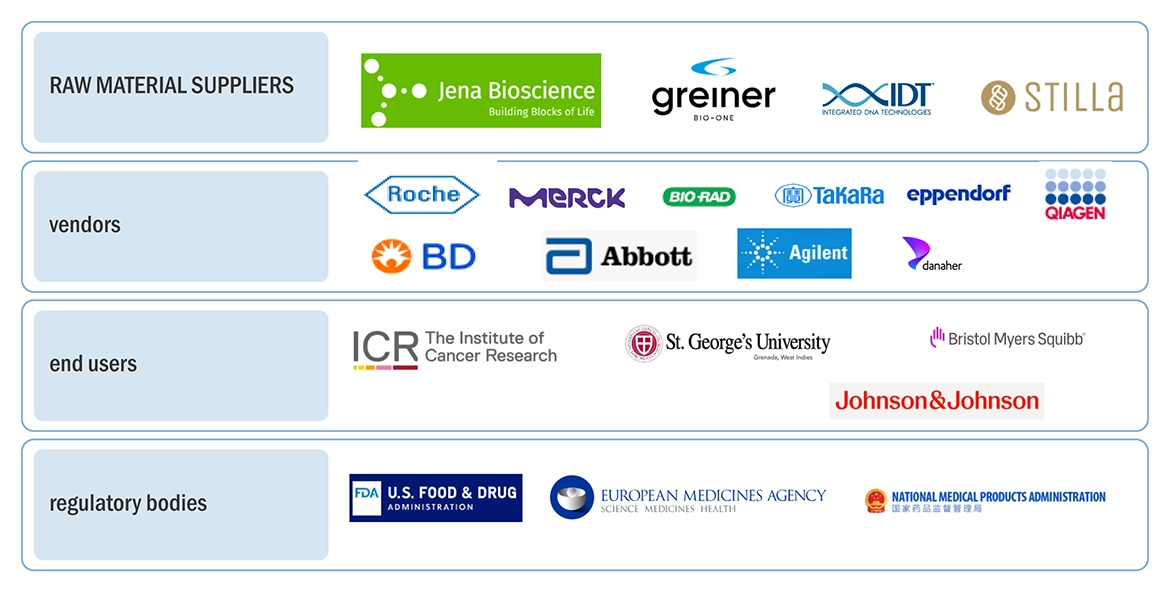
The digital PCR and real-time PCR market is advancing as laboratories seek sensitive, reliable, and efficient molecular testing technologies. Real-time PCR enables the monitoring of DNA amplification during each reaction cycle, while digital PCR partitions samples into numerous individual reactions to support absolute nucleic acid quantification without relying on a standard calibration curve. Advances in assay design, automation, multiplexing, reagent chemistry, and data analysis are expanding applications in infectious disease diagnostics, cancer research, genetic testing, pharmaceutical development, and environmental monitoring. Competition centers on analytical performance, workflow simplicity, instrument capabilities, assay availability, and compatibility with laboratory systems. Established life sciences suppliers compete alongside specialized molecular diagnostics developers, creating opportunities for integrated solutions that combine instruments, consumables, software, and technical support.
1. Danaher Corporation
Danaher Corporation participates in the molecular diagnostics and life sciences markets through its operating companies, including Cepheid, Beckman Coulter, and Integrated DNA Technologies (IDT). Cepheid develops automated molecular diagnostic systems and PCR-based assays, while IDT supplies custom nucleic acids, primers, probes, and related reagents used in PCR research and assay development. These capabilities support infectious disease testing, molecular biology, and genomics applications. Danaher's broad diagnostics and life sciences portfolio provides relevant expertise across molecular testing workflows, although specific dPCR offerings should be assessed at the operating-company level.
2. F. Hoffmann-La Roche Ltd.
F. Hoffmann-La Roche Ltd. is a major participant in molecular diagnostics through Roche Diagnostics, which develops PCR instruments, reagents, and diagnostic assays. Its real-time PCR technologies support applications including infectious disease testing, clinical laboratory analysis, and molecular diagnostics. Roche's LightCycler platform has established a role in PCR-based analysis, while its broader diagnostics portfolio connects molecular testing with laboratory automation and clinical workflows. The company's experience in assay development, diagnostic validation, and global laboratory markets supports its relevance to qPCR. Its specific dPCR positioning should be evaluated separately from its established real-time PCR capabilities.
3. Thermo Fisher Scientific Inc.
Thermo Fisher Scientific Inc. offers a broad portfolio of PCR instruments, reagents, consumables, and molecular biology technologies. Its Applied Biosystems real-time PCR systems, including the QuantStudio family, support gene expression analysis, pathogen detection, genotyping, and other research and diagnostic applications. The company also provides digital PCR technologies and associated consumables for applications requiring precise nucleic acid quantification. By combining instruments, assay reagents, software, and laboratory support, Thermo Fisher addresses diverse molecular testing needs across academic research, pharmaceutical development, biotechnology, and clinical laboratory settings.
4. Merck KGaA
Merck KGaA, operating as MilliporeSigma in the United States and Canada, supplies life sciences products used in molecular biology and PCR workflows. Its portfolio includes laboratory reagents, nucleic acid analysis products, assay components, and research materials that support amplification and molecular testing activities. These products can contribute to assay development, sample preparation, and laboratory research involving qPCR and related techniques. Merck's broader life sciences capabilities and global distribution network make it relevant to the PCR ecosystem, particularly in research and biopharmaceutical laboratories. Specific instrument-level dPCR and qPCR participation should be distinguished from its reagent and consumables role.
5. QIAGEN N.V.
QIAGEN N.V. develops sample preparation technologies, molecular testing solutions, PCR assays, and laboratory automation systems. Its real-time PCR portfolio includes the Rotor-Gene Q platform and related assay technologies used in research and diagnostic workflows. QIAGEN also provides nucleic acid extraction kits, assay reagents, and specialized molecular testing solutions that support infectious disease detection, gene expression studies, and other applications. The combination of sample preparation, amplification, and analysis technologies enables laboratories to build integrated workflows. Its established molecular diagnostics expertise and assay development capabilities support its position in the broader dPCR and qPCR market.
6. Bio-Rad Laboratories, Inc.
Bio-Rad Laboratories, Inc. is a prominent supplier of digital PCR and real-time PCR technologies. Its QX family of digital PCR systems supports absolute nucleic acid quantification, including applications in gene expression analysis, rare mutation detection, copy number assessment, and oncology research. Bio-Rad also offers real-time PCR instruments, amplification reagents, assay consumables, and related software. Its digital PCR expertise and established research customer base make it particularly relevant to laboratories seeking sensitive molecular measurements. By supporting applications across life sciences research, biotechnology, and selected clinical testing workflows, the company competes through specialized platforms and integrated assay solutions.
7. Agilent Technologies, Inc.
Agilent Technologies, Inc. supplies molecular biology instruments, reagents, and analytical solutions used in genomics and life sciences research. Its portfolio includes real-time PCR instrumentation, such as the AriaMx and AriaDx systems, alongside PCR reagents and products supporting gene expression analysis and nucleic acid quantification. These technologies are relevant to research laboratories, biotechnology companies, and diagnostic assay developers. Agilent's expertise in analytical instrumentation and molecular workflows strengthens its position in qPCR-related applications. Its role in the market is particularly associated with real-time PCR and complementary laboratory technologies rather than a broad standalone digital PCR platform portfolio.
8. Takara Bio Inc.
Takara Bio Inc. develops molecular biology reagents, PCR enzymes, nucleic acid amplification products, and research technologies for genomics and life sciences applications. Its portfolio includes real-time PCR reagents and kits that support gene expression studies, nucleic acid detection, and molecular assay development. The company also provides reverse transcription and nucleic acid preparation technologies that complement PCR workflows. Takara Bio's specialization in molecular biology reagents and its global research customer base make it relevant to qPCR laboratories and assay developers. Its strongest market contribution lies in reagents and molecular research tools rather than a broad range of standalone PCR instruments.
9. Becton, Dickinson and Company
Becton, Dickinson and Company (BD) operates across medical technology, diagnostics, and laboratory systems. Its molecular diagnostics activities include the BD MAX System, which automates sample processing and PCR-based testing for selected infectious diseases and other clinical applications. BD's expertise in diagnostic assay development, sample handling, and laboratory workflow integration supports molecular testing in healthcare settings. The company is relevant to the real-time PCR ecosystem through automated diagnostic testing capabilities, although individual assay chemistries and platform specifications should be verified for each application. Its broader clinical diagnostics presence supports laboratories seeking streamlined and standardized testing workflows.
10. Abbott Laboratories
Abbott Laboratories develops diagnostic instruments, assays, and laboratory systems serving hospitals, reference laboratories, and other healthcare providers. Its molecular diagnostics portfolio includes the m2000 system and other molecular testing solutions designed for nucleic acid detection, including infectious disease applications. Abbott's experience in clinical diagnostics, assay validation, and global laboratory distribution makes it relevant to PCR-based testing markets. Its molecular platforms support established clinical workflows, particularly where standardized testing and dependable laboratory performance are essential. Its participation should be understood primarily through molecular diagnostics and nucleic acid testing rather than assuming that every product in its portfolio uses digital PCR technology.
11. Promega Corporation
Promega Corporation develops reagents, enzymes, assay systems, and laboratory tools for molecular biology, genetic analysis, and life sciences research. Its products support nucleic acid preparation, amplification-related workflows, gene expression studies, and molecular assay development. Promega's expertise in enzyme chemistry, assay design, and research reagents makes it relevant to laboratories conducting qPCR experiments and developing molecular tests. Its products can complement PCR instruments supplied by other manufacturers, allowing researchers to configure workflows around specific analytical requirements. The company's role is principally associated with reagents and molecular biology technologies rather than a comprehensive portfolio of standalone PCR instruments.
12. Meridian Bioscience
Meridian Bioscience develops diagnostic products and life sciences reagents, with capabilities in molecular diagnostics, infectious disease testing, and assay component manufacturing. Its portfolio includes molecular diagnostic reagents and enzymes used by diagnostic developers, alongside PCR-related technologies supporting nucleic acid amplification. These capabilities are relevant to qPCR assay development and molecular testing workflows. Meridian's experience supplying both diagnostic products and assay components helps address the needs of clinical laboratories and diagnostic manufacturers. Its contribution to the market is associated with molecular diagnostic solutions and reagents, with individual product availability and ownership best confirmed against the company's current portfolio.
13. Endress+Hauser Group Services AG
Endress+Hauser Group Services AG is part of the Endress+Hauser group, which specializes in measurement instrumentation, process automation, and industrial analysis. Its core business is not the development of digital PCR or real-time PCR instruments, reagents, or molecular diagnostic assays. The group's technologies are more closely associated with industrial process measurement, liquid analysis, and laboratory or production process monitoring. Although these capabilities may support broader pharmaceutical manufacturing and laboratory infrastructure, a direct role in the dPCR and qPCR product market is not clearly established. This company should be reviewed for inclusion as a direct market participant before publication.
14. bioMérieux
bioMérieux develops in vitro diagnostic systems and tests, with a strong focus on infectious disease detection and clinical microbiology. Its molecular diagnostics portfolio includes the BIOFIRE system, which uses multiplex PCR technology to identify multiple pathogens from a single sample, as well as other molecular testing solutions. These technologies support timely clinical decision-making in hospital and laboratory settings. bioMérieux combines assay development, diagnostic instruments, and clinical testing expertise to address infectious disease diagnostics. Its market relevance is strongest in PCR-based molecular diagnostics, particularly automated and multiplex testing, rather than across every segment of the digital PCR market.
15. Eppendorf AG
Eppendorf AG supplies laboratory instruments and consumables used in molecular biology, life sciences research, and biopharmaceutical laboratories. Its portfolio includes thermal cyclers, pipettes, centrifuges, and laboratory consumables that support PCR preparation and amplification workflows. These products help researchers manage sample volumes, maintain experimental consistency, and carry out nucleic acid analysis. Eppendorf's role in the PCR ecosystem is supported by its laboratory equipment expertise and established presence in research facilities. Its contribution is primarily through conventional PCR equipment and workflow-enabling products, rather than a broad portfolio of dedicated digital PCR or real-time PCR diagnostic systems.
16. QuidelOrtho Corporation
QuidelOrtho Corporation develops diagnostic solutions for clinical laboratories, hospitals, and point-of-care settings. Its portfolio includes rapid diagnostic tests, immunoassays, clinical chemistry systems, and molecular diagnostic products. Through its molecular diagnostics capabilities, the company participates in nucleic acid testing, including PCR-based infectious disease detection. These technologies complement its broader diagnostics business by supporting the identification of pathogens and other clinically relevant targets. QuidelOrtho's established diagnostic distribution network and experience serving healthcare providers support its relevance to molecular testing. Specific dPCR or qPCR product participation should be confirmed against the current product portfolio and assay specifications.
17. Enzo Biochem Inc.
Enzo Biochem Inc. has operated across life sciences research products, clinical laboratory services, and diagnostic technologies. Its historical life sciences portfolio has included molecular biology reagents and products used in research and nucleic acid analysis, creating a connection to PCR-related workflows. However, the company's current business structure, product availability, and ongoing participation in the dPCR and qPCR market should be verified before publication. Where relevant products remain available, its contribution would be assessed through the specific reagents, assays, or laboratory services offered rather than assuming that it maintains a broad, current PCR instrument portfolio.
18. Lepu Medical Technology Co., Ltd.
Lepu Medical Technology Co., Ltd. develops medical devices, diagnostic products, and healthcare technologies, with activities spanning cardiovascular care, in vitro diagnostics, and other medical applications. Its diagnostic business provides a potential connection to molecular testing and PCR-related clinical workflows. However, its direct participation in digital PCR and real-time PCR should be assessed using specific current instruments, assays, or reagent offerings. The company's wider diagnostic presence may provide relevant infrastructure and distribution capabilities, but inclusion as a leading dPCR or qPCR supplier requires confirmation that its products directly address the market segments defined in the report.
19. Sysmex Corporation
Sysmex Corporation develops clinical laboratory instruments, reagents, and diagnostic systems, with established expertise in hematology, hemostasis, urinalysis, and other laboratory testing areas. Its molecular diagnostics activities include technologies for genetic analysis and nucleic acid testing, providing a connection to PCR-based clinical applications. The company has also developed molecular testing capabilities for specialized diagnostic needs. Sysmex's laboratory automation expertise and international diagnostic network support its position in the wider molecular diagnostics ecosystem. Its specific contribution to dPCR and qPCR should be evaluated according to the current availability and scope of its PCR instruments, assays, and related products.
80% of the Forbes Global 2000 B2B companies rely on MarketsandMarkets to identify growth opportunities in emerging technologies and use cases that will have a positive revenue impact.
- Food Packaging Market Size Set for Strong Growth Through 2030 Amid Rising Demand for Convenience Foods
- Crop Protection Chemical Market Size, Share & Growth Forecast (2025–2030)
- Mulch Films Market: Driving Sustainable Agriculture Through Innovation
- Agricultural Adjuvants Market Analysis, Trends, and Growth Outlook (2026–2031)
- Japan Enterprise Asset Management Market Growth: AI and Smart Infrastructure Drive Demand

Conclusion: Unlock the Full Digital PCR (dPCR) and Real-time PCR (qPCR) Market Intelligence
The digital PCR and real-time PCR market continues to evolve as advances in assay chemistry, automation, multiplexing, and molecular data analysis expand applications in infectious disease diagnostics, oncology, genomics, pharmaceutical research, and environmental testing. Competition spans integrated diagnostic manufacturers, life sciences reagent suppliers, specialized digital PCR developers, and laboratory technology providers. Future opportunities will depend on analytical sensitivity, reproducibility, workflow efficiency, instrument accessibility, and compliance with applicable diagnostic regulations. Companies that align product innovation with laboratory requirements and validated clinical applications can strengthen their competitive positions. To explore market segmentation, key suppliers, technology developments, and strategic opportunities through 2029, access the full report: Digital PCR (dPCR) and Real-time PCR (qPCR) Market by Offering (Product (Reagents & Consumables, Instrument), Software, Services), Application (Clinical (infectious, Oncology), Research, Forensic, Environmental) - Global Forecast to 2029.