The Future of AI in the Healthcare : Market 2026-2031 Outlook
Artificial intelligence is fundamentally reshaping the global medical landscape, shifting traditional practices toward a more proactive, data-driven approach. By leveraging advanced computational capabilities, medical professionals can now analyze vast datasets with unprecedented speed and accuracy. This technological evolution allows for highly personalized patient care, streamlined administrative workflows, and breakthrough discoveries in pharmaceutical research. As health systems worldwide face mounting pressures from aging populations and resource constraints, intelligent automation offers a critical lifeline. The integration of advanced algorithms into daily clinical routines is no longer a distant theoretical concept but an active, rapidly accelerating reality that promises to redefine the standards of modern medicine for decades to come.
Current Industry Overview
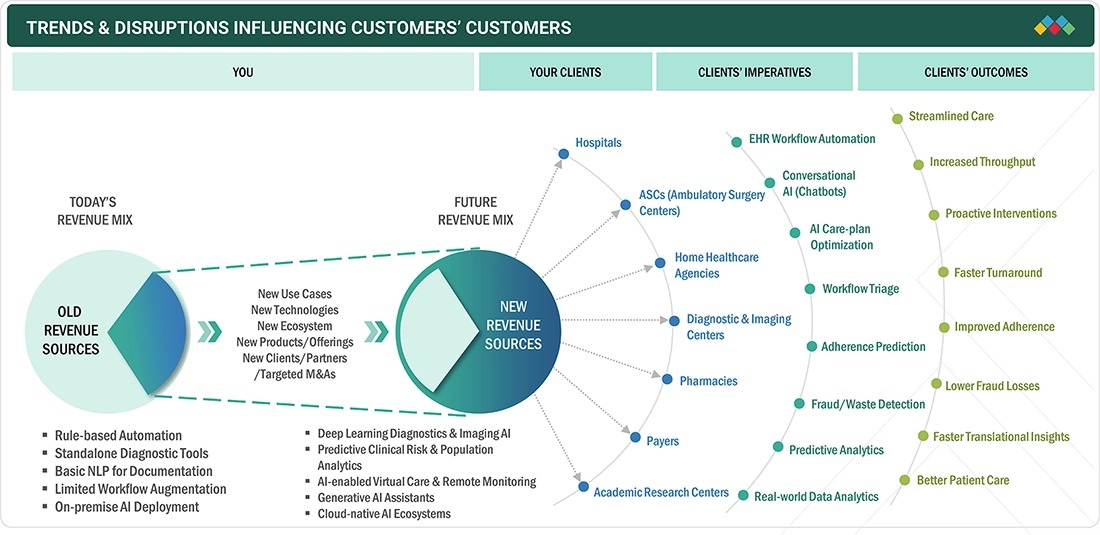
The global market for artificial intelligence in healthcare is experiencing an extraordinary period of expansion. Valued at approximately USD 25.88 billion in 2025, the sector is entering a massive hyper-growth phase. Financial projections indicate a steady climb to USD 36.67 billion by 2026, ultimately surging to an astonishing USD 194.79 billion by the year 2031. This exceptional trajectory represents a compound annual growth rate of 39.7% over the forecast period. The broader commercial ecosystem now heavily involves technology giants, insurance payers, diagnostic networks, and academic research institutions. Healthcare organizations are actively transitioning away from legacy, rule-based systems toward sophisticated, cloud-native platforms. By integrating these advanced predictive tools into clinical, operational, and financial workflows, health systems aim to drastically improve efficiency while maintaining strict cost controls and elevating the overall patient experience.
Key Market Drivers
Several critical factors are accelerating the widespread adoption of artificial intelligence in healthcare. The modern medical industry is currently grappling with severe nationwide labor shortages alongside a steady increase in clinical complexity. Intelligent automation provides a necessary and immediate solution by drastically reducing the operational and administrative burden placed on medical staff. Furthermore, government initiatives and regulatory support are playing a major role in fueling this sector's expansion. Regulatory bodies are creating supportive frameworks to encourage the safe, rapid implementation of these technologies. For instance, funding programs like the UK’s AI Airlock regulatory sandbox project are designed specifically to fast-track innovative medical devices into clinics. The surging demand for early disease detection, combined with the ongoing industry transition toward value-based care models, further incentivizes hospitals to invest heavily in modern predictive analytics.
Emerging Technologies
The technological foundation of the medical field is shifting rapidly to accommodate massive datasets. Cloud-based deployment models currently dominate the landscape, capturing over 63% of the total market share. This dominance is primarily due to their superior scalability, immediate data accessibility, and the immense computing power required to process complex medical information. Among the specific technological tools, machine learning stands out as the most prominent. These algorithms are continuously trained to identify intricate patterns within medical imaging, assess long-term disease risks, and guide critical clinical decision-making. Simultaneously, natural language processing is revolutionizing the way clinical documentation is handled. Automated transcription tools, specifically AI scribes, currently represent the fastest-growing functional segment. These ambient technologies are designed to listen to patient encounters and instantly generate accurate medical records, thereby freeing physicians from hours of manual data entry.
Future Trends
Moving forward, the industry will witness a massive shift toward highly integrated software solutions rather than isolated, niche products. Medical facilities increasingly prefer comprehensive platforms that seamlessly connect electronic health records, diagnostic imaging systems, revenue cycle management, and patient engagement tools into a single, cohesive ecosystem. Another major trend is the development and deployment of agentic and generative AI models capable of autonomous problem-solving. Substantial global investments are being directed toward creating AI-native hospital infrastructures. Mega-projects funded by billions of dollars are actively aiming to introduce intelligent assistants that can independently orchestrate hospital operations, coordinate complex patient care routines, and manage detailed administrative workflows with minimal human intervention.
Opportunities
The convergence of clinical expertise and technological prowess presents massive commercial and scientific opportunities. Strategic partnerships between established healthcare providers and leading technology firms are rapidly becoming the primary vehicle for industry innovation. By combining deep medical knowledge with immense computational power, these alliances can rapidly accelerate drug discovery, optimize treatment pathways, and improve remote patient monitoring. Furthermore, the development of human-aware AI systems presents a highly lucrative avenue for future growth. These sophisticated models are designed to intricately understand and augment human behavior, ensuring that technology acts as a seamless extension of the medical professional rather than a disruptive or distracting force. Collaborative ecosystems will ultimately dictate the pace at which next-generation care delivery is realized across the globe.
Challenges
Despite the highly optimistic outlook, significant structural and operational hurdles remain. Data privacy and cybersecurity stand as the most pressing concerns for facility administrators. The industry relies entirely on massive volumes of highly sensitive patient information, including genomic sequences and electronic medical records. As health networks become increasingly interconnected through cloud architecture, the risk of catastrophic data breaches, unauthorized access, and targeted cyberattacks multiplies exponentially. Compliance with strict regulatory frameworks adds substantial financial cost and complexity to enterprise deployment. Furthermore, a severe shortage of skilled professionals who possess dual expertise in data science and clinical workflows heavily restricts implementation capabilities. Without a robust, continuous pipeline of properly trained personnel, the deployment of intelligent systems will face significant operational bottlenecks.
Regional Outlook
Geographically, North America currently leads the global transition, holding over 42% of the market share as of recent evaluations. This regional dominance is driven by aggressive enterprise cloud adoption, substantial federal incentives for digital modernization, and the concentrated presence of major artificial intelligence vendors. However, the Asia Pacific region is rapidly emerging as the fastest-growing market in the world. Extensive healthcare digitization efforts, coupled with massive strategic investments in medical infrastructure, are propelling the region forward at a record pace. Governments across Asia are actively introducing supportive policies and open data benchmarking platforms to foster the ethical, large-scale implementation of intelligent medical technologies. This proactive regulatory environment positions the Asia Pacific market as a critical growth engine for the remainder of the decade.
Competitive Landscape
The competitive arena is characterized by a dynamic mix of established technology conglomerates and agile, highly specialized startups. Industry stalwarts such as Microsoft, NVIDIA, Oracle, GE HealthCare, and Philips currently dominate the space due to their vast installed hospital bases and extensive enterprise product portfolios. These market leaders are heavily investing in graphic processing units, digital twins, and health-focused foundation models. NVIDIA provides the computational backbone for countless medical imaging and drug discovery applications, while Philips leverages its massive footprint in acute care monitoring to embed intelligence directly into existing clinical workflows. Meanwhile, emerging companies are successfully carving out highly profitable niches by developing specialized applications for precise workflow optimization and automated diagnostic support, ensuring a landscape of continuous, rapid innovation.
What the Future Looks Like
The upcoming decade will witness a complete paradigm shift in day-to-day medical operations. Artificial intelligence in healthcare will fully transition from a supplementary digital tool to the central nervous system of both clinical and administrative environments. Predictive analytics will routinely forecast patient deterioration long before physical clinical symptoms appear, drastically reducing unexpected mortality rates. Physicians and nurses will spend significantly less time interacting with computer screens and far more time engaging directly with patients, supported entirely by invisible, ambient intelligence that documents and coordinates care in real time. Ultimately, the successful, widespread integration of these systems will create a highly efficient, hyper-personalized, and accessible global health infrastructure.
80% of the Forbes Global 2000 B2B companies rely on MarketsandMarkets to identify growth opportunities in emerging technologies and use cases that will have a positive revenue impact.
- Food Packaging Market Size Set for Strong Growth Through 2030 Amid Rising Demand for Convenience Foods
- Crop Protection Chemical Market Size, Share & Growth Forecast (2025–2030)
- Mulch Films Market: Driving Sustainable Agriculture Through Innovation
- Agricultural Adjuvants Market Analysis, Trends, and Growth Outlook (2026–2031)
- Japan Enterprise Asset Management Market Growth: AI and Smart Infrastructure Drive Demand

Conclusion
The trajectory of the artificial intelligence in healthcare market highlights a fundamental transformation in how medical services will be delivered, managed, and optimized. With explosive financial growth projected through 2031, the seamless integration of advanced algorithms is set to resolve chronic labor shortages, enhance diagnostic precision, and streamline highly complex administrative operations. While valid challenges regarding data security, interoperability, and workforce readiness persist, the relentless pace of technological innovation and strategic cross-industry partnerships will undoubtedly overcome these barriers. The global healthcare industry is currently standing on the precipice of a new era, one where intelligent computing and human clinical expertise merge to provide unparalleled patient care.