The Future of Gene Therapy: Market Innovations, Growth, and Trends
Gene therapy represents one of the most profound medical breakthroughs of the modern era. By intentionally altering the genetic makeup of a patient’s cells, medical professionals can treat or even prevent devastating diseases at their fundamental biological root. Instead of relying on traditional medications that simply manage daily symptoms, this approach introduces, removes, or modifies genetic material to permanently correct cellular dysfunction. Over the past decade, rapid advancements in molecular biology and genetic engineering have moved these treatments from theoretical research concepts into life-saving clinical realities. As researchers continue to refine delivery mechanisms and genetic targeting, this revolutionary medical field stands poised to fundamentally transform the standard of care for countless patients worldwide.
Current Industry Overview
The global landscape for these advanced therapeutics is currently experiencing an extraordinary phase of rapid expansion and commercialization. Entering 2024, the gene therapy market was valued at a robust USD 8.85 billion. Driven by relentless innovation and an influx of clinical successes, this sector is projected to surge to an impressive USD 36.55 billion by 2032. This trajectory represents a remarkable compound annual growth rate (CAGR) of 19.4% throughout the forecast period.
Presently, in-vivo delivery methods dominate the landscape, accounting for an overwhelming 72.5% of the total industry share in 2024. This preference is primarily because the majority of successfully marketed products utilize direct administration into the patient's body. Consequently, intravenous delivery remains the most prominent route of administration, offering systemic distribution of therapeutic agents. Hospitals currently serve as the central hubs for these treatments, providing the necessary specialized infrastructure, expert medical teams, and advanced monitoring required to safely administer these complex biological therapies.
Key Market Drivers
The immense growth within the gene therapy market is heavily fueled by an escalating global demand for definitive, curative treatments. For generations, patients suffering from rare genetic disorders and aggressive cancers have relied on chronic symptom management. Today, there is a paradigm shift toward addressing the underlying molecular causes of these conditions. Treatments that offer single-dose cures for diseases like cystic fibrosis and sickle cell anemia are fundamentally altering patient expectations.
Furthermore, a significant influx of financial investment into research and development is accelerating clinical progress. Both private equity and public funding are pouring into specialized biotechnology firms, expanding the pipeline of robust clinical trials. Regulatory bodies are also demonstrating increased support, streamlining approval processes for therapies that address severe unmet medical needs. This combination of strong patient demand, robust financial backing, and regulatory encouragement continues to push the boundaries of what these treatments can achieve.
Emerging Technologies
Technological breakthroughs in molecular engineering dictate the pace of modern therapeutic development. Gene silencing currently holds the largest commercial share, utilizing advanced RNA interference and specialized oligonucleotides to deliberately suppress the expression of disease-causing genes. This method proves exceptionally effective in managing inherited disorders linked to single-gene mutations by essentially shutting down the flawed biological instructions.
Simultaneously, gene augmentation is emerging as the fastest-growing therapeutic approach, expected to expand at a CAGR of 20.3%. This technique involves introducing functional genes to replace defective or missing ones. To achieve this, scientists heavily rely on modified viral vectors, particularly adeno-associated viruses (AAV) and lentiviruses. These viral vectors are expertly engineered to strip away harmful viral components, transforming them into highly efficient, safe microscopic delivery vehicles that can seamlessly transport therapeutic genetic material directly into targeted human cells.
Future Trends
As the industry matures, several critical trends are reshaping how companies operate and commercialize their pipelines. One major disruption is the shifting dynamic in pricing and reimbursement. Because these treatments command exceptionally high price tags, healthcare payers and insurance providers are increasingly demanding outcome-based pricing models. This means financial reimbursement is directly tied to the demonstrable, long-term clinical success of the therapy in individual patients.
Another vital trend is the evolution of strategic industry partnerships. Acknowledging that commercial manufacturing is an immense hurdle, biotechnology firms are rapidly forming alliances to expand in-house production capabilities or secure specialized outsourced manufacturing. Additionally, the sector is experiencing heightened competition from adjacent fields, particularly advanced RNA technologies and targeted cell therapies, forcing gene therapy developers to continuously innovate and prove their distinct clinical superiority.
Opportunities
The most lucrative opportunity within the gene therapy market lies in the aggressive expansion into rare disease treatment. Historically, pharmaceutical companies neglected rare diseases due to the small patient populations and limited potential for financial return. However, precision genetic targeting combined with powerful regulatory incentives—such as fast-track clinical approvals, extended market exclusivity, and highly sought-after orphan drug designations—has completely transformed this dynamic.
Moreover, the broader transition toward precision medicine presents a massive avenue for growth. Healthcare systems globally are recognizing the immense value of tailoring medical treatments to individual genetic profiles. As diagnostic tools become more sophisticated, clinicians can precisely identify the ideal candidates for specific genetic interventions, ensuring maximum clinical efficacy and minimizing adverse reactions.
Challenges
Despite immense clinical promise, scaling these therapies from small laboratory batches to global commercial distribution presents monumental logistical and manufacturing challenges. Producing therapeutic viral vectors requires massive resource investment, highly specialized manufacturing facilities, and strict adherence to complex Good Manufacturing Practice (GMP) regulations. Unlike conventional pharmaceutical pills that can be synthesized in massive quantities, genetic treatments are bespoke biological products that lack traditional economies of scale, resulting in extraordinarily high per-unit production costs.
Supply chain fragility further complicates commercialization. These living therapeutics require strict cold-chain logistics and often feature incredibly short shelf lives, leaving very little room for transportation errors. While emerging innovations like continuous manufacturing pipelines, single-use automated bioreactors, and AI-driven quality control systems are beginning to address these bottlenecks, manufacturing complexity remains a significant barrier to widespread global accessibility.
Regional Outlook
Geographically, North America stands as the undisputed titan of the industry, capturing 49.4% of the global market share in 2024. This dominance is anchored by massive local research and development investments, a dense concentration of leading biotechnology corporations, and highly advanced healthcare infrastructure.
However, Europe is officially projected to be the fastest-growing region over the coming decade. This rapid European expansion is catalyzed by strong government initiatives supporting genomic research and favorable regulatory environments for targeted therapeutics. Additionally, as several older, traditional blockbuster drugs face impending patent expirations in the European market, local pharmaceutical giants are aggressively pivoting their capital investments toward novel genetic technologies to secure future revenue streams.
Competitive Landscape
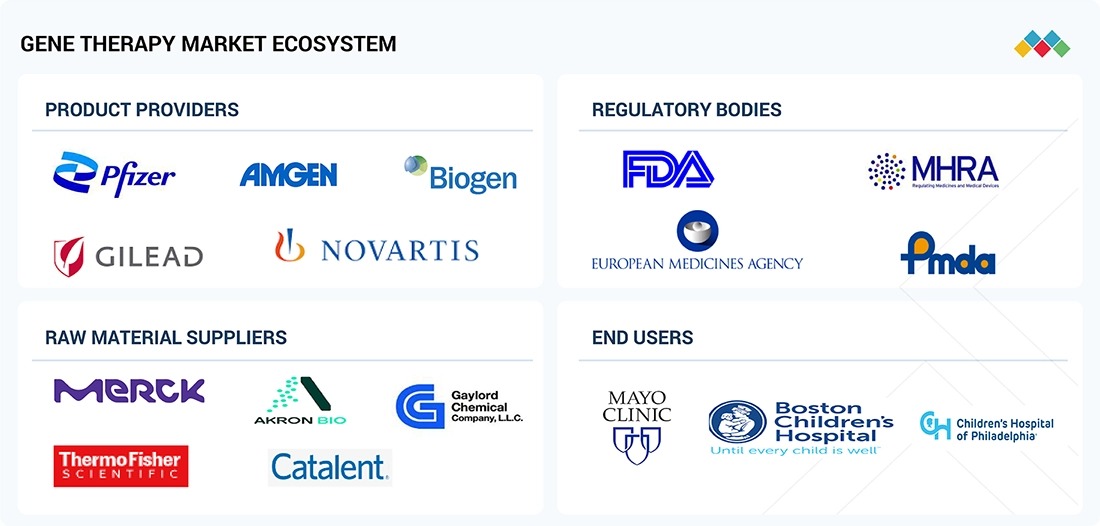
The competitive environment is highly dynamic, characterized by intense clinical rivalries and massive corporate consolidations. Industry giants like Biogen dictate the pace of innovation, recognized as a star player due to its vast clinical pipeline heavily focused on severe neurological conditions. Novartis also maintains a commanding presence, recently highlighting its commitment to the space through the massive USD 1.1 billion acquisition of Kate Therapeutics in late 2024 to secure an advanced capsid engineering platform.
Regulatory milestones continually redefine market leadership. Recent landmark FDA approvals emphasize this momentum, including Ferring’s breakthrough vector-based treatment for high-risk bladder cancer and PTC Therapeutics' historic approval for the first-ever gene treatment administered directly into the brain. Companies like Pfizer are also solidifying their market footprint, successfully launching transformative one-time cures for conditions like Hemophilia B across both American and European markets.
What the Future Looks Like
Looking ahead, the clinical focus of the gene therapy market will pivot heavily toward complex therapeutic areas, particularly neurology. Driven by aging global populations, treatments targeting devastating chronic conditions like Alzheimer's, Parkinson's disease, and spinal muscular atrophy are advancing rapidly through clinical pipelines. The neurology segment is projected to experience the absolute fastest growth rate of any therapeutic area through 2032.
Administratively, the intravenous route will remain the gold standard, expected to grow at a rapid 19.9% CAGR due to its systemic efficiency and non-invasive nature compared to surgical interventions. As manufacturing technologies mature and outcome-based pricing models stabilize, the exorbitant costs associated with these treatments should gradually normalize, paving the way for broader global patient access and integration into standard hospital care protocols.
80% of the Forbes Global 2000 B2B companies rely on MarketsandMarkets to identify growth opportunities in emerging technologies and use cases that will have a positive revenue impact.
- Food Packaging Market Size Set for Strong Growth Through 2030 Amid Rising Demand for Convenience Foods
- Crop Protection Chemical Market Size, Share & Growth Forecast (2025–2030)
- Mulch Films Market: Driving Sustainable Agriculture Through Innovation
- Agricultural Adjuvants Market Analysis, Trends, and Growth Outlook (2026–2031)
- Japan Enterprise Asset Management Market Growth: AI and Smart Infrastructure Drive Demand

The gene therapy market is no longer a speculative frontier; it is a rapidly maturing pillar of modern medicine. Propelled by unprecedented scientific breakthroughs in viral vector delivery and precise genetic silencing, this sector is systematically dismantling the traditional approach to chronic and rare diseases. While immense hurdles regarding manufacturing scalability and exorbitant production costs remain, relentless corporate investment and favorable regulatory environments ensure these barriers will eventually be overcome. Ultimately, the future of healthcare relies heavily on the continued success and global commercialization of these definitive, life-saving genetic cures.