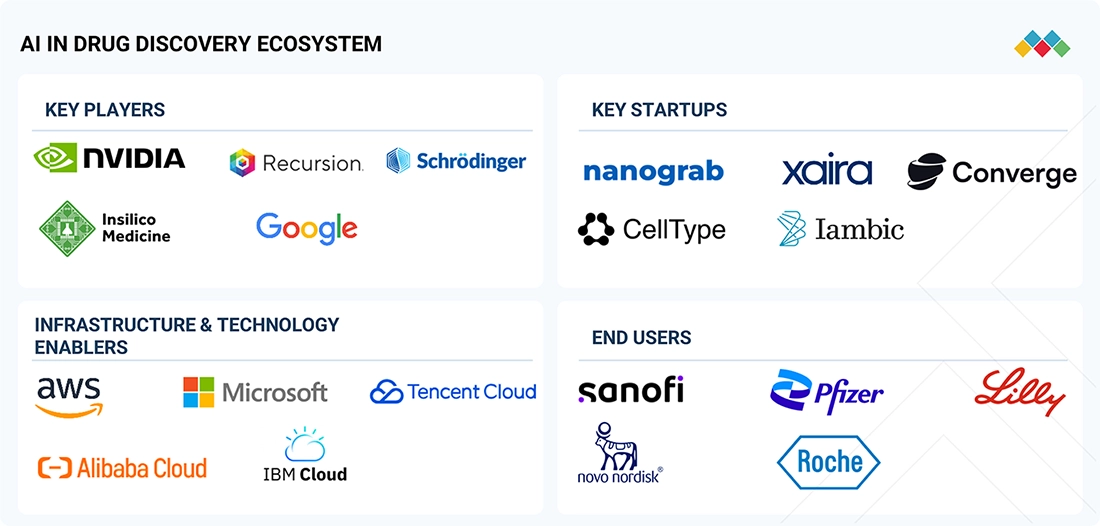
25 Leading AI in Drug Discovery Companies Shaping Innovation and Market Growth to 2031
Discover the top 25 companies driving innovation in the AI in drug discovery market. This in-depth analysis explores competitive advantages, transformative trends, and key players poised to influence pharmaceutical research, biotechnology, precision medicine, and therapeutic development through 2031. Access the comprehensive market research report for further insights into emerging technologies and competitive developments.
Spotlights on the Industry's Top AI in Drug Discovery Market Companies
The AI in drug discovery market is evolving as pharmaceutical companies and biotechnology innovators increasingly integrate artificial intelligence into target identification, hit discovery, lead optimization, molecular design, and drug repurposing. Advances in generative AI, deep learning, graph neural networks, computational chemistry, and biological foundation models are expanding the capabilities of researchers to analyze complex biological systems and prioritize promising drug candidates.
High-performance computing, multi-omics analysis, automated experimentation, and cloud-based research platforms are further transforming early-stage drug development. Competition is intensifying among technology providers, AI-native biotechnology companies, computational chemistry specialists, and pharmaceutical research innovators. However, the practical value of these technologies depends on the quality of training data, experimental validation, reproducibility, safety assessment, and regulatory compliance. Strategic collaborations between AI developers and pharmaceutical companies remain important for translating computational predictions into clinically relevant drug candidates.
1. NVIDIA Corporation
NVIDIA Corporation is a major technology provider supporting AI-driven drug discovery through accelerated computing, GPU-based processing, and specialized software for biological and chemical research. Its BioNeMo platform supports the development, customization, and deployment of AI models for applications such as protein modeling, molecular generation, and biomolecular property prediction. NVIDIA's computing infrastructure helps researchers process complex datasets and run computationally intensive simulations. Its ecosystem of hardware, software, and developer tools positions the company as an important infrastructure provider for pharmaceutical organizations building scalable AI-enabled discovery workflows.
2. Alphabet Inc.
Alphabet Inc. contributes to AI-driven drug discovery primarily through Google DeepMind and its broader artificial intelligence research ecosystem. DeepMind's AlphaFold technologies have expanded access to predicted protein structures, supporting research into protein function, molecular interactions, and disease mechanisms. Alphabet's AI research and computing capabilities are relevant to biological foundation models, computational biology, and protein engineering. Although Alphabet is a diversified technology parent company rather than a conventional pharmaceutical developer, its research advances and computational infrastructure support scientists seeking to understand biological systems and accelerate early-stage therapeutic research.
3. Recursion
Recursion is a biotechnology company that combines machine learning, experimental biology, and large-scale biological datasets to advance drug discovery. Its technology platform integrates cellular imaging, automated experimentation, and computational analysis to investigate relationships between genes, biological pathways, and disease phenotypes. These capabilities help researchers identify potential therapeutic targets and prioritize drug candidates for further investigation. Recursion's integration of laboratory automation and AI-driven analysis distinguishes its approach from purely computational discovery models. Its work is relevant to pharmaceutical research programs seeking to improve target identification, drug repurposing, and preclinical development decisions.
4. Insilico Medicine
Insilico Medicine develops AI-enabled drug discovery and development technologies through its Pharma.AI platform. Its capabilities span target identification, generative chemistry, molecular optimization, and the prioritization of potential therapeutic candidates. By integrating biological data analysis with computational chemistry, the company aims to accelerate early-stage research and improve the efficiency of candidate selection. Insilico Medicine also advances internally developed drug programs, providing opportunities to evaluate its computational approaches through experimental and clinical development. Its focus on generative AI and integrated drug development makes it a significant participant in the AI-driven pharmaceutical innovation landscape.
5. Schrödinger, Inc.
Schrödinger, Inc. provides computational chemistry software and physics-based molecular simulation technologies used in pharmaceutical and biotechnology research. Its platform combines molecular modeling, free-energy calculations, and computational analysis to support hit identification, lead optimization, and drug candidate design. These methods can help researchers evaluate molecular properties and prioritize compounds before committing to resource-intensive experiments. Schrödinger also applies its technology to internal drug discovery programs, particularly in therapeutic areas involving complex molecular targets. Its combination of established scientific software and drug development activities positions the company at the intersection of computational chemistry and AI-enabled discovery.
6. BenevolentAI
BenevolentAI has focused on applying artificial intelligence, machine learning, and biomedical knowledge integration to drug discovery and development. Its approach uses scientific literature, biological databases, and structured biomedical information to investigate disease mechanisms, identify potential targets, and generate hypotheses for therapeutic research. Such capabilities can help research teams connect fragmented scientific evidence and prioritize opportunities for experimental validation. The company's relevance to AI in drug discovery lies in its knowledge-driven approach to biomedical research rather than general-purpose computing. Its current operating activities and platform availability should be verified when assessing its position in the market.
7. Microsoft Corporation
Microsoft Corporation supports AI-driven drug discovery through cloud computing, AI development tools, data infrastructure, and high-performance computing services. Microsoft Azure provides resources that research organizations can use to manage biological datasets, develop machine learning models, and run computationally intensive scientific workloads. Its AI ecosystem can support applications involving protein analysis, molecular modeling, and biomedical data integration. Microsoft is primarily an enabling technology provider rather than a dedicated drug discovery company, but its scalable infrastructure and enterprise capabilities are relevant to pharmaceutical organizations developing digital research environments and integrating AI into existing discovery workflows.
8. Numerion Labs
Numerion Labs is included in the supplied list of companies associated with the AI in drug discovery market. However, its specific corporate identity, current operating status, proprietary platform, and direct involvement in pharmaceutical research could not be established with sufficient confidence for a detailed factual profile. Before publication, its official company website, technology portfolio, and evidence of drug discovery activities should be reviewed. If its role in AI-enabled molecular design, target identification, or therapeutic development cannot be independently verified, its inclusion among leading market participants should be reconsidered to maintain the accuracy and credibility of this industry overview.
9. Illumina, Inc.
Illumina, Inc. provides next-generation sequencing technologies and genomic analysis solutions that generate data used in biomedical research and drug development. Its sequencing platforms support the investigation of genetic variation, gene expression, and disease-associated molecular signatures. These datasets can serve as inputs for AI models designed to identify therapeutic targets, understand disease mechanisms, and investigate patient-specific biological differences. Illumina is primarily a genomics technology provider rather than a dedicated AI drug discovery company. Nevertheless, its sequencing capabilities are relevant to data-driven discovery programs, particularly those involving precision medicine, oncology, and multi-omics research.
10. XtalPi Inc.
XtalPi Inc. combines artificial intelligence, quantum physics, computational chemistry, and automation to support pharmaceutical research and materials science. Its technology capabilities include molecular property prediction, computational modeling, and the application of automated experimentation to research workflows. In drug discovery, these approaches can help researchers evaluate molecular candidates, optimize compound properties, and improve the efficiency of early-stage development. By integrating computational predictions with experimental data, XtalPi aims to reduce uncertainty during candidate selection. Its multidisciplinary approach is relevant to pharmaceutical companies seeking to combine AI-driven molecular design with practical laboratory validation.
11. Iktos
Iktos develops artificial intelligence technologies for computer-aided drug design, with an emphasis on generative chemistry and molecular optimization. Its software can help medicinal chemists explore chemical structures, design compounds with desired properties, and prioritize candidates for synthesis and testing. Generative modeling can expand the range of molecules considered during lead discovery while incorporating relevant chemical constraints and project objectives. Iktos also offers capabilities supporting automated design workflows and has pursued collaborations in pharmaceutical research. Its specialization in AI-assisted molecular design makes it relevant to organizations aiming to accelerate hit-to-lead and lead optimization activities.
12. Tempus AI, Inc.
Tempus AI, Inc. applies artificial intelligence and data analytics to precision medicine, with capabilities spanning molecular profiling, clinical data, and healthcare decision support. Its combination of genomic information and clinical records can provide insights into disease biology, patient subgroups, and treatment response. These capabilities are relevant to drug discovery and development when researchers investigate biomarkers, identify potential therapeutic targets, or design biomarker-informed clinical studies. Tempus is not exclusively an AI drug discovery company; its broader precision medicine focus connects clinical evidence with pharmaceutical research. Its contribution is particularly relevant to oncology and data-driven therapeutic development.
13. Deep Genomics, Inc.
Deep Genomics, Inc. applies artificial intelligence to RNA biology and genetic disease research, seeking to identify therapeutic opportunities arising from the relationship between genetic variation and molecular function. Its approach uses computational models to investigate how genetic changes affect RNA processing and other biological mechanisms. These insights can support the identification of disease-associated targets and the design of RNA-based therapeutic candidates. The company's focus is especially relevant to genetic disorders and precision medicine, where understanding the molecular consequences of specific variants is essential. Its specialized emphasis on AI-enabled RNA therapeutics differentiates it from broader molecular design platforms.
14. Verge Labs
Verge Labs appears in the supplied company list for the AI in drug discovery market, but its exact identity and direct participation in pharmaceutical AI research require further verification. Publicly supportable information was insufficient to establish a specific drug discovery platform, validated technology portfolio, or therapeutic development program under this exact company name. Before publication, the company should be checked against official corporate records, its website, and credible industry sources. A detailed market profile should only be included if evidence confirms its role in target discovery, molecular design, computational biology, or another clearly defined part of the AI-enabled drug development value chain.
15. BenchSci
BenchSci develops AI-powered solutions that help biomedical researchers discover and interpret scientific evidence, particularly information related to experimental reagents, antibodies, and biological research methods. Its platform uses machine learning and scientific data to make research information more accessible and support experimental planning. In the broader drug discovery ecosystem, these capabilities can help scientists assess prior evidence, select appropriate research tools, and improve the design of laboratory studies. BenchSci is not primarily a generative molecular design company, but its focus on research intelligence and experimental decision support provides an indirect connection to AI-enabled drug development.
16. insitro
insitro combines machine learning with large-scale experimental biology to develop new approaches to drug discovery. Its strategy integrates data generated from biological experiments with computational models to investigate disease mechanisms, identify potential therapeutic targets, and prioritize drug candidates. By linking laboratory measurements with machine learning, the company aims to build predictive models grounded in biological evidence rather than relying solely on existing datasets. Its approach is relevant to complex diseases where conventional discovery methods may struggle to capture underlying biological relationships. The integration of data science and experimental validation is a defining feature of its drug discovery model.
17. Valo Health
Valo Health applies computational methods, data analytics, and human biological data to drug discovery and development. Its approach emphasizes integrating diverse biomedical information to identify disease mechanisms, discover potential targets, and prioritize therapeutic programs. AI-enabled analysis can help researchers examine relationships across molecular, clinical, and other biological datasets, supporting decisions throughout early-stage development. Valo Health has positioned its technology around data-driven drug development rather than a single computational tool. Its relevance to the market reflects the broader shift toward integrated platforms that combine biomedical evidence, predictive modeling, and therapeutic research to address unmet medical needs.
18. BPGbio, Inc.
BPGbio, Inc. focuses on precision medicine and AI-enabled drug discovery, using its approach to analyze biological data and investigate disease mechanisms. The company's research strategy has emphasized identifying molecular relationships that may inform therapeutic targets, patient stratification, and treatment development. Integrating computational analysis with biological evidence can help researchers generate hypotheses and prioritize opportunities for further testing. BPGbio's relevance to AI in drug discovery is linked to the application of data-driven methods to complex diseases and precision therapeutics. Its specific platform capabilities, current development programs, and commercial activities should be checked against the latest company disclosures.
19. Generate:Biomedicines
Generate:Biomedicines applies generative AI and computational biology to the design of protein-based therapeutics. Its technology platform is intended to learn relationships between protein sequences, structures, and functions, supporting the design of novel proteins with selected biological properties. This approach can help researchers explore therapeutic candidates beyond those readily identified through conventional discovery methods. The company focuses on biologics, making its contribution distinct from platforms primarily dedicated to small-molecule chemistry. By combining computational protein design with laboratory testing and drug development, Generate:Biomedicines illustrates how generative models can be applied to the discovery of engineered therapeutic proteins.
20. Certara, Inc.
Certara, Inc. provides biosimulation software and services that support pharmaceutical research, drug development, and regulatory submissions. Its capabilities include model-informed drug development, pharmacokinetic and pharmacodynamic analysis, and quantitative evaluation of drug behavior. These technologies help researchers assess dose selection, exposure-response relationships, and development strategies using mathematical models and available experimental data. Certara's role is broader than AI-based target identification or molecular generation, but its computational tools are relevant to the wider drug development process. Its contribution is particularly important where modeling and simulation can help inform preclinical and clinical decisions after an initial therapeutic candidate has been identified.
21. Xaira Therapeutics
Xaira Therapeutics is focused on applying artificial intelligence and advanced biological research to the discovery and development of new medicines. Its approach brings together computational methods, biological data, and experimental research to investigate disease mechanisms and identify potential therapeutic opportunities. The broader scientific opportunity lies in developing predictive models that can improve understanding of biological systems and support the selection of drug candidates. Xaira's position reflects growing interest in AI-native biotechnology companies that integrate software development with laboratory research. Its evolving platform, research programs, and partnerships should be assessed using current company disclosures when evaluating its competitive standing.
22. Iambic Therapeutics, Inc.
Iambic Therapeutics, Inc. uses AI and computational methods to support drug discovery and therapeutic development. Its technology strategy includes applying machine learning to molecular design and integrating computational predictions with experimental research. Such approaches can help researchers evaluate candidate molecules, optimize their properties, and prioritize compounds for further development. Iambic's focus on translating AI-generated insights into therapeutic programs places it among companies seeking to connect computational drug design with practical pharmaceutical research. Its pipeline and development activities should be assessed using current disclosures, while its broader market relevance lies in the effort to make drug discovery more predictive and efficient.
23. Genesis Molecular AI
Genesis Molecular AI is associated with the application of artificial intelligence to molecular research and drug discovery. Its inclusion in this market reflects interest in computational approaches that can help researchers model molecular behavior, evaluate chemical structures, and investigate potential therapeutic candidates. However, the exact corporate identity, current platform capabilities, and independently verifiable drug discovery activities associated with this name should be confirmed before publication. In particular, it is important to distinguish the company from other organizations using similar names and from separately reported AI research initiatives. A detailed competitive profile should rely on verified corporate and technical information.
24. Cradle Bio
Cradle Bio develops AI-powered protein engineering technology designed to help scientists improve protein properties and develop engineered proteins. Its platform can support the design and optimization of proteins by using machine learning to guide experimental choices and interpret protein-related data. These capabilities are relevant to biologics discovery, enzyme engineering, and the development of therapeutic proteins, although protein engineering is a distinct segment within the broader AI drug discovery market. By helping researchers explore protein sequence variations and prioritize candidates for laboratory testing, Cradle Bio contributes to the growing application of predictive AI models in biotechnology research.
25. Isomorphic Labs
Isomorphic Labs applies advanced AI to biological research and drug discovery, building on computational approaches to understanding molecular systems. Its research direction focuses on using AI models to improve the prediction and design of biological molecules and support the development of new medicines. The company draws on advances in structural biology and machine learning to investigate complex interactions relevant to disease and therapeutic intervention. Its emphasis on AI-native drug design positions it among specialized innovators seeking to transform early-stage pharmaceutical research. Continued progress will depend on experimental validation, therapeutic development outcomes, and the translation of computational predictions into effective medicines.
80% of the Forbes Global 2000 B2B companies rely on MarketsandMarkets to identify growth opportunities in emerging technologies and use cases that will have a positive revenue impact.
- Food Packaging Market Size Set for Strong Growth Through 2030 Amid Rising Demand for Convenience Foods
- Crop Protection Chemical Market Size, Share & Growth Forecast (2025–2030)
- Mulch Films Market: Driving Sustainable Agriculture Through Innovation
- Agricultural Adjuvants Market Analysis, Trends, and Growth Outlook (2026–2031)
- Japan Enterprise Asset Management Market Growth: AI and Smart Infrastructure Drive Demand

The AI in drug discovery market is advancing through the convergence of generative AI, computational chemistry, biological foundation models, high-performance computing, and automated experimentation. Technology providers such as NVIDIA Corporation, Alphabet Inc., and Microsoft Corporation supply important computational capabilities, while specialized innovators such as Insilico Medicine, Recursion, Schrödinger, Inc., and Generate:Biomedicines apply AI to distinct aspects of therapeutic research. Companies working in genomics, protein engineering, biomedical intelligence, and biosimulation further expand the technologies available across the drug development value chain.
Despite these advances, translating AI-generated predictions into effective medicines requires reliable datasets, rigorous laboratory validation, reproducible results, intellectual property protection, and compliance with applicable regulatory requirements. Pharmaceutical partnerships, access to high-quality biological data, and integration with established research workflows will remain important considerations as companies seek to demonstrate the practical value of AI-driven discovery.
For a deeper understanding of market dynamics, emerging technologies, competitive developments, and strategic opportunities through 2031, explore the full report: AI in Drug Discovery Market by Process (Target, Lead), Use Case (Repurposing, DE Novo Drug Design [Vaccine] Optimization, Disease Understanding, PK/PD), Therapy (Cancer, CNS), Tool (DL [CNN, GAN]), End User - Global Forecast to 2031.