25 Leading Body Fluid Analysis Companies Shaping Innovation and Market Growth to 2031
Discover the top 25 companies driving innovation in the body fluid analysis market. This in-depth analysis explores competitive advantages, transformative trends, and key players poised to influence clinical diagnostics, neurological disease detection, infectious disease testing, oncology, and biomarker research through 2031.
Spotlights on the Industry's Top Body Fluid Analysis Companies
The global body fluid analysis market is projected to grow from USD 2.62 billion in 2026 to USD 3.65 billion by 2031, registering a CAGR of 6.9%. Growth is supported by the increasing clinical importance of cerebrospinal fluid (CSF), pleural fluid, synovial fluid, peritoneal fluid, and semen analysis in diagnosing neurological, infectious, inflammatory, and other diseases. Advances in immunoassays, polymerase chain reaction (PCR), flow cytometry, laboratory automation, and biomarker detection are expanding testing capabilities. Competition is shaped by diagnostic instrument performance, reagent portfolios, analytical sensitivity, workflow efficiency, and the ability to support specialized clinical and research applications.
1. F. Hoffmann-La Roche Ltd.
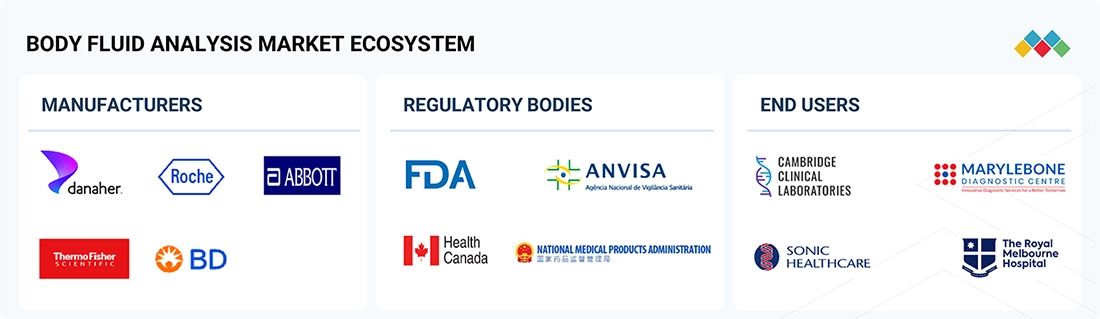
F. Hoffmann-La Roche Ltd. is a global healthcare company with established capabilities in in vitro diagnostics, clinical chemistry, immunoassays, and molecular testing. Its Roche Diagnostics portfolio includes automated analytical platforms and assays that support the evaluation of biological specimens in clinical laboratories. These capabilities are relevant to body fluid testing workflows, including specialized biomarker analysis where validated methods are available. Roche's diagnostic infrastructure, laboratory automation expertise, and international distribution network support its position in the broader clinical diagnostics market.
2. Becton, Dickinson and Company (BD)
Becton, Dickinson and Company (BD) develops medical technologies, laboratory products, specimen collection systems, and diagnostic solutions. Its specimen collection and preanalytical capabilities are relevant to body fluid analysis because sample integrity, appropriate collection, and handling influence downstream testing quality. BD also offers flow cytometry systems and reagents through its biosciences portfolio, supporting cellular analysis in laboratory settings. Its global presence and established relationships with clinical laboratories make the company relevant to the broader body fluid diagnostics ecosystem.
3. Abbott
Abbott is a diversified healthcare company with extensive capabilities in clinical chemistry, immunoassays, and point-of-care diagnostics. Its Alinity and ARCHITECT diagnostic platforms support the measurement of a wide range of clinically relevant analytes, depending on the assay and specimen authorization. These technologies provide laboratory infrastructure applicable to selected body fluid testing workflows. Abbott's strengths include automated testing systems, integrated laboratory solutions, and global commercial reach, supporting clinical laboratories seeking efficient and standardized diagnostic processes.
4. Thermo Fisher Scientific Inc.
Thermo Fisher Scientific Inc. supplies analytical instruments, laboratory reagents, molecular diagnostic technologies, and research tools used across clinical and life science laboratories. Its capabilities include PCR systems, immunodiagnostic technologies, cell analysis, and specialized analytical platforms that support the investigation of biological specimens. These offerings are relevant to body fluid analysis, particularly research applications involving biomarker discovery and molecular characterization. Its broad product portfolio, laboratory infrastructure, and technical support capabilities make it an important participant in the wider diagnostic and research ecosystem.
5. Siemens Healthineers AG
Siemens Healthineers AG provides clinical laboratory diagnostic systems, including automated chemistry and immunoassay platforms. Its Atellica and ADVIA product families support routine testing and selected specialized diagnostic workflows in hospital and reference laboratories. These systems can contribute to body fluid analysis when appropriate assays and specimen-specific validation are available. The company's strengths include laboratory automation, integrated diagnostic workflows, and global service capabilities. Its established hospital relationships position it within the broader market for laboratory-based clinical testing.
6. bioMérieux
bioMérieux specializes in in vitro diagnostics, with particular expertise in infectious disease detection, microbiology, and molecular testing. Its product portfolio includes automated microbiology systems, immunoassays, and molecular diagnostic solutions that support the identification of clinically significant pathogens. These capabilities are relevant to selected body fluid investigations, particularly when infection is suspected and suitable specimen-specific testing is available. The company's focus on infectious disease diagnostics, laboratory automation, and clinical microbiology supports its role in the broader body fluid testing landscape.
7. Sysmex Corporation
Sysmex Corporation develops hematology analyzers, reagents, urinalysis systems, and laboratory diagnostic technologies. Its expertise in cell counting and cellular characterization is particularly relevant to body fluid analysis, where cell counts and differential assessments can help evaluate inflammatory, infectious, and other conditions. Depending on the instrument configuration, its hematology portfolio includes systems designed to support body fluid measurement workflows. Sysmex benefits from specialized analyzer technology, established laboratory relationships, and international distribution, making it a significant participant in automated cellular diagnostics.
8. Bio-Rad Laboratories
Bio-Rad Laboratories provides clinical diagnostic systems, quality control materials, laboratory reagents, and research technologies. Its clinical diagnostics portfolio includes immunoassay-related products and quality assurance solutions, while its life science business supports PCR, protein analysis, and biomarker research. These capabilities can contribute to body fluid testing through appropriate assays and research workflows. Bio-Rad's strengths include analytical quality control, laboratory standardization, and established relationships with diagnostic and research laboratories, supporting reliable testing practices across multiple specimen types.
9. QIAGEN
QIAGEN develops sample preparation technologies, molecular diagnostic assays, PCR solutions, and bioinformatics tools. Its extraction and nucleic acid purification products help laboratories prepare biological specimens for downstream molecular analysis, while its diagnostic portfolio supports the detection of selected pathogens and genetic targets. These technologies are relevant to body fluid investigations when the required analytes and specimen types are supported by the applicable assay. QIAGEN's integrated sample-to-insight approach and established molecular testing expertise position it within the broader body fluid diagnostics ecosystem.
10. Revvity
Revvity provides life science research technologies, diagnostic products, and analytical solutions for healthcare and scientific applications. Its portfolio includes immunodiagnostic assays, laboratory instruments, and technologies used in biomarker analysis and disease research. These capabilities are relevant to selected body fluid applications, particularly specialized testing and research involving measurable biological markers. Revvity's experience in assay development, laboratory workflows, and diagnostic technologies supports its participation in the broader market. The applicability of individual products depends on their intended use and specimen-specific validation.
11. DiaSorin S.p.A.
DiaSorin S.p.A. specializes in immunodiagnostics and molecular diagnostics, supplying laboratory assays and analytical platforms for clinical testing. Its LIAISON family supports automated immunoassay workflows, while its molecular diagnostics portfolio addresses selected infectious disease testing applications. These technologies may support specific body fluid investigations when an appropriate assay is available and validated for the specimen. DiaSorin's specialized diagnostic focus, assay development capabilities, and international laboratory presence contribute to its relevance in the broader market for biomarker-based and molecular testing.
12. HORIBA, Ltd.
HORIBA, Ltd. develops analytical instruments and clinical diagnostic systems, including hematology analyzers and laboratory testing solutions. Its medical diagnostic technologies support blood cell analysis and other laboratory workflows, with selected capabilities relevant to cellular examination of biological specimens. Body fluid applications depend on the specifications of individual analyzers and their validated testing modes. HORIBA's engineering expertise, instrument development capabilities, and established presence in laboratory diagnostics support its role in the broader body fluid analysis ecosystem, particularly where automated cellular measurement is required.
13. Shenzhen Mindray Bio-Medical Electronics Co., Ltd.
Shenzhen Mindray Bio-Medical Electronics Co., Ltd. develops medical diagnostic equipment, including hematology analyzers, clinical chemistry systems, immunoassay platforms, and laboratory automation solutions. Its hematology technologies are relevant to cellular analysis, while its chemistry and immunoassay systems support the measurement of selected clinical biomarkers. Specific body fluid testing capabilities depend on the instrument model and validated applications. Mindray's broad diagnostic portfolio, competitive instrument offerings, and international expansion support its position in the global clinical laboratory equipment market.
14. Vircell S.L.
Vircell S.L. specializes in infectious disease diagnostic products, including serological assays, antigens, and molecular testing solutions. Its portfolio supports laboratory investigations of infectious agents, making the company relevant to selected body fluid testing applications where pathogen detection or immune response assessment is required. The suitability of its assays for cerebrospinal fluid or other specialized specimens depends on product-specific indications and validation. Vircell's focus on infectious disease testing and its specialized diagnostic offerings contribute to the broader ecosystem of laboratory-based body fluid investigations.
15. Fujirebio
Fujirebio develops in vitro diagnostic tests, automated immunoassay systems, and specialized biomarker assays. The company has capabilities in neurological biomarker testing, including assays relevant to the investigation of Alzheimer's disease and other neurodegenerative conditions. Cerebrospinal fluid biomarkers are an important area of neurological diagnostics, although assay indications and specimen requirements vary by product and jurisdiction. Fujirebio's experience in immunoassay development, automated testing, and specialized neurological diagnostics makes it particularly relevant to the biomarker-focused segment of the body fluid analysis market.
16. Erba Group
Erba Group supplies clinical laboratory diagnostic instruments, reagents, and testing solutions for healthcare facilities and laboratories. Its portfolio includes clinical chemistry and hematology technologies used to evaluate biological specimens and support routine diagnostic workflows. These capabilities are relevant to selected body fluid analysis applications where instruments and assays support the required specimen type. The company's product breadth and presence in international diagnostic markets help laboratories access analytical systems and reagents. Its specific contribution to specialized fluid testing depends on validated product capabilities.
17. Guangzhou Wondfo Biotech Co., Ltd.
Guangzhou Wondfo Biotech Co., Ltd. develops in vitro diagnostic products, including rapid tests, immunoassays, and molecular diagnostic solutions. Its technologies support the detection of selected disease markers and infectious agents across clinical and point-of-care testing settings. These capabilities may be relevant to particular body fluid applications where appropriate specimen-specific assays are available. Wondfo's focus on accessible diagnostic testing, manufacturing capabilities, and international commercial activity supports its presence in the wider diagnostics market, although individual products should be assessed for their relevance to specialized fluid analysis.
18. Meso Scale Diagnostics, LLC
Meso Scale Diagnostics, LLC develops multiplex biomarker detection technologies based on its electrochemiluminescence platform. Its Meso Scale Discovery systems enable the measurement of multiple analytes in research and drug development applications, including proteins and other biological markers. These capabilities are relevant to body fluid research involving cerebrospinal fluid and other specimens when compatible assays and validated protocols are used. The company's multiplexing technology can help researchers investigate complex biomarker profiles while conserving sample volume, supporting research into neurological disease, inflammation, and other clinical conditions.
19. Randox Laboratories Ltd.
Randox Laboratories Ltd. supplies clinical diagnostic reagents, laboratory analyzers, quality control materials, and specialized testing solutions. Its portfolio includes clinical chemistry and immunoassay-related products that support laboratory measurement of disease-associated analytes. These technologies may be used in selected body fluid testing workflows when the relevant assay is suitable for the specimen under examination. Randox's focus on diagnostic quality, reagent development, and laboratory quality assurance supports its role in the wider diagnostic market, where reproducibility and analytical performance are essential.
20. Amprion Diagnostics
Amprion Diagnostics specializes in protein misfolding diagnostics, with a focus on neurological disorders associated with abnormal protein aggregation. Its SYNTap test uses cerebrospinal fluid to assess alpha-synuclein seed amplification associated with synucleinopathies, supporting clinical evaluation in appropriate patients. This specialized application makes Amprion directly relevant to the neurological segment of body fluid analysis. Its technology illustrates the growing importance of disease-specific biomarkers and advanced molecular approaches in cerebrospinal fluid testing, although diagnostic use is governed by the test's intended purpose and applicable clinical guidance.
21. Atila BioSystems
Atila BioSystems develops molecular diagnostic assays, PCR reagents, and isothermal amplification technologies for infectious disease detection and other testing applications. Its portfolio includes assays for selected pathogens, including targets associated with infections that may require analysis of clinical specimens. These capabilities can be relevant to body fluid diagnostics when a specific assay is validated for the specimen and intended use. Atila's molecular testing expertise and assay development capabilities support its role in the broader diagnostic ecosystem, particularly in pathogen detection and specialized molecular laboratory workflows.
22. Quanterix
Quanterix develops ultrasensitive biomarker detection technologies, including its Simoa platform, which enables measurement of low-abundance proteins and other analytes. Its technologies support research into neurological disorders, inflammation, oncology, and other conditions in which biomarkers may be present at very low concentrations. Cerebrospinal fluid and other biological specimens can be important research materials for these applications, depending on the assay. Quanterix's sensitivity-focused approach and biomarker measurement expertise make it relevant to the research-driven segment of the body fluid analysis market.
23. Alamar Biosciences
Alamar Biosciences develops precision proteomics technologies designed to support sensitive and multiplexed protein biomarker analysis. Its NULISA platform is used in research applications involving low-abundance proteins, including investigations of neurological disease and other complex conditions. These capabilities are relevant to body fluid research, where cerebrospinal fluid and other specimens may contain valuable biomarker information. Alamar's emphasis on analytical sensitivity, protein profiling, and research workflow development supports biomarker discovery and translational studies, although research applications should not be confused with approved clinical diagnostic uses.
24. GeneProof
GeneProof develops molecular diagnostic assays and PCR-based testing solutions for detecting infectious agents and other clinically relevant genetic targets. Its portfolio includes real-time PCR kits designed for specified diagnostic applications, with product availability and regulatory status varying by market. These technologies may contribute to body fluid analysis when a suitable assay is validated for the specimen and clinical purpose. GeneProof's molecular diagnostic expertise supports pathogen detection workflows and illustrates the role of targeted nucleic acid testing in specialized laboratory investigations.
25. Danaher Corporation
Danaher Corporation is a global science and technology group with diagnostic businesses and life science platforms that support clinical laboratory testing and biomarker research. Through businesses such as Beckman Coulter Diagnostics and other specialized operating companies, Danaher provides clinical chemistry, immunoassay, cellular analysis, and laboratory workflow technologies. These capabilities are relevant to selected body fluid analysis applications, depending on the platform and validated assay. Its diagnostic technology portfolio, research infrastructure, and international reach strengthen its position in the broader clinical diagnostics market.
80% of the Forbes Global 2000 B2B companies rely on MarketsandMarkets to identify growth opportunities in emerging technologies and use cases that will have a positive revenue impact.
- Food Packaging Market Size Set for Strong Growth Through 2030 Amid Rising Demand for Convenience Foods
- Crop Protection Chemical Market Size, Share & Growth Forecast (2025–2030)
- Mulch Films Market: Driving Sustainable Agriculture Through Innovation
- Agricultural Adjuvants Market Analysis, Trends, and Growth Outlook (2026–2031)
- Japan Enterprise Asset Management Market Growth: AI and Smart Infrastructure Drive Demand

The body fluid analysis market is expected to advance through 2031 as healthcare providers increasingly rely on specialized specimens, biomarker-based diagnostics, and advanced laboratory technologies to support clinical decision-making. Developments in immunoassays, PCR, flow cytometry, automation, and ultrasensitive protein detection are creating opportunities across neurological diagnostics, infectious disease testing, oncology, and research. At the same time, analytical validation, regulatory compliance, specimen quality, reimbursement considerations, and laboratory workflow integration remain important factors influencing adoption. Companies that strengthen assay performance, expand specialized testing capabilities, and support reliable diagnostic workflows will be well positioned to address evolving clinical and research needs.