25 Leading Flow Cytometry Companies Shaping Innovation and Market Growth to 2033
Discover the top 25 companies driving innovation in the Flow Cytometry market. This in-depth analysis explores competitive advantages, transformative trends, and key players poised to influence global cell analysis and life science research through 2033. Access the comprehensive market research report at MarketsandMarkets for further insights.
Spotlights on the Industry's Top Flow Cytometry Companies
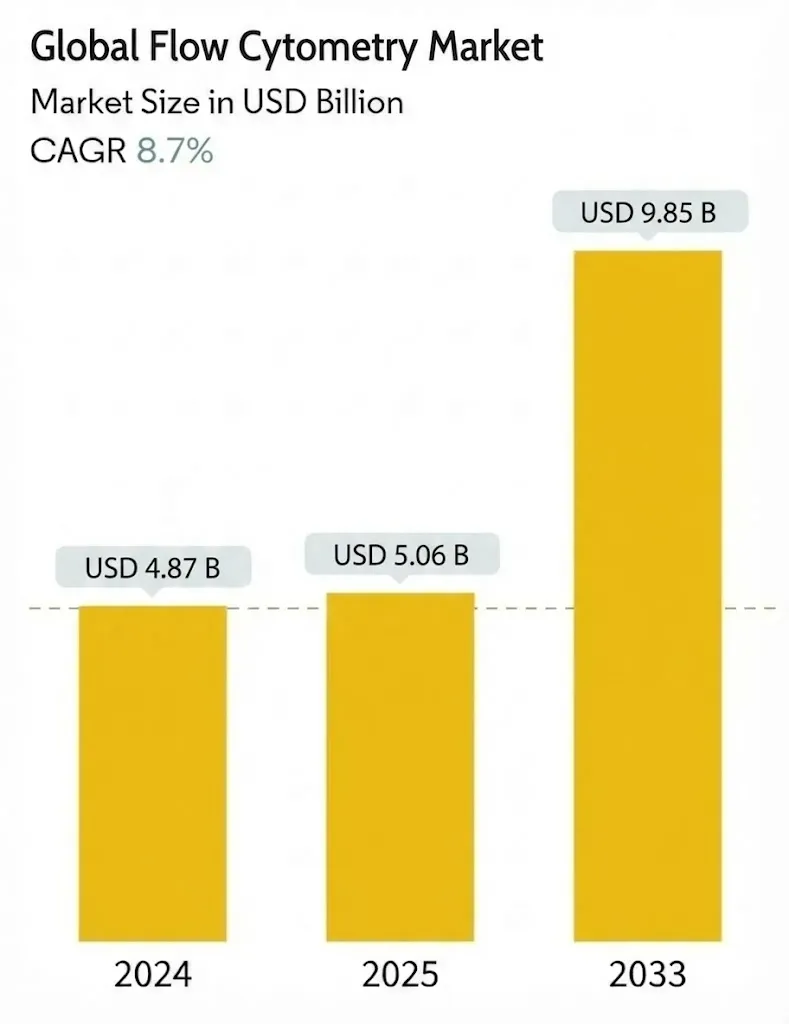
The flow cytometry market is experiencing a period of remarkable technological evolution and commercial expansion, driven by continuous advancements in spectral detection, microfluidics, and AI-powered data analysis; increasing adoption of flow cytometry in clinical diagnostics; rising prevalence of chronic diseases such as cancer, HIV, and autoimmune disorders that demand sophisticated immune profiling; and the explosive growth of biopharmaceutical R&D including cell therapy and immunotherapy programs where flow cytometry is an indispensable analytical tool. The global flow cytometry market is projected to grow from USD 5.06 billion in 2025 to USD 9.85 billion by 2033, at a CAGR of 8.7% over the forecast period. The integration of artificial intelligence and machine learning into cytometry data analysis platforms is further accelerating the utility and adoption of flow cytometry by enabling automated population identification, predictive biomarker discovery, and real-time quality control that reduce analytical complexity and enhance reproducibility across research and clinical applications. In this dynamic environment, the following 25 industry leaders stand out for their technological innovation, clinical and research market depth, and transformative contributions to the science and application of flow cytometry worldwide.
1. Becton, Dickinson and Company
Becton, Dickinson and Company (BD) is the undisputed global leader in flow cytometry, with a comprehensive portfolio spanning research-grade and clinical flow cytometers, cell sorters, reagents, antibodies, and data analysis software that collectively define the standard of practice in the field. Their FACSymphony, FACSLyric, and FACSCanto clinical platforms serve research institutions, core facilities, and hospital clinical laboratories across the world, while the FACSMelody and FACSAria cell sorters support high-purity cell isolation for research and therapeutic cell manufacturing applications. BD's unmatched installed base, deep antibody and reagent portfolio through their Pharmingen and Horizon Brilliant dye brands, and continuous investment in spectral flow cytometry and AI-driven data analysis tools ensure their enduring dominance across every dimension of the flow cytometry market.
2. Danaher Corporation
Danaher Corporation is a major force in the flow cytometry market through its Beckman Coulter Life Sciences brand, which offers a comprehensive range of cell analyzers, cell sorters, and clinical hematology systems anchored by the CytoFLEX, MoFlo, and DxFLEX product families. The CytoFLEX platform has achieved exceptional global market penetration with its fiber-optic spatial filter technology delivering high sensitivity and compact footprint accessible to a broad range of research and clinical users. Danaher's powerful operating model, global commercial infrastructure, and Beckman Coulter's deep clinical hematology heritage position them as a formidable and sustained competitor across both research and clinical flow cytometry application segments.
3. Thermo Fisher Scientific Inc.
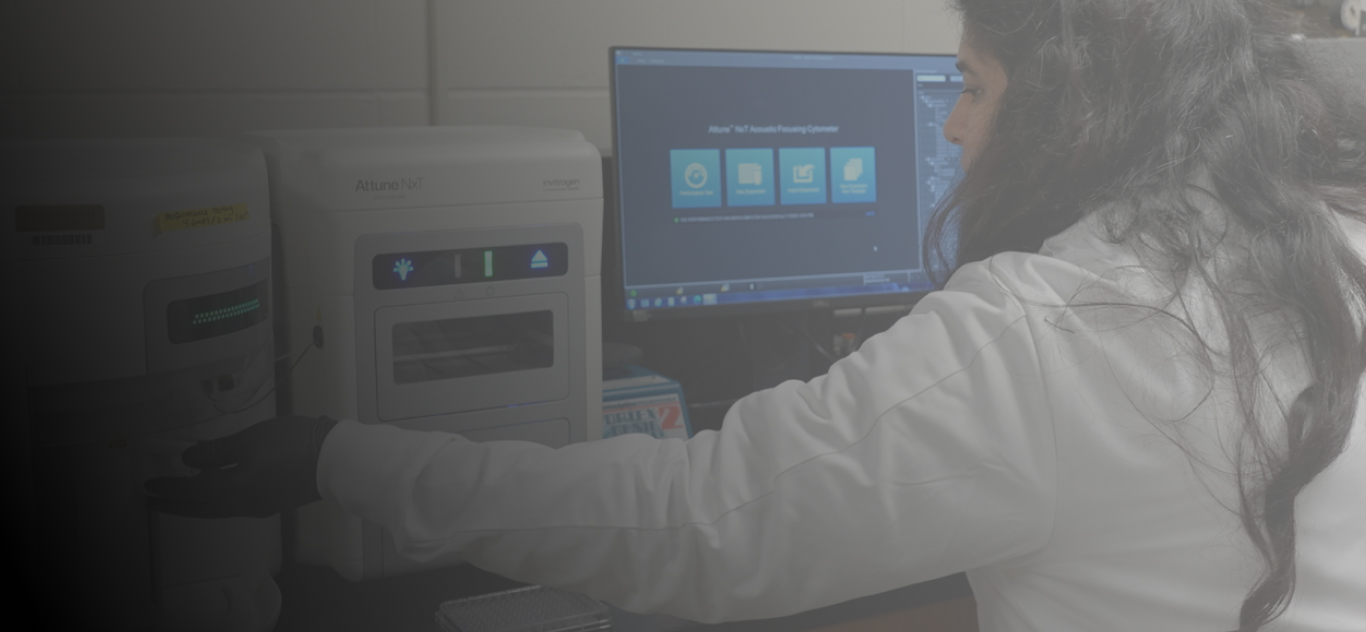
Thermo Fisher Scientific Inc. contributes to the flow cytometry market through its Attune CytPix and Attune NxT acoustic focusing cytometers, a vast catalog of Invitrogen-branded antibodies, viability dyes, and intracellular staining kits, and its growing portfolio of cell analysis reagents supporting immunophenotyping, cell health, and functional assay workflows. Their acoustic focusing technology—which aligns cells acoustically rather than hydrodynamically—delivers high sensitivity and fast acquisition speeds from challenging sample types with reduced clogging and improved data quality. Thermo Fisher's vertically integrated reagent and instrument ecosystem, global supply chain, and deep relationships with pharmaceutical and academic research customers make them a comprehensive flow cytometry partner for laboratories of all sizes.
4. Agilent Technologies, Inc.
Agilent Technologies, Inc. expanded its flow cytometry presence substantially through its acquisition of ACEA Biosciences and the NovoCyte flow cytometer platform, which delivers high-performance multi-laser cell analysis in a compact, user-friendly instrument designed for broad research laboratory adoption. The NovoCyte Quanteon and NovoCyte Penteon platforms extend Agilent's flow cytometry reach into high-parameter and spectral analysis applications, supporting complex immunophenotyping and multi-color panel designs. Agilent's broader life science tools expertise, strong bioinformatics and data analysis capabilities, and established customer relationships in pharmaceutical research create compelling synergies for their growing flow cytometry business.
5. Sony Corporation
Sony Corporation brings its world-class optical engineering and precision electronics heritage to the flow cytometry market through its Sony Biotechnology division, which offers the SH800S cell sorter and ID7000 spectral cell analyzer—instruments recognized for exceptional optical performance, intuitive operation, and innovative design. The ID7000 spectral flow cytometer, capable of resolving up to 44 parameters simultaneously, represents one of the most powerful commercially available spectral cytometry platforms and has earned strong adoption among immunology and single-cell biology research programs requiring ultra-high-dimensional cell phenotyping. Sony's commitment to imaging science, engineering precision, and user experience design differentiates their instruments in a competitive market where optical performance and workflow simplicity are paramount.
6. Bio-Rad Laboratories, Inc.
Bio-Rad Laboratories, Inc. delivers flow cytometry solutions through its ZE5 Cell Analyzer—a high-throughput, multi-laser benchtop cytometer designed for demanding research applications in immunology, cell biology, and drug discovery—complemented by a growing portfolio of antibody panels, cell viability reagents, and droplet digital PCR tools that intersect with flow cytometry workflows. Their ZE5 platform's high acquisition speed and automated sample loading capabilities support high-throughput screening applications in pharmaceutical research where processing large numbers of samples efficiently is critical. Bio-Rad's longstanding reputation for scientific rigor, reagent quality, and technical support sustains strong customer loyalty in research and pharmaceutical flow cytometry application segments.
7. Miltenyi Biotec
Miltenyi Biotec is a unique and influential player in the flow cytometry and cell analysis market, offering the MACSQuant analyzer series, REAfinity recombinant antibody portfolio, and an unmatched ecosystem of magnetic cell separation, cell culture, and cell therapy manufacturing tools that create powerful synergies with their cytometry instruments. Their MACSQuant Tyto microchip-based cell sorter enables gentle, closed-system cell sorting under sterile conditions—addressing critical unmet needs in cell therapy manufacturing, stem cell research, and clinical cell processing where maintaining cell viability and sterility is paramount. Miltenyi's deeply integrated cell biology ecosystem, from cell isolation through analysis and expansion, positions them as an indispensable partner for researchers and clinicians advancing cell and gene therapy programs.
8. Enzo Biochem Inc.
Enzo Biochem Inc. contributes to the flow cytometry market through its portfolio of fluorescent dyes, detection reagents, cell viability assays, and apoptosis detection kits that support immunophenotyping and functional cell analysis workflows in research and clinical laboratory settings. Their ENZO Life Sciences brand offers a broad selection of primary antibodies, secondary detection reagents, and cell health assay kits widely used as accessory reagents in multi-color flow cytometry panels. Enzo's focus on high-quality detection chemistry and their growing portfolio of cell biology research tools support their role as a valued reagent supplier to flow cytometry laboratories seeking reliable and scientifically validated accessory products.
9. Sysmex Corporation
Sysmex Corporation is a Japanese in vitro diagnostics leader whose clinical hematology analyzers incorporate flow cytometry principles to deliver automated blood cell counting, differential analysis, and reticulocyte profiling in high-throughput clinical laboratory environments worldwide. Their XN-Series hematology analyzers are installed in thousands of hospital laboratories globally, processing millions of patient samples annually with exceptional precision and reliability. Sysmex's dominance in clinical hematology flow analysis, combined with their growing investments in oncology diagnostics, liquid biopsy, and urinalysis platforms that leverage similar optical cell analysis technologies, positions them as a significant and clinically critical participant in the broader flow cytometry market.
10. Cytek Biosciences
Cytek Biosciences has emerged as one of the most disruptive and rapidly growing companies in the flow cytometry market through its Aurora and Northern Lights full-spectrum flow cytometers, which have democratized high-parameter cell analysis by enabling researchers to simultaneously measure 30 or more parameters on conventional benchtop instruments without the cost and complexity of traditional high-laser high-detector conventional cytometers. Their full-spectrum unmixing technology captures the complete emission spectrum of every fluorochrome, dramatically expanding panel flexibility and enabling the use of tandem dyes and novel fluorophores with unprecedented reliability. Cytek's technology has fundamentally shifted the economics and accessibility of high-dimensional flow cytometry, earning rapid global adoption among immunology, oncology, and single-cell biology research programs.
11. bioMérieux
bioMérieux participates in the flow cytometry market through its clinical immunology and infectious disease diagnostics platforms that leverage flow cytometric principles for CD4 T-cell counting, sepsis biomarker detection, and automated microbiology cell analysis applications critical to HIV management and critical care medicine. Their AQUIOS CL automated flow cytometer is specifically designed for high-throughput clinical CD4 counting in HIV monitoring programs, providing walk-away automation and standardized results essential for large-scale patient management in both developed and resource-limited healthcare settings. bioMérieux's strong clinical diagnostics heritage, regulatory expertise, and global reach in infectious disease and immunology diagnostics sustain their meaningful contribution to clinical flow cytometry applications.
12. Cytonome/ST, LLC
Cytonome/ST, LLC is a specialized microfluidics and cell sorting technology company focused on developing acoustic and microfluidic cell sorting platforms for applications in cell therapy manufacturing, rare cell isolation, and high-throughput cell dispensing. Their acoustic focusing and microfluidic chip-based sorting technologies enable gentle, label-free, and high-viability cell separation from complex biological samples, addressing critical unmet needs in therapeutic cell manufacturing where preserving cell function during sorting is essential for downstream cell therapy efficacy. Cytonome/ST's technology focus on the intersection of microfluidics and cell sorting positions them as an innovative contributor to the rapidly growing cell therapy manufacturing tools segment of the broader flow cytometry and cell analysis market.
13. Sartorius AG
Sartorius AG is a leading life science tools and bioprocessing company whose iQue Advanced Flow Cytometry Platform—acquired through its purchase of Intellicyt—enables high-throughput, automated flow cytometry screening of 96- and 384-well plates with integrated fluidics and analysis software designed for pharmaceutical drug discovery and immune cell profiling applications. Their iQue platform's integration with liquid handling automation and its purpose-built screening software support rapid immunophenotyping and functional cell assay campaigns at scales impractical with conventional cytometers. Sartorius' broader bioprocessing expertise, strong pharmaceutical customer relationships, and growing cell analysis portfolio position them as a compelling flow cytometry partner for biopharma organizations integrating cell analysis into industrial drug discovery and cell therapy development workflows.
14. Union Biometrica, Inc.
Union Biometrica, Inc. is a specialized flow cytometry company that has pioneered large-particle flow cytometry and flow-based analysis of model organisms including C. elegans nematodes, zebrafish embryos, and Drosophila, enabling automated phenotypic screening of intact organisms at throughputs previously unachievable with conventional microscopy. Their COPAS (Complex Object Parametric Analyzer and Sorter) instruments provide researchers with quantitative fluorescent profiling and physical sorting of large biological objects, opening new possibilities for drug discovery, developmental biology, and genetic screening studies in whole-organism model systems. Union Biometrica's unique large-particle flow cytometry niche supports a dedicated and growing community of researchers leveraging model organism screens in pharmaceutical and academic biology programs.
15. Takara Bio Inc.
Takara Bio Inc. contributes to the flow cytometry market through its cell analysis reagents, cell sorting media, and molecular biology tools that support flow cytometry workflows in single-cell isolation, cell cycle analysis, and cell-based assay development. Their ReagentPack sheath fluids, cell sorting media, and specialized flow cytometry staining kits are valued for their compatibility with diverse instrument platforms and their optimization for downstream molecular analysis of sorted cell populations. Takara Bio's expertise in single-cell genomics, including their SMART-Seq RNA amplification technologies, creates a powerful synergy between their cell sorting support products and single-cell transcriptomics workflows where flow-sorted cells are the critical starting material.
16. Apogee Flow Systems Ltd.
Apogee Flow Systems Ltd. is a UK-based specialist in nano-flow cytometry and small particle analysis, offering instruments uniquely capable of detecting and characterizing extracellular vesicles, exosomes, viruses, and sub-micron biological particles that are beyond the detection capabilities of conventional flow cytometers. Their A60-Micro and A50-Micro nano-flow cytometers serve a growing research community exploring extracellular vesicle biology, viral vector characterization, and nano-particle quality control in therapeutic development programs. Apogee's technological specialization in small-particle flow cytometry addresses a critical analytical gap in biopharmaceutical development and exosome research, positioning them as a distinctive and scientifically valued niche innovator in the expanding flow cytometry market.
17. Stratedigm, Inc.
Stratedigm, Inc. is a US-based flow cytometry instrument company offering a range of versatile research cytometers—including the S1000EXi and CL1500 platforms—designed to deliver high-performance multi-color cell analysis with flexible laser configurations and competitive pricing accessible to a broad range of research laboratory budgets. Their instruments are noted for optical sensitivity, ease of configuration, and a software interface designed to minimize the learning curve for users transitioning from established platforms. Stratedigm's focus on delivering high-value, researcher-friendly cytometry instruments positions them as a practical alternative for core facilities and individual research laboratories seeking capable multi-color flow cytometry without the premium pricing of market-leading platforms.
18. NanoCellect Biomedical
NanoCellect Biomedical is an innovative US company that has developed the WOLF G2 Cell Sorter—a compact, microfluidic chip-based cell sorting system that enables gentle, low-pressure cell sorting in a benchtop instrument accessible to standard research laboratories without dedicated cell sorting expertise or biosafety infrastructure requirements. Their single-use microfluidic cartridge approach eliminates cross-contamination risks and dramatically simplifies instrument operation and maintenance, making high-purity cell sorting practical for individual research labs that previously lacked access to traditional high-complexity cell sorters. NanoCellect's democratization of cell sorting through instrument miniaturization and simplified operation represents a meaningful innovation in expanding the accessibility of cell sorting capabilities across the research community.
19. BioLegend, Inc.
BioLegend, Inc. is one of the world's leading suppliers of antibodies and reagents for flow cytometry, offering an exceptionally broad catalog of fluorochrome-conjugated antibodies, multicolor panel design tools, and cell analysis reagents that are fundamental consumable components of virtually every flow cytometry workflow in research and clinical laboratories globally. Their TotalSeq antibody-oligonucleotide conjugates have enabled the CITE-seq single-cell multi-omics methodology, allowing simultaneous protein and transcriptome measurement from single cells—a transformative capability for immunology and single-cell biology research. BioLegend's combination of breadth of antibody catalog, rigorous validation standards, competitive pricing, and rapid innovation in novel detection reagents positions them as one of the most important reagent partners in the global flow cytometry ecosystem.
20. On-Chip Biotechnologies Co., Ltd.
On-Chip Biotechnologies Co., Ltd. is a Japanese microfluidics company that has developed the On-Chip Sort—a microfluidic chip-based cell sorter enabling gentle, high-viability cell sorting under closed, contamination-free conditions suitable for sterile cell isolation in cell therapy preparation and sensitive primary cell research applications. Their disposable microfluidic chip approach eliminates the cross-contamination risks and aerosol biohazards associated with conventional jet-in-air cell sorters, making their platform particularly well-suited for clinical cell processing, stem cell isolation, and sorting of rare and fragile cell populations. On-Chip Biotechnologies' innovation in chip-based sorting technology addresses a growing demand for safer, simpler, and more accessible cell sorting solutions in research and clinical cell biology applications.
21. Nexcelom Bioscience LLC
Nexcelom Bioscience LLC is a specialist in image-based cell analysis and automated cell counting, offering the Cellometer and Celigo platforms that complement traditional flow cytometry with brightfield and fluorescence imaging-based cell enumeration and viability assessment workflows. Their Cellometer systems provide rapid, automated cell counting and viability analysis from trypan blue or fluorescent viability dyes, serving as essential quality control tools in cell therapy manufacturing, CAR-T cell production, and cell culture research where accurate cell counts are critical process parameters. Nexcelom's focus on accessible, high-throughput cell analysis tools that complement conventional flow cytometry positions them as a practical and widely adopted partner in life science research and biopharmaceutical manufacturing quality control.
22. BennuBio Inc.
BennuBio Inc. is an emerging flow cytometry innovator developing next-generation cell analysis platforms that aim to deliver high-dimensional, high-throughput cell characterization with improved sensitivity and reduced cost compared to conventional multi-laser cytometers. Their technology development focus on novel detection architectures and data analysis approaches seeks to address persistent barriers to high-parameter flow cytometry adoption in resource-constrained research and clinical settings. BennuBio's innovative approach to cytometry instrument design reflects the broader industry trend toward democratizing access to sophisticated cell analysis capabilities through technology-enabled simplification and cost reduction.
23. Orflo Technologies
Orflo Technologies is a US-based cell analysis company specializing in compact, affordable flow cytometry systems and microfluidic cell analysis solutions designed to bring accurate cell counting, viability assessment, and basic immunophenotyping to laboratories and settings where conventional flow cytometers are too complex or expensive. Their Moxi Z Mini and Moxi GO II platforms provide rapid, automated cell analysis from minimal sample volumes in a handheld or compact benchtop form factor suited to point-of-need cell analysis in research and bioproduction environments. Orflo's innovation in miniaturized cell analysis addresses the growing demand for accessible cell monitoring tools in cell therapy manufacturing, stem cell research, and laboratory settings where workflow simplicity and instrument footprint are important practical considerations.
24. Bay Bioscience LLC
Bay Bioscience LLC is a Japanese-founded life science company offering flow cytometry instruments, reagents, and integrated cell analysis solutions with a focus on delivering practical, high-performance cytometry tools to research and clinical laboratory markets across Asia and internationally. Their cytometry instruments and cell analysis platforms are designed to provide reliable multi-parameter cell analysis performance with operational simplicity well-suited to laboratory environments seeking capable flow cytometry without the complexity of top-tier research platforms. Bay Bioscience's regional market expertise, practical instrument design philosophy, and growing product portfolio support their development as a competitive flow cytometry provider in Asian and emerging market laboratory segments.
25. CytoBuoy
CytoBuoy is a Dutch company that has pioneered the application of flow cytometry principles to aquatic particle and phytoplankton analysis, developing submersible and shipboard flow cytometers—the CytoSub and CytoBuoy instruments—that enable automated, real-time monitoring of phytoplankton communities, microplastics, and suspended particles in marine, freshwater, and estuarine environments. Their technology provides oceanographers, environmental scientists, and water quality monitoring programs with continuous, quantitative data on aquatic microbial and particle populations at spatial and temporal resolutions impossible to achieve with conventional bottle-based sampling and laboratory analysis. CytoBuoy's unique application of flow cytometry technology to environmental monitoring demonstrates the remarkable versatility of the underlying cell analysis principles across domains far beyond traditional biomedical research.
80% of the Forbes Global 2000 B2B companies rely on MarketsandMarkets to identify growth opportunities in emerging technologies and use cases that will have a positive revenue impact.
- Food Packaging Market Size Set for Strong Growth Through 2030 Amid Rising Demand for Convenience Foods
- Crop Protection Chemical Market Size, Share & Growth Forecast (2025–2030)
- Mulch Films Market: Driving Sustainable Agriculture Through Innovation
- Agricultural Adjuvants Market Analysis, Trends, and Growth Outlook (2026–2031)
- Japan Enterprise Asset Management Market Growth: AI and Smart Infrastructure Drive Demand

The flow cytometry landscape is entering one of its most dynamic periods of transformation, defined by the convergence of full-spectrum detection, microfluidic cell sorting, AI-enhanced data interpretation, and the expanding demands of precision medicine, cell therapy manufacturing, and single-cell multi-omics research.
As the global market advances toward USD 9.85 billion by 2033, the companies profiled in this article represent the extraordinary breadth of innovation and strategic vision shaping the future of cell analysis—from established global instrument leaders with comprehensive instrument-reagent-software ecosystems and vast clinical installed bases, to pioneering specialists democratizing access to high-parameter analysis, gentle cell sorting, and novel application domains such as environmental monitoring and large-particle analysis.
Each player contributes to an ecosystem that is making sophisticated cell characterization ever more accessible, powerful, and clinically relevant for researchers, clinicians, and biopharmaceutical developers worldwide. Stakeholders seeking a deeper understanding of market segmentation, technology trends, and competitive dynamics are encouraged to consult the comprehensive Flow Cytometry Market Report from MarketsandMarkets.