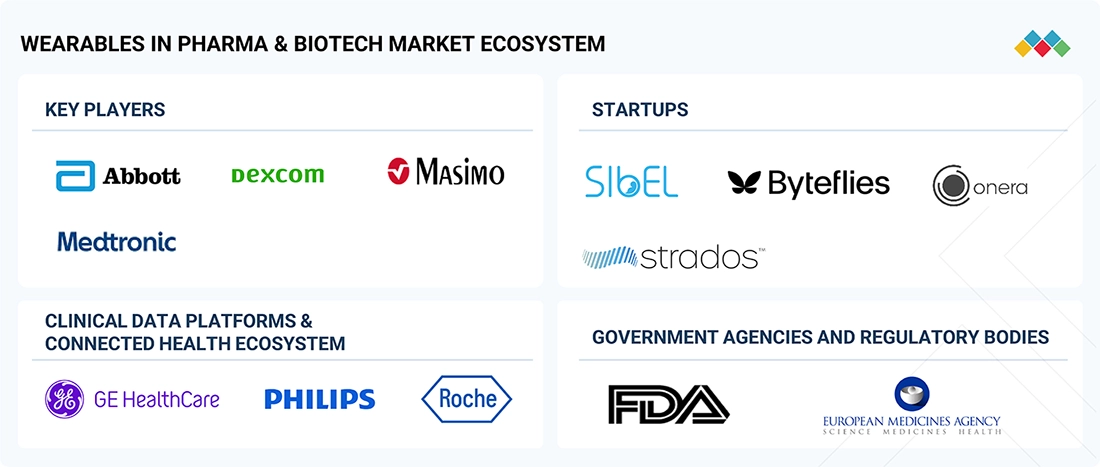
25 Leading Wearables in Pharma & Biotech Companies Shaping Innovation and Market Growth to 2031
Discover the top 25 companies driving innovation in the wearables in pharma & biotech market. This in-depth analysis explores competitive advantages, transformative trends, and key players poised to influence pharmaceutical research, biotechnology, clinical trials, remote patient monitoring, and personalized healthcare through 2031. Access the comprehensive market research report for further insights.
Spotlights on the Industry's Top Wearables in Pharma & Biotech Companies
The wearables in pharma and biotech market is evolving as pharmaceutical companies, biotechnology developers, healthcare providers, and clinical research organizations increasingly use connected devices to collect continuous, real-world patient data. Smartwatches, continuous glucose monitors (CGMs), wearable biosensors, smart patches, and connected drug-delivery systems can support clinical trial monitoring, medication adherence, disease management, and personalized treatment strategies. Advances in sensor technology, wireless connectivity, cloud-based analytics, and artificial intelligence are expanding the potential applications of wearable technologies. At the same time, data privacy, device validation, interoperability, and regulatory compliance remain important considerations. Competition spans established medical technology manufacturers, consumer electronics brands, digital health specialists, and emerging biosensor companies, each contributing different capabilities to the broader ecosystem.
The global wearables in pharma & biotech market is projected to grow from USD 3.98 billion in 2026 to USD 9.97 billion by 2031, registering a CAGR of 20.2% during the forecast period. The market was valued at USD 3.35 billion in 2025. This growth outlook highlights increasing interest in wearable-enabled clinical research, continuous physiological monitoring, and data-driven pharmaceutical development.
1. Dexcom, Inc.
Dexcom, Inc. is a medical technology company specializing in continuous glucose monitoring systems that measure glucose levels throughout the day and night. Its wearable CGM sensors and connected applications provide real-time glucose information that can support diabetes management and generate longitudinal data for healthcare professionals and research teams. These capabilities are relevant to pharmaceutical research involving diabetes therapies, treatment response, and real-world evidence generation. Dexcom's established CGM portfolio and connected data ecosystem position the company as an important participant in the wearable technology landscape supporting metabolic health and clinical research.
2. Abbott
Abbott develops medical devices and healthcare technologies, including its FreeStyle Libre continuous glucose monitoring systems. These wearable sensors provide glucose readings and trends that can help patients and clinicians understand glucose patterns and assess diabetes management. In pharmaceutical and biotechnology applications, CGM-generated data can support the evaluation of investigational therapies, treatment effectiveness, and patient outcomes in metabolic disease research. Abbott's global healthcare presence, sensor technology, and digital connectivity capabilities make it relevant to the expanding use of wearable devices in clinical studies and data-driven disease management.
3. Masimo
Masimo develops noninvasive patient-monitoring technologies, including pulse oximetry and other physiological measurement solutions. Its monitoring capabilities are relevant to wearable and connected healthcare applications that seek to capture oxygen saturation, pulse rate, and additional physiological parameters. In pharmaceutical research and clinical trials, appropriately validated wearable monitoring technologies can help researchers observe patient responses and collect measurements outside conventional clinical settings. Masimo's experience in physiological sensing and patient monitoring provides a foundation for applications involving continuous observation, remote care, and the collection of clinically relevant data, subject to device suitability and study requirements.
4. BD
Becton, Dickinson and Company (BD) is a global medical technology company with expertise in medication delivery, infusion systems, and connected healthcare solutions. Its broader portfolio is relevant to pharmaceutical treatment delivery and the healthcare infrastructure surrounding medication administration. Within the wearables in pharma and biotech ecosystem, BD's relevance is strongest where drug-delivery technologies, patient safety, and connected medication-management systems intersect. Its established relationships with healthcare providers and pharmaceutical manufacturers support its position in the wider treatment-delivery landscape, although individual products should be assessed separately when determining whether they qualify as wearable devices.
5. Apple Inc.
Apple Inc. develops consumer electronics and health-related software, including the Apple Watch and its associated health applications. Compatible devices can collect information such as heart rate, activity, sleep patterns, and selected cardiac measurements, depending on the model, region, and feature availability. With appropriate study protocols and participant consent, wearable-derived information may support observational research, remote data collection, and selected clinical studies. Apple's broad consumer reach, integrated software ecosystem, and developer tools make it relevant to digital health research. However, research use requires consideration of measurement validity, data access, privacy, and regulatory requirements.
6. Boston Scientific Corporation
Boston Scientific Corporation develops medical devices for cardiovascular, electrophysiology, endoscopy, and other clinical applications. Its cardiac rhythm management and connected monitoring-related technologies are relevant to the broader ecosystem of wearable-enabled cardiovascular research. The company's portfolio includes implantable cardiac devices and technologies used to monitor heart rhythm, although not all products are external wearables. In pharmaceutical research, cardiovascular monitoring can help investigators assess selected physiological outcomes and treatment responses. Boston Scientific's clinical expertise and global medical technology presence make it relevant to research involving cardiac conditions and connected patient monitoring.
7. iRhythm Technologies, Inc.
iRhythm Technologies, Inc. specializes in ambulatory cardiac monitoring through its Zio portfolio of wearable ECG monitoring devices and associated analytical services. Its technologies collect cardiac rhythm data over extended periods, supporting the detection and assessment of arrhythmias. These capabilities can be relevant to clinical studies investigating cardiovascular treatments, cardiac safety, and real-world patient outcomes. By combining wearable biosensors with data analysis and clinical reporting, iRhythm contributes to the growing use of remote cardiac monitoring. Its focused expertise in ambulatory electrocardiography differentiates its offering within the digital health and clinical research ecosystem.
8. Koninklijke Philips N.V.
Koninklijke Philips N.V. is a health technology company offering patient monitoring, connected care, diagnostic, and health informatics solutions. Its broader monitoring portfolio supports the collection and interpretation of physiological information across clinical settings. These capabilities are relevant to pharmaceutical research where continuous or remote observation may help assess patient status, treatment response, and clinical outcomes. Philips' experience in healthcare systems integration and clinical monitoring can support connected research environments, although the suitability of individual products for wearable-based studies depends on their intended use and technical specifications. Its international presence strengthens its role in the wider digital health ecosystem.
9. Medtronic
Medtronic develops medical technologies across cardiovascular care, diabetes management, neuroscience, and other therapeutic areas. Its diabetes portfolio includes connected insulin delivery and glucose monitoring-related solutions, while its broader product range includes implantable devices that monitor physiological activity. These technologies are relevant to pharmaceutical and biotechnology research involving chronic disease management, treatment adherence, and patient outcomes. Medtronic's experience in regulated medical devices, clinical evidence generation, and connected healthcare supports its participation in the broader wearable-enabled care ecosystem. Its specific relevance to individual wearable market segments depends on the product category and intended research application.
10. BioIntelliSense, Inc.
BioIntelliSense, Inc. develops medical-grade wearable biosensor technologies and connected monitoring solutions designed to collect physiological data continuously or over extended periods. Its BioButton platform is associated with remote patient monitoring and the measurement of multiple vital signs, subject to device configuration and intended use. These capabilities are relevant to decentralized clinical trials, post-treatment observation, and research requiring longitudinal physiological measurements outside traditional healthcare facilities. By combining wearable sensing with data transmission and analytics, BioIntelliSense addresses the need for scalable patient monitoring. Its technology is particularly relevant where reliable remote data collection is an important component of clinical research.
11. F. Hoffmann-La Roche Ltd.
F. Hoffmann-La Roche Ltd. is a global pharmaceutical and diagnostics company with activities spanning drug development, laboratory diagnostics, and personalized healthcare. Its relevance to wearables in pharma and biotech lies primarily in the broader integration of digital health data, diagnostic information, and clinical research. Wearable-generated measurements may complement other clinical data when evaluating investigational medicines, monitoring disease progression, or developing real-world evidence. Roche's pharmaceutical research capabilities and diagnostic expertise provide a foundation for exploring data-enabled clinical development. However, its involvement should be distinguished from that of companies whose principal business is manufacturing wearable sensors or consumer devices.
12. GE HealthCare
GE HealthCare develops medical imaging, patient monitoring, ultrasound, and healthcare technology solutions. Its patient monitoring and digital healthcare capabilities are relevant to connected clinical environments where physiological measurements can be integrated into broader patient care and research systems. In pharmaceutical and biotechnology studies, connected monitoring technologies can contribute to clinical data collection and the observation of patient status, depending on the equipment and study design. GE HealthCare's established relationships with hospitals, research institutions, and healthcare professionals support its role in the broader digital health ecosystem. Its wearable-specific relevance varies by product and application.
13. Biobeat
Biobeat develops wearable medical monitoring technologies designed to measure physiological parameters through noninvasive sensing. Its portfolio has included wearable devices intended to support continuous or remote monitoring of measurements such as blood pressure and other vital signs, depending on the product. These capabilities are relevant to clinical studies involving cardiovascular health, hypertension, and remote patient observation. By enabling data collection outside conventional clinical settings, wearable monitoring systems can help researchers investigate physiological trends over time. Biobeat's focus on connected monitoring and wearable sensor technology positions it within the specialized medical wearable segment supporting digital health and clinical research applications.
14. Empatica Inc.
Empatica Inc. develops wearable sensing technologies and digital health solutions with applications in physiological and behavioral monitoring. Its EpiMonitor system, for example, combines wearable technology and connected software to support seizure monitoring for eligible users. The company's expertise in collecting physiological and movement-related signals is relevant to research involving neurological disorders, behavioral health, and digital biomarkers. Wearable-generated data can help researchers study patterns between clinical visits and investigate changes in patient activity or physiological status. Empatica's specialized focus on biosensing and digital health supports applications where continuous monitoring may complement conventional clinical assessments.
15. VitalConnect
VitalConnect develops wearable biosensor technologies and remote patient monitoring solutions for collecting physiological measurements. Its VitalPatch platform is designed to support continuous monitoring of selected parameters, including cardiac activity and other vital signs, depending on the configuration. Such capabilities are relevant to clinical research requiring extended observation, remote monitoring, and the identification of physiological changes over time. Connected data transmission can reduce reliance on isolated in-person measurements and support more comprehensive patient monitoring strategies. VitalConnect's focus on medical-grade wearable sensors makes it relevant to pharmaceutical studies and digital health programs that require structured physiological data collection.
16. Ametris, LLC
Ametris, LLC is identified among the companies covered in the wearables in pharma and biotech market. Its inclusion in this landscape warrants consideration alongside manufacturers of connected monitoring and wearable technologies. However, detailed public information establishing its specific product portfolio, technical capabilities, and direct contribution to pharmaceutical or biotechnology wearables is limited. Its precise role should therefore be verified against the original market research report and current company information before publication. Confirming its products, intended applications, and organizational identity would help distinguish any direct wearable technology involvement from broader healthcare technology or service activities.
17. AliveCor, Inc.
AliveCor, Inc. specializes in personal electrocardiogram technology and connected cardiac monitoring. Its Kardia product portfolio includes portable ECG devices that allow users to record heart rhythm information and access associated analysis features, depending on the device and applicable regulatory clearance. These technologies are relevant to cardiovascular research, remote rhythm monitoring, and studies examining cardiac outcomes. Wearable and portable ECG data can complement conventional assessments when incorporated into appropriately designed clinical protocols. AliveCor's focus on accessible cardiac measurement and digital interpretation supports the growing use of connected monitoring technologies in clinical research and cardiovascular care.
18. Withings
Withings develops connected health devices, including smartwatches, activity trackers, and other products designed to monitor selected health and wellness measurements. Depending on the model, its devices can collect information relating to heart rate, physical activity, sleep, and selected cardiovascular indicators. These data streams may support observational studies, lifestyle research, and remote monitoring programs when the devices and measurements are appropriate for the study. Withings' consumer-oriented product design and connected health ecosystem provide opportunities for longitudinal data collection. However, researchers must evaluate device validation, measurement limitations, and regulatory status before using its products to support clinical endpoints.
19. VivaLNK, Inc.
VivaLNK, Inc. develops wearable medical sensors and connected monitoring solutions for healthcare and clinical research applications. Its portfolio has included wearable ECG sensors, temperature sensors, and multi-parameter monitoring technologies designed to collect physiological information and transmit it to connected systems. These capabilities can support remote patient observation, clinical trial monitoring, and studies requiring continuous measurements over defined periods. By combining sensor hardware with software and data integration capabilities, VivaLNK addresses the operational needs of digital health programs. Its specialized focus on wearable sensing makes it relevant to research teams exploring more flexible and data-rich clinical study designs.
20. MediBioSense
MediBioSense is associated with wearable and connected healthcare monitoring technologies intended to support remote collection of physiological data. Its relevance to pharmaceutical and biotechnology applications centers on the potential use of connected measurements in patient monitoring and clinical research. Wearable-enabled data collection can help researchers observe changes over time and supplement information gathered during conventional visits, provided the selected devices meet the study's requirements. Detailed claims about current products, sensor specifications, and regulatory status should be confirmed using authoritative company documentation before publication. This verification is particularly important when assessing the company's direct contribution to medical-grade wearables and clinical trial infrastructure.
21. Sibel Health, Inc.
Sibel Health, Inc. develops medical-grade wearable sensor technologies designed for continuous physiological monitoring. Its ANNE platform includes wireless sensors intended to collect clinical measurements, with applications spanning patient monitoring and healthcare research. The company's technology is relevant to studies that require unobtrusive data collection and remote observation, including research involving vulnerable patient populations and specialized clinical settings. By emphasizing wearable design, sensor performance, and connected data collection, Sibel Health addresses the need for high-quality physiological information outside traditional monitoring environments. Its specialized capabilities distinguish it among emerging companies serving the medical wearable and digital clinical research ecosystem.
22. Byteflies
Byteflies develops wearable sensor systems and digital health technologies for collecting physiological data in clinical and research environments. Its technology has been associated with modular wearable sensors and platforms designed to support long-term monitoring and the analysis of physiological signals. These capabilities can be relevant to neurological research, sleep studies, and other investigations where measurements collected during everyday activities may provide additional clinical context. Wearable data can complement traditional assessments when validated for the intended application. Byteflies' emphasis on flexible sensing and digital data collection supports the broader shift toward remote, patient-centered research and more continuous observation of health-related parameters.
23. Strados Labs
Strados Labs develops wearable respiratory monitoring technology, including the RESP wearable system, designed to capture lung sounds and related respiratory information. Its focus on digital respiratory biomarkers is relevant to research involving asthma, chronic obstructive pulmonary disease, and other respiratory conditions. Wearable respiratory measurements may help investigators examine symptom patterns, disease fluctuations, and treatment responses between scheduled clinical visits. Such applications depend on appropriate validation, study protocols, and the specific measurements collected. Strados Labs' specialized emphasis on respiratory sensing adds a distinct capability to the wearables in pharma and biotech ecosystem, particularly for clinical studies seeking more detailed respiratory data.
24. Onera Technologies B.V.
Onera Technologies B.V., associated with Onera Health, develops technologies for sleep diagnostics and remote physiological monitoring. Its offerings have included wearable and connected sensor systems designed to collect information relevant to sleep-related conditions and cardiorespiratory assessment. These capabilities can support research into sleep disorders, respiratory health, and associated treatment outcomes. In pharmaceutical development, objective sleep and physiological measurements may complement patient-reported outcomes and conventional clinical assessments when appropriately validated. Onera's focus on digital sleep diagnostics and data-enabled monitoring makes it relevant to research programs seeking more accessible ways to gather physiological information beyond traditional laboratory-based testing.
25. Epicore Biosystems, Inc.
Epicore Biosystems, Inc. develops wearable microfluidic technologies that analyze sweat and provide information about selected physiological and biochemical markers. Its wearable platforms are designed to support applications involving hydration, electrolyte balance, and personalized physiological monitoring. These technologies are relevant to research exploring noninvasive biomarker collection and the potential use of wearable measurements in health and performance studies. In pharmaceutical and biotechnology settings, sweat-based sensing represents an emerging approach that may complement established monitoring methods where the relevant biomarkers are suitable. Epicore's expertise in wearable microfluidics contributes to innovation in sensor design and the development of new approaches to continuous physiological data collection.
80% of the Forbes Global 2000 B2B companies rely on MarketsandMarkets to identify growth opportunities in emerging technologies and use cases that will have a positive revenue impact.
- Food Packaging Market Size Set for Strong Growth Through 2030 Amid Rising Demand for Convenience Foods
- Crop Protection Chemical Market Size, Share & Growth Forecast (2025–2030)
- Mulch Films Market: Driving Sustainable Agriculture Through Innovation
- Agricultural Adjuvants Market Analysis, Trends, and Growth Outlook (2026–2031)
- Japan Enterprise Asset Management Market Growth: AI and Smart Infrastructure Drive Demand

The wearables in pharma and biotech market is positioned for substantial expansion as pharmaceutical companies, biotechnology developers, and clinical research organizations increasingly explore continuous patient monitoring, digital biomarkers, decentralized clinical trials, and real-world evidence generation. Advances in biosensors, connected devices, and data analytics are creating opportunities to improve the quality and availability of clinical information. At the same time, data privacy, cybersecurity, interoperability, measurement accuracy, regulatory compliance, and patient adherence remain important considerations. Companies that combine reliable wearable technologies with clinically meaningful data and effective integration capabilities may be well positioned to address evolving research requirements. For a deeper understanding of market opportunities, competitive positioning, product segments, and strategic developments, explore the full Wearables in Pharma & Biotech Market by Product (Smartwatches, CGMs, Bands, Rings, Patches, Injectors), Therapy (Diabetes, Cardio, Onco, Mental Health), Application (Drug Discovery, Clinical Trials, Medication Adherence), End User - Global Forecasts to 2031 report from MarketsandMarkets.