25 Leading Operating Room Management Companies Shaping Innovation and Market Growth to 2029
Discover the top 25 companies driving innovation in the operating room management market. This in-depth analysis explores competitive capabilities, transformative trends, and key players poised to influence surgical scheduling, perioperative workflow coordination, operating room utilization, anesthesia management, and hospital resource optimization through 2029. Access the comprehensive Operating Room Management Market Size, Share & Trends by Type (OR Scheduling, Supply, Performance, Anesthesia, Data, Communication, Patient), Workflow (Pre, Intra & Post Operative), Component (Software, Service), End User (Hospital, ASC), & Region - Global Forecast to 2029 report for further insights.
Spotlights on the Industry's Top Operating Room Management Companies
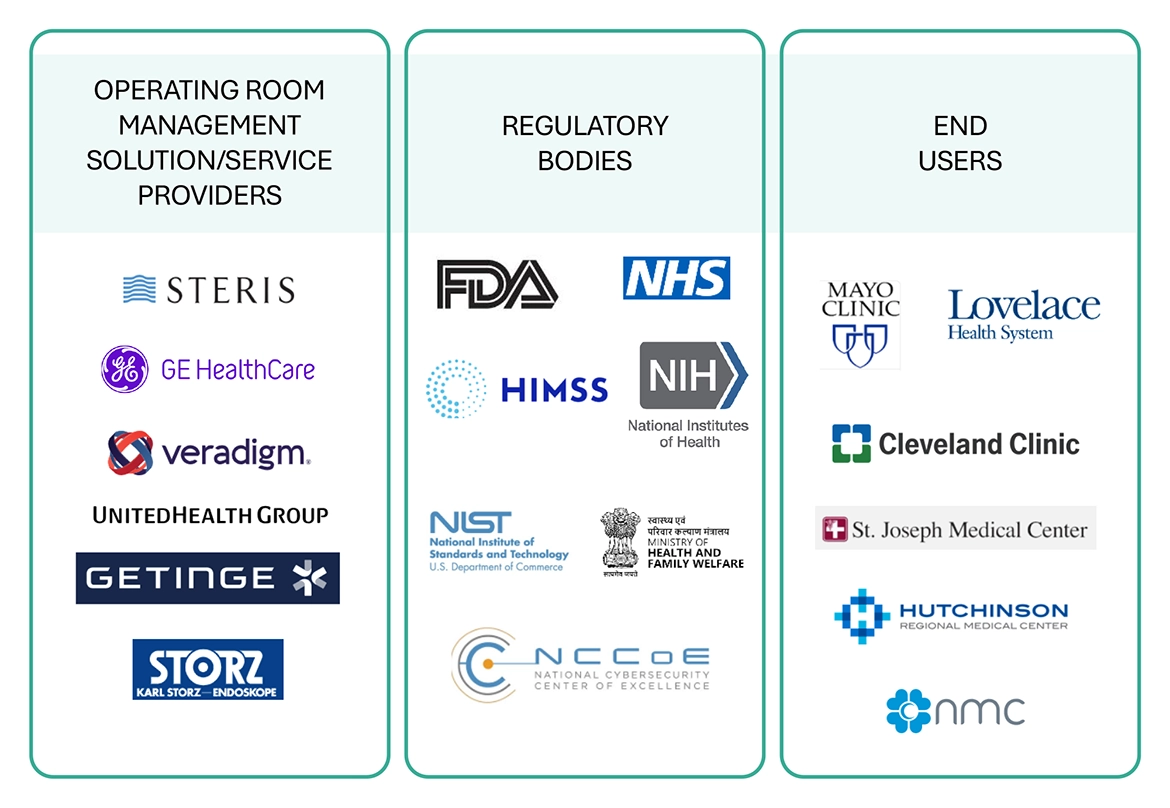
The operating room management market is evolving as hospitals and ambulatory surgery centers seek to improve surgical throughput, optimize operating room utilization, coordinate clinical teams, and control procedural costs. Digital scheduling, perioperative information systems, real-time operational dashboards, integrated communication platforms, and predictive analytics are helping healthcare organizations manage complex surgical workflows. Artificial intelligence is also being applied to demand forecasting, capacity planning, case scheduling, and resource allocation. Competition includes enterprise health IT providers, specialized operating room software developers, surgical equipment manufacturers, and workflow automation companies. Interoperability with electronic health records, patient safety, cybersecurity, and the ability to measure operational performance are increasingly important purchasing considerations.
1. Oracle
Oracle participates in operating room management through its Oracle Health healthcare information technology portfolio, which includes electronic health record and clinical information management capabilities. These systems support patient documentation, clinical workflows, scheduling-related processes, and information exchange across hospital departments. When integrated with perioperative applications, enterprise health IT platforms can help coordinate preoperative assessments, surgical procedures, and postoperative care. Oracle's cloud infrastructure, database technologies, and analytics capabilities also support healthcare data management. Its relevance to operating room management depends on the specific Oracle Health applications deployed and their integration with dedicated perioperative scheduling and resource management systems.
2. Getinge AB
Getinge AB develops medical technology for operating rooms, intensive care units, and sterile processing departments. Its portfolio includes operating room equipment, surgical workflow solutions, infection control technologies, and systems supporting the delivery of critical care. Getinge's OR integration capabilities help connect selected medical devices and information sources, improving visibility and coordination within surgical environments. Its expertise in surgical infrastructure and clinical equipment positions the company within the broader operating room management ecosystem. Its principal strength is the integration of medical technology and surgical environments rather than standalone enterprise-wide operating room scheduling software.
3. GE HealthCare
GE HealthCare provides medical imaging, patient monitoring, anesthesia delivery, and digital healthcare technologies that support surgical and perioperative environments. Its equipment and clinical information solutions help care teams monitor patients, access relevant clinical information, and coordinate activities around surgical procedures. Connected monitoring and imaging technologies can contribute to more informed perioperative workflows, while digital tools support data access and operational visibility. GE HealthCare's global hospital presence and medical technology expertise make it relevant to operating room management, particularly where equipment integration, patient monitoring, and coordinated clinical workflows are priorities.
4. Medical Information Technology, Inc. (MEDITECH)
Medical Information Technology, Inc. (MEDITECH) develops electronic health record systems used by hospitals and healthcare organizations. Its Expanse platform supports clinical documentation, patient management, scheduling, and information exchange across healthcare departments, including workflows associated with surgical care. By connecting patient records and clinical information, MEDITECH can help healthcare teams coordinate preoperative assessments, procedure documentation, and postoperative activities. Its relevance to operating room management is primarily through perioperative EHR functionality and integration with hospital information systems, rather than through a standalone operating room optimization platform.
5. Epic Systems Corporation
Epic Systems Corporation develops electronic health record and hospital information systems with capabilities supporting surgical and perioperative care. Its OpTime application is designed to support operating room scheduling, surgical case management, perioperative documentation, and coordination of clinical workflows. Related applications can connect surgical activities with anesthesia documentation, patient records, billing, and broader hospital operations. Epic's integrated platform enables health systems to manage information across preoperative, intraoperative, and postoperative stages. Its established presence in large healthcare organizations makes it an important participant in software-driven operating room management and perioperative information coordination.
6. Surgical Information Systems
Surgical Information Systems develops software focused on surgical care and perioperative operations, particularly for hospitals and ambulatory surgery centers. Its solutions support areas such as surgical scheduling, patient tracking, clinical documentation, resource utilization, and operational reporting. By connecting administrative and clinical processes, the company helps surgical facilities coordinate procedures and monitor performance across the surgical journey. Its specialized focus on surgical workflows differentiates it from broader enterprise EHR vendors. The company's relevance lies in helping healthcare organizations improve scheduling visibility, streamline perioperative processes, and make more informed decisions about operating room capacity and performance.
7. Picis Clinical Solutions, Inc.
Picis Clinical Solutions, Inc. provides clinical information systems designed for high-acuity hospital environments, including operating rooms, anesthesia, and critical care. Its perioperative technologies support clinical documentation, patient monitoring information, and workflow coordination around surgical procedures. These capabilities help clinicians capture relevant information and maintain continuity between perioperative care stages. Picis has historically focused on specialized clinical systems that address the requirements of complex hospital departments. Its relevance to operating room management is strongest in perioperative information management and clinical workflow support, with current product availability and ownership details worth verifying before publication.
8. Veradigm LLC
Veradigm LLC provides healthcare data, analytics, and technology solutions, with a background in ambulatory electronic health records and clinical information systems. Its products and services support clinical workflows, practice operations, interoperability, and healthcare data analysis. These capabilities may contribute indirectly to surgical coordination through information exchange between ambulatory providers, surgical facilities, and broader care networks. However, Veradigm is not primarily a dedicated operating room scheduling or intraoperative management vendor. Its direct relevance to this market should therefore be evaluated according to the specific products and integrations used by hospitals and ambulatory surgery centers.
9. Becton, Dickinson and Company
Becton, Dickinson and Company (BD) develops medical devices, medication management systems, and technologies supporting medication safety and clinical workflows. Its Pyxis portfolio includes automated medication dispensing systems used in hospitals, including perioperative environments where controlled access to medications is important. BD's products can support operating room readiness, medication availability, and inventory control, helping clinical teams manage essential resources. Although BD is not primarily an operating room scheduling software provider, its medication management and connected healthcare technologies contribute to the operational infrastructure that supports safe and efficient surgical services.
10. STERIS Corporation
STERIS Corporation provides infection prevention, sterilization, surgical equipment, and procedural environment solutions for healthcare facilities. Its portfolio includes operating room tables, surgical lights, equipment integration offerings, and products supporting instrument reprocessing and sterile processing workflows. These technologies contribute to surgical readiness, room turnover, and the availability of properly prepared instruments and equipment. STERIS's relevance to operating room management is closely tied to the physical and operational infrastructure surrounding surgical procedures. Its equipment and service capabilities can complement digital scheduling and resource management platforms used by hospitals and ambulatory surgery centers.
11. UnitedHealth Group
UnitedHealth Group operates across health benefits and healthcare services, including technology-enabled services through its Optum businesses. Its capabilities span healthcare data analytics, clinical services, payment administration, and operational technology that support broader care delivery and financial workflows. These services may contribute indirectly to surgical operations through care coordination, utilization management, and healthcare information processing. However, UnitedHealth Group is not primarily a supplier of operating room scheduling or intraoperative management software. Its inclusion in this market should be tied to a specific documented product or service that directly supports operating room operations rather than its general healthcare industry presence.
12. Brainlab AG
Brainlab AG develops digital medical technologies for image-guided surgery, surgical planning, navigation, and operating room integration. Its solutions help surgical teams access imaging data, plan procedures, and coordinate information across compatible medical devices. Digital operating room technologies can improve access to relevant clinical information and support collaboration during complex procedures. Brainlab's expertise in surgical software and connected operating room environments makes it relevant to the technology layer of operating room management, particularly intraoperative coordination and integration. Its principal focus is surgical workflow and procedural technology rather than comprehensive hospital-wide scheduling and capacity planning.
13. Richard Wolf GmbH
Richard Wolf GmbH develops endoscopic systems and medical devices used in minimally invasive surgery and other clinical procedures. Its portfolio includes endoscopes, camera systems, light sources, and equipment designed for surgical visualization and procedural workflows. These technologies support operating room readiness and the delivery of endoscopic procedures, while compatible integration solutions can help manage audiovisual information within surgical environments. Richard Wolf's role in operating room management is primarily associated with surgical equipment and procedural technology rather than enterprise scheduling software. Its products contribute to the equipment infrastructure required for coordinated surgical operations.
14. KARL STORZ SE & Co. KG
KARL STORZ SE & Co. KG specializes in endoscopy and minimally invasive surgical technologies. Its products include endoscopes, imaging systems, instruments, and solutions designed to support visualization and documentation during surgical procedures. Digital operating room technologies can enable compatible devices and video sources to be connected, helping teams access and manage procedural information. The company's expertise in endoscopic equipment and surgical visualization makes it relevant to intraoperative workflow integration. Its primary market role is supplying medical technology for surgical procedures, which complements rather than replaces dedicated scheduling, staffing, and operating room utilization software.
15. Censis Technologies Inc.
Censis Technologies Inc. provides software for sterile processing departments and surgical instrument management. Its solutions help healthcare facilities track instruments, manage sterilization workflows, maintain traceability, and coordinate instrument availability for surgical procedures. By connecting sterile processing activities with surgical requirements, these systems can support instrument readiness and reduce workflow gaps that affect operating room schedules. Censis is particularly relevant to the operational relationship between operating rooms and central sterile services departments. Its focus is specialized instrument tracking and sterile processing management rather than comprehensive operating room scheduling or intraoperative clinical documentation.
16. Barco
Barco develops visualization, display, and collaboration technologies used in healthcare and other professional environments. Its medical displays and surgical visualization solutions support the presentation of diagnostic images and procedural information in operating rooms. The company also offers technologies for integrating and distributing visual information from compatible medical devices, helping clinical teams access relevant content during procedures. Barco's expertise in medical-grade displays and operating room visualization makes it relevant to intraoperative information management. Its contribution is centered on visual integration and surgical collaboration rather than hospital-wide scheduling, staffing, or operating room performance management software.
17. Cardinal Health
Cardinal Health supplies medical products, pharmaceuticals, and healthcare distribution services, with offerings that support hospitals, surgery centers, and other care settings. Its medical products and supply chain services help healthcare facilities obtain surgical supplies and manage essential clinical resources. Effective supply availability is a key operational requirement for operating room readiness and procedure scheduling. Cardinal Health's relevance to operating room management is therefore primarily through supply chain support, inventory availability, and procedural products rather than dedicated OR scheduling software. Its role complements digital management platforms by supporting the materials and logistics needed for surgical services.
18. eClinicalWorks
eClinicalWorks develops electronic health record and practice management software primarily for ambulatory healthcare providers. Its solutions support patient records, appointment scheduling, clinical documentation, billing, and information exchange across outpatient care settings. These capabilities may help coordinate patient information and administrative processes when ambulatory practices work with hospitals or surgical facilities. However, eClinicalWorks is not primarily known as a dedicated operating room management platform for intraoperative scheduling and resource optimization. Its relevance is strongest in ambulatory clinical information management and connected care workflows, with direct operating room functionality dependent on specific integrations and deployments.
19. CaseCTRL
CaseCTRL is associated with technology designed to support surgical case management and coordination. Solutions in this category can help healthcare teams organize case information, coordinate preoperative requirements, and improve visibility into the activities needed before a procedure. Such capabilities address operational challenges that can affect surgical readiness, including incomplete preparation and fragmented communication. Before publication, the company's current product scope, deployment footprint, and specific operating room management functions should be confirmed against reliable company documentation. This verification is important to distinguish direct scheduling and perioperative workflow capabilities from adjacent surgical coordination tools.
20. CareSyntax
CareSyntax develops digital technologies focused on surgical workflows, operating room integration, and data-driven performance improvement. Its solutions have been associated with connecting operating room equipment and capturing procedural data to help healthcare organizations understand surgical activity and operational performance. Such capabilities can support workflow visibility, quality improvement, and the analysis of operating room utilization. By combining digital integration with surgical data, CareSyntax addresses needs that extend beyond basic scheduling. Its relevance lies in helping hospitals use connected operating room information to support operational decisions, improve coordination, and assess surgical service performance.
21. MediCAD
MediCAD develops digital planning software used in medical settings, particularly for orthopedic preoperative planning and implant-related procedures. Its technologies support the visualization and planning of surgical interventions using medical images and procedure-specific tools. Although preoperative planning contributes to surgical preparation, it is distinct from enterprise operating room management functions such as scheduling, staffing, and room utilization. MediCAD's relevance to this market is therefore specialized and workflow-adjacent. Its inclusion as a direct operating room management company should be reviewed against the precise market definition and any current products that address scheduling or perioperative operational management.
22. Qventus
Qventus develops AI-powered software designed to improve hospital operations and patient flow. Its solutions support operational decision-making across areas such as surgical services, capacity management, discharge planning, and resource coordination. By analyzing operational data and identifying workflow bottlenecks, the platform can help healthcare teams improve readiness, reduce avoidable delays, and make better use of available capacity. Qventus is relevant to operating room management through its focus on operational intelligence and workflow optimization. Its value proposition differs from traditional scheduling systems by emphasizing data-driven recommendations and coordination across the wider hospital environment.
23. Alert Life Sciences Computing, S.A.
Alert Life Sciences Computing, S.A. has been associated with healthcare information systems designed to support clinical documentation, patient records, and hospital workflows. Such systems can contribute to perioperative information management by connecting patient data and clinical activities across care settings. However, its current ownership, product availability, and specific operating room management capabilities should be verified before treating it as an active market participant. A direct role would require evidence of current solutions supporting surgical scheduling, perioperative documentation, or related operating room workflows. Its inclusion should be assessed based on verifiable product and business information.
24. Tedisel Medical
Tedisel Medical develops medical infrastructure and equipment for healthcare environments, including operating room systems and clinical spaces. Its portfolio includes medical supply units, headwalls, and other infrastructure solutions designed to support the delivery of care. These products help organize clinical workspaces and provide access to essential services and equipment around surgical procedures. Tedisel Medical's relevance to operating room management is primarily through the physical environment and infrastructure that enable surgical teams to work efficiently. Its offerings complement digital management systems but should not be confused with dedicated software for scheduling, performance analytics, or perioperative documentation.
25. Owens & Minor
Owens & Minor provides healthcare supply chain services and medical products to hospitals, surgery centers, and other healthcare organizations. Through its medical products and distribution operations, the company supports the availability of supplies used in surgical and procedural settings. Reliable inventory management and timely delivery are important to operating room readiness, procedure planning, and the avoidance of supply-related delays. Owens & Minor's role in this market is primarily indirect, through medical supply logistics and healthcare products rather than operating room management software. Its relevance is strongest where supply availability and procedural resource coordination are considered part of the broader operating room ecosystem.
80% of the Forbes Global 2000 B2B companies rely on MarketsandMarkets to identify growth opportunities in emerging technologies and use cases that will have a positive revenue impact.
- Food Packaging Market Size Set for Strong Growth Through 2030 Amid Rising Demand for Convenience Foods
- Crop Protection Chemical Market Size, Share & Growth Forecast (2025–2030)
- Mulch Films Market: Driving Sustainable Agriculture Through Innovation
- Agricultural Adjuvants Market Analysis, Trends, and Growth Outlook (2026–2031)
- Japan Enterprise Asset Management Market Growth: AI and Smart Infrastructure Drive Demand

Conclusion: Unlock the Full Operating Room Management Market Intelligence The operating room management market is moving toward connected, data-driven surgical environments that integrate scheduling, perioperative documentation, equipment, communication, and resource planning. Healthcare organizations are increasingly evaluating technologies that improve operating room utilization, reduce avoidable delays, strengthen coordination, and support patient safety. Interoperability, cybersecurity, clinical workflow requirements, and compliance with applicable healthcare regulations remain essential considerations when implementing these solutions. Competitive opportunities span enterprise software, specialized surgical workflow platforms, equipment integration, and AI-powered operational optimization. Understanding the roles of software providers, medical technology manufacturers, and supply chain partners is essential for evaluating this evolving landscape. For a detailed assessment of market segments, competitive developments, regional opportunities, and technology trends through 2029, explore the full report: Operating Room Management Market Size, Share & Trends by Type (OR Scheduling, Supply, Performance, Anesthesia, Data, Communication, Patient), Workflow (Pre, Intra & Post Operative), Component (Software, Service), End User (Hospital, ASC), & Region - Global Forecast to 2029.