11 Leading Single Cell Sequencing Companies Shaping Innovation and Market Growth to 2030
Discover the top 11 companies driving innovation in the single cell sequencing market. This in-depth analysis explores competitive strengths, transformative technologies, and key players poised to influence genomics research, cellular heterogeneity analysis, precision medicine, biomarker discovery, and disease diagnostics through 2030. Access the comprehensive Single Cell Sequencing Market by Product (Reagents & Kits, Platforms, Software), Workflow (Presequencing), Service (Sample Preparation, Bioinformatics), Sequencing (scRNA, scDNA), Application (Research, Diagnostic), End User - Global Forecast to 2030 report for further insights.
Spotlights on the Industry's Top Single Cell Sequencing Companies
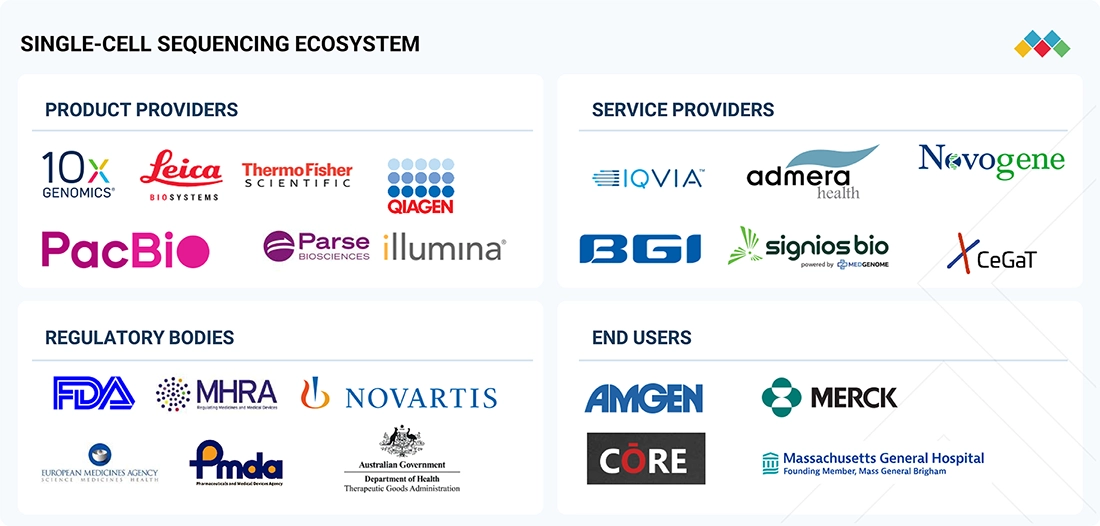
The single cell sequencing market is advancing as researchers seek to understand biological differences between individual cells that may remain hidden in bulk sequencing analyses. Single-cell RNA sequencing (scRNA-seq) enables researchers to investigate gene expression at cellular resolution, while single-cell DNA sequencing (scDNA-seq) supports the study of genomic variation, mutations, and clonal diversity. Innovations in cell isolation, droplet microfluidics, barcoding, library preparation, sequencing throughput, and bioinformatics are expanding applications in oncology, immunology, developmental biology, neuroscience, and drug discovery. Competition increasingly centers on assay sensitivity, sample compatibility, throughput, workflow scalability, data interpretation, and integration across instruments, reagents, and software. Leading companies are developing complementary technologies that help laboratories translate complex single-cell datasets into biological insights and potential diagnostic applications.
1. 10x Genomics
10x Genomics is a leading developer of single-cell and spatial biology technologies used to investigate cellular heterogeneity and gene expression. Its Chromium platform supports high-throughput single-cell analysis, including single-cell RNA sequencing and immune profiling, through microfluidics and cell barcoding. The company also provides reagents, library preparation kits, and software that help researchers process and analyze complex datasets. Its integrated workflow supports applications in oncology, immunology, neuroscience, and developmental biology. The combination of specialized instruments, consumables, and analytical tools gives 10x Genomics a prominent position in the single-cell research ecosystem.
2. Illumina, Inc.
Illumina, Inc. develops next-generation sequencing (NGS) platforms, sequencing reagents, library preparation products, and genomic analysis tools used across life sciences research and clinical applications. Its sequencing systems support the downstream analysis of single-cell libraries prepared using compatible sample barcoding and library construction workflows. Illumina's sequencing technologies are used for single-cell transcriptomics, genomic variation studies, and other high-throughput applications. Its broad installed base, sequencing chemistry, and established research ecosystem make it an important technology provider for single-cell studies. Its role is primarily in sequencing and associated workflows rather than cell capture alone.
3. BD
BD, formally Becton, Dickinson and Company, contributes to single-cell research through its expertise in cell analysis, flow cytometry, sample handling, and molecular biology technologies. Its BD Rhapsody platform supports single-cell multiomics workflows, including gene expression and immune profiling, using cell capture and molecular barcoding approaches. These capabilities enable researchers to examine cellular populations and biological variation at individual-cell resolution. BD's established position in cell analysis and laboratory diagnostics supports its relevance to single-cell sequencing, particularly in immune research, oncology, and translational studies that combine cellular characterization with genomic analysis.
4. Danaher Corporation
Danaher Corporation participates in the single-cell sequencing ecosystem through its life sciences and diagnostics businesses, including subsidiaries and operating companies with complementary capabilities. Cytiva provides bioprocessing and life sciences technologies, while Integrated DNA Technologies (IDT) supplies custom oligonucleotides and nucleic acid products used in sequencing library preparation and molecular research. Other Danaher businesses contribute to cell analysis and laboratory workflows. These capabilities can support sample preparation, assay development, and downstream genomic analysis. Danaher's relevance spans the broader life sciences value chain, although specific single-cell sequencing products should be attributed to the appropriate operating company.
5. Thermo Fisher Scientific Inc.
Thermo Fisher Scientific Inc. provides sequencing technologies, molecular biology reagents, cell analysis instruments, sample preparation products, and genomic research tools. Its Ion Torrent sequencing platforms and associated library preparation technologies can support single-cell genomic workflows when paired with suitable cell isolation, amplification, and barcoding methods. The company also offers products for nucleic acid extraction, gene expression analysis, and cell characterization. Its broad portfolio enables laboratories to combine sample preparation with downstream molecular analysis. Thermo Fisher's established research infrastructure and global distribution network support its relevance to single-cell sequencing across academic, biotechnology, and pharmaceutical research.
6. Merck KGaA
Merck KGaA, operating as MilliporeSigma in the United States and Canada, supplies life sciences products used in cell biology, genomics, sample preparation, and molecular research. Its portfolio includes reagents, laboratory materials, cell culture products, and tools that can support upstream workflows for single-cell sequencing. These products help researchers maintain sample quality and prepare biological materials for downstream genomic analysis. Merck's capabilities across life sciences research and biopharmaceutical development make it relevant to the broader single-cell sequencing supply chain. Its contribution is primarily through enabling products and laboratory technologies rather than a dedicated end-to-end single-cell sequencing platform.
7. QIAGEN
QIAGEN develops sample preparation, molecular testing, nucleic acid purification, and bioinformatics solutions used in genomics research. Its extraction kits and molecular biology products can support the preparation of DNA and RNA for single-cell sequencing workflows, while its computational tools help researchers interpret complex genomic datasets. QIAGEN's expertise in nucleic acid handling and molecular analysis is particularly relevant where sample quality and reproducible preparation are critical to downstream sequencing performance. The company's role in single-cell sequencing is primarily complementary, supporting preparation and analysis workflows rather than relying exclusively on a proprietary single-cell capture platform.
8. Takara Bio Inc.
Takara Bio Inc. develops molecular biology reagents, nucleic acid amplification technologies, and research tools used in genomics and gene expression studies. Its SMART technology has been applied to full-length cDNA synthesis and single-cell RNA sequencing workflows, supporting the preparation of sequencing libraries from small amounts of starting material. The company also offers enzymes, reverse transcription products, and amplification reagents that help researchers process challenging samples. Takara Bio's expertise in molecular biology and single-cell assay preparation makes it relevant to laboratories studying gene expression, cell diversity, and cellular responses in biological and disease research.
9. Cytek Biosciences
Cytek Biosciences specializes in cell analysis technologies, particularly spectral flow cytometry, which enables detailed characterization of complex cell populations. Its instruments help researchers distinguish cellular subtypes and evaluate multiple biological markers, providing complementary information for single-cell sequencing studies. Although flow cytometry is not itself a sequencing technology, it can support the identification, characterization, and enrichment of cell populations before genomic analysis. Cytek's relevance lies in the broader single-cell analysis ecosystem, particularly in immunology, oncology, and translational research. Its flow cytometry capabilities should be distinguished from dedicated single-cell sequencing platforms and sequencing library preparation products.
10. PacBio
PacBio develops high-fidelity long-read sequencing technologies that support detailed analysis of genomes and transcriptomes. Its sequencing platforms can contribute to single-cell research through compatible library preparation and barcoding workflows, enabling investigations of transcript isoforms, genomic variation, and complex molecular structures. PacBio's HiFi sequencing technology offers high accuracy for long reads, which can provide additional resolution for selected single-cell applications. Its role in this market is associated primarily with downstream sequencing and advanced genomic analysis. Compatibility with specific single-cell protocols depends on the library preparation method, sample type, and experimental objectives.
11. Oxford Nanopore Technologies Plc
Oxford Nanopore Technologies Plc develops nanopore-based sequencing platforms that analyze DNA and RNA by measuring changes in electrical current as molecules pass through nanopores. Its technology supports long-read sequencing and can enable transcriptomic and genomic investigations using suitable single-cell barcoding and library preparation workflows. Direct RNA sequencing and long-read analysis can provide insights into transcript structures and molecular variation that complement conventional short-read approaches. The company's flexible sequencing formats and real-time data generation make it relevant to advanced single-cell research, although successful single-cell applications depend on compatible protocols and appropriate sample preparation.
80% of the Forbes Global 2000 B2B companies rely on MarketsandMarkets to identify growth opportunities in emerging technologies and use cases that will have a positive revenue impact.
- Food Packaging Market Size Set for Strong Growth Through 2030 Amid Rising Demand for Convenience Foods
- Crop Protection Chemical Market Size, Share & Growth Forecast (2025–2030)
- Mulch Films Market: Driving Sustainable Agriculture Through Innovation
- Agricultural Adjuvants Market Analysis, Trends, and Growth Outlook (2026–2031)
- Japan Enterprise Asset Management Market Growth: AI and Smart Infrastructure Drive Demand

Conclusion: Unlock the Full Single Cell Sequencing Market Intelligence The single cell sequencing market is progressing toward higher-throughput workflows, improved molecular resolution, integrated multiomics, and more sophisticated computational analysis. Advances in cell capture, barcoding, sequencing chemistry, sample preparation, and bioinformatics are creating opportunities in cancer research, immunology, drug discovery, and precision medicine. Competition spans dedicated single-cell platform developers, established sequencing manufacturers, and suppliers of complementary reagents and analytical technologies. As applications move closer to clinical use, reproducibility, data quality, workflow standardization, and applicable regulatory requirements will remain important considerations. Understanding the capabilities and strategic positions of these companies can help researchers, technology developers, and healthcare stakeholders evaluate emerging opportunities. Explore the full report for detailed market segmentation, competitive analysis, and strategic insights through 2030: Single Cell Sequencing Market by Product (Reagents & Kits, Platforms, Software), Workflow (Presequencing), Service (Sample Preparation, Bioinformatics), Sequencing (scRNA, scDNA), Application (Research, Diagnostic), End User - Global Forecast to 2030.