3D Models for Printing Market Trends, Growth, Applications and Opportunities
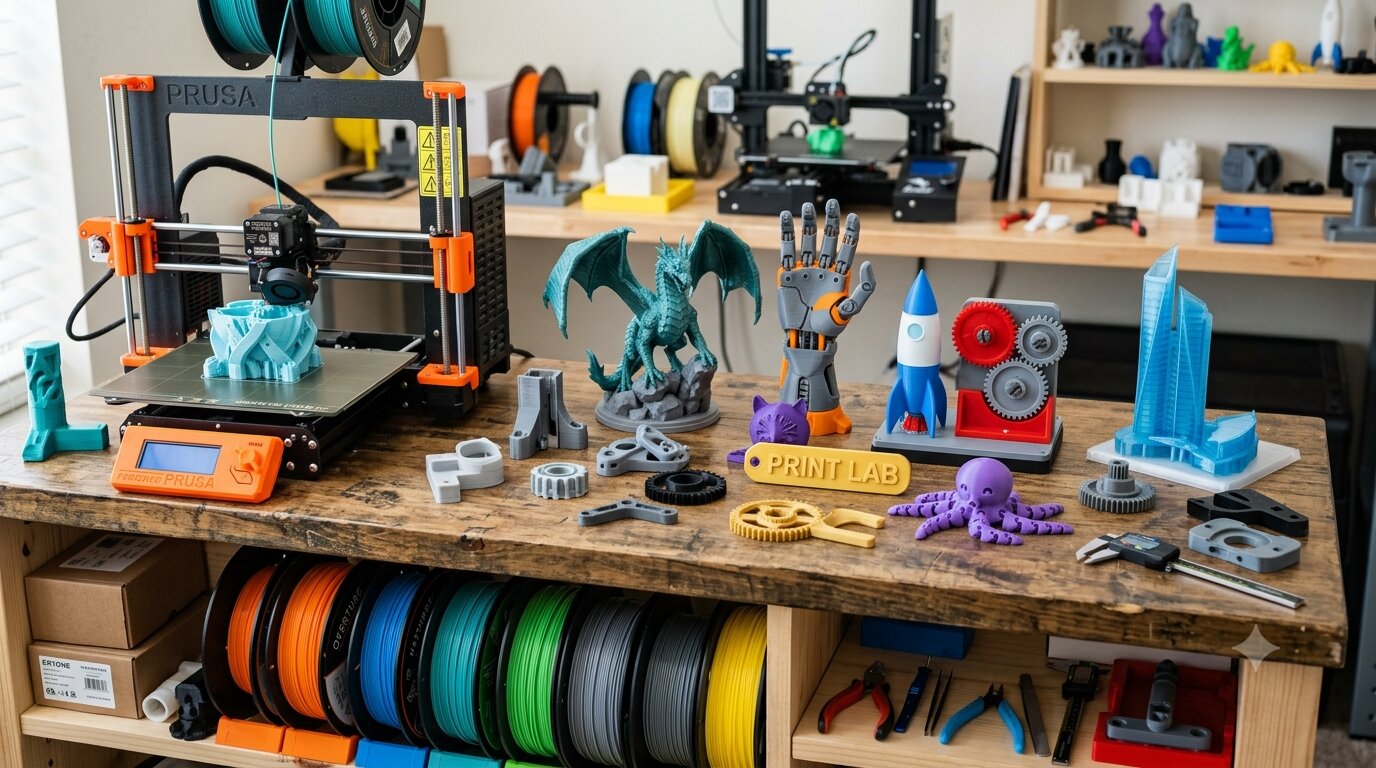
The 3d models for printing market is gaining importance as additive manufacturing becomes increasingly accessible across industries, educational institutions, creative fields, and consumer applications. Digital models serve as the foundation for transforming concepts into physical objects through 3D printing technologies. Improvements in modeling software, scanning solutions, digital design platforms, and printer capabilities are expanding the use of printable models. Designers and manufacturers can now create detailed objects with complex geometries that are difficult to produce through conventional manufacturing. This development is supporting wider adoption of digital design libraries and customized printable content.
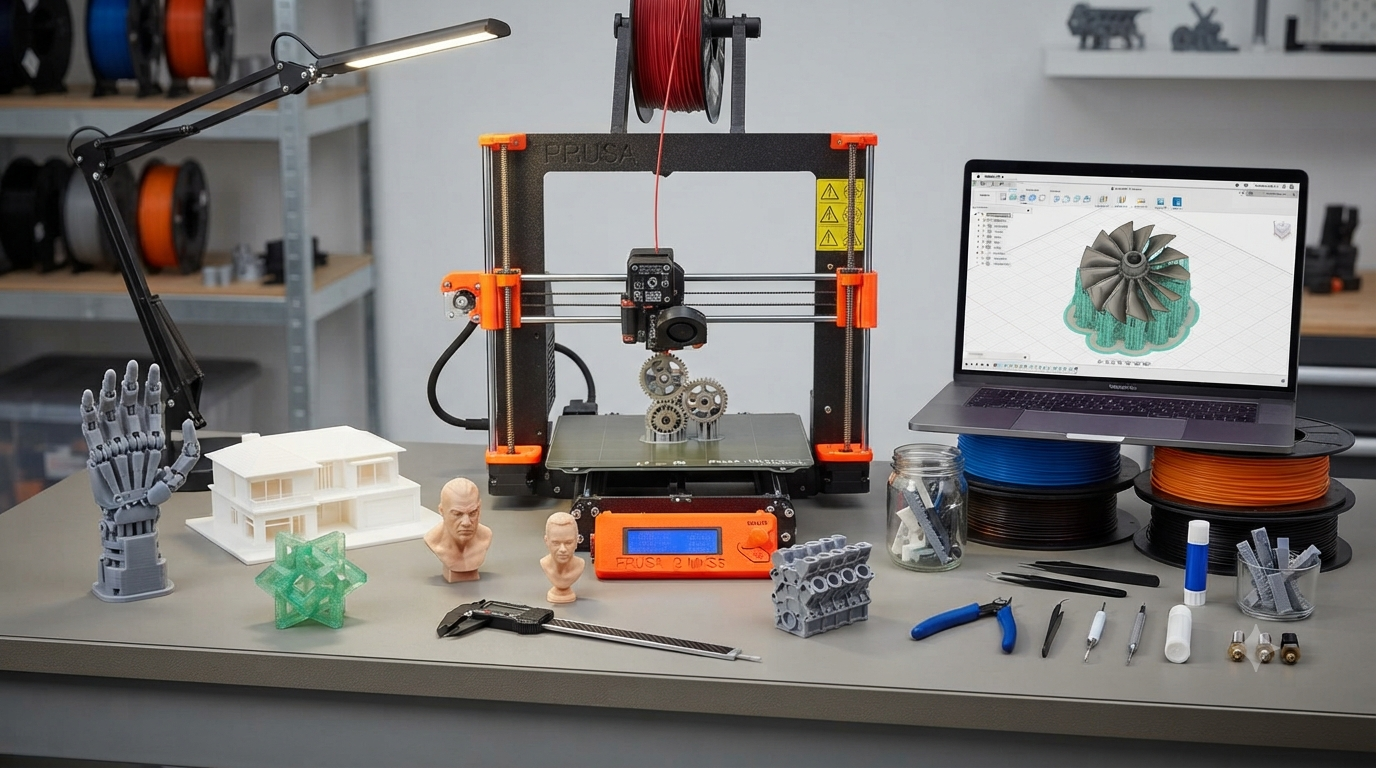
The growing interest in rapid prototyping is another important factor supporting the 3d models for printing market. Product developers can create digital representations, modify designs, and produce physical prototypes without investing heavily in traditional tooling. This approach can shorten design cycles and make experimentation more practical. In sectors such as engineering, architecture, healthcare, education, automotive design, and consumer products, 3D models are increasingly integrated into development workflows. As digital manufacturing becomes more connected with design processes, the demand for accurate and print ready models continues to increase.
According to Marketsandmarkets, the global 3D printing market size is projected to grow from USD 16.43 billion in 2026 to USD 31.77 billion by 2032, growing at a CAGR of 11.6% from 2026 to 2032.
Download PDF Brochure @ https://www.marketsandmarkets.com/pdfdownloadNew.asp?id=1276
Growing Adoption of Digital Manufacturing
The expansion of digital manufacturing is creating a favorable environment for the 3d models for printing market. Modern production workflows increasingly connect computer aided design systems with additive manufacturing equipment. A digital model can move from the design stage to slicing and printing with fewer physical development steps. This enables organizations to test shapes, dimensions, materials, and functional characteristics before committing to larger production activities. The ability to make design changes digitally also improves flexibility when products require customization.
Small businesses and individual creators are also contributing to market development. Affordable desktop printers have made 3D printing more accessible to hobbyists, students, designers, and entrepreneurs. These users often depend on downloadable models or create their own designs using modeling software. Online repositories have therefore become important sources of printable objects, educational resources, decorative products, replacement parts, and functional components. As more people gain experience with 3D printing, the ecosystem surrounding downloadable and professionally designed models is becoming more diverse.
Role of Advanced 3D Modeling Software
Advanced modeling software is playing a central role in shaping the 3d models for printing market. Contemporary platforms provide tools for creating highly detailed objects, modifying existing designs, preparing meshes, and checking models for printing compatibility. Designers can create complex structures while controlling dimensions and surface characteristics. Software improvements are also making modeling more accessible to users with different levels of technical expertise. This combination of professional capabilities and simplified interfaces is encouraging broader participation in digital model creation.
Artificial intelligence and automation are also influencing digital design workflows. Automated tools can assist with design generation, optimization, error detection, and model preparation. Generative approaches can produce multiple design alternatives based on dimensions, performance requirements, or structural constraints. These developments can reduce repetitive design tasks and help creators explore concepts more efficiently. As digital tools continue evolving, the 3d models for printing market is expected to benefit from increasing integration between modeling, simulation, optimization, and printing preparation.
Key Applications Across Industries
The 3d models for printing market serves a wide range of applications because printable digital designs can be adapted to different materials, printer types, and production requirements. Industrial users rely on models for prototyping, tooling, component development, and design validation. Architects use models to represent buildings, structures, interiors, and spatial concepts. Healthcare professionals can use specialized models for educational purposes, anatomical visualization, and customized planning. Educational institutions use printable designs to make scientific and technical concepts more tangible for learners.
Major application areas include:
- Product development and rapid prototyping
- Architecture and construction visualization
- Healthcare and anatomical modeling
- Education and classroom learning
- Engineering and mechanical design
- Consumer products and customized objects
- Jewelry and artistic creation
- Replacement parts and functional components
The diversity of these applications provides a broad foundation for the 3d models for printing market. Different users require different levels of detail, accuracy, file compatibility, and customization. Professional applications may prioritize dimensional precision and engineering specifications, while creative users may focus more heavily on appearance and artistic expression. Educational users often require simplified models that communicate concepts effectively. These varying requirements encourage the development of specialized model categories and digital marketplaces.
Importance of Print Ready Digital Models
Print readiness is a major consideration within the 3d models for printing market. A visually attractive digital model may not automatically be suitable for physical production. Printable designs need appropriate geometry, sufficient wall thickness, correctly connected surfaces, and suitable file structures. Models may also require consideration of support structures, print orientation, material characteristics, and machine capabilities. Designers who understand these requirements can create digital assets that reduce preparation problems and improve printing efficiency.
File compatibility is another important element. Common formats used for 3D printing workflows include STL, OBJ, 3MF, and other specialized formats. Different software platforms and printers may support different features and levels of information. Some formats primarily describe geometry, while newer formats can carry additional information associated with colors, materials, or manufacturing settings. As the ecosystem becomes more sophisticated, demand is increasing for models that can integrate smoothly into modern production workflows.
Growth of Online Model Libraries
Online model libraries are an important part of the 3d models for printing market because they connect creators with users seeking ready to print digital designs. These platforms can contain thousands or millions of models covering functional objects, educational resources, decorative items, mechanical components, miniatures, and creative designs. Users can search for specific categories and download designs based on their printing requirements. This reduces the need to create every object from the beginning.
The expansion of these libraries also creates opportunities for independent designers. Creators can develop specialized models and distribute them digitally to users across different geographical markets. Paid and free distribution models can support different types of digital content. Licensing has become increasingly important because creators need mechanisms to define how their designs can be used, modified, reproduced, or commercially distributed. Clear licensing information can help establish greater transparency between model creators and users.
Customization Driving Market Demand
Customization is a significant factor supporting the 3d models for printing market. Traditional mass manufacturing generally focuses on standardized products, whereas 3D printing can accommodate individualized designs without requiring extensive changes to production equipment. This makes digital models particularly valuable for personalized products, customized components, educational objects, medical applications, and creative projects. Designers can modify dimensions, patterns, shapes, and functional features according to individual requirements.
Personalization can also support niche markets that may not justify traditional manufacturing methods. A designer can create a digital model for a small group of users and produce objects only when required. This approach can reduce the need for maintaining large inventories of physical products. Digital inventories can instead be maintained through files that are reproduced when demand arises. Such capabilities are increasing the strategic value of digital models in flexible manufacturing environments.
Education and Skill Development
Educational institutions are becoming an important user segment for the 3d models for printing market. Three dimensional objects can help students understand subjects that are difficult to visualize through conventional two dimensional materials. Mathematics, science, engineering, geography, history, art, and design courses can incorporate printable models into classroom activities. Students can also learn digital design by creating their own models and converting them into physical objects.
The educational value extends beyond the final printed object. Students can learn about measurement, geometry, materials, manufacturing processes, problem solving, and iterative design. Teachers can use models to demonstrate structures and concepts that may otherwise remain abstract. As schools, colleges, technical institutes, and training centers expand digital fabrication activities, the demand for educational model libraries and design resources can increase.
Healthcare Applications and Specialized Designs
Healthcare represents another specialized opportunity for the 3d models for printing market. Digital models can be used for anatomical education, medical training, surgical planning support, prosthetic design, and customized devices, subject to applicable clinical requirements and professional oversight. Three dimensional representations can provide an alternative way of understanding complex anatomical structures. This can be particularly useful when physical specimens are difficult to obtain or reproduce.
The development of patient specific designs is also creating new possibilities. Digital imaging data can be converted into three dimensional representations that support customized planning and manufacturing workflows. However, healthcare applications require higher standards for accuracy, privacy, validation, and regulatory compliance than many consumer applications. These requirements create both opportunities and barriers for companies and professionals developing specialized printable models.
Architecture and Construction Applications
Architecture and construction professionals use the 3d models for printing market to create physical representations of buildings, interiors, landscapes, and structural concepts. Printed architectural models can make design presentations easier to understand by providing a tangible representation of proposed structures. Designers can examine proportions, spatial relationships, and visual elements in a physical format. This can support communication among architects, clients, engineers, and other project participants.
Digital models can also be updated quickly when project specifications change. Instead of rebuilding an entire model manually, designers can modify the digital file and produce an updated version. This flexibility can be particularly useful during iterative design processes. As digital construction workflows become more integrated, printable models may continue to serve as a bridge between digital visualization and physical design communication.
Market Challenges and Limitations
Despite expanding applications, the 3d models for printing market faces several challenges. Model quality varies considerably across online platforms, and users may encounter files with incorrect geometry, incomplete surfaces, unsuitable dimensions, or insufficient print information. Beginners may also find it difficult to identify whether a particular model is appropriate for their printer and material. These issues can result in failed prints, wasted materials, and additional preparation time.
Intellectual property is another important challenge. Digital models can be copied and redistributed relatively easily, creating concerns for designers who depend on digital assets as a source of income. Unauthorized commercial use can affect creators and businesses. Licensing systems, digital rights management practices, creator verification, and clearer usage terms can help address these concerns. Greater awareness among users is also necessary to support responsible digital model consumption.
Importance of Model Quality and Accuracy
Quality is becoming an important differentiating factor within the 3d models for printing market. Users increasingly expect models to be accurate, optimized, well documented, and compatible with their intended production workflow. Professional users may require precise dimensions and technical specifications, while creative users may prioritize visual detail and surface quality. Models that meet these expectations can provide greater practical value than files designed only for visual presentation.
Quality assurance can include geometry validation, manifold checks, dimensional verification, mesh optimization, and test printing. Designers may also provide information about recommended print settings and materials. Such information can reduce uncertainty for users and improve the overall experience. As competition grows across digital model platforms, reliable quality and useful documentation can become increasingly important factors in user selection.
Emerging Trends in the Market
Several technology trends are influencing the direction of the 3d models for printing market. Artificial intelligence assisted design is helping users generate and modify objects more efficiently. Parametric modeling enables dimensions and design elements to be adjusted systematically. Cloud based collaboration allows multiple users to work with digital designs across locations. Improvements in scanning technology are also making it easier to capture physical objects and convert them into digital representations.
Another emerging trend is the development of more sophisticated digital manufacturing ecosystems. Designers increasingly expect model files, slicing software, simulation tools, printer settings, and material information to work together. This integration can simplify the transition from digital concept to physical production. As these technologies mature, the value of a 3D model may increasingly depend not only on its geometry but also on the manufacturing information associated with it.
Regional Market Development
The 3d models for printing market is developing across major technology and manufacturing regions. Regions with established engineering, education, healthcare, and industrial ecosystems are supporting strong demand for professional digital models. Emerging markets are also experiencing growing interest as desktop 3D printers become more accessible and digital fabrication skills expand. Local educational programs, maker communities, design schools, and small manufacturing businesses are contributing to ecosystem development.
Regional differences can influence the types of models demanded by users. Industrial regions may demonstrate stronger demand for engineering and manufacturing designs, while creative communities may focus on artistic products, miniatures, and customized objects. Educational adoption can also vary according to institutional investment and access to digital fabrication equipment. These differences create opportunities for specialized model providers that understand the needs of individual user groups.
Future Opportunities for Digital Model Providers
The future of the 3d models for printing market will depend on the ability of digital model providers to deliver useful, reliable, and accessible designs. Opportunities exist in professional engineering libraries, educational collections, customized products, healthcare related models, architectural assets, replacement components, and creative designs. Providers can differentiate their offerings through model quality, customization options, documentation, licensing clarity, and compatibility with multiple workflows.
Subscription based access, individual digital purchases, custom modeling services, and community driven platforms represent different approaches to digital model distribution. Businesses can also develop specialized libraries for particular industries. Integration with cloud manufacturing and automated printing services could further simplify the process from model selection to physical production. These developments may strengthen the role of digital models as an important component of distributed manufacturing.
Conclusion
The 3d models for printing market is becoming an important part of the broader digital manufacturing ecosystem. The combination of accessible 3D printers, advanced modeling software, online libraries, customization capabilities, and expanding applications is creating demand across professional and consumer segments. Engineering, education, architecture, healthcare, creative industries, and product development are among the areas benefiting from increasingly capable digital models.
Future development will depend on model quality, interoperability, intellectual property protection, user education, and integration with manufacturing technologies. Artificial intelligence, digital scanning, parametric design, and cloud based workflows are expected to continue changing how printable models are created and distributed. As organizations and individual creators increasingly move from physical inventories toward digital assets, the 3d models for printing market can remain an important area of development within additive manufacturing.
FAQs
What is the 3D models for printing market?
The 3d models for printing market refers to the ecosystem surrounding digital three dimensional designs created, distributed, purchased, customized, and used for 3D printing. It includes models for industrial, educational, professional, creative, and consumer applications.
Why are 3D models important for 3D printing?
3D models provide the digital geometry required to create physical objects using additive manufacturing equipment. They allow users to design, modify, test, and reproduce objects without creating physical tooling for every design change.
Which industries use printable 3D models?
Engineering, manufacturing, architecture, healthcare, education, automotive design, consumer products, jewelry, entertainment, and creative industries use printable models for different applications. The required model specifications vary according to the intended use.
What file formats are commonly used for 3D printing?
STL, OBJ, and 3MF are among the formats commonly encountered in 3D printing workflows. The appropriate format depends on the modeling software, slicing platform, printer, and information required for the manufacturing process.
How does customization affect the market?
Customization allows users to modify digital designs according to specific dimensions, functional requirements, or aesthetic preferences. This capability supports personalized products, specialized components, educational resources, and small scale manufacturing applications.
What challenges affect printable 3D models?
Common challenges include inconsistent model quality, compatibility issues, complex preparation requirements, intellectual property concerns, licensing uncertainty, and the need for accurate dimensions. Professional applications may also require additional validation and documentation.
How is artificial intelligence affecting 3D models?
Artificial intelligence can assist with design generation, optimization, modification, error identification, and workflow automation. These capabilities can help users explore more design alternatives and reduce repetitive modeling tasks.
What is the role of online 3D model libraries?
Online libraries provide centralized access to downloadable digital designs. They allow users to discover models for functional, educational, decorative, engineering, and creative applications without creating every design from scratch.
What opportunities exist for 3D model creators?
Creators can develop specialized digital libraries, sell individual models, provide customized design services, create educational collections, or develop professional models for specific industries. Clear licensing and reliable model quality can support sustainable digital distribution.
What is the future outlook for the 3D models for printing market?
The market is likely to evolve alongside advances in 3D printing, digital design, artificial intelligence, scanning, cloud collaboration, and manufacturing automation. Greater integration between digital models and production workflows can create additional applications and business opportunities.
80% of the Forbes Global 2000 B2B companies rely on MarketsandMarkets to identify growth opportunities in emerging technologies and use cases that will have a positive revenue impact.
- Food Packaging Market Size Set for Strong Growth Through 2030 Amid Rising Demand for Convenience Foods
- Crop Protection Chemical Market Size, Share & Growth Forecast (2025–2030)
- Mulch Films Market: Driving Sustainable Agriculture Through Innovation
- Agricultural Adjuvants Market Analysis, Trends, and Growth Outlook (2026–2031)
- Japan Enterprise Asset Management Market Growth: AI and Smart Infrastructure Drive Demand