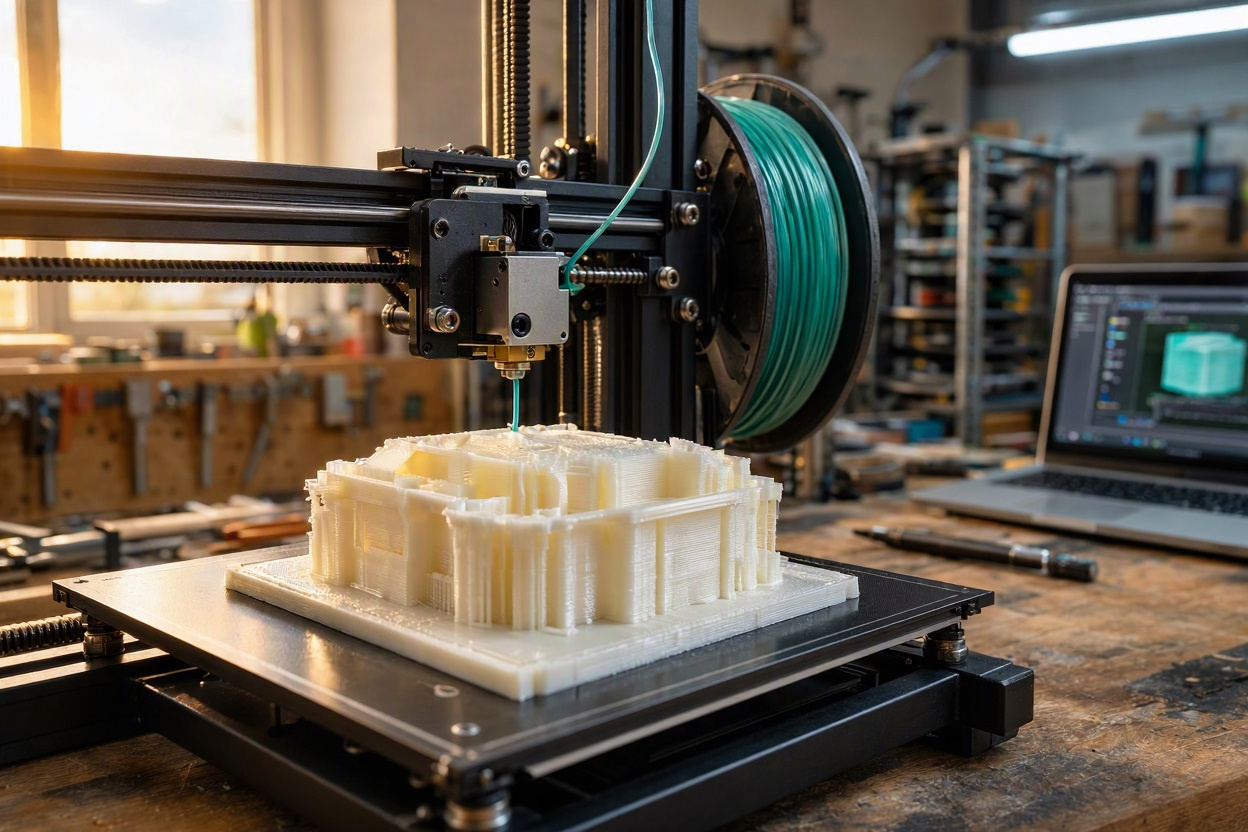
3D Printing Challenges: Key Barriers and Solutions in 2026
3D printing is moving beyond prototyping into production, but its wider industrial adoption still faces several challenges, including high equipment and material costs, limited material options, production consistency, post-processing requirements, scalability, workforce shortages, standardization, cybersecurity, and sustainability. At the same time, advances in materials, process monitoring, automation, software, and digital manufacturing are helping manufacturers address these barriers and expand the use of additive manufacturing across aerospace, automotive, healthcare, electronics, and industrial applications.
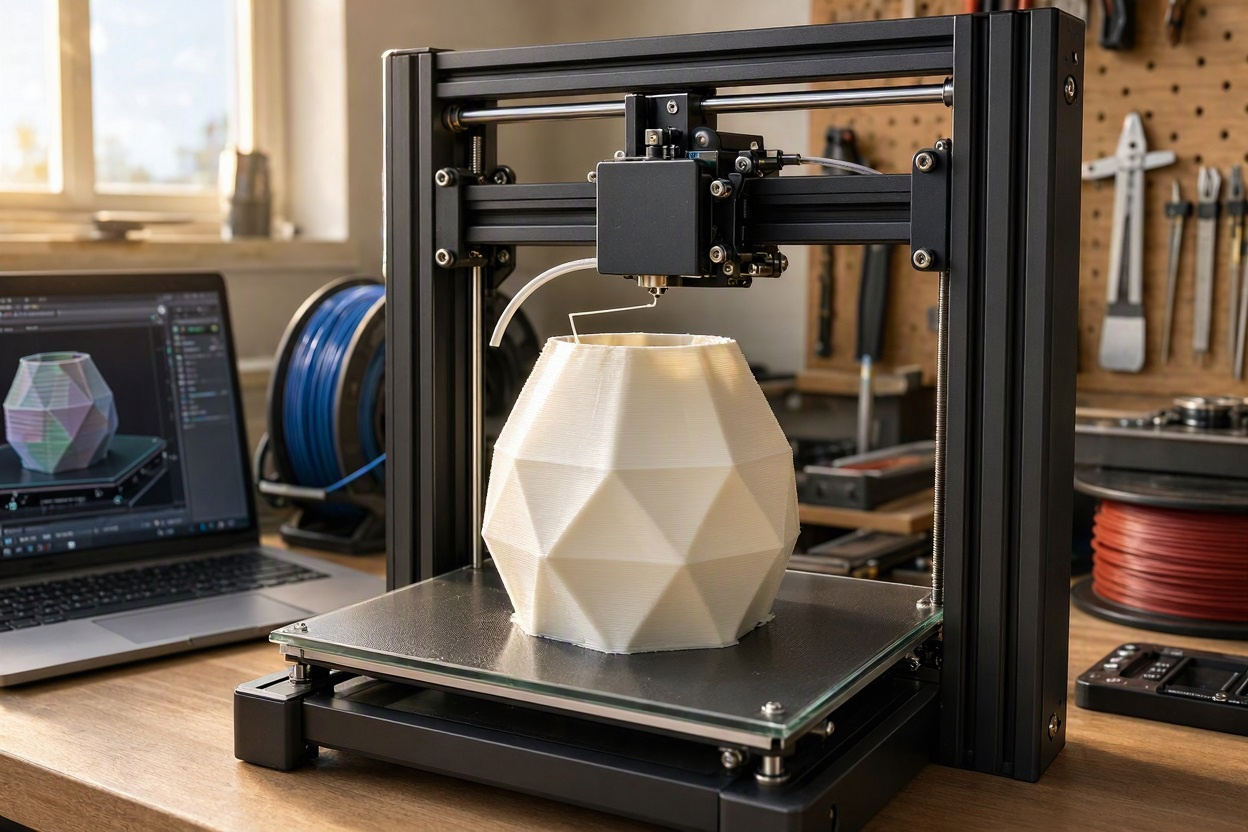
The challenges are becoming more important as manufacturers evaluate 3D printing for increasingly demanding applications. The latest MarketsandMarkets analysis projects the global 3D printing market to grow from USD 16.43 billion in 2026 to USD 31.77 billion by 2032, representing a CAGR of 11.6% during 2026–2032. This growth reflects increasing adoption of additive manufacturing technologies, materials, software, and services across industrial applications.
Key Takeaways
-
High printer, software, maintenance, and post-processing costs can increase the total cost of ownership.
-
Material availability, consistency, qualification, and cost remain important industrial barriers.
-
Repeatable quality and process control are essential for production applications.
-
Standardization is improving, but qualification and certification requirements remain complex.
-
Post-processing can add time, labor, equipment requirements, and cost.
-
Production speed and scalability remain important considerations when compared with conventional manufacturing.
-
Skilled professionals are required across design, materials, machine operation, simulation, and process optimization.
-
Digital design files create additional intellectual property and cybersecurity considerations.
-
Sustainability depends on material selection, energy consumption, waste management, recycling, and lifecycle assessment.
-
AI, automation, process monitoring, digital workflows, and advanced materials are helping address several of these challenges.
Why Are 3D Printing Challenges Important for Manufacturers?
The value of additive manufacturing comes from its ability to produce complex geometries, customized components, lightweight structures, tooling, and parts that may be difficult or uneconomical to manufacture using conventional processes. However, moving from prototypes to repeatable production introduces additional requirements for process control, material qualification, quality assurance, production economics, and workforce capabilities.
The latest MarketsandMarkets analysis identifies several restraints and challenges, including high raw material costs, limited standardized testing methods for material properties, insufficient design and process-control data, consistency of finished products, and shortages of skilled additive manufacturing professionals.
As a result, manufacturers increasingly need to evaluate 3D printing as part of an integrated production strategy rather than simply as an alternative to conventional manufacturing.
High Equipment and Total Ownership Costs
One of the major 3D printing challenges is the investment required for industrial-grade systems. Advanced printers for metal, polymer, ceramic, and composite applications can require significant capital expenditure. The overall investment can also include software, installation, environmental controls, inspection systems, maintenance, feedstock handling, and post-processing equipment.
For manufacturers, the relevant consideration is therefore not only the purchase price of a printer. Total cost of ownership can include machine utilization, material consumption, labor, maintenance, energy, quality inspection, and finishing requirements.
This can make the business case more difficult for companies that have relatively low production volumes or applications where conventional manufacturing already provides a competitive cost structure.
Request the 3D Printing Market Sample Report https://www.marketsandmarkets.com/pdfdownloadNew.asp?id=1276
Material Availability and Cost Remain Major Barriers
Materials are another important challenge in 3D printing. Different additive manufacturing processes require specific feedstock characteristics, including particle size, viscosity, thermal behavior, purity, and consistency.
Industrial applications can require materials with predictable mechanical, thermal, chemical, or biological properties. Qualification requirements can also increase the time and cost associated with introducing new materials.
The latest MarketsandMarkets report identifies high raw material costs and the lack of standardized testing methods for verifying mechanical properties as important restraints for the industry.
Material development is nevertheless progressing. Manufacturers and material developers are expanding the range of polymers, metals, ceramics, composites, recycled materials, and bio-based feedstocks available for additive manufacturing.
Consistent Quality and Process Repeatability
Achieving consistent output is one of the most important challenges when 3D printing moves from prototyping to production.
A finished component can be affected by numerous parameters, including material properties, machine configuration, temperature, layer characteristics, printing speed, build orientation, environmental conditions, and post-processing. Small variations can influence dimensional accuracy, surface quality, strength, or other performance characteristics.
For production applications, manufacturers therefore need robust process-control systems, monitoring capabilities, testing procedures, and documentation.
The MarketsandMarkets report specifically identifies ensuring consistent quality with repeatable and stable production processes as a key industry challenge.
Standardization and Certification Requirements
Standardization has historically been a barrier to wider adoption of additive manufacturing, particularly in regulated industries.
However, the standards ecosystem is developing rapidly. ISO and ASTM have published standards addressing additive manufacturing terminology, qualification, testing, data, materials, and application-specific requirements. In 2026, ISO/ASTM 52951:2026 was published to address data packages for additive manufacturing parts, supporting information exchange from design through acceptance.
Similarly, ISO/ASTM 52941:2026 was published in August 2026 and establishes requirements and test methods for qualification and requalification of laser metal powder bed fusion machines used for aerospace applications.
These developments indicate that standardization is progressing, but manufacturers still need to manage application-specific qualification, documentation, testing, and regulatory requirements.
Post-Processing Adds Time and Cost
Printing a component is often only one stage of the manufacturing process. Depending on the technology and material, components may require support removal, curing, washing, heat treatment, machining, polishing, surface finishing, or inspection.
Post-processing can therefore affect production economics and throughput. It can also require specialized equipment and trained personnel.
Automation is increasingly being applied to finishing and inspection workflows. Reducing manual intervention can help manufacturers improve consistency and shorten production cycles, particularly when additive manufacturing is used for larger production volumes.
Production Speed and Scalability
3D printing provides significant design flexibility, but production speed remains an important consideration.
Traditional manufacturing processes can be highly efficient for standardized high-volume products. Additive manufacturing may be more attractive where production involves complex geometries, customization, low-to-medium volumes, lightweight structures, or frequent design changes.
Scaling additive manufacturing requires more than installing additional printers. Manufacturers need coordinated material supply, production planning, quality assurance, machine utilization, post-processing, inspection, software, and workforce capabilities.
For this reason, production scalability remains one of the central challenges in moving additive manufacturing toward broader industrial production.
Shortage of Skilled Additive Manufacturing Professionals
3D printing requires expertise across multiple disciplines. Engineers may need knowledge of design for additive manufacturing, material science, machine parameters, simulation, process monitoring, quality control, and post-processing.
The challenge is particularly relevant for companies moving from prototyping to production because the required skills extend beyond operating a printer.
MarketsandMarkets identifies the shortage of skilled professionals in additive manufacturing as a key industry challenge.
Training programs, certification initiatives, university programs, and on-the-job development can help companies build the capabilities required to operate and scale additive manufacturing systems.
Intellectual Property and Cybersecurity Risks
The digital nature of additive manufacturing creates another category of risk. A physical product can be represented by a digital design file containing valuable intellectual property.
Unauthorized access, copying, modification, or distribution of these files can create risks for manufacturers and designers. Connected production environments can also introduce cybersecurity considerations across software, machines, networks, cloud platforms, and digital supply chains.
Manufacturers can address these risks through access controls, encryption, secure file management, authentication, monitoring, and cybersecurity policies covering the complete digital manufacturing workflow.
The development of data standards is also relevant because structured digital information can improve traceability and communication between designers, manufacturers, and other stakeholders. ISO/ASTM 52951:2026 specifically addresses data packages and information workflows associated with additive manufacturing parts.
Sustainability and Material Recycling
Sustainability is becoming an increasingly important consideration for manufacturers adopting additive manufacturing.
3D printing can reduce material waste in certain applications because material is deposited or selectively processed to create a component rather than removing large amounts of material from a larger workpiece. However, the environmental impact varies according to the technology, material, energy requirements, production conditions, transportation, post-processing, and end-of-life management.
Material recycling is another important consideration. Manufacturers are exploring recycled and bio-based feedstocks, although maintaining consistent performance and quality can be challenging.
In September 2026, ISO/ASTM registered a new work item, ISO/ASTM AWI 52964, focused on life-cycle assessment of additive manufacturing processes and parts. The work covers areas such as energy consumption, material losses, auxiliary inputs, and lifecycle assessment methodology.
Integration With Conventional Manufacturing
Manufacturers do not necessarily have to choose between additive and conventional production.
Hybrid workflows can combine 3D printing with CNC machining, injection molding, casting, forming, inspection, and other processes. For example, additive manufacturing can produce a near-net-shape component that subsequently undergoes machining or finishing.
However, integration requires compatible software, production planning, inspection procedures, data management, and skilled personnel.
Successful implementation therefore depends on designing an end-to-end workflow rather than evaluating the printer as an isolated piece of equipment.
Design and Process Control Complexity
Designing for additive manufacturing requires a different approach from designing exclusively for conventional manufacturing.
Engineers can use additive manufacturing to create internal channels, lattice structures, topology-optimized components, lightweight geometries, and customized designs. However, these possibilities introduce additional considerations around build orientation, support structures, thermal behavior, tolerances, material behavior, and post-processing.
MarketsandMarkets identifies inadequate design and process-control data resulting from a lack of printing material specifications as one of the industry's restraints.
Improved simulation, process monitoring, digital twins, and AI-assisted design can help address these issues by connecting design decisions with manufacturing parameters and expected component performance.
What Is Being Done to Overcome 3D Printing Challenges?
The industry is addressing these barriers through improvements across hardware, materials, software, automation, and standards.
Key approaches include:
-
Developing higher-performance and application-specific materials
-
Increasing printer automation and process monitoring
-
Using AI and simulation for design and process optimization
-
Improving inspection and quality-control systems
-
Automating post-processing activities
-
Developing standardized testing and qualification procedures
-
Increasing the use of recycled and bio-based materials
-
Building additive manufacturing skills through training and certification
-
Connecting additive manufacturing with digital production systems
Emerging Technologies Can Help Address Industry Barriers
The next phase of additive manufacturing is increasingly connected with digital technologies. AI can support design optimization, parameter selection, defect detection, predictive maintenance, and process analysis. Machine learning can also be used with sensor data to identify process variations.
Digital twins can connect virtual models with physical production systems, while IoT connectivity can provide greater visibility into machine performance and production conditions.
The latest MarketsandMarkets research also highlights rapid advancements in printing technologies and materials as an opportunity for the industry. Emerging applications are expanding beyond traditional prototyping into automotive, printed electronics, jewelry, education, and other areas.
How 3D Printing Adoption Is Evolving Across Industries
3D printing adoption is becoming increasingly application-specific.
In aerospace and defense, additive manufacturing can support complex, lightweight, and customized components where qualification and reliability requirements are particularly important. In healthcare, applications include customized devices, implants, anatomical models, and other patient-specific products.
Automotive manufacturers use additive manufacturing for prototyping, tooling, lightweight components, customization, and selected production applications. Electronics and industrial manufacturers are also exploring additive processes for complex components and specialized production requirements.
The expansion of these applications creates opportunities while simultaneously increasing the need for quality assurance, standards, materials qualification, and production repeatability.
The Future of 3D Printing: From Prototyping to Production
The future of 3D printing will depend not only on faster printers but also on the development of a complete industrial ecosystem encompassing materials, software, automation, process monitoring, standards, skilled professionals, inspection, and digital manufacturing infrastructure.
The latest MarketsandMarkets report projects the 3D printing market to reach USD 31.77 billion by 2032, reflecting continued expansion of additive manufacturing technologies and applications.
At the same time, recent standards developments show that the industry is working toward greater consistency in areas such as machine qualification and digital data management.
For manufacturers, the key question is therefore shifting from whether 3D printing can produce a part to whether it can produce the required part consistently, economically, securely, and at the necessary production scale.
Key Considerations for Companies Evaluating 3D Printing
Organizations considering additive manufacturing should evaluate the complete production economics and technical requirements before selecting a technology.
Important evaluation areas include:
-
Application and component requirements
-
Material availability and qualification
-
Printer capability and utilization
-
Production volume and cycle time
-
Post-processing requirements
-
Quality inspection and certification
-
Software and digital workflow integration
-
Workforce capabilities
-
Intellectual property and cybersecurity
-
Sustainability and lifecycle considerations
This approach can help manufacturers identify where additive manufacturing creates measurable value and where conventional or hybrid manufacturing processes may remain appropriate.
3D printing has evolved from a prototyping technology into an increasingly important manufacturing approach, but its broader industrial adoption depends on overcoming several technical, economic, operational, and regulatory barriers. Equipment and material costs, quality consistency, post-processing, production scalability, skilled labor, standardization, cybersecurity, and sustainability remain important considerations.
As additive manufacturing becomes more integrated with conventional manufacturing and digital production systems, organizations that evaluate the entire workflow rather than the printer alone will be better positioned to understand where 3D printing can deliver practical manufacturing value.
Frequently Asked Questions About 3D Printing Challenges
What are the biggest challenges in 3D printing?
The major challenges include high equipment and material costs, material limitations, production consistency, post-processing, scalability, standardization, workforce shortages, cybersecurity, and sustainability.
Why is 3D printing expensive?
The total cost can include the printer, materials, software, maintenance, energy, labor, inspection, post-processing, and facility requirements. Industrial systems and specialized materials can significantly increase the overall investment.
Is 3D printing suitable for mass production?
3D printing can support production applications, particularly where customization, complex geometries, lightweight structures, or low-to-medium production volumes are important. However, production speed, post-processing, machine utilization, and cost must be evaluated for high-volume applications.
What is the biggest material challenge in 3D printing?
Important issues include material availability, cost, consistency, qualification, and the ability to achieve predictable mechanical and thermal properties. These considerations become particularly important in aerospace, healthcare, automotive, and other demanding applications.
Why is standardization important for additive manufacturing?
Standardization helps manufacturers establish consistent requirements for processes, machines, materials, testing, qualification, and data. Recent ISO/ASTM developments are expanding the standards framework for industrial additive manufacturing.
How can AI help overcome 3D printing challenges?
AI can support design optimization, process monitoring, defect detection, predictive maintenance, parameter optimization, and production analysis. Its effectiveness depends on data quality, process integration, and application-specific validation.
What role does sustainability play in 3D printing?
Sustainability considerations include material efficiency, energy consumption, feedstock production, recycling, waste, transportation, post-processing, and end-of-life management. Lifecycle assessment can help companies evaluate environmental impacts more systematically.
80% of the Forbes Global 2000 B2B companies rely on MarketsandMarkets to identify growth opportunities in emerging technologies and use cases that will have a positive revenue impact.
- Food Packaging Market Size Set for Strong Growth Through 2030 Amid Rising Demand for Convenience Foods
- Crop Protection Chemical Market Size, Share & Growth Forecast (2025–2030)
- Mulch Films Market: Driving Sustainable Agriculture Through Innovation
- Agricultural Adjuvants Market Analysis, Trends, and Growth Outlook (2026–2031)
- Japan Enterprise Asset Management Market Growth: AI and Smart Infrastructure Drive Demand