3D Printing in Education Market Trends, Applications, Growth and Opportunities
The 3D printing in education market is becoming an important part of modern teaching and learning environments. Educational institutions are increasingly using three dimensional printing technologies to make complex concepts easier to understand through physical models and interactive projects. The technology allows students to convert digital designs into tangible objects while developing creativity, technical knowledge, and practical skills. From schools and colleges to universities and vocational training centers, 3D printing is being introduced across different educational levels. Growing interest in experiential learning is supporting the adoption of 3D printing as an educational resource.
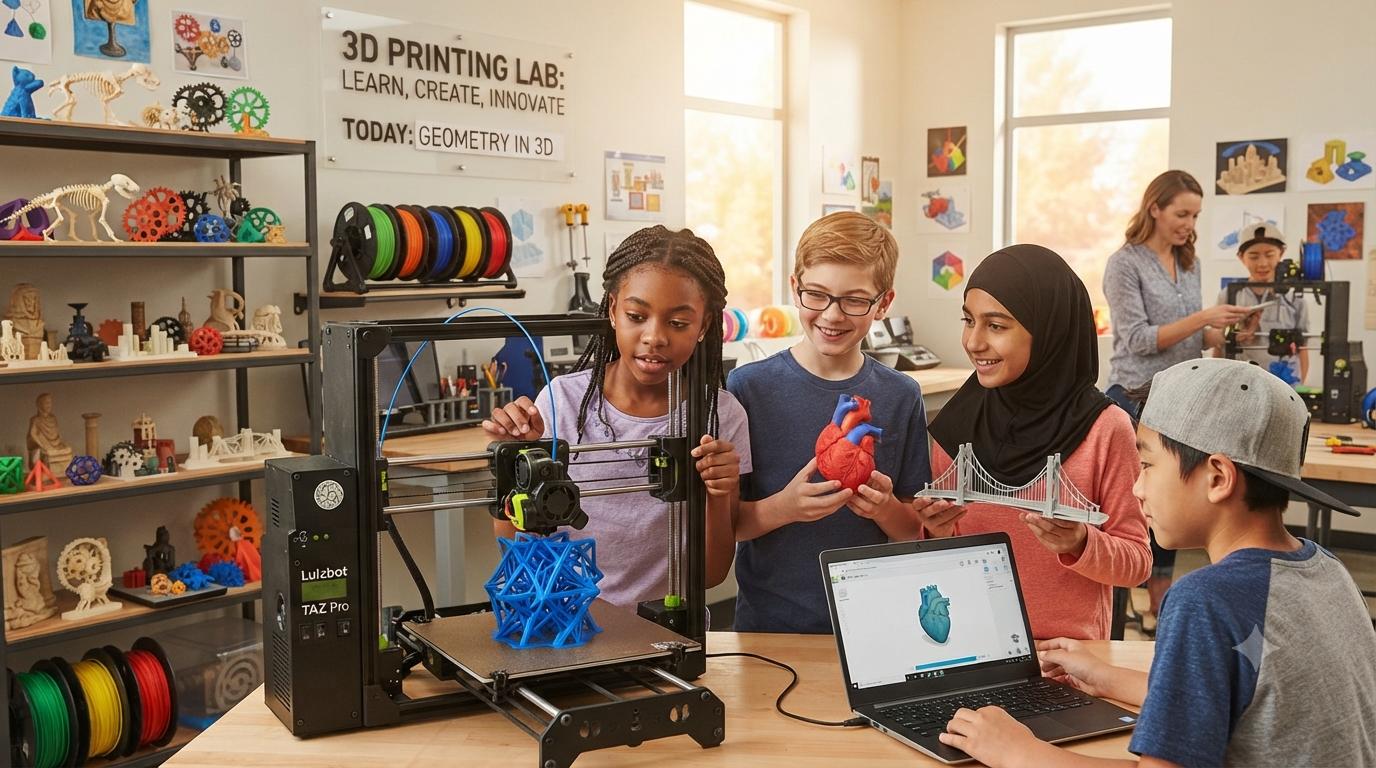
The 3D printing in education market is closely connected with the increasing use of science, technology, engineering, arts, and mathematics based learning approaches. Traditional classroom instruction can sometimes make it difficult for students to visualize complicated structures, mechanical systems, biological models, and architectural concepts. Three dimensional printing provides educators with an opportunity to create physical representations that students can observe, touch, modify, and analyze. This approach can improve classroom engagement while encouraging students to participate actively in learning activities. As digital education continues to evolve, physical fabrication is becoming an increasingly valuable extension of digital learning.
According to Marketsandmarkets, the global 3D printing market size is projected to grow from USD 16.43 billion in 2026 to USD 31.77 billion by 2032, growing at a CAGR of 11.6% from 2026 to 2032.
Download PDF Brochure @ https://www.marketsandmarkets.com/pdfdownloadNew.asp?id=1276
Understanding Three Dimensional Printing in Education
Three dimensional printing is an additive manufacturing process that creates physical objects from digital models. The process generally involves designing an object using specialized software and then producing it layer by layer through a compatible printing system. In educational environments, students can learn the complete process from conceptualization and digital design to production and evaluation. This provides practical exposure to design thinking, engineering principles, measurement, and problem solving. The 3D printing in education market benefits from this combination of digital creativity and physical experimentation.
Educational 3D printing can be applied to numerous subjects and academic disciplines. Science students can create anatomical models, molecular structures, geological formations, and laboratory equipment prototypes. Engineering students can produce mechanical components and functional prototypes, while architecture students can transform digital building concepts into physical models. Art and design students can explore shapes, textures, and innovative forms through physical fabrication. These applications make 3D printing a flexible technology that can support different learning objectives within the same institution.
Key Trends Shaping the Education Printing Landscape
One important trend in the 3D printing in education market is the movement toward project based learning. Instead of relying exclusively on textbooks and lectures, educators are creating assignments that require students to design and produce physical objects. Such activities can encourage collaboration and help learners understand how theoretical principles are applied in practical situations. Students can test different designs, identify weaknesses, and make improvements through repeated experimentation. This process supports a learning environment where mistakes can become opportunities for discovery and innovation.
Another important trend is the integration of 3D printing with digital design education. Accessible modeling software is allowing students with different levels of technical experience to create printable designs. Educational institutions are also incorporating computer aided design concepts into technical and creative courses. The connection between digital modeling and physical production provides students with an understanding of how digital ideas can become real products. As design literacy becomes increasingly important across professional fields, the 3D printing in education market is gaining relevance in curriculum development.
Role of 3D Printing in STEM Education
STEM education represents one of the most important application areas for the 3D printing in education market. Three dimensional printing can help students understand engineering, mathematics, physics, chemistry, and biology through practical models. A student studying geometry can create and examine complex shapes instead of viewing them only through diagrams. Physics learners can produce components for demonstrations, while engineering students can develop prototypes to test mechanical principles. This practical approach can connect classroom theory with physical experimentation.
The technology can also support interdisciplinary STEM projects. Students may combine mathematics, programming, engineering, and design skills to develop a single physical product. For example, learners can design a structural model, calculate its dimensions, print the design, and evaluate its stability. Such projects can develop analytical thinking while introducing students to the iterative nature of engineering. The 3D printing in education market therefore has an important role in supporting educational models that emphasize practical knowledge and multidisciplinary problem solving.
Applications Across Different Educational Levels
The 3D printing in education market serves educational institutions ranging from primary schools to advanced higher education facilities. At the school level, printers can be used for simple models, classroom demonstrations, creative projects, and introductory design activities. At the college and university level, applications become more specialized and may include engineering prototypes, medical models, architectural structures, and research related projects. Vocational institutions can use printing systems to provide hands on experience with digital fabrication and manufacturing concepts. This broad application range increases the relevance of three dimensional printing across the education sector.
In primary education, 3D printing can introduce children to basic concepts related to shapes, construction, creativity, and design. Teachers can use simple printed objects to make lessons more interactive and visually engaging. In secondary education, students can progress toward more advanced modeling and engineering assignments. Higher education institutions can use sophisticated printing systems for specialized academic projects and laboratory activities. The 3D printing in education market consequently supports a learning progression in which students can develop increasingly advanced technical skills.
Major Applications of 3D Printing in Education
The versatility of three dimensional printing allows educational institutions to use the technology for multiple academic and operational purposes. Applications can range from classroom demonstrations and student projects to specialized prototyping and research activities. Physical models can make abstract ideas more accessible and provide students with opportunities to experiment with real objects. Teachers can also create customized learning materials that match specific curriculum requirements. The 3D printing in education market continues to benefit from this broad range of educational applications.
Key applications include:
• Educational model creation for science, mathematics, geography, and engineering lessons.
• Rapid prototyping for student design and engineering projects.
• Architectural model development for planning and visualization courses.
• Medical and anatomical models for healthcare education.
• Customized teaching aids for students with different learning requirements.
• Product design projects that connect digital modeling with physical production.
Benefits for Students and Educators
One of the major benefits associated with the 3D printing in education market is improved practical learning. Students can move from simply observing information to actively creating and testing physical objects. This process can strengthen understanding by allowing learners to explore concepts through direct interaction. Three dimensional printing can also encourage curiosity because students can modify designs and immediately see the physical consequences of their decisions. Such experiences can make classroom activities more engaging and memorable.
Another benefit is the development of transferable skills. Students working with 3D printers can learn digital modeling, measurement, spatial reasoning, technical documentation, troubleshooting, and design evaluation. They may also develop communication and teamwork skills when completing group projects. Educators can use these activities to introduce students to real world design and manufacturing workflows. The 3D printing in education market therefore contributes not only to subject knowledge but also to broader technical and creative skill development.
Important benefits include:
• Enhanced visualization of complex academic concepts.
• Greater student participation through hands on learning.
• Development of creativity and design thinking.
• Practical exposure to digital manufacturing processes.
• Opportunities for collaborative project based education.
• Creation of customized physical learning resources.
Technology Used in Educational 3D Printing
Different printing technologies can be used in educational environments depending on the required application, material, budget, and desired level of detail. Some systems are designed for simple classroom projects, while others provide greater precision for specialized academic applications. Material extrusion systems are commonly associated with educational experimentation because they can support a variety of basic modeling activities. Resin based systems can provide detailed objects for applications where surface quality and precision are important. The 3D printing in education market includes technologies suited to different institutional requirements.
Material selection is another important consideration for educational printing. Common materials can support prototypes, models, educational tools, and creative projects. Institutions may select materials based on durability, flexibility, cost, ease of handling, and environmental considerations. Advanced educational facilities may require specialized materials for engineering or research projects. Understanding the relationship between printing technology and material characteristics helps educators choose appropriate systems for specific learning objectives.
Integration with Digital Learning Platforms
The 3D printing in education market is increasingly connected with digital learning ecosystems. Students can create digital designs using modeling applications and then transfer those designs to printing systems. Cloud based platforms can facilitate the sharing of models, project files, and classroom resources between educators and students. This creates a digital workflow that connects design, collaboration, production, and evaluation. The integration can make fabrication activities easier to organize within modern technology enabled classrooms.
Digital libraries can also support educational institutions by providing access to reusable three dimensional models. Teachers can select models relevant to specific subjects and adapt them for classroom activities. Students can study existing designs before creating their own versions or improvements. This combination of digital resources and physical production can encourage experimentation while reducing the time required to develop basic teaching models. As digital education infrastructure improves, the relationship between software and printing hardware is expected to remain important.
Factors Supporting Market Development
Several factors are contributing to the development of the 3D printing in education market. Increasing emphasis on practical education is encouraging institutions to introduce technologies that provide hands on learning experiences. The expansion of STEM programs is creating additional demand for tools that help students understand technical concepts. Greater accessibility of desktop printing systems is also making three dimensional printing more practical for educational institutions with limited resources. These developments are creating a broader foundation for adoption.
The growing focus on innovation and entrepreneurship education is another supporting factor. Students are increasingly encouraged to develop ideas, create prototypes, and evaluate potential solutions to real world problems. Three dimensional printing can provide an accessible method for turning early concepts into physical prototypes. This can help learners understand product development from initial design through testing and modification. Consequently, the 3D printing in education market can support educational programs focused on innovation, creativity, and practical problem solving.
Role of Teachers and Educational Institutions
Successful implementation of three dimensional printing depends heavily on teacher involvement and institutional planning. Educators need sufficient knowledge to integrate printing activities into lessons rather than treating the technology as an isolated classroom device. Training can help teachers understand printer operation, digital modeling, material selection, safety procedures, and classroom management. Curriculum alignment is also important because printing projects should support specific educational objectives. The 3D printing in education market can achieve greater value when technology adoption is connected with effective teaching strategies.
Educational institutions can establish dedicated fabrication areas where students can access printers and related digital tools. Such spaces can become collaborative environments for design projects, engineering activities, and interdisciplinary experimentation. Institutions may also develop guidelines covering equipment operation, material handling, maintenance, and student access. A structured approach can help ensure that printing technology becomes part of regular academic activities. Long term educational value depends on combining suitable equipment with trained educators and well designed learning programs.
Challenges Affecting Educational Adoption
Despite its advantages, the 3D printing in education market faces several challenges. Initial equipment costs can be difficult for institutions operating under limited technology budgets. Additional expenses may include materials, maintenance, software, replacement components, and training. Schools and colleges also need appropriate physical spaces and safety procedures for operating equipment. These considerations can influence the pace at which educational institutions introduce three dimensional printing.
Another challenge is the technical learning curve associated with digital modeling and printer operation. Teachers and students may require time to understand design software, file preparation, machine settings, material characteristics, and troubleshooting. Poorly prepared designs can result in failed prints and material waste. Institutions therefore need appropriate training and technical support to maximize the value of their investment. Addressing these challenges can help educational organizations create sustainable printing programs.
Importance of Safety and Responsible Usage
Safety is an important consideration when introducing three dimensional printers into educational environments. Institutions should establish clear procedures for machine operation, material handling, ventilation, electrical safety, and equipment maintenance. Students should receive age appropriate instructions before operating or assisting with printing activities. Teachers or trained supervisors should oversee activities involving equipment that requires additional technical precautions. Responsible implementation can help create a safer and more effective educational experience.
Material waste and environmental responsibility are also receiving increasing attention. Educational institutions can encourage students to optimize designs before printing to reduce unnecessary material consumption. Reusing suitable materials and improving print efficiency can support more responsible fabrication practices. These activities can also provide opportunities to teach students about resource management and sustainable design. The 3D printing in education market can therefore contribute to sustainability education when environmental considerations are incorporated into classroom projects.
Future Opportunities in Educational 3D Printing
The 3D printing in education market offers opportunities for deeper integration with emerging digital technologies. Artificial intelligence assisted design tools can help students explore alternative structures and generate ideas more efficiently. Robotics and automated systems can expand practical learning by connecting printed components with programmable machines. Virtual reality can also complement physical printing by allowing learners to inspect digital models before producing them. These technologies can create richer learning environments that combine digital visualization with physical experimentation.
Another opportunity involves greater customization of educational resources. Teachers may increasingly create learning objects based on specific classroom requirements, student abilities, and curriculum objectives. Customized models can be especially useful in subjects where physical representation improves comprehension. Educational institutions can also use printing technology to support accessibility by developing tactile resources and specialized teaching aids. Such developments can broaden the practical applications of the 3D printing in education market.
Impact on Design and Engineering Education
Design and engineering programs can benefit significantly from the practical capabilities of three dimensional printing. Students can develop an idea digitally, create a prototype, evaluate its performance, and revise the design. This iterative process reflects professional design workflows and helps learners understand why testing is an important part of product development. Physical prototypes can reveal design problems that may not be obvious in digital models. The 3D printing in education market provides an effective bridge between theoretical engineering knowledge and practical fabrication.
Engineering education can also use printed components for laboratory demonstrations and experimental projects. Students can compare different structures, materials, dimensions, and mechanical configurations. Design assignments can be structured around real world challenges that require learners to balance functionality, appearance, material use, and production limitations. This encourages students to consider multiple factors when developing solutions. Such practical exposure can strengthen technical understanding while encouraging innovation.
Accessibility and Customized Learning
The 3D printing in education market can support more inclusive approaches to learning by enabling customized educational materials. Students with different learning needs may benefit from physical models that provide tactile or visual representations of concepts. Teachers can create modified objects that better match specific classroom requirements. This flexibility can be particularly useful when standard educational materials are difficult to adapt. Three dimensional printing provides an opportunity to make learning resources more responsive to individual needs.
Customized printing can also support experiential learning for subjects that traditionally depend heavily on visual content. Physical maps, geometric shapes, scientific structures, and historical objects can provide additional ways for students to interact with educational information. By combining visual, tactile, and practical experiences, educators can create more diverse learning activities. The usefulness of customized resources demonstrates why three dimensional printing can extend beyond conventional technology education.
Adoption Across Educational Institutions
Adoption patterns differ according to institutional size, academic focus, available infrastructure, and technology budgets. Large universities may establish dedicated fabrication laboratories equipped with multiple printing systems and digital design tools. Schools may begin with smaller desktop printers that are suitable for basic classroom activities. Vocational institutions can focus on practical manufacturing and technical training. This flexibility allows the 3D printing in education market to address different levels of educational demand.
Institutional adoption can also increase when educators demonstrate clear connections between printing activities and learning outcomes. Successful projects can encourage other departments to explore applications for their own courses. Cross departmental collaboration can further increase equipment utilization by allowing multiple academic disciplines to share resources. Over time, printing facilities can become important innovation spaces within educational institutions. Effective resource management can help institutions gain greater educational value from their printing infrastructure.
Conclusion
The 3D printing in education market is transforming the way students interact with academic concepts by connecting digital design with physical learning. Its applications extend across STEM education, engineering, architecture, healthcare education, art, design, and vocational training. The technology enables learners to visualize complex subjects, create prototypes, experiment with ideas, and develop practical technical skills. Its educational value comes from the combination of creativity, experimentation, and hands on participation. As institutions continue exploring innovative teaching approaches, three dimensional printing can remain an important educational technology.
The development of the 3D printing in education market is supported by greater interest in experiential learning, digital design, STEM education, customized teaching resources, and innovation focused curricula. Challenges involving cost, training, maintenance, safety, and infrastructure still require careful planning. However, institutions that integrate printing technology with clear educational objectives can create meaningful opportunities for students and educators. The connection between digital tools and physical fabrication can strengthen learning across numerous academic disciplines. Three dimensional printing is consequently becoming an increasingly relevant component of technology enabled education.
Frequently Asked Questions
What is the 3D printing in education market?
The 3D printing in education market refers to the use of three dimensional printing technologies, materials, software, and related services within educational institutions. It covers applications such as teaching models, student projects, prototypes, research activities, and customized learning resources. The market serves schools, colleges, universities, vocational institutions, and specialized training centers. Its primary value comes from enabling students to transform digital designs into physical objects.
Why is 3D printing useful in education?
Three dimensional printing makes abstract concepts easier to visualize by allowing students to interact with physical models. It can support practical learning, creativity, design thinking, experimentation, and problem solving. Students can create and modify objects while learning how digital designs translate into physical products. These capabilities make the technology useful across science, engineering, mathematics, architecture, healthcare, art, and design education.
Which subjects can use 3D printing?
3D printing can be used across many subjects, including science, mathematics, engineering, architecture, medicine, geography, art, and product design. Educators can create physical models that support specific lessons and demonstrations. Students can also use printers for projects involving design, prototyping, construction, and experimentation. The flexibility of the technology allows individual institutions to adapt applications according to their curricula.
How does 3D printing support STEM education?
The technology provides students with opportunities to design, build, test, and improve physical objects. This process combines mathematical reasoning, scientific concepts, engineering principles, and digital design skills. Students can use printed models to investigate structures, mechanisms, measurements, and physical relationships. The 3D printing in education market therefore aligns closely with practical STEM learning approaches.
What are the major challenges of educational 3D printing?
Major challenges include equipment costs, material expenses, maintenance requirements, teacher training, software learning, safety procedures, and infrastructure requirements. Institutions also need suitable spaces and clear operating guidelines. Failed prints can create material waste when students are learning the design process. Proper planning, training, supervision, and curriculum integration can help educational institutions manage these challenges.
Can 3D printing improve student creativity?
3D printing can provide students with a practical platform for turning ideas into physical objects. Learners can experiment with different shapes, structures, designs, and materials while developing their projects. The ability to quickly create and modify prototypes can encourage experimentation and iterative thinking. This makes three dimensional printing a useful tool for creativity focused educational activities.
How can schools introduce 3D printing?
Schools can begin by identifying subjects where physical models or prototypes can directly support learning objectives. Educators can receive training in printer operation, digital modeling, material selection, and safety procedures. Institutions can initially use simple projects before moving toward more advanced applications. Establishing clear guidelines and integrating printing activities into existing curricula can support effective adoption.
What is the role of teachers in 3D printing education?
Teachers help students connect printing technology with academic concepts and learning objectives. They can guide students through design, material selection, printing, testing, and evaluation. Teachers also play an important role in maintaining safe and organized classroom environments. Their ability to integrate technology with effective teaching methods is an important factor influencing the educational value of the 3D printing in education market.
80% of the Forbes Global 2000 B2B companies rely on MarketsandMarkets to identify growth opportunities in emerging technologies and use cases that will have a positive revenue impact.
- Food Packaging Market Size Set for Strong Growth Through 2030 Amid Rising Demand for Convenience Foods
- Crop Protection Chemical Market Size, Share & Growth Forecast (2025–2030)
- Mulch Films Market: Driving Sustainable Agriculture Through Innovation
- Agricultural Adjuvants Market Analysis, Trends, and Growth Outlook (2026–2031)
- Japan Enterprise Asset Management Market Growth: AI and Smart Infrastructure Drive Demand