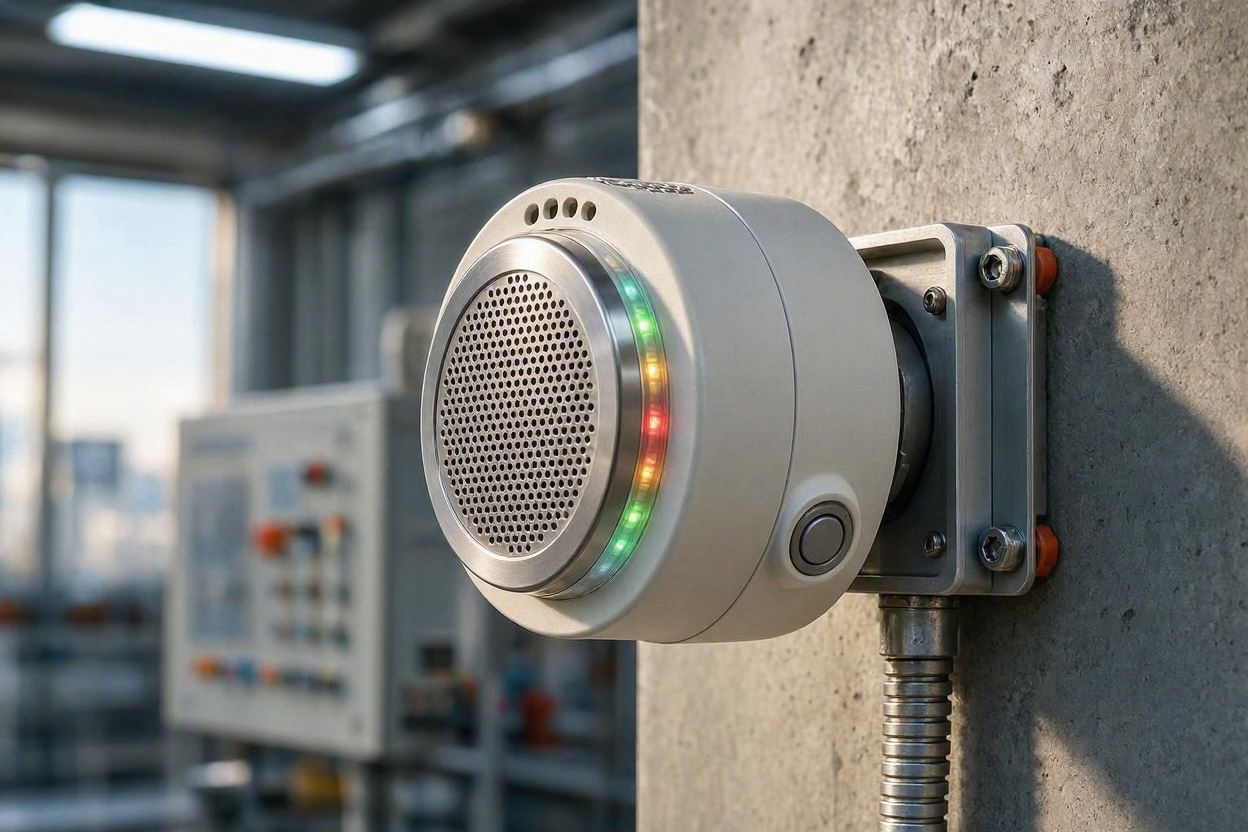
Gas Sensor Technology Innovation: Market Analysis and Technology Trends
Executive Summary
The global gas sensor technology is undergoing a significant transformation driven by technological innovation and increasing demand across diverse industries. According to Marketsandmarkets, the global gas sensor market was valued at USD 1.78 billion in 2025 and is projected to reach USD 3.20 billion by 2033, representing a robust compound annual growth rate (CAGR) of 7.6% from 2025 to 2030 . This growth trajectory reflects the escalating need for advanced gas detection solutions across industrial safety, environmental monitoring, smart city infrastructure, and consumer electronics applications. The market's expansion is fueled by stringent regulatory frameworks, rising awareness of air quality issues, and continuous technological breakthroughs in sensing materials and system integration. As industries and governments prioritize safety, sustainability, and real-time monitoring capabilities, gas sensor innovations are becoming indispensable across the global economic landscape. This comprehensive report examines the market dynamics, technological trends, and key players shaping the future of the gas sensor industry, providing stakeholders with actionable insights for strategic decision-making.
Download PDF Brochure @ https://www.marketsandmarkets.com/pdfdownloadNew.asp?id=245141093
Market Overview and Growth Dynamics
The gas sensor market demonstrates remarkable resilience and growth potential, underpinned by fundamental shifts in industrial safety protocols and environmental regulations. The market's valuation of USD 1.78 billion in 2025 establishes a strong foundation for expansion, with projections indicating sustained momentum through 2033. Key growth drivers include increasing demand for emission monitoring across industrial sectors, implementation of workplace safety regulations, and the proliferation of smart city initiatives worldwide . The integration of gas sensors into HVAC systems and building management platforms has created substantial market opportunities, particularly in developed economies where indoor air quality standards continue to tighten. Additionally, the automotive sector's adoption of cabin air quality monitoring systems and emission control technologies contributes significantly to market growth. The Asia Pacific region commands a dominant 35.6% revenue share, driven by rapid industrialization and automotive production in countries like China, Japan, and South Korea . This regional leadership is expected to persist, with Asia Pacific projected to experience the fastest growth rate during the forecast period, fueled by ongoing smart city development and expanding manufacturing capabilities.
Technological Innovations Reshaping the Market
Advanced Sensing Materials and Nanostructuring
Recent breakthroughs in gas sensor technology are revolutionizing detection capabilities, sensitivity, and selectivity. The development of metal-organic framework (MOF)-based sensors represents a significant advancement, offering enhanced porosity and conductivity for ultratrace gas detection . Template-directed synthesis approaches have enabled controlled fabrication of conductive MOF thin films with defined morphology and thickness, achieving detection limits as low as 350 ppb for nitrogen dioxide at room temperature . This innovation addresses traditional challenges of high-temperature operation and material degradation, paving the way for practical deployment in diverse environments. Nanostructured polypyrrole chemiresistive sensors, created through nanosphere templating, demonstrate improved sensitivity for ammonia detection by increasing the surface area available for gas-analyte interactions . These material innovations are critical for meeting emerging application requirements in healthcare, environmental monitoring, and industrial safety.
AI-Enabled and IoT-Integrated Sensing Platforms
The convergence of artificial intelligence, machine learning, and IoT connectivity is transforming gas sensor capabilities from simple detection devices to intelligent analytical systems. The BME688 "electronic nose" from Bosch Sensortec exemplifies this trend, utilizing AI-enabled signatures to detect food spoilage and forest-fire precursors . Pulse-driven MEMS heaters combined with deep neural networks achieve 100% identification accuracy across multiple gas types, including hydrogen, carbon monoxide, and ammonia . This integration of software analytics with hardware sensing platforms enables predictive maintenance, automated response systems, and remote monitoring capabilities that were previously impossible. The rise of firmware over-the-air updates represents a decisive differentiator, allowing continuous performance optimization and adaptation to changing environmental conditions. These intelligent sensing platforms are increasingly deployed in smart city infrastructure, industrial automation, and consumer IoT applications, creating a robust ecosystem that extends far beyond traditional gas detection use cases.
Energy-Efficient and Room-Temperature Operation
Power consumption has long been a critical limitation for gas sensors, particularly for portable and wearable applications. Recent innovations in LED-driven sensing technology address this challenge by eliminating the need for high-temperature operation. The Korea Research Institute of Standards and Science (KRISS) has developed a next-generation sensor using visible-light LED technology with Type-I heterojunction nanostructures that achieve exceptional sensitivity of 201.03 parts per trillion . This breakthrough enables room-temperature operation, reducing power consumption by orders of magnitude compared to conventional heated sensors. The technology demonstrates remarkable stability, maintaining performance over 300 days and under 80% humidity conditions, making it commercially viable for both industrial and consumer applications . As sensors become integrated into wearable devices, smartphones, and smartwatches, this low-power capability will enable new user-centered safety services, allowing individuals to monitor hazardous conditions in real-time along daily routes.
Holographic Sensing and Non-Invasive Detection
The holographic sensing technology segment is emerging as one of the fastest-growing areas in the gas sensor market, with a projected CAGR of 13.0% . This advanced technology offers highly precise, real-time gas detection without physical contact with the gas, making it particularly valuable for applications in chemical manufacturing, aerospace, and healthcare . The non-invasive nature of holographic sensors addresses critical safety concerns in hazardous environments while providing exceptional accuracy and reliability. Industries increasingly seek detection methods that minimize contamination risks, reduce maintenance requirements, and deliver continuous monitoring capabilities. The growing adoption of holographic sensing reflects a broader trend toward optical and spectroscopic technologies that offer superior selectivity and immunity to interfering substances, distinguishing them from traditional electrochemical and semiconductor approaches.
Miniaturization and MEMS Integration
Miniaturization continues to drive innovation across the gas sensor market, with MEMS (Micro-Electro-Mechanical Systems) technology enabling compact, cost-effective solutions for high-volume applications. Electrochemical sensors currently maintain the largest market share at 31.65%, offering proven field reliability and low initial cost . However, MEMS-semiconductor optical stacks are forecast to achieve a 15.60% CAGR, driven by their inherent selectivity, drift immunity, and compatibility with machine-learning-based pattern libraries . This technological shift is particularly pronounced in automotive, HVAC, and consumer IoT endpoints that demand calibration-free operation and extended operational life. The integration of multiple sensing principles into hybrid devices represents the next frontier, blending optical, electrochemical, and metal-oxide technologies within a single package to replace multiple discrete boards and streamline procurement processes. As sensor dimensions continue to shrink, new applications in medical diagnostics, environmental monitoring, and consumer electronics become viable, expanding the overall market opportunity.
Key Applications and End-Use Industries
Smart Cities and Building Automation: This segment holds the largest market share, driven by demand for energy-efficient infrastructure and real-time monitoring of air quality and emissions . Integration of gas sensors into building management systems enables automated ventilation control, energy optimization, and compliance with strict indoor air quality standards. Smart city initiatives across Asia Pacific and North America are accelerating deployment of connected gas-sensing networks for pollution management and public safety.
Industrial Safety and Process Control: Gas sensors remain essential for workplace safety across oil and gas, mining, chemical processing, and power generation sectors . Adoption of ISO 45001 and OSHA confined-space regulations mandate deployment of continuous fixed detectors and portable monitoring devices . Chemical processors and semiconductor cleanrooms are upgrading to MEMS arrays with self-calibration and cloud data logging capabilities, integrating with digital-twin platforms for predictive interventions that reduce downtime and insurance premiums.
Automotive and Transportation: Cabin air quality monitoring and emission control systems represent growing applications, particularly in Asia Pacific markets with high passenger car manufacturing volumes. The expansion of oxygen, carbon dioxide, carbon monoxide, and nitrogen oxide sensors in automotive applications continues to support regional market development, while Euro 7 regulations drive NOx after-treatment probe adoption across European vehicle platforms .
Healthcare and Medical Devices: Gas sensors are finding increasing applications in medical equipment, respiratory monitoring devices, and diagnostic instruments. The low-power, room-temperature operation of next-generation sensors enables integration into wearable health monitors and portable diagnostic tools, opening new opportunities for personalized healthcare solutions.
Regional Market Analysis
Asia Pacific: The region accounts for the largest revenue share (35.6% in 2024) and is projected to experience the highest CAGR, driven by smart city development, automotive manufacturing, and industrial expansion . China's smart-city blueprints mandate block-level pollution monitoring grids, India's ISO 45001 alignment fuels plant-floor retrofits, Japan's hydrogen-society ambitions accelerate sub-ppm safety monitor adoption, and South Korea's semiconductor expansions seed domestic MEMS supply chains . Local manufacturers like Figaro Engineering leverage component clustering and labor advantages to serve both export and internal markets.
North America: The United States leads technology development and manufacturing, hosting major players like MSA Safety and Amphenol Corporation. EPA Tier 3 exhaust limits, the Super Emitter Program, and Canada's 75% methane-reduction target drive demand for high-fidelity leak-detection networks and optical methane cameras . Oil-patch operators deploy networked sensing solutions, while battery-gigafactory expansions specify multi-gas electrochemical racks for worker protection.
Europe: Regulation remains the primary growth driver, with Euro 7 and EU methane regulations compelling continuous monitoring across vehicles and upstream energy operations . Germany's green-steel initiatives integrate oxygen and hydrogen gauges into closed-loop burners, while Scandinavian cities add NO2 and O3 sensors to bikeway air-quality signs over 5G networks.
Competitive Landscape
The gas sensor market features a diverse competitive landscape with established multinational players and emerging innovators. Honeywell International leads with a strong global presence and comprehensive gas sensor portfolio, supported by robust manufacturing capacity across Japan, China, Malaysia, and Europe . The company's position as preferred supplier for Tier-1 automotive and industrial OEMs reflects its supply reliability and technical expertise. Other key players include MSA Safety, Amphenol Corporation, Sensirion AG, ams-OSRAM AG, Figaro Engineering, and Alphasense . The competitive environment is characterized by continuous product innovation, strategic partnerships, and geographic expansion. Companies are investing heavily in IoT-enabled sensors, AI-powered analytics platforms, and advanced materials research to differentiate their offerings. Emerging leaders such as SIA MiPex are rapidly gaining momentum through focused product portfolios and agile development approaches . As the market transitions toward intelligent, connected, and multi-gas sensing solutions, competition will increasingly center on software capabilities, ecosystem integration, and value-added services rather than hardware specifications alone.
Find More Information on Gas Sensor Technology Innovation @ https://www.marketsandmarkets.com/Market-Reports/gas-sensor-market-245141093.html
80% of the Forbes Global 2000 B2B companies rely on MarketsandMarkets to identify growth opportunities in emerging technologies and use cases that will have a positive revenue impact.
- Food Packaging Market Size Set for Strong Growth Through 2030 Amid Rising Demand for Convenience Foods
- Crop Protection Chemical Market Size, Share & Growth Forecast (2025–2030)
- Mulch Films Market: Driving Sustainable Agriculture Through Innovation
- Agricultural Adjuvants Market Analysis, Trends, and Growth Outlook (2026–2031)
- Japan Enterprise Asset Management Market Growth: AI and Smart Infrastructure Drive Demand