Robotics Training Services Market Growth, Trends and Opportunities
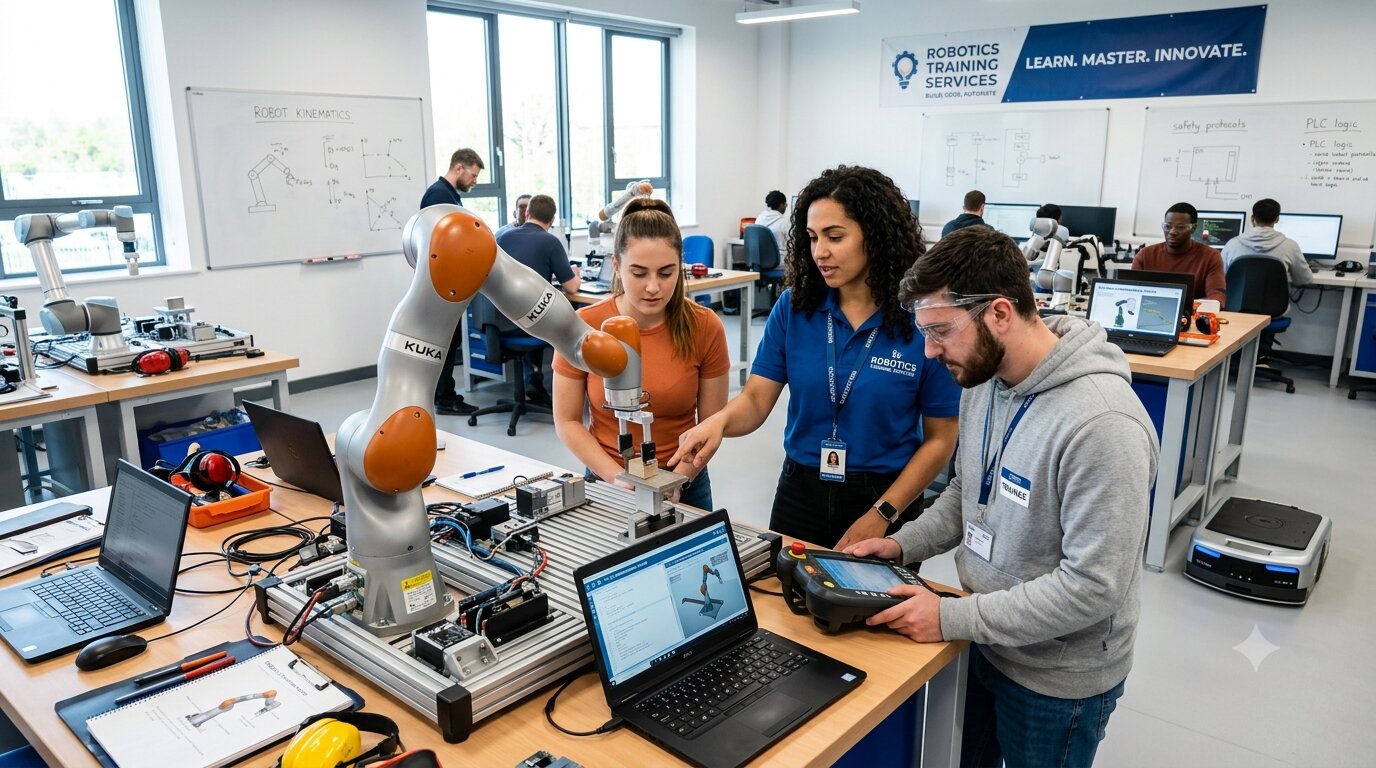
The robotics training services market is developing as organizations, educational institutions, and technology focused professionals seek practical capabilities in robotics design, programming, operation, maintenance, and integration. The increasing use of robots across manufacturing, healthcare, logistics, education, agriculture, and other industries is creating demand for structured learning programs. Training services help learners understand robotic systems while developing practical skills required for real world applications. These services range from introductory courses to advanced technical programs covering automation, programming, simulation, sensors, control systems, and robot maintenance. As robotics becomes increasingly connected with artificial intelligence and industrial automation, specialized training is becoming an important part of workforce development.
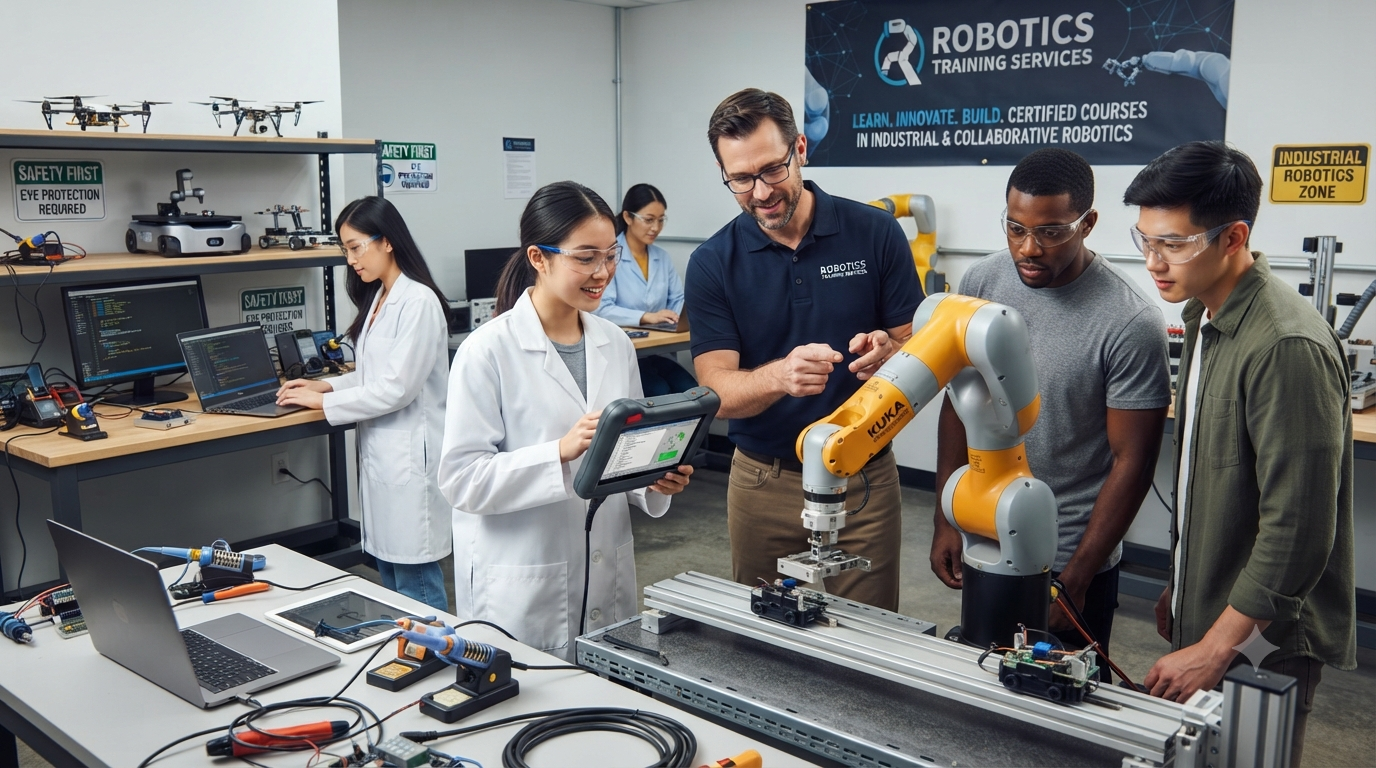
The expansion of automation is changing the type of skills required across technical occupations. Businesses increasingly need employees who can operate robotic equipment, troubleshoot automated systems, analyze performance, and participate in robotics integration projects. Educational organizations are also incorporating robotics into engineering and vocational learning to prepare students for technology oriented careers. This combination of professional demand and academic adoption is supporting the development of the robotics training services market. Training providers are responding by offering flexible learning formats, practical laboratories, simulation environments, instructor led sessions, and online learning modules. The market therefore connects robotics technology development with the human expertise needed to deploy and manage robotic systems effectively.
The service robot market is projected to reach USD 98.65 billion by 2029 from USD 47.10 billion in 2024, at a CAGR of 15.9% from 2024 to 2029.
Download PDF Brochure @ https://www.marketsandmarkets.com/pdfdownloadNew.asp?id=681
Key Drivers Supporting Market Development
One of the primary factors influencing the robotics training services market is the growing adoption of automation. Companies across multiple industries are using robotic systems to improve production consistency, reduce repetitive manual activities, enhance workplace safety, and increase operational efficiency. However, successful deployment requires employees with appropriate technical knowledge. Workers must understand programming interfaces, robotic movement, sensors, safety procedures, maintenance requirements, and system integration. Training services provide organizations with a structured way to develop these capabilities. As the installed base of robotic systems expands, the requirement for trained personnel is also becoming more significant.
Another important driver is the increasing complexity of modern robotic platforms. Contemporary robots can combine machine vision, sensors, artificial intelligence, connectivity, and advanced control technologies. Operating these systems requires knowledge that goes beyond basic mechanical skills. Training programs are consequently expanding their curriculum to include programming, data handling, simulation, artificial intelligence concepts, robotic perception, and automation workflows. The need to continuously update employee capabilities is creating recurring opportunities for training providers. Organizations can use these programs to reskill existing employees instead of relying entirely on external technical specialists.
Growing Role of Robotics in Education
Education is becoming an important application area for robotics training. Schools, colleges, universities, technical institutes, and vocational organizations are introducing robotics programs to develop problem solving, programming, engineering, and analytical skills. Students can learn through hands on projects that involve building, programming, testing, and improving robotic systems. This practical approach helps connect theoretical concepts with real world engineering applications.
The educational segment of the robotics training services market includes beginner programs as well as specialized technical education. Introductory courses may focus on basic robotics concepts, while advanced programs can address industrial automation, robot programming, computer vision, autonomous navigation, and system integration. Project based learning is particularly relevant because it allows learners to understand how individual components interact within a complete robotic system. Robotics competitions, laboratory activities, virtual simulations, and collaborative projects are also contributing to greater exposure to the technology.
Corporate Training and Workforce Development
Businesses are increasingly treating robotics training as part of broader workforce development strategies. When a company introduces automated equipment, employees may need to acquire new competencies before they can operate or maintain the technology. Training services can support different employee groups, including machine operators, engineers, technicians, maintenance teams, supervisors, and automation specialists.
Corporate training can be customized according to an organization's equipment, production environment, and operational objectives. Programs may combine classroom instruction with practical exercises to provide a more complete learning experience. Some organizations also use continuous training models because robotics technology and software platforms evolve rapidly. This creates demand for refresher courses, advanced modules, certification programs, and specialized technical workshops.
Online and Hybrid Learning Models
Digital learning is changing how robotics education is delivered. Online courses allow learners to access educational material without being physically present in a training facility. Video lessons, interactive content, programming exercises, virtual laboratories, and simulation software can provide learners with exposure to robotics concepts from different locations.
Hybrid learning combines online theory with physical laboratory sessions. This model can be particularly useful for robotics because learners need both conceptual knowledge and hands on experience. Virtual simulations allow users to experiment with robotic movements, programming logic, and automation sequences before working with physical equipment. The growing availability of these technologies is expanding accessibility and contributing to the evolution of the robotics training services market.
Important Training Areas in Robotics
Robotics training covers a broad collection of technical and operational subjects. The curriculum generally depends on the learner's experience, industry requirements, and type of robotic system involved.
Key training areas include:
- Robotics fundamentals and mechanical principles
- Robot programming and simulation
- Sensors and machine vision
- Industrial automation and control systems
- Artificial intelligence and autonomous robotics
- Robot installation and commissioning
- Maintenance and troubleshooting
- Robotics safety and operational procedures
Training programs may also cover communication protocols, robotic operating systems, motion planning, data analysis, programming languages, and integration with manufacturing equipment. Advanced learners may work on autonomous navigation, collaborative robotics, computer vision, and intelligent automation. The diversity of these subjects allows training providers to serve students, professionals, technicians, and organizations with different requirements.
Application Areas Creating Training Demand
Manufacturing remains an important environment for robotics skills because robotic systems are widely used for activities such as assembly, welding, material handling, packaging, inspection, and quality control. Employees working with these systems require appropriate technical training to ensure efficient and safe operation.
Logistics and warehousing are also creating new learning requirements as automated mobile systems, robotic picking solutions, sorting equipment, and autonomous platforms become more common. Healthcare applications require specialized knowledge because medical robots operate within highly controlled environments. Agriculture is another emerging area where robotics can support crop monitoring, harvesting, spraying, and other activities. These applications require training programs designed around different operating conditions and technical requirements.
The growing range of applications is making the robotics training services market increasingly diverse. Instead of focusing exclusively on industrial robots, training providers can address educational robotics, service robots, mobile robots, collaborative systems, medical applications, agricultural robotics, and autonomous platforms. This diversification creates opportunities for specialized learning programs.
Role of Artificial Intelligence in Robotics Training
Artificial intelligence is increasingly influencing robotics education. Intelligent robotic systems can process information from sensors, identify objects, understand environments, and make decisions based on programmed or learned models. As these capabilities become more common, robotics professionals need knowledge of artificial intelligence alongside traditional robotics engineering.
Training programs are therefore introducing concepts such as machine learning, computer vision, neural networks, autonomous decision making, and intelligent control. Learners can use simulations and practical projects to understand how artificial intelligence can improve robotic performance. The integration of AI is also creating demand for interdisciplinary training that combines mechanical engineering, electronics, software development, data science, and automation.
Importance of Practical and Simulation Based Training
Practical training remains essential because robotics involves interaction between hardware and software. Reading technical material alone may not provide enough experience to understand how a robot behaves under different operating conditions. Laboratory exercises allow learners to program systems, configure sensors, identify errors, and evaluate robotic performance.
Simulation platforms provide another important learning environment. Learners can test programs and robotic movements in virtual environments before applying them to physical equipment. This can reduce equipment dependency and provide opportunities to repeat complex exercises. Simulation is particularly useful for advanced training involving industrial automation, autonomous navigation, and multi robot systems.
Challenges Affecting Market Expansion
The robotics training services market faces several challenges despite increasing demand. One major issue is the cost associated with establishing practical robotics laboratories. Physical robots, controllers, sensors, safety equipment, simulation systems, and supporting infrastructure can require significant investment. This can make advanced training difficult for smaller educational organizations and businesses.
Another challenge is the shortage of instructors with both theoretical knowledge and practical robotics experience. Robotics is multidisciplinary, requiring expertise across mechanical engineering, electronics, programming, automation, and artificial intelligence. Finding instructors capable of teaching these areas effectively can be difficult.
Rapid technological change presents another challenge. Training material can become outdated when robotic platforms, programming environments, or automation methods change. Providers therefore need to update curricula regularly. Maintaining relevant equipment and software is also important for delivering industry aligned training.
Opportunities for Training Providers
There are substantial opportunities for organizations that can deliver flexible, practical, and specialized robotics education. Customized corporate programs can address specific operational requirements, while modular online courses can reach a broader learner base. Certification programs can provide structured pathways for professionals seeking to demonstrate technical knowledge.
Training providers can also develop specialized programs around areas such as autonomous mobile robotics, collaborative robots, machine vision, AI enabled robotics, robotic process automation, and industrial automation. Partnerships with educational institutions and technology organizations can help expand access to equipment, laboratories, and specialized instructors.
Another opportunity lies in lifelong learning. Robotics professionals may require continuous education as new technologies enter workplaces. Short refresher courses and advanced certification modules can help employees maintain relevant capabilities throughout their careers. This recurring demand can contribute to sustained development of the robotics training services market.
Regional Development and Skill Ecosystems
Demand for robotics training varies across regions depending on industrialization, educational infrastructure, automation adoption, and workforce requirements. Regions with strong manufacturing and engineering ecosystems often have greater demand for industrial robotics education. Areas investing in digital transformation and advanced manufacturing are also creating new opportunities for technical training.
Developing markets can benefit from robotics education by building specialized workforce capabilities. Training institutions can support this process through vocational programs, university courses, online learning, and industry oriented certification. Government supported skill development initiatives may also contribute to the availability of robotics education, although the scale and structure of such programs vary by region.
Future Direction of Robotics Training
The future of the robotics training services market is likely to be shaped by greater integration between robotics, artificial intelligence, cloud technologies, simulation, and digital learning. Training programs are expected to become increasingly modular, allowing learners to select courses based on their existing skills and career requirements.
Immersive learning technologies can also provide new ways to teach robotics. Virtual and augmented environments can allow learners to interact with simulated robotic equipment and understand complex operating procedures. Remote laboratories may further expand access to physical robotic systems by enabling learners to control equipment from different locations.
The distinction between robotics training and broader automation education may also become less pronounced. Professionals increasingly need combined knowledge of robotics, industrial control, software, data, and artificial intelligence. Training providers that address these interconnected skills can support the evolving requirements of modern workplaces.
Conclusion
The robotics training services market is developing alongside the broader adoption of robotics and automation across industrial, educational, commercial, and specialized applications. Organizations need trained employees who can program, operate, maintain, integrate, and manage robotic systems effectively. Educational institutions are also using robotics to prepare learners for technology focused careers.
Online learning, simulation, practical laboratories, corporate education, and specialized certification are expanding the range of training options available to learners. At the same time, high equipment costs, instructor shortages, and rapid technological changes remain important challenges. As robotics continues to become more intelligent and interconnected, training will increasingly require a combination of mechanical, electronic, software, automation, and artificial intelligence skills. These developments are expected to keep the robotics training services market closely connected with workforce transformation and technological advancement.
FAQs
What is the robotics training services market?
The robotics training services market includes educational and professional services designed to teach individuals and organizations how to understand, program, operate, maintain, integrate, and manage robotic systems. Services can be delivered through classroom, laboratory, online, hybrid, and simulation based formats.
Why is robotics training becoming important?
Robotics adoption requires skilled personnel who can operate equipment, troubleshoot technical problems, program robotic systems, and maintain safe working environments. Training helps organizations develop these capabilities while helping students and professionals prepare for robotics related careers.
Who uses robotics training services?
Students, engineers, technicians, machine operators, maintenance professionals, automation specialists, educators, and corporate employees can use robotics training services. The content is generally adapted according to the learner's technical background and application requirements.
What subjects are covered in robotics training?
Common subjects include robotics fundamentals, programming, sensors, machine vision, automation, control systems, robot maintenance, safety, simulation, artificial intelligence, autonomous navigation, and system integration.
How does simulation support robotics education?
Simulation allows learners to practice programming and robotic operations within virtual environments. It can provide opportunities to test different scenarios, identify programming issues, and understand robotic behavior before working with physical equipment.
Is online robotics training effective?
Online training can be effective for theoretical concepts, programming instruction, simulations, and introductory learning. Practical laboratory sessions can complement online education when learners need direct experience with physical robotic equipment.
What industries require robotics training?
Manufacturing, logistics, healthcare, agriculture, education, warehousing, automotive operations, electronics production, and other technology intensive industries can require robotics skills. Training requirements differ according to the type of robotic system and application.
What is the role of AI in robotics training?
Artificial intelligence is expanding the scope of robotics education by introducing concepts such as machine learning, computer vision, intelligent control, autonomous decision making, and robotic perception. Modern training can therefore combine traditional robotics concepts with AI based technologies.
What challenges affect robotics training providers?
Major challenges include equipment costs, access to advanced laboratories, instructor availability, curriculum updates, software changes, and the need to provide practical experience. Training providers must continuously adapt their programs to changing robotics technologies.
80% of the Forbes Global 2000 B2B companies rely on MarketsandMarkets to identify growth opportunities in emerging technologies and use cases that will have a positive revenue impact.
- Food Packaging Market Size Set for Strong Growth Through 2030 Amid Rising Demand for Convenience Foods
- Crop Protection Chemical Market Size, Share & Growth Forecast (2025–2030)
- Mulch Films Market: Driving Sustainable Agriculture Through Innovation
- Agricultural Adjuvants Market Analysis, Trends, and Growth Outlook (2026–2031)
- Japan Enterprise Asset Management Market Growth: AI and Smart Infrastructure Drive Demand