

Smart Sports Wearable Market Emerging Technologies, Innovation Trends, and Digital Transformation
The smart sports wearable market is evolving rapidly as athletes, fitness enthusiasts, and active consumers increasingly use connected devices to understand performance, health, and training patterns. Smartwatches, fitness trackers, smart clothing, headwear, and smart shoes are combining sensors, connectivity, software, and analytics into increasingly integrated platforms. These devices can collect information related to movement, heart rate, location, sleep, recovery, and workout intensity. The broader adoption of connected fitness technologies is also expanding the role of wearable devices beyond basic activity tracking. Current industry analysis identifies fitness tracking, sports performance, health monitoring, navigation, and biometric analysis as important application areas.
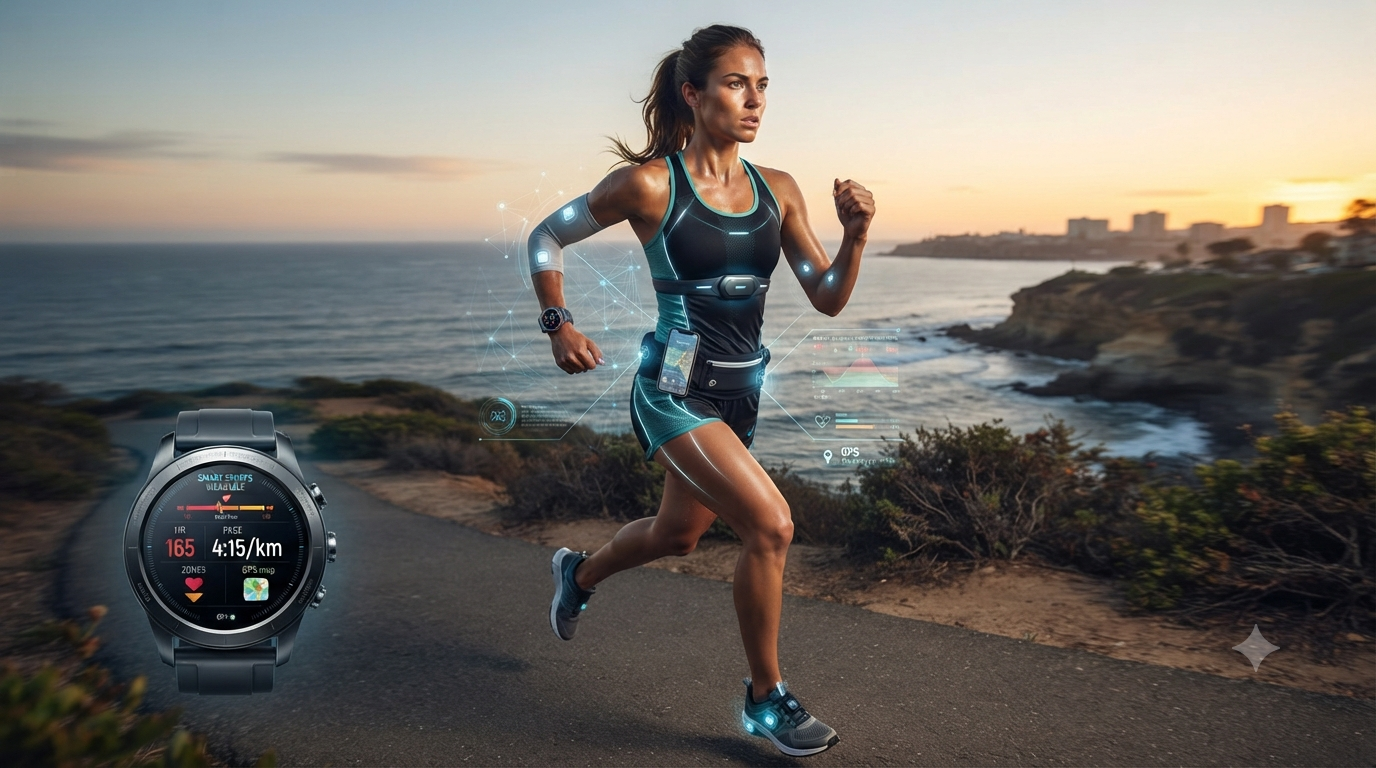
The transformation of the smart sports wearable market is closely associated with improvements in sensors, wireless connectivity, artificial intelligence, battery technologies, and mobile applications. Earlier fitness devices primarily counted steps or measured basic exercise activity, while modern systems can process multiple physiological and movement parameters simultaneously. Users increasingly expect actionable information instead of simply receiving raw data. This shift is encouraging developers to create platforms capable of interpreting activity patterns and presenting personalized insights. As connected ecosystems mature, wearable devices are becoming important components of digital fitness and sports technology environments.
According to Marketsandmarkets, the global wearable technology market size is projected to grow from USD 104.95 Billion in 2026 to USD 238.71 billion by 2032, growing at a CAGR of 14.7% from 2026 to 2032.
Download PDF Brochure @ https://www.marketsandmarkets.com/pdfdownloadNew.asp?id=983
Advanced Sensors Transform Sports Performance Monitoring
Sensor innovation is one of the most important technological developments influencing the smart sports wearable market. Modern wearable devices can incorporate accelerometers, gyroscopes, optical heart rate sensors, GPS modules, temperature sensors, and other sensing technologies. Combining data from multiple sensors allows devices to provide more detailed information about movement, training intensity, distance, speed, and physiological responses. Improvements in sensor miniaturization are also helping manufacturers develop lighter and more comfortable products. This is particularly important for athletes who may wear devices for extended periods during training and competition.
The growing use of multisensor architectures is also changing how sports data is interpreted. Instead of relying on a single measurement, devices can combine movement, heart rate, location, and workout information to create a broader picture of athletic activity. Advanced algorithms can identify patterns that may not be obvious from individual measurements. This creates opportunities for more personalized training recommendations and recovery analysis. Sensor accuracy, power efficiency, durability, and comfort are therefore becoming important areas of innovation across the smart sports wearable market.
Artificial Intelligence Enables Personalized Fitness
Artificial intelligence is becoming increasingly relevant to the smart sports wearable market because it enables devices to transform large volumes of collected data into personalized insights. AI and machine learning algorithms can analyze historical activity, exercise intensity, recovery patterns, and individual goals to generate customized recommendations. Industry sources identify AI integration as an emerging trend in wearable technology, particularly for personalized fitness and health insights.
AI can also support adaptive training experiences. A wearable platform may identify changes in activity patterns and adjust recommendations according to an individual's recent workouts and recovery information. Instead of providing identical guidance to every user, intelligent systems can increasingly consider personal characteristics and historical performance. This creates opportunities for more engaging digital fitness experiences. As AI capabilities improve, the smart sports wearable market is likely to place greater emphasis on intelligent interpretation rather than simple data collection.
Health Monitoring Expands Wearable Applications
The convergence of sports technology and health monitoring is broadening the applications of smart wearable devices. Modern wearables can track metrics such as heart rate, sleep patterns, heart rate variability, blood oxygen levels, activity levels, and other physiological indicators depending on the device. Industry analysis highlights health monitoring as an important application area alongside fitness and performance tracking.
This development is creating a more continuous approach to personal wellness. Users can observe changes in their activity and recovery patterns over time rather than relying only on individual workout sessions. Wearables can also encourage healthier habits by providing reminders, progress information, and activity goals. However, health related wearable information needs to be interpreted carefully because consumer devices are not automatically equivalent to clinical diagnostic equipment. Data quality, validation, privacy, and responsible communication will remain important considerations as health functionality expands within the smart sports wearable market.
Connected Fitness Creates Integrated Ecosystems
Connectivity is another major factor influencing the smart sports wearable market. Bluetooth, GPS, WiFi, smartphones, cloud platforms, and application ecosystems allow wearable devices to communicate with multiple digital services. Users can synchronize workout data across smartphones, computers, fitness applications, and other connected devices. This creates a continuous flow of information between the wearable and the wider digital environment.
Connected ecosystems also improve user engagement by allowing information to be accessed across multiple platforms. A runner may use a wearable during a workout, review performance information through a smartphone application, and analyze long term progress through a web dashboard. For sports organizations and training environments, connected platforms can facilitate centralized monitoring and performance analysis. As interoperability improves, the value of wearable devices increasingly depends on how effectively hardware, software, applications, and cloud based services work together.
Smart Clothing Introduces Flexible Wearable Technology
Smart clothing is emerging as an important area of innovation within the smart sports wearable market. Unlike conventional wrist worn devices, smart clothing can integrate sensors directly into garments. These technologies can potentially monitor movement, body position, physiological signals, and other performance parameters while maintaining a natural form factor. Smart shirts, shorts, socks, and other connected apparel can therefore provide new ways to collect sports data.
The development of conductive fabrics, flexible electronics, miniaturized sensors, and wireless communication technologies is supporting this transition. Smart clothing may be particularly valuable when wrist based devices cannot capture specific movement or body related information effectively. Comfort and durability remain critical because sports apparel must withstand repeated movement, washing, moisture, and physical stress. Continued improvements in textile technology could therefore create new product categories and applications across the smart sports wearable market.
Sports Specific Devices Improve Training Insights
The demand for sports specific technology is influencing product development across the smart sports wearable market. Different sports require different measurements, meaning a general purpose fitness tracker may not provide all the information needed by a particular athlete. Running, cycling, swimming, football, tennis, golf, and other activities can involve different performance indicators and training requirements.
Specialized wearables can therefore focus on metrics relevant to specific activities. Running focused systems may emphasize pace, distance, cadence, and heart rate, while cycling solutions can provide information related to speed, location, and training intensity. Sports specific technologies can also combine wearable data with coaching platforms to provide more detailed performance analysis. This specialization creates opportunities for devices that deliver more meaningful information for athletes with particular training objectives.
Recovery Tracking Becomes a Key Innovation Area
Sports performance increasingly involves balancing training intensity with adequate recovery. As a result, recovery tracking is becoming an important part of the smart sports wearable market. Wearable platforms can combine information such as sleep, heart rate variability, activity levels, and training intensity to provide insights into recovery patterns.
Recovery focused features can help users understand how their daily habits relate to exercise performance. Instead of concentrating exclusively on workout duration or calories burned, users can consider sleep quality, rest periods, and changes in physiological indicators. This broader perspective supports a more comprehensive approach to fitness. Continued improvements in algorithms and sensor technologies may enable wearables to provide increasingly personalized recovery information while maintaining appropriate limitations around health interpretation.
Data Analytics Supports Better Decision Making
The growing volume of data generated by wearable devices is increasing the importance of analytics within the smart sports wearable market. A wearable may generate information throughout workouts and everyday activities, creating large datasets that can be difficult to interpret manually. Analytics platforms help organize this information into dashboards, trends, comparisons, and personalized insights.
Advanced analytics can also support longitudinal performance analysis. Users can compare current activity with previous sessions and identify patterns in training intensity, recovery, and performance. Coaches and professional sports organizations can use aggregated data to support training decisions when appropriate data governance and consent processes are in place. This evolution is moving wearable technology from simple tracking toward data driven sports performance management.
Key Trends Shaping the Smart Sports Wearable Market
Several technology and consumer trends are influencing the direction of the smart sports wearable market. These trends reflect the transition from basic activity tracking toward intelligent, connected, and personalized sports technology.
• Artificial intelligence is enabling personalized recommendations and automated analysis of fitness data.
• Advanced sensors are improving the ability to monitor movement, physiological signals, and training activity.
• Smart clothing is expanding wearable technology beyond traditional wrist based devices.
• Connected applications are integrating wearable information with broader digital fitness ecosystems.
• Recovery and wellness tracking are becoming increasingly important alongside conventional performance metrics.
These developments are encouraging manufacturers and technology developers to focus on user experience, accuracy, personalization, and long term engagement. The combination of hardware innovation and software intelligence is particularly important because consumers increasingly expect wearable devices to provide understandable and useful insights rather than simply collecting information.
Role of IoT in Connected Sports Technology
The Internet of Things is supporting greater connectivity across the smart sports wearable market. IoT enabled wearables can exchange information with smartphones, cloud platforms, fitness equipment, smart environments, and other connected devices. This connectivity allows data to move between different systems and supports more integrated fitness experiences. Industry analysis has identified IoT connectivity as an important trend in the development of connected sports wearables.
IoT can also support connected training environments. A wearable could interact with exercise equipment or digital coaching applications to create a more synchronized workout experience. Sports facilities may use connected technologies to provide personalized training environments and collect aggregated performance information. As connectivity becomes more seamless, interoperability and data security will become increasingly important to maintaining user trust.
Battery Technology Remains Important
Battery performance continues to influence the usability of smart wearable devices. Advanced sensors, GPS, wireless communication, displays, and continuous monitoring features can increase energy consumption. Users generally expect wearable devices to remain operational for long periods without frequent charging. Battery limitations have therefore been identified as an ongoing challenge for advanced wearable technology.
Innovation in battery materials, low power processors, energy efficient sensors, and software optimization can help address these challenges. Device manufacturers can also improve efficiency by intelligently controlling sensors according to user activity. Longer battery life can increase the usefulness of continuous monitoring because users are less likely to interrupt data collection for charging. Consequently, energy efficiency remains a key consideration in product design across the smart sports wearable market.
Data Privacy and Security Become Critical
Wearable devices can collect highly personal information related to physical activity, location, sleep, and physiological characteristics. This makes data privacy and cybersecurity important considerations for the smart sports wearable market. Consumers increasingly want transparency about what information is collected, how it is stored, and how it is shared. Industry analysis also identifies data privacy concerns as a significant challenge for wearable technology adoption.
Strong authentication, encryption, transparent privacy policies, secure cloud infrastructure, and appropriate data controls can help improve user confidence. Developers also need to consider how information is transferred between wearable devices, smartphones, applications, and third party platforms. Privacy by design can become an important differentiator as wearable ecosystems become more interconnected. Maintaining consumer trust will remain essential as devices collect increasingly detailed personal information.
Regional Adoption and Digital Fitness Growth
Adoption patterns across regions are influenced by consumer awareness, technology infrastructure, disposable income, sports participation, and access to connected services. North America has historically represented a significant market for smart sports wearables, supported by strong consumer interest in fitness technology and connected devices. Industry analysis has also identified Asia Pacific as an important region for wearable technology development and adoption.
Emerging markets are creating additional opportunities as smartphones, mobile applications, digital payments, and connected fitness platforms become more accessible. Consumers in these markets are increasingly interested in affordable devices that combine multiple functions. Product localization, pricing strategies, language support, battery performance, and mobile ecosystem compatibility can influence adoption. These regional differences create diverse opportunities for the smart sports wearable market.
Future Innovation in Smart Sports Wearables
Future innovation in the smart sports wearable market is expected to focus on greater personalization, improved sensing, seamless connectivity, and more intelligent data interpretation. Devices are increasingly moving toward continuous and context aware monitoring rather than isolated workout measurements. Advances in flexible electronics and smart textiles could introduce new wearable formats that are less dependent on conventional hardware designs.
Artificial intelligence is also likely to remain central to software development. Intelligent systems can help users interpret complex performance information and identify patterns across multiple types of data. Augmented reality may also create new possibilities for training by delivering real time visual information during sports activities. Industry sources have already identified AI, IoT, smart materials, and augmented reality as emerging areas influencing wearable innovation.
Opportunities for Digital Transformation
Digital transformation is changing the smart sports wearable market from a device focused industry into a broader ecosystem involving hardware, software, analytics, applications, connectivity, and digital services. Businesses can explore opportunities by improving sensor accuracy, developing specialized sports solutions, integrating intelligent analytics, and creating connected fitness platforms.
Another opportunity lies in improving user engagement. Wearable devices need to provide meaningful information without overwhelming users with excessive data. Simple dashboards, personalized recommendations, clear progress indicators, and actionable insights can improve the overall experience. Sustainability can also influence future product development through durable designs, efficient components, recyclable materials, and longer product lifecycles. These developments can help shape the next stage of innovation in the smart sports wearable market.
Conclusion
The smart sports wearable market is undergoing significant technological transformation as sensors, artificial intelligence, IoT connectivity, smart textiles, and advanced analytics become increasingly integrated into sports technology. Wearables are evolving from basic activity trackers into intelligent platforms capable of supporting fitness monitoring, sports performance analysis, recovery tracking, and personalized digital experiences. This evolution is expanding the role of connected devices across professional and recreational sports.
Future development will depend on improvements in accuracy, battery efficiency, privacy, interoperability, comfort, and intelligent data interpretation. The integration of hardware and software will remain central to delivering useful experiences for athletes and fitness enthusiasts. As consumers increasingly seek personalized and connected approaches to fitness, smart sports wearables can continue to play an important role in the broader digital transformation of sports and wellness.
FAQs
What is the smart sports wearable market?
The smart sports wearable market includes connected devices designed to monitor fitness, sports performance, health related indicators, movement, location, and other activity information. These products can include smartwatches, fitness trackers, smart clothing, smart shoes, headwear, and other wearable technologies.
What technologies are used in smart sports wearables?
Smart sports wearables commonly use technologies such as GPS, accelerometers, gyroscopes, optical sensors, Bluetooth, wireless connectivity, advanced processors, artificial intelligence, and mobile applications. The combination of these technologies enables devices to collect and interpret different types of sports and fitness data.
How is AI changing smart sports wearables?
AI can analyze information collected from wearable sensors and generate personalized insights. It can support customized workout recommendations, activity analysis, performance monitoring, recovery insights, and other intelligent features based on individual patterns and goals.
What are the major applications of smart sports wearables?
Major applications include fitness and activity tracking, sports performance enhancement, health monitoring, navigation and location tracking, biometric analysis, training assistance, and recovery monitoring. The applications vary depending on the type of wearable and its intended user.
What are the major challenges in smart sports wearables?
Important challenges include battery limitations, data privacy, cybersecurity, sensor accuracy, device comfort, interoperability, and the responsible interpretation of health related information. Addressing these issues is important for maintaining user confidence and long term adoption.
How are smart clothing technologies influencing sports wearables?
Smart clothing integrates sensors and electronic components into garments, enabling data collection from different parts of the body. This approach can provide new forms of movement and physiological monitoring while offering an alternative to traditional wrist worn devices.
Why is recovery tracking important?
Recovery tracking provides information that can help users understand the relationship between training activity, rest, sleep, and physiological responses. It expands wearable functionality beyond workout measurement and supports a broader approach to fitness management.
What is the role of IoT in smart sports wearables?
IoT enables wearable devices to communicate with smartphones, applications, cloud platforms, fitness equipment, and other connected systems. This connectivity supports synchronized data, integrated fitness experiences, and more comprehensive digital sports ecosystems.
80% of the Forbes Global 2000 B2B companies rely on MarketsandMarkets to identify growth opportunities in emerging technologies and use cases that will have a positive revenue impact.
- Food Packaging Market Size Set for Strong Growth Through 2030 Amid Rising Demand for Convenience Foods
- Crop Protection Chemical Market Size, Share & Growth Forecast (2025–2030)
- Mulch Films Market: Driving Sustainable Agriculture Through Innovation
- Agricultural Adjuvants Market Analysis, Trends, and Growth Outlook (2026–2031)
- Japan Enterprise Asset Management Market Growth: AI and Smart Infrastructure Drive Demand

.jpg)
