

Aircraft Seating Technology Innovation: Key Trends, Growth Drivers, and Future Opportunities
Introduction to Aircraft Seating Technology
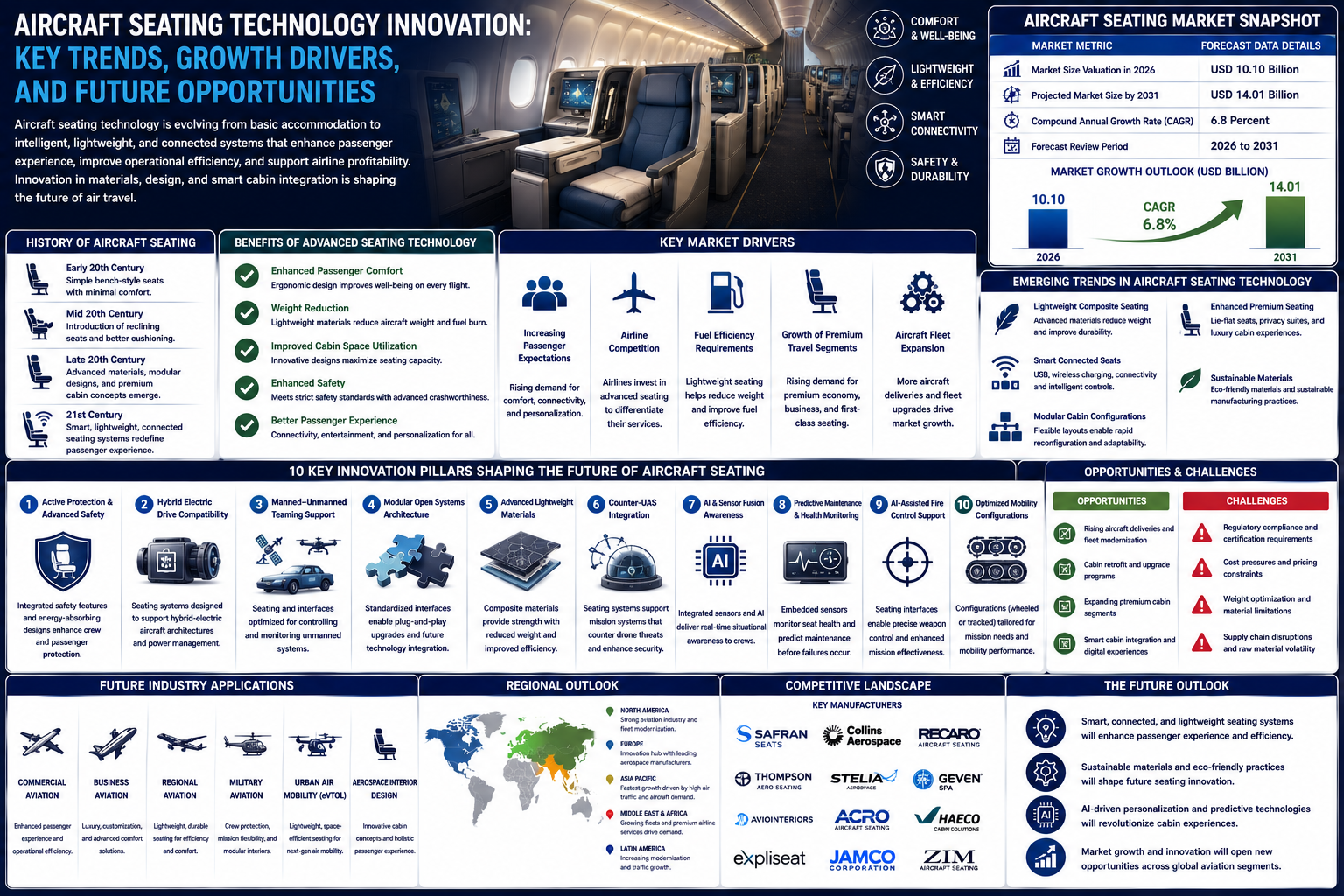
Aircraft Seating Technology has evolved from basic passenger accommodation to a critical component of the overall air travel experience. Modern aircraft seats are designed not only to provide comfort and safety but also to enhance passenger satisfaction, maximize cabin efficiency, reduce aircraft weight, and support airline profitability.
As airlines compete to improve customer experience while optimizing operational performance, aircraft seating manufacturers are introducing innovative solutions that combine advanced materials, ergonomic designs, connectivity features, and space-saving configurations. From premium business-class suites and lie-flat seats to lightweight economy seating and smart cabin technologies, seating innovation is reshaping the future of commercial aviation.
Today, aircraft seating technology plays a vital role in passenger comfort, fuel efficiency, cabin customization, and next-generation airline service strategies.
History of Aircraft Seating Technology
The evolution of aircraft seating has closely followed the growth of commercial aviation. Early aircraft featured simple seating arrangements with limited attention to comfort or ergonomics. As air travel became more accessible and passenger expectations increased, airlines began investing in improved seat designs and cabin layouts.
The introduction of reclining seats, enhanced cushioning, adjustable headrests, and premium cabin products marked significant advancements in passenger comfort. Over the past two decades, aircraft seating technology has progressed further with lightweight composite materials, modular seat architectures, integrated entertainment systems, and smart cabin connectivity features.
Today’s aircraft seats are engineered using advanced aerospace technologies to balance comfort, durability, safety, and operational efficiency.
Benefits of Aircraft Seating Technology
Modern aircraft seating technology provides numerous advantages for airlines and passengers alike.
1. Enhanced Passenger Comfort
Ergonomically designed seats improve passenger well-being during both short-haul and long-haul flights.
2. Weight Reduction
Lightweight seating systems help reduce aircraft weight, improving fuel efficiency and lowering operating costs.
3. Improved Cabin Space Utilization
Advanced seat designs enable airlines to maximize seating capacity without significantly compromising passenger comfort.
4. Enhanced Safety
Modern seating systems comply with stringent aviation safety standards while incorporating advanced crashworthiness features.
5. Better Passenger Experience
Integrated connectivity, charging ports, entertainment systems, and customizable seating options contribute to a superior travel experience.
Current Market Size and Growth Trends of the Aircraft Seating Industry
The aircraft seating market has experienced significant growth due to increasing air passenger traffic, airline fleet expansion, aircraft deliveries, and growing demand for enhanced cabin experiences.
According to MarketsandMarkets, the Global Aircraft Seating Market Size was valued at USD 10.10 billion in 2026 and is projected to reach USD 14.01 billion by 2031, growing at a CAGR of 6.8% from 2026 to 2031.
This growth is being driven by several important factors:
-
Rising global air passenger traffic
-
Expansion of commercial airline fleets
-
Growing demand for premium economy and business-class seating
-
Increasing aircraft production and deliveries
-
Airline investments in cabin modernization programs
-
Adoption of lightweight seating materials
-
Growing focus on passenger comfort and personalized travel experiences
Key Drivers and Factors Influencing the Future of Aircraft Seating Technology
Several factors are shaping the future of aircraft seating innovation.
1. Increasing Passenger Expectations
Modern travelers increasingly expect greater comfort, connectivity, and personalized cabin experiences.
2. Airline Competition
Airlines are investing in advanced seating solutions to differentiate their services and improve customer satisfaction.
3. Fuel Efficiency Requirements
Reducing aircraft weight through lightweight seating designs helps airlines improve operational efficiency.
4. Growth of Premium Travel Segments
Premium economy, business-class, and first-class seating innovations continue to drive market growth.
5. Aircraft Fleet Expansion
Growing aircraft orders and fleet modernization initiatives support increasing demand for advanced seating systems.
Emerging Trends in Aircraft Seating Technology
The future of aircraft seating is being shaped by several exciting trends and innovations.
1. Lightweight Composite Seating
Manufacturers are increasingly utilizing advanced composite materials to reduce seat weight while maintaining structural strength.
2. Smart Connected Seats
Modern aircraft seats are incorporating USB charging ports, wireless charging, passenger connectivity, and intelligent controls.
3. Modular Cabin Configurations
Airlines are adopting modular seating architectures that allow rapid cabin reconfiguration based on operational needs.
4. Enhanced Premium Seating Solutions
Business-class suites, lie-flat seats, privacy doors, and luxury seating concepts continue to evolve.
5. Sustainable Seating Materials
Manufacturers are exploring eco-friendly materials and sustainable manufacturing processes to reduce environmental impact.
Opportunities and Challenges in the Aircraft Seating Market
The aircraft seating market presents significant opportunities while facing several industry challenges.
Opportunities
1. Rising Aircraft Deliveries
Growing demand for new commercial aircraft creates substantial opportunities for seating manufacturers.
2. Cabin Retrofit Programs
Airlines are investing heavily in upgrading existing fleets with modern seating solutions.
3. Premium Cabin Expansion
Increasing demand for premium travel experiences supports innovation in high-end seating products.
4. Smart Cabin Integration
The integration of seating systems with connected aircraft cabins offers new growth opportunities.
Challenges
1. Regulatory Compliance
Aircraft seating systems must comply with strict safety, certification, and airworthiness regulations.
2. Cost Pressures
Balancing passenger comfort, innovation, and cost-effectiveness remains a key challenge for manufacturers.
3. Weight Optimization Requirements
Manufacturers must continuously innovate to reduce seat weight without compromising durability or safety.
4. Supply Chain Disruptions
Global supply chain challenges can impact production schedules and aircraft delivery timelines.
Innovations and Advancements in Aircraft Seating Technology
The future of aircraft seating is being driven by numerous technological advancements.
1. Smart Seating Systems
Advanced seats incorporate sensors, automated adjustments, and personalized comfort settings.
2. Lightweight Aerospace Materials
Carbon fiber composites and advanced alloys are reducing seat weight while improving durability.
3. Integrated Passenger Connectivity
Modern seating solutions include power outlets, USB ports, wireless charging, and integrated digital interfaces.
4. Ergonomic Design Innovations
Improved lumbar support, adjustable headrests, and optimized seat geometry enhance passenger comfort.
5. Advanced Cabin Personalization
Future seating systems may utilize AI-driven personalization to adapt seating configurations to passenger preferences.
Future Applications and Industries That Will Benefit from Aircraft Seating Technology
The future of aircraft seating innovation will impact multiple aviation segments.
1. Commercial Aviation
Passenger airlines will continue adopting advanced seating solutions to improve customer experience and operational performance.
2. Business Aviation
Private jets and corporate aircraft will increasingly feature luxury seating systems with advanced customization capabilities.
3. Regional Aviation
Regional carriers will benefit from lightweight seating solutions that improve efficiency and passenger comfort.
4. Military Aviation
Military transport and special mission aircraft will utilize advanced seating systems designed for operational flexibility and crew protection.
5. Urban Air Mobility
Emerging electric vertical takeoff and landing (eVTOL) aircraft will require innovative lightweight seating solutions optimized for next-generation air transportation.
6. Aerospace Interior Design
Aircraft seating innovation will play a major role in shaping future cabin architecture and passenger experience strategies.
Regional Analysis of the Global Aircraft Seating Market
North America
North America remains a leading market due to strong commercial aviation activity, fleet modernization initiatives, and significant aircraft manufacturing capabilities.
Europe
Europe is a major hub for aircraft interior innovation, driven by leading aerospace manufacturers and airline investments in premium cabin products.
Asia Pacific
Asia Pacific is expected to witness the fastest growth due to increasing air travel demand, expanding airline fleets, and rising aircraft procurement activities.
Middle East & Africa
Premium airline services, growing aviation infrastructure, and fleet expansion programs are driving seating market growth throughout the region.
Latin America
Increasing airline modernization efforts and growing passenger traffic continue to support market development across Latin America.
Competitive Landscape of the Aircraft Seating Market
The aircraft seating market is highly competitive, with manufacturers focusing on innovation, passenger comfort, weight reduction, and cabin optimization.
Key competitive strategies include:
-
Development of lightweight seating technologies
-
Expansion of premium seating portfolios
-
Smart cabin integration initiatives
-
Sustainable manufacturing practices
-
Strategic airline partnerships
-
Continuous investment in ergonomic design innovation
Key Manufacturers in the Aircraft Seating Industry
Several major companies are leading innovation within the global aircraft seating market.
-
Safran Seats
-
Collins Aerospace
-
Recaro Aircraft Seating
-
Thompson Aero Seating
-
Stelia Aerospace
-
Geven S.p.A.
-
Aviointeriors S.p.A.
-
Acro Aircraft Seating
-
HAECO Cabin Solutions
-
Expliseat
-
JAMCO Corporation
-
ZIM Aircraft Seating
These manufacturers continue investing in next-generation seating solutions that improve passenger comfort, operational efficiency, and airline competitiveness.
Conclusion: The Promising Future of Aircraft Seating Technology
Aircraft seating technology is becoming an increasingly important differentiator within the aviation industry. Innovations in lightweight materials, smart connectivity, ergonomic design, premium cabin experiences, and sustainable manufacturing are transforming how airlines approach passenger comfort and cabin efficiency.
As the global Aircraft Seating Market grows from USD 10.10 billion in 2026 to USD 14.01 billion by 2031, manufacturers and airlines will continue investing in advanced seating solutions that enhance both passenger satisfaction and operational performance.
While challenges related to certification, cost management, and supply chain complexity remain, ongoing innovation is expected to unlock significant opportunities across commercial, business, military, and emerging urban air mobility markets. The future of aircraft seating technology promises smarter, lighter, more comfortable, and highly personalized travel experiences for passengers worldwide.
Discover the latest advancements and innovations shaping the future of aircraft seating technology and explore how next-generation cabin solutions are redefining modern air travel.
Download Sample Research Report for Aircraft Seating Market Future @ https://www.marketsandmarkets.com/pdfdownloadNew.asp?id=906
80% of the Forbes Global 2000 B2B companies rely on MarketsandMarkets to identify growth opportunities in emerging technologies and use cases that will have a positive revenue impact.
- Food Packaging Market Size Set for Strong Growth Through 2030 Amid Rising Demand for Convenience Foods
- Mulch Films Market: Driving Sustainable Agriculture Through Innovation
- Agricultural Adjuvants Market Analysis, Trends, and Growth Outlook (2026–2031)
- Crop Protection Chemical Market Size, Share & Growth Forecast (2025–2030)
- Japan Enterprise Asset Management Market Growth: AI and Smart Infrastructure Drive Demand

