

Ballistic Protection Technology Innovation: Key Trends, Growth Drivers, and Future Opportunities
Introduction to Ballistic Protection Technology
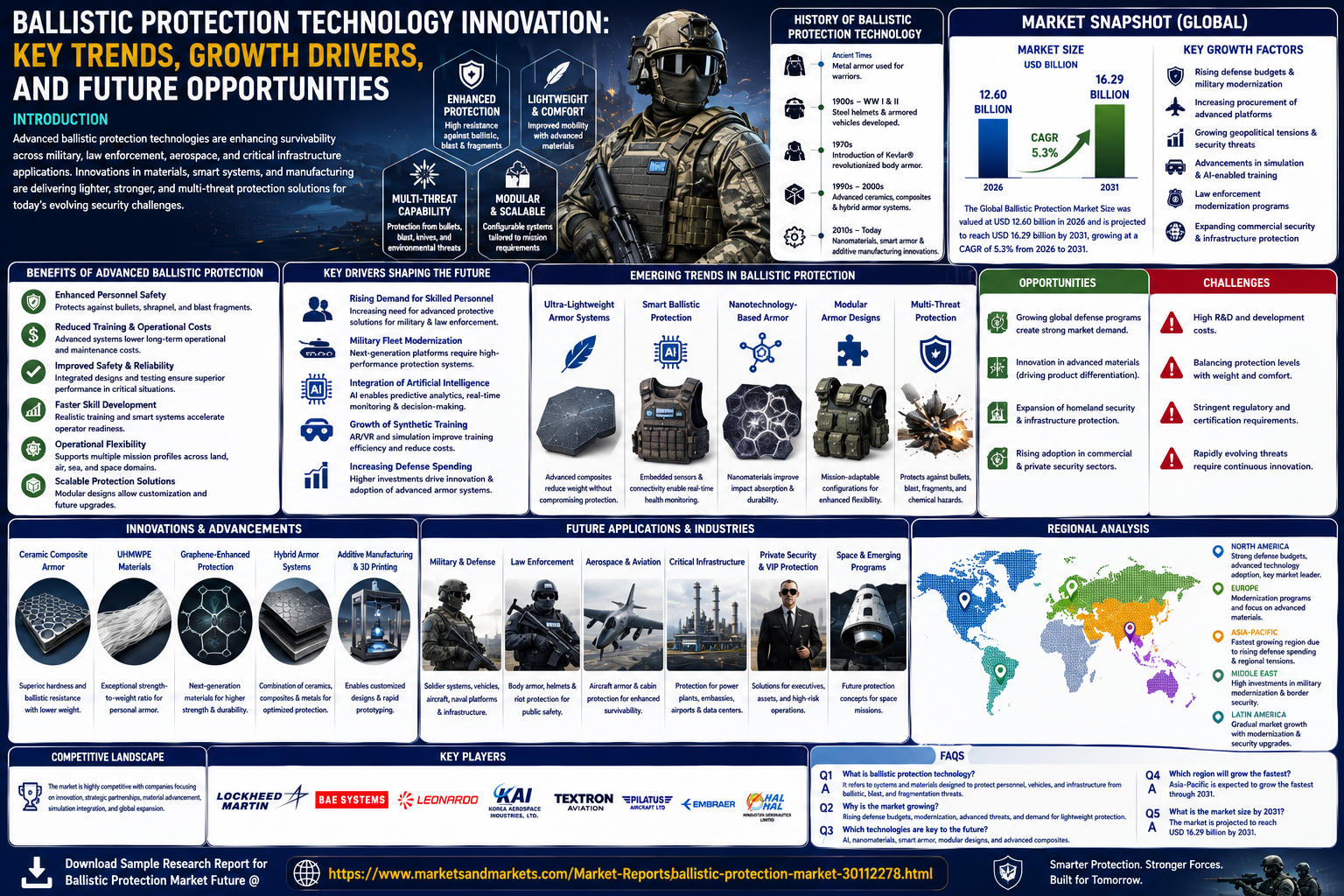
In an increasingly complex global security environment, ballistic protection technology has become a critical component of modern defense, law enforcement, homeland security, and personal protection systems. Designed to safeguard personnel, vehicles, aircraft, and infrastructure from ballistic threats, these technologies have evolved significantly over the past decades. Innovations in advanced materials, lightweight armor systems, nanotechnology, and smart protection solutions are transforming the effectiveness and adaptability of ballistic protection equipment.
As military modernization programs accelerate worldwide and security threats continue to evolve, the ballistic protection industry is witnessing unprecedented technological advancements that enhance survivability while reducing weight and operational burden.
History of Ballistic Protection Technology
The origins of ballistic protection date back centuries when warriors relied on metal armor for protection against projectiles and edged weapons. Modern ballistic protection emerged during the 20th century with the development of steel helmets and armored vehicles during the World Wars.
The introduction of synthetic fibers such as Kevlar in the 1970s revolutionized personal protection by enabling lightweight bullet-resistant vests. Since then, continuous advancements in ceramic composites, ultra-high molecular weight polyethylene (UHMWPE), nanomaterials, and hybrid armor systems have significantly improved ballistic resistance while enhancing mobility and comfort for users.
Benefits of Ballistic Protection Technology
Ballistic protection systems offer numerous advantages across military, law enforcement, and civilian security applications:
-
Enhanced Personnel Safety: Provides critical protection against bullets, shrapnel, and explosive fragments.
-
Improved Mobility: Modern lightweight materials reduce soldier fatigue while maintaining protection levels.
-
Multi-Threat Protection: Advanced armor systems protect against various kinetic and blast threats.
-
Operational Effectiveness: Increased survivability improves mission success rates in high-risk environments.
-
Scalable Protection: Modular armor systems allow customization based on mission requirements.
-
Vehicle and Infrastructure Security: Ballistic materials protect military vehicles, aircraft, naval vessels, and critical facilities.
Current Market Size and Growth Trends of the Ballistic Protection Industry
The ballistic protection market has experienced substantial growth due to increasing defense expenditures, military modernization initiatives, and rising demand for advanced personal protection equipment worldwide.
According to MarketsandMarkets, the Global Ballistic Protection Market Size was valued at USD 12.60 billion in 2026 and is projected to reach USD 16.29 billion by 2031, growing at a CAGR of 5.3% from 2026 to 2031.
This steady market expansion can be attributed to several factors:
-
Rising defense budgets across major economies
-
Increasing procurement of advanced body armor and tactical equipment
-
Growing geopolitical tensions and border security concerns
-
Advancements in lightweight armor materials and manufacturing technologies
-
Expansion of law enforcement modernization programs
-
Increasing demand for vehicle and aircraft armor protection systems
Key Drivers and Factors Influencing the Future of Ballistic Protection
Several important factors are shaping the future of ballistic protection technology:
1. Military Modernization Programs
Governments worldwide are investing heavily in next-generation soldier protection systems to improve combat effectiveness and survivability.
2. Rising Security Threats
Growing geopolitical instability, asymmetric warfare, and terrorism concerns continue to drive demand for advanced protective solutions.
3. Advanced Material Innovation
Continuous breakthroughs in ceramics, composites, nanomaterials, and polyethylene fibers are enabling stronger and lighter armor systems.
4. Vehicle Protection Requirements
Modern combat vehicles require enhanced ballistic protection against evolving battlefield threats and anti-armor weapons.
5. Law Enforcement Equipment Upgrades
Police and security agencies are increasingly adopting advanced protective gear to address modern security challenges.
Emerging Trends in Ballistic Protection Technology
The future of ballistic protection is being shaped by several transformative trends:
1. Ultra-Lightweight Armor Systems
Manufacturers are developing lighter armor solutions that improve mobility without compromising protection levels.
2. Smart Ballistic Protection
Integration of sensors, health monitoring systems, and connectivity features is creating intelligent protective equipment.
3. Nanotechnology-Based Armor
Nanomaterials are improving impact absorption, durability, and ballistic resistance.
4. Modular Armor Designs
Customizable protection systems enable users to adapt armor configurations based on operational requirements.
5. Multi-Threat Protection Solutions
Modern systems are designed to simultaneously protect against bullets, blast fragments, and environmental hazards.
Opportunities and Challenges in the Ballistic Protection Market
As the market expands, numerous growth opportunities are emerging.
Opportunities
1. Increasing Global Defense Investments
Growing military expenditures are generating significant demand for advanced ballistic protection technologies.
2. Innovation in Advanced Materials
Research into graphene, nanocomposites, and next-generation fibers presents opportunities for product differentiation.
3. Expanding Homeland Security Applications
Governments are investing in protective equipment for border security and critical infrastructure protection.
4. Growing Commercial Security Market
Private security organizations and high-risk industries are increasingly adopting ballistic protection solutions.
Challenges
1. High Development Costs
Advanced materials and sophisticated manufacturing processes increase production expenses.
2. Weight and Comfort Limitations
Balancing protection levels with user comfort remains a major engineering challenge.
3. Regulatory Compliance Requirements
Manufacturers must meet stringent military and law enforcement certification standards.
4. Rapidly Evolving Threat Environment
Protection systems must continuously adapt to emerging ammunition and weapon technologies.
Innovations and Advancements in Ballistic Protection Technology
The industry is witnessing significant technological breakthroughs:
1. Ceramic Composite Armor
Advanced ceramic materials offer superior ballistic resistance while reducing overall armor weight.
2. Ultra-High Molecular Weight Polyethylene (UHMWPE)
These lightweight materials provide exceptional strength-to-weight ratios for personal armor systems.
3. Graphene-Enhanced Protection
Researchers are exploring graphene-based materials for next-generation armor applications.
4. Hybrid Armor Systems
Combining multiple materials improves protection against diverse threat profiles.
5. Additive Manufacturing and 3D Printing
Advanced manufacturing technologies enable customized armor designs and rapid prototyping.
Future Applications and Industries Benefiting from Ballistic Protection Technology
Ballistic protection technology will continue to expand across numerous sectors:
1. Military and Defense
Soldier protection systems, armored vehicles, aircraft, naval platforms, and battlefield infrastructure.
2. Law Enforcement
Protective equipment for police officers, tactical teams, and homeland security personnel.
3. Aerospace and Aviation
Aircraft armor solutions designed to improve survivability in hostile environments.
4. Critical Infrastructure Protection
Security systems protecting government facilities, embassies, power plants, and transportation hubs.
5. Private Security Industry
Advanced protective solutions for security personnel operating in high-risk environments.
6. VIP and Executive Protection
Customized ballistic protection solutions for government officials and corporate executives.
Conclusion: The Promising Future of Ballistic Protection Technology
The future of ballistic protection technology is characterized by continuous innovation, advanced materials development, and increasing demand for enhanced survivability solutions. As security threats become more sophisticated, the need for lightweight, high-performance, and intelligent protection systems will continue to grow.
From advanced ceramic armor and graphene-enhanced materials to smart protective systems and modular designs, the next generation of ballistic protection technologies is poised to redefine personal and platform survivability. These innovations will play a vital role in safeguarding military personnel, law enforcement officers, critical infrastructure, and civilians worldwide.
While challenges related to cost, certification, and evolving threat landscapes remain, ongoing investments in research and development are accelerating the pace of innovation. Collaboration among defense agencies, material scientists, manufacturers, and technology providers will be essential for unlocking the full potential of future ballistic protection systems.
As global defense modernization initiatives continue and security requirements evolve, ballistic protection technology will remain a cornerstone of modern defense and security strategies, delivering enhanced protection, operational effectiveness, and mission success.
Download Sample Research Report for Ballistic Protection Market Future @
https://www.marketsandmarkets.com/Market-Reports/ballistic-protection-market-30112278.html
80% of the Forbes Global 2000 B2B companies rely on MarketsandMarkets to identify growth opportunities in emerging technologies and use cases that will have a positive revenue impact.
- Food Packaging Market Size Set for Strong Growth Through 2030 Amid Rising Demand for Convenience Foods
- Crop Protection Chemical Market Size, Share & Growth Forecast (2025–2030)
- Mulch Films Market: Driving Sustainable Agriculture Through Innovation
- Agricultural Adjuvants Market Analysis, Trends, and Growth Outlook (2026–2031)
- Japan Enterprise Asset Management Market Growth: AI and Smart Infrastructure Drive Demand

