

The future of the eVTOL Market is closely tied to the rapid evolution of urban air mobility (UAM), smart city infrastructure, and sustainable transportation systems. Electric Vertical Take-Off and Landing (eVTOL) aircraft are expected to redefine short-distance travel in congested metropolitan regions. As governments and private investors increase funding for clean aviation technologies, the eVTOL Market is projected to witness exponential growth over the next decade. The combination of electric propulsion, autonomous flight systems, and lightweight composite materials positions the eVTOL Market as one of the most disruptive segments in the aerospace and mobility ecosystem.
The eVTOL Aircraft Market is expected to grow from USD 3.19 billion in 2031 to USD 5.08 billion by 2035, with a CAGR of 12.3%.Rapid urbanization is leading to increased road congestion in major cities. Governments and private operators are seeking faster point-to-point transportation options. eVTOL aircraft help meet this demand with shorter travel times and lower operating costs compared to helicopters
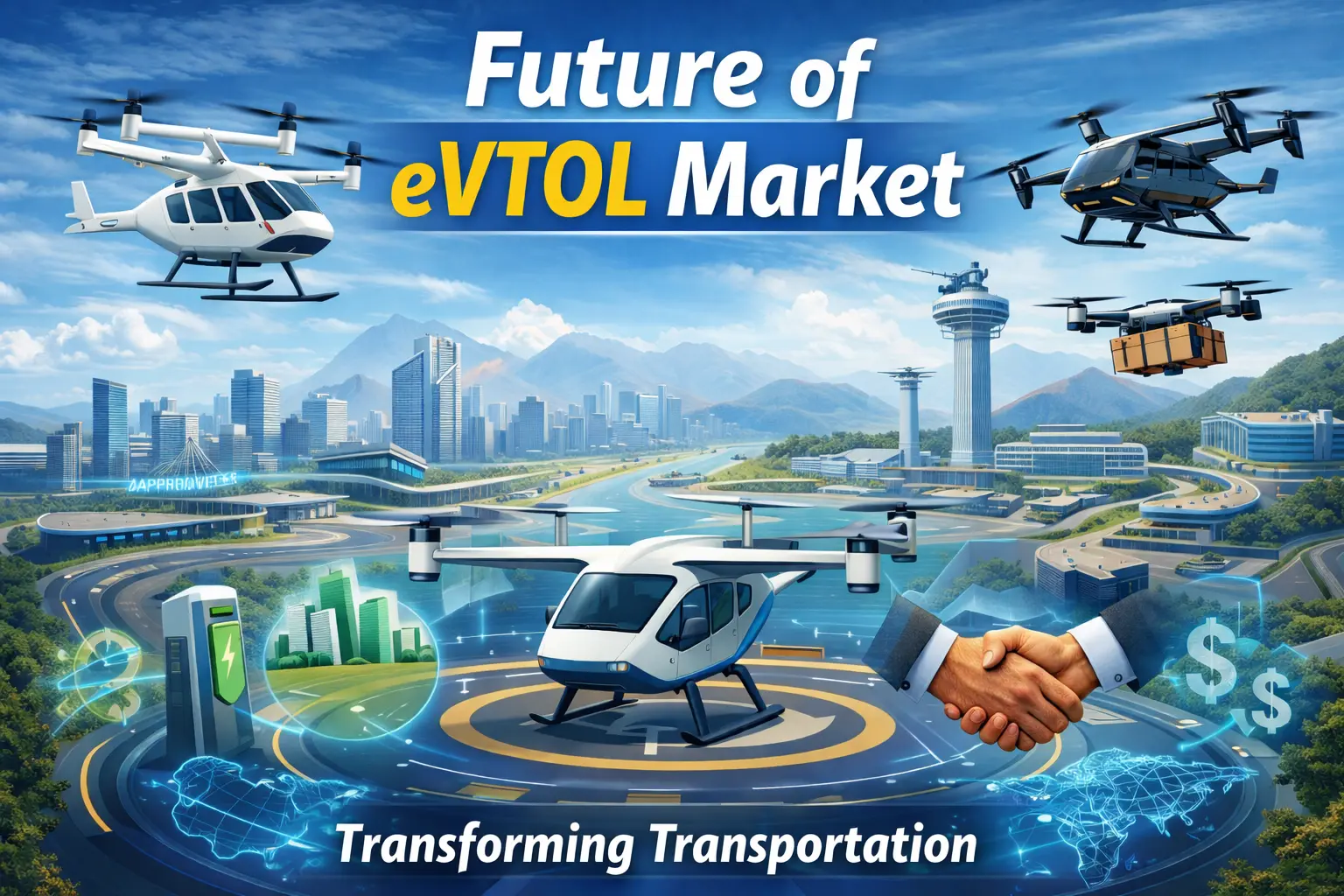
https://www.marketsandmarkets.com/pdfdownloadNew.asp?id=28054110
Key Takeaways: Future of the eVTOL Market
-
Strong growth potential driven by rising demand for urban air mobility and sustainable transportation solutions in the eVTOL Market.
-
Urban air mobility remains the primary growth engine, helping the eVTOL Market address traffic congestion in major metropolitan regions.
-
Technological advancements in battery systems, AI-powered flight controls, and lightweight materials are accelerating innovation in the eVTOL Market.
-
Regulatory approvals from authorities such as the Federal Aviation Administration and the European Union Aviation Safety Agency are critical for commercial expansion of the eVTOL Market.
-
Infrastructure development, including vertiports and charging networks, will directly influence the scalability of the eVTOL Market.
-
Cargo transport, emergency services, and defense applications are expanding revenue opportunities within the eVTOL Market.
-
Sustainability advantages such as reduced carbon emissions and lower noise levels strengthen the long-term outlook of the eVTOL Market.
-
Strong venture capital funding and strategic aerospace partnerships are accelerating commercialization in the eVTOL Market.
-
Regional growth patterns in North America, Europe, and Asia-Pacific will shape the competitive landscape of the eVTOL Market.
-
By 2035, the eVTOL Market is expected to significantly transform short-distance travel through autonomous systems and integrated urban mobility networks.
Rising Demand for Urban Air Mobility
The growing traffic congestion in megacities such as New York City, Los Angeles, and Dubai is accelerating the adoption of air taxi solutions. The eVTOL Market is benefiting from increasing demand for faster, safer, and environmentally friendly transportation alternatives. Urban commuters are expected to rely on eVTOL aircraft for airport transfers, intercity mobility, and emergency services. As infrastructure such as vertiports and charging stations expands, the eVTOL Market will transition from pilot projects to commercial-scale deployment.
Technological Advancements Driving the eVTOL Market
The future of the eVTOL Market is heavily influenced by breakthroughs in battery technology, AI-powered flight control systems, and advanced air traffic management. Companies like Joby Aviation, Archer Aviation, and Lilium are investing significantly in improving energy density and flight range. Solid-state batteries and hybrid-electric propulsion systems are expected to extend operational capabilities. As automation becomes more reliable, the eVTOL Market may gradually shift toward pilot-optional or fully autonomous aircraft, reducing operational costs and enhancing scalability.
Regulatory Landscape and Certification Pathways
A crucial factor shaping the future of the eVTOL Market is regulatory approval and certification. Aviation authorities such as the Federal Aviation Administration and the European Union Aviation Safety Agency are developing safety standards tailored to electric aircraft. The pace of certification will directly impact commercialization timelines. Once regulatory frameworks are standardized globally, the eVTOL Market will gain stronger investor confidence and faster global expansion.
Infrastructure Development and Smart Cities
Smart city initiatives across regions are creating opportunities for the eVTOL Market to integrate with multimodal transportation networks. The development of vertiports, digital booking platforms, and AI-based air traffic management systems will enhance operational efficiency. Cities in United States, Germany, and China are already testing pilot programs to evaluate commercial feasibility. As infrastructure investments grow, the eVTOL Market will move closer to mainstream adoption.
Investment Trends and Strategic Partnerships
The future of the eVTOL Market is supported by strong venture capital funding and strategic alliances between aerospace firms and automotive giants. Collaborations between traditional aircraft manufacturers and technology startups are accelerating product development. Public-private partnerships are also playing a vital role in scaling operations. As profitability models mature, the eVTOL Market is expected to attract institutional investors seeking long-term growth in sustainable aviation.
Sustainability and Environmental Impact
Sustainability remains a core driver of the eVTOL Market. Electric propulsion significantly reduces carbon emissions compared to conventional helicopters. As countries commit to net-zero targets, the eVTOL Market will benefit from favorable environmental policies and green incentives. Noise reduction technology is another key advantage, enabling operations in densely populated urban areas without major disruption.
Long-Term Outlook of the eVTOL Market
By 2035, the eVTOL Market is projected to evolve from niche pilot projects to a fully operational urban mobility network. Integration with AI, 5G connectivity, and autonomous navigation systems will further enhance safety and efficiency. While challenges such as battery limitations, regulatory delays, and infrastructure costs remain, the overall trajectory of the eVTOL Market points toward sustained expansion.
In conclusion, the future of the eVTOL Market is defined by innovation, sustainability, and urban transformation. As technology advances and regulatory frameworks mature, the eVTOL Market will play a central role in reshaping global transportation systems and unlocking a new era of aerial mobility.
Defense and Emergency Applications Expanding the eVTOL Market
Beyond commercial air taxis, the future of the eVTOL Market is increasingly linked to defense logistics and emergency response services. Military organizations are exploring eVTOL aircraft for rapid troop mobility, surveillance, and medical evacuation in challenging terrains. The silent electric propulsion system gives the eVTOL Market a strategic advantage in tactical operations. In addition, air ambulances and disaster-response units can use eVTOL aircraft to access remote or congested urban areas quickly. As these applications scale, the eVTOL Market will diversify its revenue streams beyond passenger mobility.
Cargo and Logistics Innovation in the eVTOL Market
The eVTOL Market is also poised to revolutionize last-mile delivery and high-value cargo transport. With the rise of e-commerce and same-day delivery expectations, logistics companies are evaluating eVTOL aircraft for transporting lightweight goods across cities. Cargo-focused models developed by companies such as EHang are already being tested in pilot projects. The ability to bypass road congestion significantly enhances operational efficiency, strengthening the commercial viability of the eVTOL Market. Over time, autonomous cargo operations could reduce costs and improve supply chain agility.
Battery Innovation and Energy Ecosystem Development
The long-term success of the eVTOL Market depends heavily on advancements in battery technology and charging infrastructure. Improvements in lithium-ion chemistry, solid-state batteries, and rapid-charging systems will extend flight range and reduce turnaround times. Energy providers and aviation stakeholders are collaborating to build sustainable charging ecosystems at vertiports. As renewable energy integration increases, the eVTOL Market will align more closely with global decarbonization goals. Enhanced battery performance will directly impact operational economics and passenger confidence in the eVTOL Market.
Regional Growth Opportunities in the eVTOL Market
Regional expansion will shape the competitive landscape of the eVTOL Market. North America remains a frontrunner due to strong investment, supportive regulations, and active players like Beta Technologies. Europe is focusing on sustainable aviation initiatives, while Asia-Pacific is emerging as a manufacturing and adoption hub, particularly in countries investing heavily in smart mobility infrastructure. As regional governments introduce incentives and pilot programs, the eVTOL Market will experience varied growth patterns based on regulatory readiness and infrastructure maturity.
Public Acceptance and Commercial Scalability
Public perception and trust will play a critical role in determining the future of the eVTOL Market. Safety demonstrations, transparent regulatory approvals, and pilot training standards will help build consumer confidence. As ticket pricing becomes competitive with premium ground transportation, broader adoption will follow. Over time, economies of scale and technological refinement will lower production costs, making services more accessible. The scalability of operations, supported by digital booking platforms and integrated transport networks, will ultimately determine the long-term success of the eVTOL Market.

