

Avionics Technology Innovation: Key Trends, Growth Drivers and Opportunities
Introduction to Avionics Technology
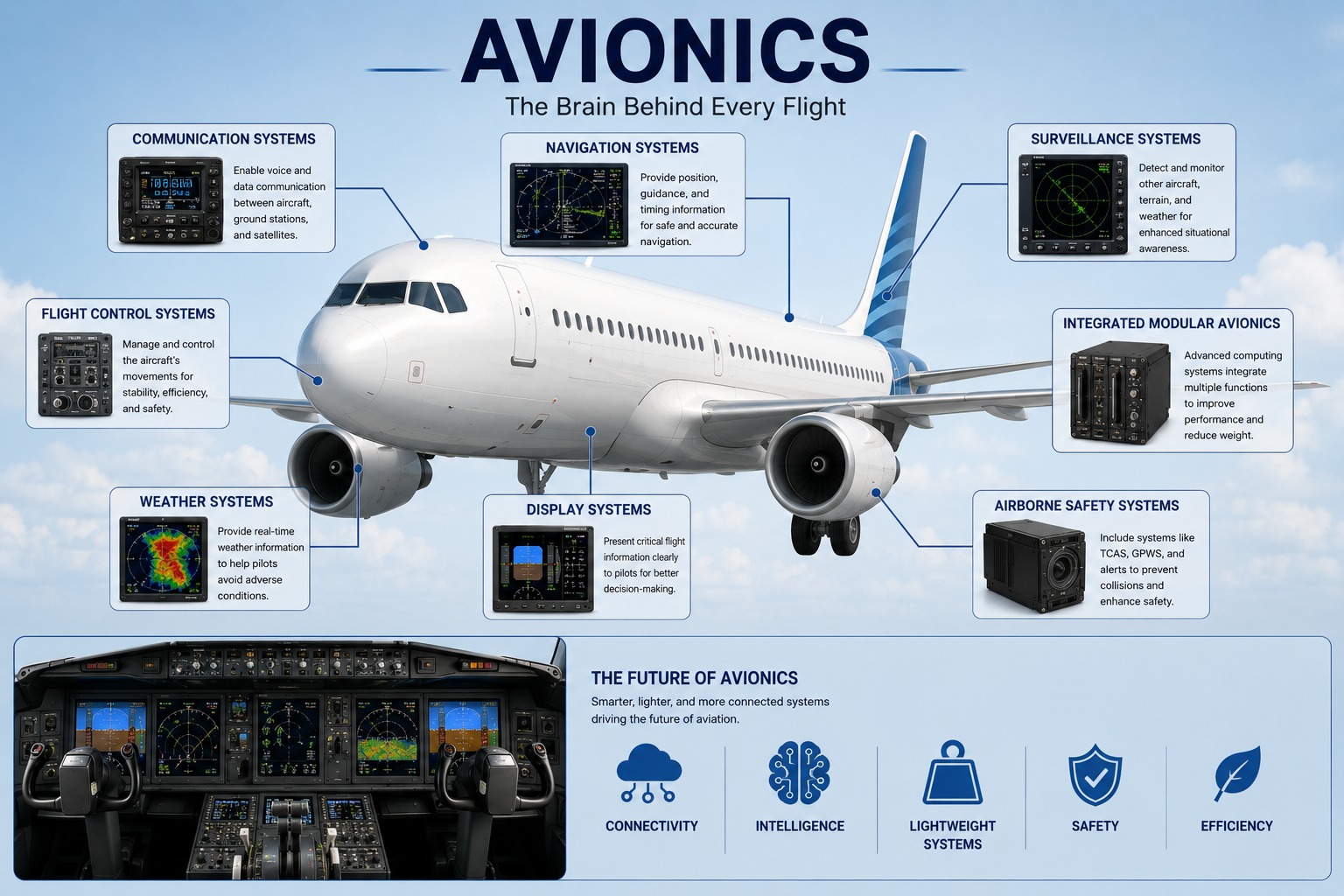
In the rapidly evolving aviation industry, avionics technology has emerged as a critical innovation area, transforming how aircraft navigate, communicate, operate, and respond to increasingly complex flight environments. Avionics integrates electronic systems for navigation, communication, flight management, displays, traffic management, weather detection, mission management, and aircraft data processing. Modern avionics are moving beyond conventional standalone systems toward highly integrated, connected, software-defined, and intelligent architectures that support safer and more efficient flight operations. The growing adoption of artificial intelligence (AI), advanced sensors, high-speed connectivity, automation, data analytics, and digital cockpit technologies is accelerating avionics innovation. As commercial aviation expands and new platforms such as electric aircraft, hybrid-electric aircraft, autonomous aircraft, and eVTOL vehicles develop, avionics systems are becoming increasingly important for enabling reliable, automated, and connected flight operations.
History of Avionics Technology
The evolution of avionics began with basic electrical and radio systems introduced into aircraft during the early development of aviation. Radio communication and navigation equipment gradually became essential for enabling pilots to operate aircraft safely over longer distances and under challenging weather conditions. During the second half of the twentieth century, radar, inertial navigation systems, flight management systems, and electronic displays significantly improved aircraft situational awareness and operational reliability. The development of digital electronics marked another major transformation. Digital flight computers replaced many mechanical and analog systems, while integrated avionics enabled multiple aircraft functions to share information. Today, avionics technology is progressing toward open architectures, intelligent automation, connected aircraft systems, advanced cockpit displays, and software-centric platforms that can continuously evolve through upgrades.
Benefits of Avionics Technology Innovation
Avionics technology innovation offers numerous advantages to aircraft manufacturers, airlines, pilots, defense operators, and passengers:
1. Enhanced safety: Advanced navigation, collision avoidance, weather detection, flight control, and monitoring systems improve situational awareness and reduce operational risks.
2. Operational efficiency: Integrated flight management and data systems help optimize routes, fuel consumption, aircraft performance, and maintenance activities.
3. Automation: AI-enabled avionics can support pilots by processing large volumes of information, identifying anomalies, and providing decision-support capabilities.
4. Connectivity: High-speed communication and satellite connectivity enable continuous exchange of operational, maintenance, and passenger-related information.
5. Fleet modernization: Retrofit avionics allow operators to upgrade existing aircraft without replacing complete fleets, extending aircraft service life and improving compliance with evolving standards.
Current Market Size and Growth Trends of Avionics Industry
According to MarketsandMarkets, the Avionics Market size was valued at USD 56.22 billion in 2025 and is expected to reach USD 82.33 billion by 2030, representing a CAGR of 7.9% during 2025–2030. The global avionics market is experiencing strong expansion as aircraft manufacturers and operators invest in advanced cockpit systems, connectivity, navigation, automation, and safety technologies.
This growth can be attributed to several factors, including:
• Rising production of commercial and military aircraft
• Increasing demand for advanced navigation and communication systems
• Growing air passenger traffic and fleet expansion
• Continuous avionics modernization and retrofit programs
• Increasing focus on flight safety, automation, and operational efficiency
Navigation, communication, and flight management systems remain important areas of demand, while advanced displays, mission computers, collision-avoidance technologies, and connected aircraft platforms are gaining importance. Asia Pacific is expected to be the fastest-growing regional market, supported by aircraft deliveries, expanding air travel, and investments in next-generation aviation infrastructure.
Key Drivers and Factors Influencing the Future of Avionics
Several key drivers and factors are shaping the future of avionics technology:
1. Aircraft production and fleet expansion: Increasing commercial and military aircraft production directly generates demand for integrated avionics systems and electronic flight equipment.
2. Digital transformation: Airlines and aircraft manufacturers are adopting digital technologies to improve aircraft performance, operational visibility, and maintenance efficiency.
3. Artificial intelligence: AI and machine learning are enabling intelligent decision support, predictive maintenance, anomaly detection, and automated analysis of aircraft data.
4. Connected aircraft: Satellite communications, high-speed data links, and advanced connectivity are creating aircraft ecosystems capable of continuous data exchange.
5. Safety and automation: Increasing requirements for safer and more efficient operations are accelerating the adoption of automated flight management, enhanced vision, traffic management, and collision-avoidance technologies.
Emerging Trends in Avionics Technology
The future of avionics is being shaped by several important trends and innovations:
1. AI-enabled avionics: Artificial intelligence is increasingly being explored for real-time decision support, predictive diagnostics, flight optimization, and automated data interpretation.
2. Integrated modular avionics: Modular architectures allow multiple aircraft functions to share computing resources, reducing size, weight, power consumption, and system complexity.
3. Advanced cockpit displays: OLED, high-resolution, synthetic vision, enhanced vision, and augmented-reality displays are improving pilot situational awareness and reducing workload.
4. Advanced connectivity: Satellite communications, 5G, and high-speed data links are supporting real-time communication between aircraft, ground infrastructure, operators, and maintenance teams.
5. Cybersecure avionics: As aircraft become more connected, cybersecurity technologies, secure communication, encryption, and continuous system monitoring are becoming essential components of avionics design.
Opportunities and Challenges in the Avionics Market
As avionics technology continues to advance, it presents significant opportunities for technology providers, aircraft manufacturers, airlines, and defense organizations:
1. AI and automation opportunities: Companies developing intelligent avionics, autonomous decision-support systems, and advanced flight-control technologies can address increasing demand for automated aviation.
2. Retrofit and modernization: The large installed base of aircraft creates opportunities for companies providing digital cockpit upgrades, navigation modernization, communication systems, and cybersecurity solutions.
3. Next-generation aircraft: Electric, hybrid-electric, autonomous, and eVTOL aircraft require compact, lightweight, and highly integrated avionics architectures, creating new technology opportunities.
However, the avionics industry also faces several challenges:
1. Regulatory and certification complexity: Avionics systems must meet stringent aviation safety and certification requirements, increasing development time and costs.
2. High development costs: Advanced processors, sensors, software, testing, and certification can require substantial investment.
3. Cybersecurity risks: Increasing aircraft connectivity creates potential exposure to cyber threats, requiring continuous investment in security technologies.
4. Technological obsolescence: Rapid advances in computing, software, communications, and sensors can shorten technology lifecycles and create upgrade challenges.
Innovations and Advancements in Avionics Technology
The future of avionics is being shaped by a multitude of innovative technologies and advancements:
1. Artificial intelligence and machine learning: AI-based systems can analyze aircraft data, identify unusual conditions, support predictive maintenance, and assist pilots with complex operational decisions.
2. Digital twin technology: Digital twins can combine aircraft and avionics data with simulation models to monitor performance, predict component degradation, and support maintenance planning.
3. Fly-by-wire and advanced flight controls: Modern electronic flight-control systems are improving aircraft maneuverability, stability, automation, and operational efficiency.
4. Integrated mission computers: Advanced mission computers can process information from multiple sensors and systems, providing improved situational awareness for military and special-mission aircraft.
5. Software-defined avionics: Software-centric architectures enable functionality to be updated and enhanced through controlled software upgrades rather than extensive hardware replacement.
Future Applications and Industries that will Benefit from Avionics
The future of avionics technology holds immense potential across a wide range of applications and industries:
1. Commercial aviation: Airlines will increasingly use advanced avionics for safer navigation, connected operations, fuel-efficient flight planning, predictive maintenance, and enhanced passenger experiences.
2. Military aviation: Advanced mission systems, electronic warfare, secure communications, sensors, and integrated displays will strengthen situational awareness and mission effectiveness.
3. Business and general aviation: Modern avionics will provide smaller aircraft with advanced navigation, connectivity, automated flight assistance, and digital cockpit capabilities.
4. Urban air mobility: eVTOL aircraft will depend heavily on lightweight, redundant, automated, and highly integrated avionics to support new urban flight operations.
5. Autonomous aircraft: Uncrewed and autonomous aviation platforms will require sophisticated navigation, sensing, communication, computing, and decision-support systems.
6. Electric and hybrid-electric aircraft: Next-generation propulsion architectures will require advanced avionics for energy management, propulsion monitoring, flight optimization, and integrated aircraft control.
Conclusion: The Promising Future of Avionics Technology
The future of avionics technology is brimming with exciting possibilities and transformative advancements. As aviation moves toward connected, automated, sustainable, and increasingly intelligent operations, avionics will remain the technological backbone of modern aircraft. AI, machine learning, advanced connectivity, integrated modular architectures, digital twins, cybersecurity, and sophisticated cockpit displays are reshaping aircraft systems and creating new opportunities across commercial, military, general, and emerging aviation platforms. The transition toward electric aircraft, autonomous systems, eVTOL vehicles, and connected fleets will further increase demand for compact, reliable, software-defined, and intelligent avionics. At the same time, retrofit and modernization programs will provide sustained opportunities as aircraft operators seek to improve safety, efficiency, connectivity, and regulatory compliance.
However, realizing the full potential of avionics innovation will require continued investment in research and development, certification, cybersecurity, interoperability, and advanced computing technologies. Collaboration among aircraft manufacturers, avionics suppliers, airlines, regulators, technology companies, and research institutions will be essential for accelerating innovation while maintaining the highest standards of aviation safety. As the aviation industry enters a new era of digital and autonomous flight, one thing is certain: avionics technology will play a pivotal role in creating safer, smarter, more connected, and more efficient aircraft, supporting the long-term transformation of global aviation. Discover the latest advancements and solutions in avionics technology by exploring the global market outlook and emerging industry opportunities. Stay ahead of the curve and understand how advanced avionics can support the next generation of connected and intelligent aviation systems.
Download Sample Research Report for Future of Avionics Market @ https://www.marketsandmarkets.com/Market-Reports/commercial-avionic-system-market-138098845.html
80% of the Forbes Global 2000 B2B companies rely on MarketsandMarkets to identify growth opportunities in emerging technologies and use cases that will have a positive revenue impact.
- Food Packaging Market Size Set for Strong Growth Through 2030 Amid Rising Demand for Convenience Foods
- Crop Protection Chemical Market Size, Share & Growth Forecast (2025–2030)
- Mulch Films Market: Driving Sustainable Agriculture Through Innovation
- Agricultural Adjuvants Market Analysis, Trends, and Growth Outlook (2026–2031)
- Japan Enterprise Asset Management Market Growth: AI and Smart Infrastructure Drive Demand


