

Future of the Electric Ship Market: Key Trends, Growth Drivers, and Opportunities Through 2032
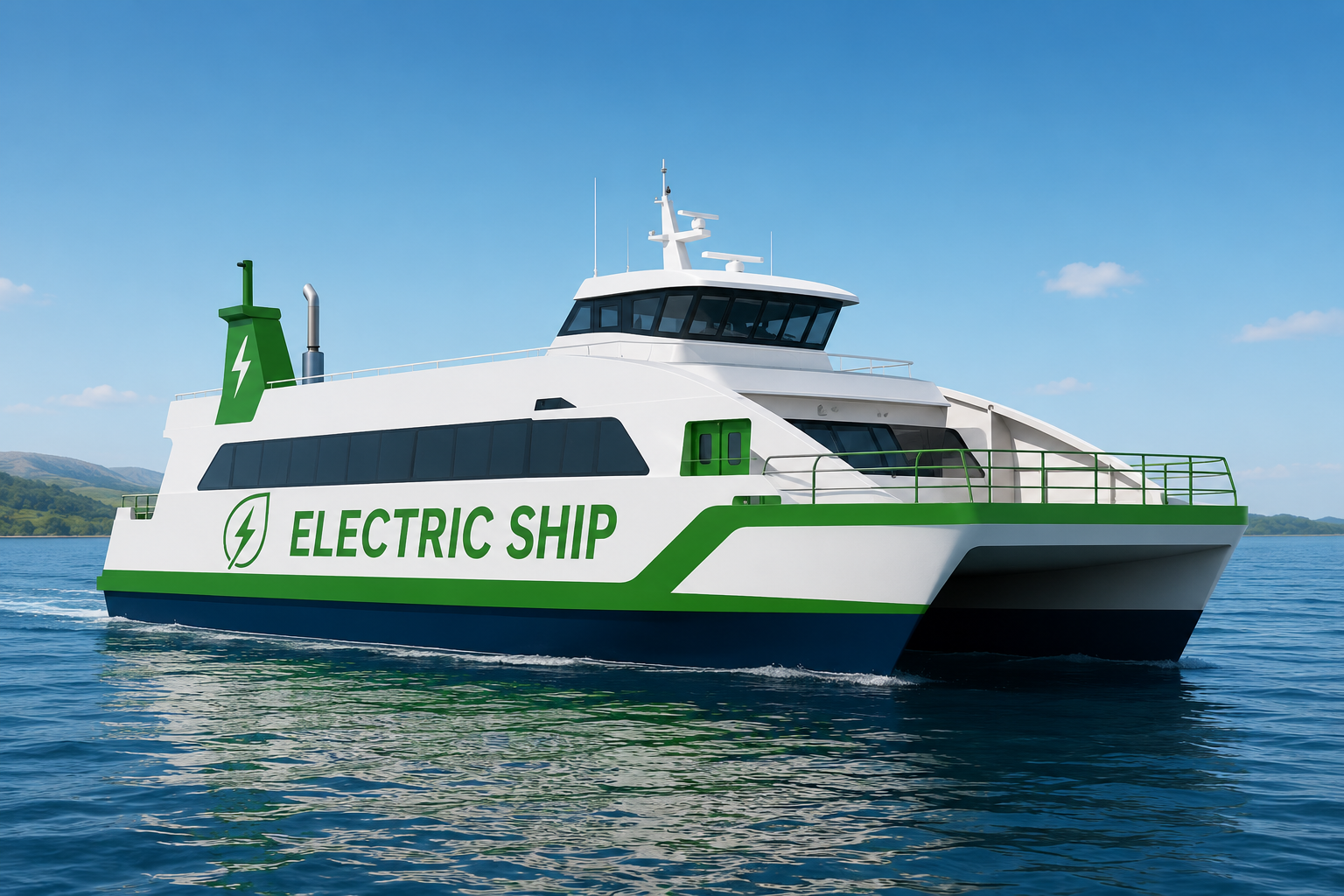
The Electric Ship Market is emerging as a major transformation opportunity for the maritime industry as shipowners, governments, ports, and technology providers accelerate investments in cleaner propulsion and intelligent vessel technologies. Increasing pressure to reduce greenhouse-gas emissions, improve fuel efficiency, comply with maritime environmental regulations, and lower vessel operating costs is encouraging the adoption of battery-electric and hybrid-electric propulsion systems.
The future of Electric Ship Market will extend beyond replacing conventional marine engines with electric motors. The next generation of electric ships will combine electrification, artificial intelligence (AI), Internet of Things (IoT), automation, digital twins, advanced energy storage, and smart-grid connectivity. These technologies will create more efficient, connected, and sustainable vessels while opening opportunities across passenger transportation, commercial shipping, offshore operations, defense, and port services.
The global Electric Ship Market size is projected to grow from approximately USD 4.9 billion in 2025 to USD 18.4 billion by 2032, registering a CAGR of around 21.0% From 2025 to 2032. This strong growth reflects increasing investments in vessel electrification, advanced batteries, electric motors, power electronics, charging infrastructure, and digital energy-management systems.
Electric Ship Market: A Shift Toward Sustainable Maritime Transportation
Maritime transportation carries a substantial share of global trade, making improvements in vessel efficiency and emissions particularly important. Conventional ships primarily depend on diesel and other fossil fuels, creating emissions and exposing operators to fuel-price volatility.
Electric propulsion provides an alternative for vessel categories where operating routes, charging availability, and energy requirements make electrification commercially viable. Battery-electric systems can eliminate direct propulsion emissions during operation, while hybrid-electric architectures can reduce fuel consumption by combining batteries with conventional or alternative power sources.
Passenger ferries, inland vessels, harbor craft, tugboats, and short-distance workboats are among the applications particularly suited to electrification because they often follow predictable routes and return to charging locations regularly. As battery technologies improve, the range of potential applications is expected to expand.
Download PDF Brochure: https://www.marketsandmarkets.com/pdfdownloadNew.asp?id=167955093
Key Trends in Electric Ship Market
1. Advanced Battery Technology
Battery technology will remain one of the most important factors influencing the future of the Electric Ship Market. Current electric vessels primarily use lithium-ion battery technologies because of their energy density, efficiency, and commercial maturity.
However, maritime operators require batteries that offer higher energy density, faster charging, longer operating life, improved safety, and lower lifecycle costs. As a result, manufacturers and technology developers are exploring advanced battery chemistries and next-generation energy-storage technologies.
Solid-state batteries represent a potential long-term opportunity because they could offer improvements in energy density and safety. Other battery technologies, including lithium-iron-phosphate systems, are also gaining attention for applications where safety, lifecycle performance, and cost are important.
Battery-management systems will become increasingly sophisticated. These systems can monitor temperature, voltage, current, state of charge, and battery health to optimize performance and improve safety.
2. Growth of Hybrid-Electric Ships
While full battery-electric propulsion is highly attractive for short-distance operations, it remains challenging for large vessels and long voyages because of energy-storage requirements. This limitation is creating significant opportunities for hybrid-electric propulsion.
Hybrid vessels can combine batteries with diesel engines, fuel cells, alternative-fuel engines, or other energy sources. Batteries can provide additional power during acceleration and peak loads while enabling electric operation in ports and environmentally sensitive areas.
Hybrid-electric systems also allow shipowners to gradually transition toward cleaner operations without completely replacing existing propulsion technologies. This flexibility is likely to make hybrid architectures an important part of the maritime energy transition through 2032.
3. Smart Energy Management and AI
The future electric vessel will be increasingly software-defined. As electrical systems become more complex, intelligent energy-management platforms will be needed to balance propulsion requirements, battery capacity, onboard electrical loads, and charging availability.
Artificial intelligence can analyze real-time information from batteries, propulsion systems, weather conditions, vessel speed, route characteristics, and operational requirements. AI algorithms can then recommend or automatically implement energy-efficient operating strategies.
Predictive analytics can also identify abnormal equipment behavior before a failure occurs. This capability can reduce unexpected downtime and improve vessel availability.
AI-enabled energy optimization is expected to become particularly valuable for fleets operating multiple electric or hybrid vessels. Fleet operators can compare energy consumption across vessels and routes and use the resulting insights to optimize operations.
4. Digital Twins and Predictive Maintenance
Digital twins are expected to become an increasingly important technology in electric ship development and operation. A digital twin creates a virtual model of a vessel and its systems, allowing operators and engineers to monitor and simulate real-world performance.
For electric ships, digital twins can model battery performance, propulsion efficiency, electrical loads, thermal conditions, and equipment degradation.
Operators can use digital twins to simulate different routes and energy-consumption scenarios before a vessel begins a voyage. Engineers can also test modifications virtually, reducing development risks.
Predictive maintenance is another major opportunity. Connected sensors can continuously monitor electric motors, batteries, converters, pumps, and other components. Machine-learning algorithms can identify early indicators of failure and recommend maintenance before breakdowns occur.
5. Smart Charging and Port Electrification
The expansion of electric ships will require significant investment beyond the vessels themselves. Charging infrastructure will become a critical component of the maritime electrification ecosystem.
Ports will need high-capacity charging systems capable of supporting vessel operations without causing excessive strain on local electricity networks. Automated charging systems could reduce turnaround time and simplify vessel-to-shore connections.
Smart charging can further improve efficiency by scheduling charging according to vessel requirements, electricity prices, grid availability, and renewable-energy generation.
Ports could combine vessel charging with solar power, wind energy, stationary battery storage, and intelligent energy-management systems. This approach could create integrated maritime energy hubs capable of supporting multiple electric vessels.
Key Growth Drivers in Electric Ship Market
1. Maritime Decarbonization
Environmental regulations and global decarbonization objectives will remain among the strongest growth drivers for the Electric Ship Market. Governments and maritime authorities are encouraging the transition toward lower-emission vessel technologies through regulations, incentives, and infrastructure investments.
Electric and hybrid-electric ships can help reduce local emissions, particularly in ports and coastal areas. They can also reduce noise pollution, which is an important consideration for vessels operating near urban and environmentally sensitive locations.
As sustainability becomes an increasingly important consideration for shipping companies and cargo owners, investments in cleaner vessel technologies could become an important component of corporate environmental strategies.
2. Lower Operating and Maintenance Costs
The economic benefits of electrification represent another major growth opportunity. Electric motors generally have fewer moving components than conventional internal-combustion engines, potentially reducing maintenance requirements.
Electric propulsion can also provide high efficiency across a range of operating conditions. When combined with intelligent energy management, this can help reduce energy consumption.
Although electric vessels often involve higher upfront costs, shipowners increasingly evaluate investments using total cost of ownership. Savings in fuel, maintenance, and emissions-related expenses can improve the long-term economic case for electrification.
Battery costs and infrastructure expenses remain important considerations, but continued technological improvements could strengthen the commercial viability of electric vessels.
3. Passenger Ferries and Inland Waterways
Passenger ferries are expected to remain one of the most attractive opportunities through 2032. Many ferry routes are short, predictable, and supported by established terminals, making them well suited to scheduled charging.
Electric ferries can provide quieter and cleaner operations, improving the passenger experience while reducing local emissions.
Inland-waterway vessels represent another opportunity. These vessels often operate on fixed routes and can potentially use strategically positioned charging stations.
As governments seek to improve air quality around cities and waterways, electric propulsion could gain further momentum in these applications.
Key Opportunities
1. Ports, Tugboats, and Harbor Craft
Harbor operations provide another strong growth opportunity. Tugboats, pilot boats, service vessels, and other port craft frequently operate close to shore and can benefit from electric or hybrid propulsion.
Electric tugboats can deliver high torque and precise power control, characteristics that are valuable during vessel maneuvering and harbor operations.
Ports themselves will increasingly become important participants in the Electric Ship Market. Investments in charging infrastructure, renewable power, energy storage, and smart-grid systems can create new revenue opportunities for port operators and energy providers.
2. Offshore Energy and Renewable Infrastructure
Offshore wind and other marine renewable-energy projects are creating new applications for electric and hybrid vessels. Offshore support vessels can use hybrid systems to reduce fuel consumption during low-power operations and optimize energy use during dynamic positioning.
Electric and autonomous vessels can also support inspection and maintenance activities around offshore infrastructure.
As offshore renewable-energy capacity expands, demand for specialized low-emission vessels is expected to increase. This creates opportunities for shipbuilders, propulsion-system suppliers, battery manufacturers, charging providers, and digital technology companies.
Challenges That Could Affect Market Growth
Despite strong growth prospects, several challenges could influence the pace of adoption. Battery energy density remains a major limitation for long-distance vessels. Large batteries can add significant weight, potentially reducing payload capacity and increasing vessel-design complexity.
Charging infrastructure is another challenge. Ports require substantial investment in electrical connections, charging equipment, grid upgrades, and energy storage.
Battery safety and thermal management are also critical. Large marine battery systems require advanced monitoring, cooling, fire protection, and safety architectures.
The initial cost of electric vessels can also discourage smaller operators. Financing mechanisms, government incentives, and declining technology costs will therefore play an important role in market development.
Another challenge is standardization. Common charging standards, battery interfaces, communication protocols, and safety requirements can simplify adoption and accelerate the development of maritime electrification ecosystems.
Competitive Opportunities Across the Value Chain
The Electric Ship Market is creating opportunities across a broad technology ecosystem. Shipbuilders can develop new electric and hybrid vessel platforms, while propulsion manufacturers can provide motors, drives, generators, and integrated electrical architectures.
Battery manufacturers have opportunities to develop marine-specific energy-storage solutions with improved safety and lifecycle performance. Charging infrastructure companies can address the growing need for high-power shore-side systems.
Software providers can develop energy-management, fleet-optimization, predictive-maintenance, and digital-twin platforms.
The market is therefore evolving into a multidisciplinary ecosystem where success depends not only on vessel design but also on batteries, software, infrastructure, data, and energy management.
Future Outlook Through 2032
The future of the Electric Ship Market is being shaped by a combination of environmental requirements, technological innovation, economic pressures, and digital transformation. Advanced batteries, hybrid propulsion, AI-powered energy management, digital twins, predictive maintenance, smart charging, and connected maritime infrastructure are creating new pathways toward cleaner and more efficient shipping. With the market projected to grow from approximately USD 4.9 billion in 2025 to USD 18.4 billion by 2032, significant opportunities are emerging for shipbuilders, battery suppliers, propulsion manufacturers, software developers, port operators, energy companies, and maritime technology providers.
Through 2032, the Electric Ship Market is expected to transition from early adoption toward broader commercialization across multiple vessel categories. Short-route applications are likely to maintain strong momentum, while hybrid technologies will support electrification in vessels requiring longer operating ranges.
The convergence of AI, IoT, automation, digital twins, batteries, fuel cells, and smart charging will create increasingly intelligent vessels. Electric ships will generate operational data that can be used to optimize energy consumption, predict maintenance requirements, and improve fleet management. The longer-term development of hydrogen fuel cells and other alternative energy technologies could further expand the market beyond battery-electric systems. The future maritime ecosystem will likely involve close integration between ships and ports. Vessels will communicate with charging infrastructure and energy-management platforms, while ports will coordinate charging schedules with electricity availability and renewable-energy generation.
Ultimately, the next generation of maritime transportation will not simply be electric. It will be connected, intelligent, automated, energy-efficient, and digitally managed. Companies that successfully combine electrification with digital technologies and scalable infrastructure will be well positioned to capture the expanding opportunities created by the global transition toward sustainable maritime transportation.
Download Latest Research Report of Electric Ship Market @ https://www.marketsandmarkets.com/Market-Reports/electric-ships-market-167955093.html
80% of the Forbes Global 2000 B2B companies rely on MarketsandMarkets to identify growth opportunities in emerging technologies and use cases that will have a positive revenue impact.
- Food Packaging Market Size Set for Strong Growth Through 2030 Amid Rising Demand for Convenience Foods
- Mulch Films Market: Driving Sustainable Agriculture Through Innovation
- Agricultural Adjuvants Market Analysis, Trends, and Growth Outlook (2026–2031)
- Crop Protection Chemical Market Size, Share & Growth Forecast (2025–2030)
- Japan Enterprise Asset Management Market Growth: AI and Smart Infrastructure Drive Demand

