

Precision-Guided Munition Technology Innovation: Key Trends, Growth Drivers and Opportunities
Introduction to Precision-Guided Munition Technology
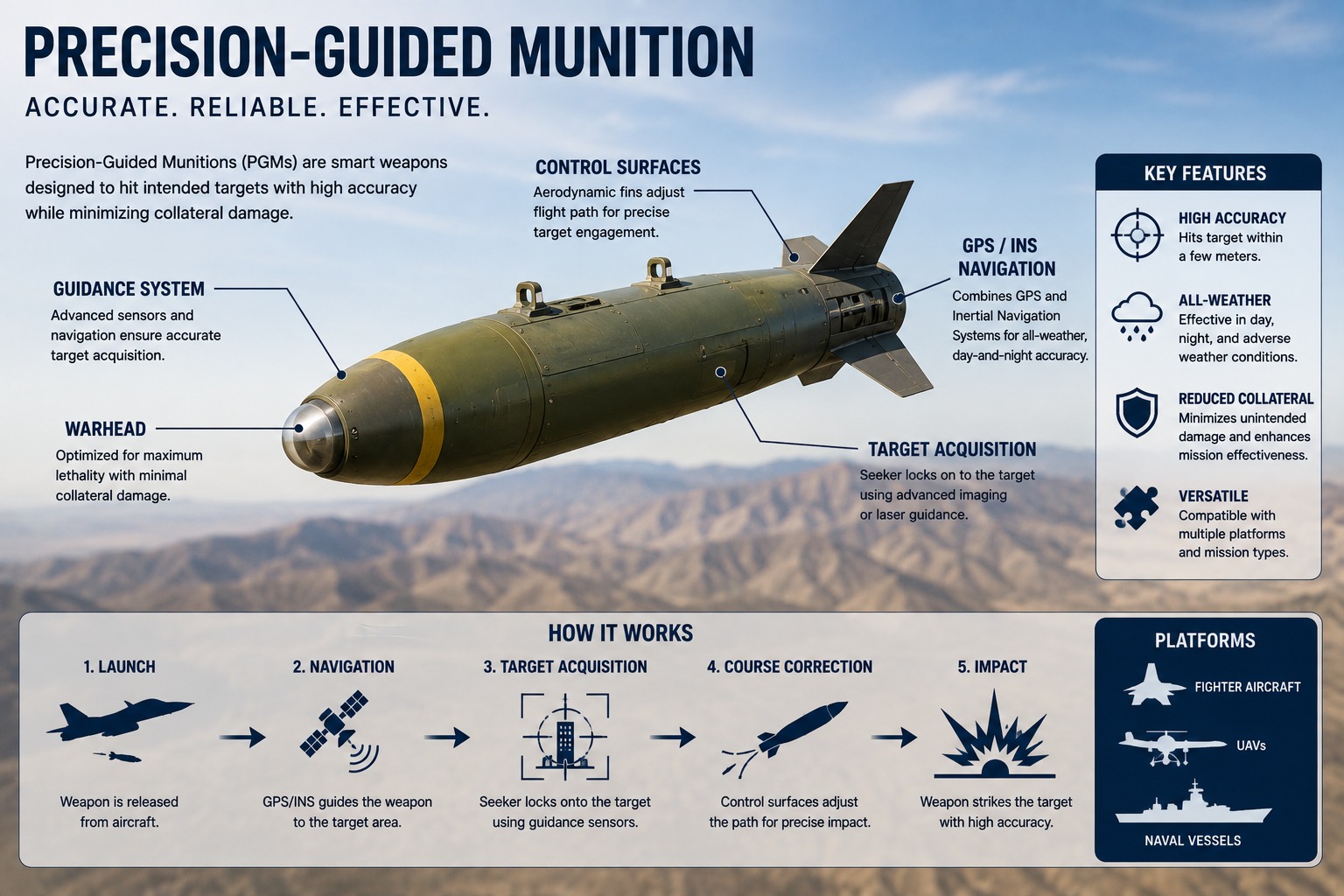
In the evolving defense technology landscape, precision-guided munitions (PGMs) have emerged as a significant innovation, transforming how modern armed forces approach accuracy, mission effectiveness, and target discrimination. Unlike conventional unguided weapons, PGMs incorporate advanced guidance, navigation, targeting, and control technologies to improve the likelihood of reaching designated targets while supporting efforts to reduce unintended damage. As defense organizations worldwide pursue modernization, precision-guided munition technology is becoming increasingly important across airborne, land, and naval platforms.
The evolution of PGMs reflects broader advances in electronics, sensing, navigation, computing, propulsion, and autonomous systems. Modern development increasingly focuses on integrating multiple technologies into compact and adaptable systems capable of operating across complex environments. As these capabilities continue to mature, the PGM ecosystem is expected to create new opportunities for defense manufacturers, technology providers, component suppliers, and system integrators.
History of Precision-Guided Munition Technology
The foundations of precision-guided weapon technology can be traced to the development of guided weapons during the 20th century. Early systems demonstrated that electronic guidance could significantly improve weapon accuracy compared with conventional unguided munitions. Subsequent developments introduced radar, infrared, electro-optical, laser, and satellite-based navigation technologies.
The introduction and advancement of satellite navigation and inertial navigation systems represented an important milestone. These technologies enabled increasingly sophisticated guidance architectures and improved the ability of munitions to maintain an intended trajectory. Today, precision-guided systems can combine multiple navigation and sensing technologies, creating more resilient and adaptable architectures for modern defense applications.
Benefits of Precision-Guided Munition Technology
Precision-guided munition technology offers several important advantages for modern defense organizations:
1. Accuracy: Advanced guidance and navigation technologies can improve the ability of a munition to reach a designated target, supporting more precise mission planning.
2. Reduced collateral damage: Greater precision can help military planners limit unintended effects and improve target discrimination, particularly in complex operational environments.
3. Mission effectiveness: PGMs can support a broader range of mission requirements by combining sophisticated guidance, targeting, and payload technologies.
4. Platform flexibility: Modern guided munitions are being developed for land, naval, and airborne platforms, expanding their potential applications across defense forces.
Current market size and growth trends of the Precision-Guided Munition industry
According to MarketsandMarkets, the global Precision-Guided Munition Market size was valued at USD 37.25 billion in 2025 and is projected to reach USD 49.71 billion by 2030, growing at a CAGR of 5.9% from 2025 to 2030. The global precision-guided munition market is experiencing steady expansion as governments increase defense modernization programs and seek advanced precision-strike capabilities.
This growth can be attributed to several factors, including:
• Increasing demand for high-precision strike capabilities
• Growing emphasis on minimizing civilian casualties and collateral damage
• Rising defense modernization and military procurement programs
• Advancements in guidance, navigation, and targeting technologies
• Increasing demand for enhanced mission effectiveness
MarketsandMarkets identifies loitering munitions as the product segment expected to register the highest CAGR, while Asia Pacific is identified as the fastest-growing regional market. The report also highlights autonomous operation as a leading segment and propulsion systems as a rapidly expanding technology area.
Key drivers and factors influencing the future of Precision-Guided Munition Technology
Several key drivers are shaping the future development of precision-guided munition technology:
1. Defense Modernization: Governments are investing in next-generation defense capabilities to replace aging inventories and improve technological readiness.
2. Demand for Precision: Increasing emphasis on target discrimination and mission accuracy is encouraging the adoption of advanced guidance and navigation technologies.
3. Technological Advancement: Improvements in sensors, electronics, computing, navigation, and propulsion are enabling more sophisticated PGM architectures.
4. Autonomous Systems: Growing interest in autonomous and semi-autonomous defense platforms is encouraging the integration of intelligent technologies into precision-guided systems.
5. Platform Integration: PGMs are increasingly designed for compatibility with diverse airborne, land, and naval platforms, creating demand for modular and adaptable technologies.
Emerging Trends in Precision-Guided Munition Technology
The future of precision-guided munition technology is being shaped by several important trends and innovations:
1. Advanced Guidance and Navigation: The integration of satellite navigation, inertial navigation, electro-optical sensors, and other guidance technologies is supporting more resilient precision capabilities.
2. Miniaturization: Advances in electronics, sensors, and propulsion are enabling smaller and lighter guided systems that can potentially be integrated with a wider range of platforms.
3. Autonomous Operation: Autonomous and semi-autonomous technologies are gaining attention as defense organizations seek systems capable of supporting faster and more adaptable decision-making.
4. AI-Enabled Technologies: Artificial intelligence and machine-learning technologies are increasingly being explored for sensing, classification, navigation, and decision-support applications within broader defense architectures.
5. Modular Architectures: Modular designs can allow manufacturers to adapt guidance, propulsion, payload, and power-related components to different platform and mission requirements.
Opportunities and Challenges in the Precision-Guided Munition Market
As the PGM market expands, it presents significant opportunities for defense companies and technology suppliers:
1. Market Expansion: Rising defense budgets and modernization initiatives across regions are creating opportunities for manufacturers of guidance systems, sensors, propulsion technologies, and integrated solutions.
2. Technology Innovation: Companies investing in advanced navigation, sensing, autonomy, miniaturization, and electronics can differentiate their offerings in an increasingly technology-focused market.
3. Supply-Chain Development: Growing demand for sophisticated components is creating opportunities for specialized suppliers involved in electronics, sensors, materials, propulsion, and power systems.
4. Regional Manufacturing: Countries seeking greater defense self-reliance are creating opportunities for domestic development, technology partnerships, and localized manufacturing.
However, the industry also faces several challenges:
1. Regulatory Restrictions: Stringent arms-transfer regulations and export-control frameworks can limit international technology transfers and affect procurement timelines.
2. High Manufacturing Costs: Advanced sensors, electronics, propulsion systems, and specialized materials can increase production costs.
3. Integration Complexity: Integrating sophisticated munitions with different launch platforms and legacy defense architectures can create technical and compatibility challenges.
4. Storage and Shelf-Life: Maintaining sophisticated systems over long periods can create requirements for reliable components, testing, maintenance, and lifecycle management.
MarketsandMarkets identifies stringent arms-transfer regulations and high manufacturing costs as important restraints, while integration constraints and storage limitations remain notable challenges.
Innovations and advancements in Precision-Guided Munition Technology
The next generation of PGMs is being shaped by multiple technology innovations:
1. Multi-Mode Guidance: Combining different guidance and sensing approaches can improve flexibility and resilience across changing operational environments.
2. Advanced Propulsion: Developments in propulsion technology are supporting improvements in range, responsiveness, and platform integration.
3. Smart Sensors: Increasingly sophisticated electro-optical, infrared, radar, and other sensing technologies are supporting improved target identification and navigation.
4. Compact Electronics: Miniaturized processors, sensors, communications components, and power systems are enabling more capabilities within smaller architectures.
5. Digital Engineering: Simulation, digital twins, modeling, and advanced manufacturing techniques can accelerate development, testing, and lifecycle management while helping manufacturers evaluate system performance before physical production.
Future Applications and Industries that will Benefit from Precision-Guided Munition Technology
The future of precision-guided munition innovation will extend across several defense applications and technology ecosystems:
1. Airborne Defense: Aircraft platforms will continue to incorporate increasingly sophisticated guided systems as air forces modernize their inventories and seek greater mission flexibility.
2. Land-Based Systems: Guided rockets, guided ammunition, and other precision systems can support modernization of ground-based defense capabilities.
3. Naval Applications: Precision-guided technologies will remain important for naval platforms requiring advanced navigation, sensing, and mission systems.
4. Unmanned Platforms: The growth of unmanned aerial and other autonomous platforms is creating demand for compact, lightweight, and digitally integrated technologies.
5. Defense Electronics: Semiconductor, sensor, communications, navigation, and computing companies can benefit from increasing demand for advanced components.
6. Aerospace and Manufacturing: Specialized materials, advanced manufacturing, testing, simulation, and systems-integration companies can participate in the expanding PGM technology ecosystem.
Conclusion: The Promising Future of Precision-Guided Munition Technology
The future of precision-guided munition technology is being shaped by rapid advances in sensing, navigation, computing, propulsion, miniaturization, autonomy, and digital engineering. As defense organizations continue to modernize their capabilities, the demand for accurate, adaptable, and technologically advanced systems is expected to remain strong. From advanced guidance architectures and autonomous technologies to compact systems and modular designs, innovation is creating new possibilities throughout the PGM ecosystem. The market outlook reflects this momentum, with MarketsandMarkets projecting growth from USD 37.25 billion in 2025 to USD 49.71 billion by 2030 at a CAGR of 5.9%.
At the same time, realizing the full potential of precision-guided munition technology will require continued investment in research, manufacturing capabilities, supply-chain resilience, regulatory compliance, testing, and responsible technology development. Collaboration among defense organizations, technology companies, researchers, and industrial partners will remain important for addressing these challenges. As the defense industry moves toward increasingly connected, autonomous, and digitally engineered systems, precision-guided munition technology will remain an important area of innovation. Its evolution is likely to influence defense procurement, aerospace engineering, electronics manufacturing, and advanced systems integration for years to come. Discover the latest market insights, technology developments, and growth opportunities in precision-guided munition technology through the MarketsandMarkets research report.
Download the Precision-Guided Munition Market Research Report @ https://www.marketsandmarkets.com/Market-Reports/precision-guided-munition-market-109859417.html
80% of the Forbes Global 2000 B2B companies rely on MarketsandMarkets to identify growth opportunities in emerging technologies and use cases that will have a positive revenue impact.
- Food Packaging Market Size Set for Strong Growth Through 2030 Amid Rising Demand for Convenience Foods
- Mulch Films Market: Driving Sustainable Agriculture Through Innovation
- Agricultural Adjuvants Market Analysis, Trends, and Growth Outlook (2026–2031)
- Crop Protection Chemical Market Size, Share & Growth Forecast (2025–2030)
- Japan Enterprise Asset Management Market Growth: AI and Smart Infrastructure Drive Demand


