

Trainer Aircraft Technology Innovation: Key Trends, Growth Drivers, and Future Opportunities
Introduction to Trainer Aircraft Technology
In the rapidly evolving aerospace and defense industry, trainer aircraft technology has emerged as a critical enabler of modern pilot development and operational readiness. Trainer aircraft are specifically designed to prepare pilots for increasingly sophisticated military and commercial aviation platforms through realistic flight training environments, advanced avionics, and integrated simulation systems.
As air forces and aviation academies worldwide modernize their training infrastructure, trainer aircraft are becoming more technologically advanced, incorporating artificial intelligence, digital cockpits, virtual training environments, and network-enabled capabilities. These innovations are transforming pilot training methodologies while improving efficiency, safety, and mission preparedness.
History of Trainer Aircraft Development
The evolution of trainer aircraft dates back to the early days of military aviation when simple dual-control aircraft were used to teach fundamental flying skills. During World War I and World War II, dedicated trainer platforms emerged to support the growing demand for skilled military pilots.
Over the decades, trainer aircraft evolved from basic piston-engine platforms to advanced jet trainers capable of replicating combat environments. Modern trainer aircraft now incorporate sophisticated avionics, embedded simulation systems, and tactical training capabilities that closely mirror operational fighter aircraft.
Benefits of Advanced Trainer Aircraft Technology
Modern trainer aircraft offer several advantages over traditional pilot training methods:
1. Enhanced Pilot Preparedness
Advanced training platforms provide realistic flight scenarios, helping pilots gain operational proficiency before transitioning to frontline aircraft.
2. Reduced Training Costs
Modern trainers simulate complex combat environments at significantly lower operational costs than deploying frontline fighter jets.
3. Improved Safety
Integrated training systems and simulation technologies allow pilots to practice emergency procedures in controlled environments.
4. Faster Skill Development
Digital training ecosystems accelerate pilot learning curves and improve training outcomes.
5. Operational Flexibility
Modern trainer aircraft support multiple training missions, including basic flight instruction, advanced combat training, and mission rehearsal.
Current Market Size and Growth Trends of the Trainer Aircraft Industry
The trainer aircraft market is experiencing significant growth as nations invest heavily in pilot training modernization and military aviation readiness.
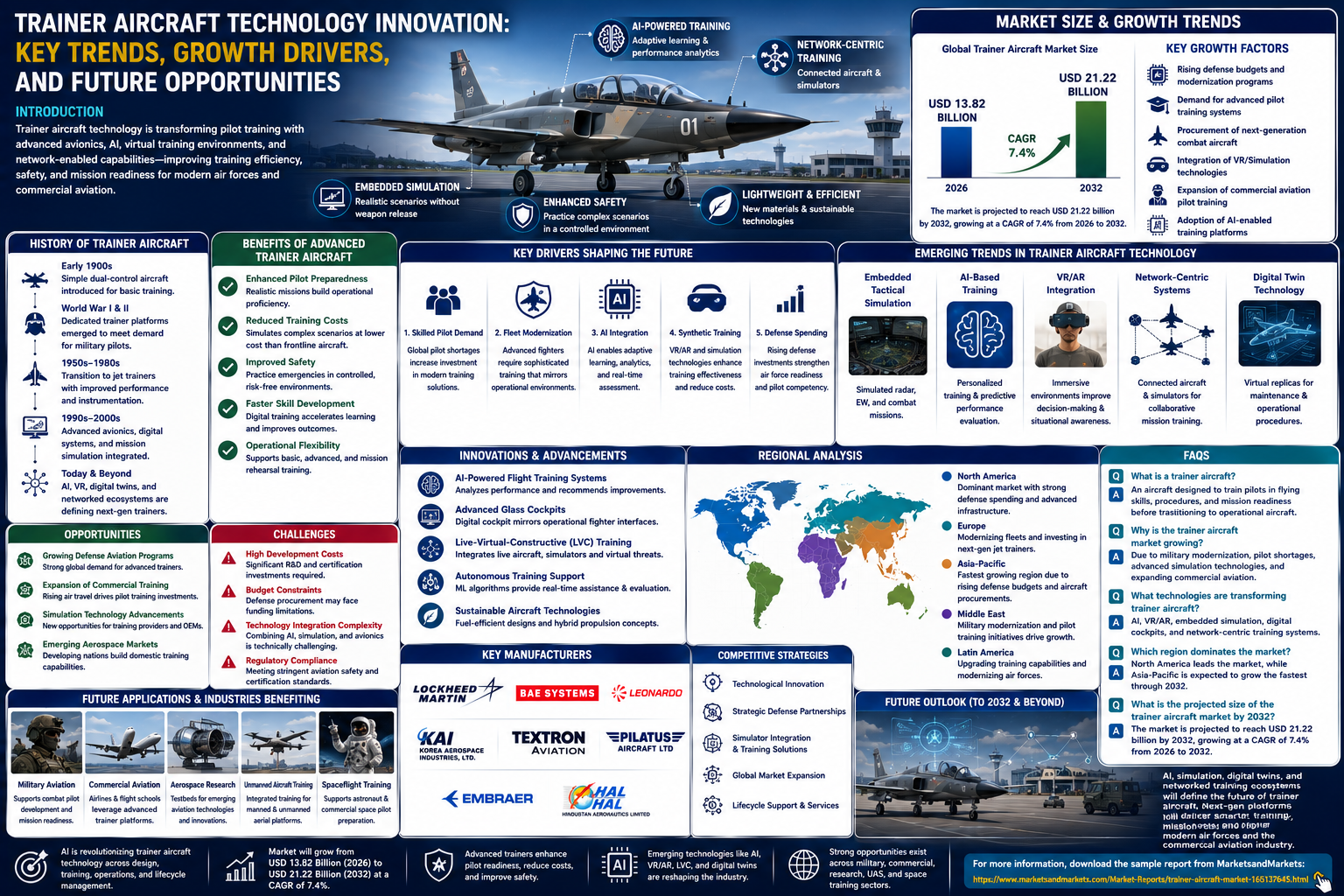
According to MarketsandMarkets, the Global Trainer Aircraft Market Size was valued at USD 13.82 billion in 2026 and is projected to reach USD 21.22 billion by 2032, growing at a CAGR of 7.4% from 2026 to 2032.
The market's expansion is being driven by several key factors:
-
Rising defense budgets and military modernization programs
-
Growing demand for advanced pilot training systems
-
Increasing procurement of next-generation combat aircraft
-
Integration of virtual reality and simulation technologies
-
Expansion of commercial aviation pilot training requirements
-
Increasing adoption of AI-enabled training platforms
The growing complexity of modern aircraft systems has made advanced trainer aircraft essential for preparing pilots to operate sophisticated military and civilian aviation platforms efficiently.
Key Drivers and Factors Influencing the Future of Trainer Aircraft Technology
Several major factors are accelerating innovation within the trainer aircraft market:
1. Rising Demand for Skilled Pilots
Global pilot shortages in both military and commercial aviation sectors are increasing investments in advanced training solutions.
2. Military Fleet Modernization
The acquisition of fifth-generation fighters and advanced combat aircraft requires sophisticated training platforms capable of replicating operational environments.
3. Integration of Artificial Intelligence
AI-powered training systems provide adaptive learning experiences and real-time performance assessment.
4. Growth of Synthetic Training Environments
Virtual and augmented reality technologies are enhancing pilot training effectiveness while reducing operational costs.
5. Increasing Defense Spending
Many countries are expanding defense budgets to strengthen air force readiness and pilot competency.
Emerging Trends in Trainer Aircraft Technology
The future of trainer aircraft technology is being shaped by several transformative trends:
1. Embedded Tactical Simulation
Modern trainer aircraft can simulate radar systems, electronic warfare, and combat missions without requiring actual weapon deployment.
2. Artificial Intelligence-Based Training
AI-driven analytics enable personalized pilot training programs and predictive performance evaluation.
3. Virtual and Augmented Reality Integration
Immersive training environments are improving pilot decision-making and situational awareness.
4. Network-Centric Training Systems
Connected aircraft and simulators facilitate collaborative mission training across multiple locations.
5. Digital Twin Technology
Digital replicas of aircraft systems allow trainees to practice maintenance and operational procedures in virtual environments.
Opportunities and Challenges in the Trainer Aircraft Market
Key Opportunities
1. Growing Defense Aviation Programs
Air force modernization initiatives worldwide are generating strong demand for advanced trainer aircraft.
2. Expansion of Commercial Flight Training
Increasing global air travel is driving investments in commercial pilot training infrastructure.
3. Simulation Technology Advancements
The integration of advanced simulators creates new opportunities for training providers and aircraft manufacturers.
4. Emerging Aerospace Markets
Developing nations are investing in domestic pilot training capabilities to strengthen aviation sectors.
Key Challenges
1. High Development Costs
Advanced trainer aircraft require substantial investments in R&D and certification processes.
2. Budget Constraints
Defense procurement programs may face funding limitations during economic uncertainty.
3. Technology Integration Complexity
Combining simulation, AI, and avionics systems into a unified training platform presents engineering challenges.
4. Regulatory Compliance
Trainer aircraft manufacturers must meet stringent aviation safety and certification standards.
Innovations and Advancements in Trainer Aircraft Technology
Several breakthrough technologies are reshaping trainer aircraft capabilities:
1. AI-Powered Flight Training Systems
Artificial intelligence assists instructors by analyzing pilot performance and recommending targeted improvements.
2. Advanced Glass Cockpits
Digital cockpit architectures mirror operational fighter aircraft, enabling smoother pilot transitions.
3. Live-Virtual-Constructive (LVC) Training
LVC systems integrate live aircraft, simulators, and virtual threats into a single training environment.
4. Autonomous Training Support Systems
Machine learning algorithms provide real-time flight assistance and mission evaluation.
5. Sustainable Aircraft Technologies
Manufacturers are developing fuel-efficient trainer aircraft and exploring hybrid propulsion concepts.
Regional Analysis of the Trainer Aircraft Market
North America
North America remains a dominant market due to strong defense spending, advanced aerospace infrastructure, and continuous military pilot training programs.
Europe
European countries are modernizing air force fleets and investing in advanced jet trainer aircraft to support future combat aircraft programs.
Asia-Pacific
Asia-Pacific is expected to witness the fastest growth due to expanding defense budgets, rising geopolitical tensions, and increasing aircraft procurement activities.
Middle East
Growing military modernization programs and pilot training initiatives are driving market expansion across the region.
Latin America
Several countries are upgrading military aviation training capabilities, creating opportunities for trainer aircraft manufacturers.
Competitive Landscape and Key Manufacturers
The trainer aircraft market is highly competitive, with leading aerospace companies focusing on advanced training capabilities, simulation integration, and next-generation avionics.
Major Companies Operating in the Market
-
Lockheed Martin
-
BAE Systems
-
Leonardo S.p.A.
-
Korea Aerospace Industries
-
Textron Aviation
-
Pilatus Aircraft
-
Embraer
-
Hindustan Aeronautics Limited
Key competitive strategies include technological innovation, strategic defense partnerships, simulator integration, and global training solution offerings.
Future Applications and Industries Benefiting from Trainer Aircraft Technology
Military Aviation
Advanced trainers will continue supporting combat pilot development and mission readiness.
Commercial Aviation
Airlines and flight schools will increasingly utilize sophisticated trainer platforms to address pilot shortages.
Aerospace Research
Trainer aircraft serve as valuable testbeds for emerging aviation technologies.
Unmanned Aircraft Training
Future systems may support integrated training for both manned and unmanned aerial platforms.
Spaceflight Training
Advanced trainer technologies could contribute to astronaut and commercial space pilot preparation programs.
Frequently Asked Questions (FAQs)
What is a trainer aircraft?
A trainer aircraft is specifically designed to train pilots in flying skills, operational procedures, and mission readiness before transitioning to operational aircraft.
Why is the trainer aircraft market growing?
Growth is driven by military modernization programs, increasing pilot demand, advanced simulation technologies, and expanding commercial aviation sectors.
What technologies are transforming trainer aircraft?
Artificial intelligence, virtual reality, embedded simulation, digital cockpits, and network-centric training systems are significantly enhancing training capabilities.
Which region dominates the trainer aircraft market?
North America currently leads the market, while Asia-Pacific is expected to experience the fastest growth through 2032.
What is the projected size of the trainer aircraft market by 2032?
The market is projected to reach USD 21.22 billion by 2032, growing at a CAGR of 7.4% from 2026 to 2032.
Conclusion: The Promising Future of Trainer Aircraft Technology
Trainer aircraft technology is undergoing a remarkable transformation as aerospace manufacturers integrate artificial intelligence, simulation technologies, digital training ecosystems, and advanced avionics into next-generation platforms. As military and commercial aviation sectors continue to evolve, the need for highly skilled pilots and efficient training systems will remain a strategic priority.
With the Global Trainer Aircraft Market projected to grow from USD 13.82 billion in 2026 to USD 21.22 billion by 2032, opportunities for innovation, investment, and technological advancement remain substantial. The convergence of AI, virtual reality, networked training, and sustainable aviation technologies will continue reshaping the future of pilot development worldwide.
For more information, download the sample report from MarketsandMarkets:
https://www.marketsandmarkets.com/Market-Reports/trainer-aircraft-market-165137645.html
80% of the Forbes Global 2000 B2B companies rely on MarketsandMarkets to identify growth opportunities in emerging technologies and use cases that will have a positive revenue impact.
- Food Packaging Market Size Set for Strong Growth Through 2030 Amid Rising Demand for Convenience Foods
- Mulch Films Market: Driving Sustainable Agriculture Through Innovation
- Agricultural Adjuvants Market Analysis, Trends, and Growth Outlook (2026–2031)
- Crop Protection Chemical Market Size, Share & Growth Forecast (2025–2030)
- Japan Enterprise Asset Management Market Growth: AI and Smart Infrastructure Drive Demand

