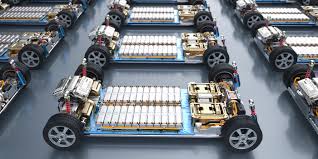
EV Battery Market Trends: Powering the Future of Electric Mobility
The global shift toward electric vehicles (EVs) is no longer a distant vision—it’s accelerating at full speed. At the heart of this transformation lies one of the most critical components: the electric vehicle battery. As demand for zero-emission transportation grows, the EV battery market is evolving rapidly, driven by technological advancements, changing consumer expectations, and supportive government policies.
According to industry reports, the EV battery market is projected to grow at a significant CAGR through 2030, fueled by the rising adoption of EVs across all segments—from passenger cars and commercial vehicles to two-wheelers and buses.
Key Trends Driving the EV Battery Market
1. Rise of Solid-State Batteries
Solid-state batteries are gaining traction due to their higher energy density, faster charging times, and improved safety over traditional lithium-ion batteries. Automotive giants and startups alike are investing in solid-state R&D to overcome limitations like battery swelling, overheating, and fire risk.
2. Cost Reduction and Economies of Scale
Battery costs have declined significantly—from over $1,000 per kWh a decade ago to under $150/kWh today. As manufacturers scale up production and optimize supply chains, affordable EVs are becoming more accessible to the mass market.
3. LFP and NMC Chemistry Dominance
Two chemistries dominate the landscape:
- LFP (Lithium Iron Phosphate) batteries: cost-effective, thermally stable, and widely used in mass-market EVs, particularly in China.
- NMC (Nickel Manganese Cobalt) batteries: higher energy density, preferred for premium EVs and longer range applications.
4. Battery Recycling & Second-Life Applications
As EV adoption grows, so does the need for battery lifecycle management. Companies are investing in battery recycling and second-life energy storage solutions to support a circular economy and reduce environmental impact.
5. Wireless EV Charging & Battery Swapping
New charging innovations, such as wireless inductive charging and battery swapping stations, are emerging to reduce charging time and infrastructure barriers, especially in urban and fleet applications.
Download PDF Brochure @ https://www.marketsandmarkets.com/pdfdownloadNew.asp?id=100188347
Regional Insights
- Asia-Pacific remains the dominant player, led by China, South Korea, and Japan—home to major battery suppliers like CATL, BYD, LG Energy Solution, Panasonic, and Samsung SDI.
- Europe is ramping up battery production with initiatives like the European Battery Alliance, driven by the need for local supply chains.
- North America is also making strides, with the U.S. Inflation Reduction Act accelerating investments in domestic battery manufacturing and EV incentives.
Leading Players in the EV Battery Market
Key companies shaping the future of EV batteries include:
- Contemporary Amperex Technology Co. Ltd. (CATL)
- LG Energy Solution
- BYD
- Panasonic
- Samsung SDI
- SK On
- Toshiba
- Northvolt
- General Motors (Ultium)
- Tesla (4680 Cells)
These companies are not just scaling capacity but also innovating in battery architecture, energy density, and fast-charging capabilities.
Future Outlook: What’s Next?
The EV battery market is set to become one of the most crucial sectors in the green mobility revolution. With global EV sales projected to reach over 30 million units by 2030, battery technology must evolve to meet demands for longer range, faster charging, lower cost, and sustainable sourcing.
Upcoming innovations to watch:
- Silicon Anodes for higher capacity
- Cobalt-free Chemistries for ethical sourcing
- Battery-as-a-Service (BaaS) for commercial fleets
-
AI-Powered Battery Management Systems (BMS) for real-time optimization
Request Free Sample Report @ https://www.marketsandmarkets.com/requestsampleNew.asp?id=100188347
Conclusion
As governments push for decarbonization and consumers embrace EVs, EV battery technology will continue to play a foundational role in shaping the mobility landscape. The market is moving toward smarter, safer, and more sustainable battery solutions, paving the way for a cleaner, electrified future.
80% of the Forbes Global 2000 B2B companies rely on MarketsandMarkets to identify growth opportunities in emerging technologies and use cases that will have a positive revenue impact.
- Food Packaging Market Size Set for Strong Growth Through 2030 Amid Rising Demand for Convenience Foods
- Mulch Films Market: Driving Sustainable Agriculture Through Innovation
- Agricultural Adjuvants Market Analysis, Trends, and Growth Outlook (2026–2031)
- Crop Protection Chemical Market Size, Share & Growth Forecast (2025–2030)
- Japan Enterprise Asset Management Market Growth: AI and Smart Infrastructure Drive Demand